
Aerospace Applications of Grade 23 Titanium: Combining Light Weight and Strength
In the aerospace industry, where performance, reliability, and efficiency are non-negotiable, materials play a defining role in shaping design and engineering innovations. Among the many high-performance alloys available, Grade 23 titanium (Ti-6Al-4V ELI) has become a cornerstone material thanks to its superior strength-to-weight ratio, excellent corrosion resistance, and outstanding fatigue performance.
Often described as a refined version of Grade 5 titanium, Grade 23 titanium offers even greater toughness and ductility due to its extra-low interstitial (ELI) chemistry. These attributes make it ideal for critical aerospace applications where safety, durability, and light weight are essential.
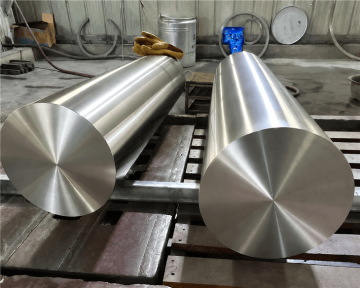
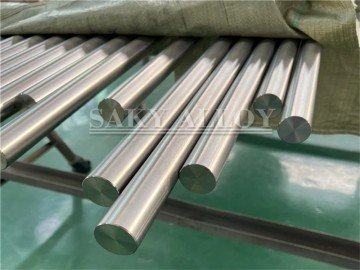
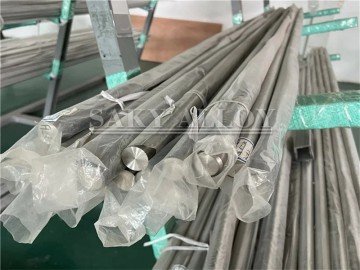
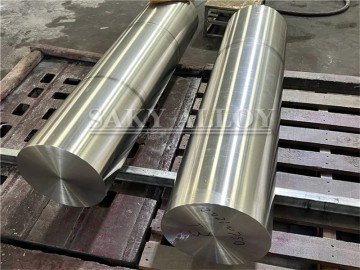
This article explores the key aerospace applications of Grade 23 titanium, how its unique properties enhance performance, and how SAKYALLOY, a trusted global manufacturer, produces precision-engineered titanium bars that meet the highest standards for the aviation and space industries.
1. Introduction: The Material Behind Aerospace Innovation
Modern aircraft and spacecraft must be lightweight yet strong enough to withstand extreme conditions — including high temperatures, intense stress, and corrosive environments. Every kilogram saved in aircraft weight translates to improved fuel efficiency, greater payload capacity, and lower emissions.
Grade 23 titanium bar perfectly fits this need. Its combination of low density (4.43 g/cm³) and high tensile strength (up to 950 MPa) allows engineers to replace heavier metals such as steel or nickel alloys without sacrificing performance or safety.
As aerospace design continues to push the limits of speed, altitude, and durability, materials like Grade 23 titanium remain indispensable for achieving optimal performance in airframes, engines, and structural components.
2. Understanding Grade 23 Titanium Alloy
Grade 23 titanium, or Ti-6Al-4V ELI, is a two-phase alpha-beta alloy composed primarily of titanium, aluminum, and vanadium. The “ELI” stands for Extra Low Interstitial, meaning that the content of oxygen, carbon, and nitrogen is minimized. This enhances fracture toughness, fatigue resistance, and impact strength, especially in cryogenic and high-stress environments — conditions commonly encountered in aerospace operations.
| Element | Composition (%) | Function |
|---|---|---|
| Titanium (Ti) | Balance | Provides low weight and corrosion resistance. |
| Aluminum (Al) | 5.5 – 6.75 | Strengthens the alloy and stabilizes the alpha phase. |
| Vanadium (V) | 3.5 – 4.5 | Enhances ductility and stabilizes the beta phase. |
| Oxygen (O) | ≤ 0.13 | Controlled to improve toughness and fatigue life. |
| Iron (Fe) | ≤ 0.25 | Provides minor strengthening. |
| Carbon (C) | ≤ 0.08 | Kept minimal for improved ductility. |
The result is a lightweight yet robust alloy capable of withstanding the demanding thermal and mechanical stresses of aerospace operations.
3. Key Mechanical and Physical Properties
| Property | Typical Value | Benefit |
|---|---|---|
| Tensile Strength | 860 – 950 MPa | Withstands high operational loads. |
| Yield Strength | 780 – 880 MPa | Maintains structural integrity under stress. |
| Elongation | 10 – 14% | Provides flexibility to resist cracking. |
| Density | 4.43 g/cm³ | Reduces total aircraft weight. |
| Elastic Modulus | 110 GPa | Offers strength without brittleness. |
| Hardness | 32 – 38 HRC | Ensures durability and wear resistance. |
| Fatigue Limit | ~550 MPa | Excellent for cyclic loading applications. |
These properties make Grade 23 titanium one of the few materials that can combine the essential attributes of strength, lightness, and corrosion resistance in one alloy — a critical advantage for aerospace engineers.
4. Advantages of Grade 23 Titanium in Aerospace Applications
a) Light Weight with High Strength
Titanium’s density is about 40% lower than steel, yet Grade 23 offers comparable tensile strength. This allows aerospace designers to significantly reduce overall component weight, improving fuel efficiency and payload capacity.
b) Superior Fatigue and Creep Resistance
Aircraft and spacecraft components undergo repetitive stress and temperature cycles. The refined microstructure of Grade 23 titanium provides excellent fatigue and creep resistance, ensuring long-term performance in engines and structural assemblies.
c) Corrosion and Oxidation Resistance
Titanium’s passive oxide layer protects it from oxidation and corrosion — even in saline, humid, or high-temperature environments. This makes it ideal for both aircraft exposed to the atmosphere and spacecraft operating in oxidizing conditions.
d) Compatibility with Cryogenic Environments
Due to its low interstitial content, Grade 23 titanium retains ductility and impact strength even at cryogenic temperatures, making it suitable for spacecraft structures, cryogenic fuel systems, and satellite components.
e) Non-Magnetic and Heat Stable
Grade 23 titanium is non-magnetic and maintains its strength up to 400°C, making it suitable for sensitive instrumentation and high-heat applications in engines and exhaust systems.
5. Aerospace Applications of Grade 23 Titanium
a) Airframe Structures
Titanium alloys are widely used in aircraft fuselage frames, landing gear components, and wing structures due to their combination of strength and weight savings.
Grade 23 titanium’s enhanced toughness and fatigue resistance ensure long service life, even under fluctuating loads during takeoff, flight, and landing.
b) Jet Engine Components
In modern jet engines, titanium alloys are used for compressor blades, casings, and rotors, where high strength, low density, and thermal stability are critical. Grade 23 titanium resists fatigue and oxidation at high temperatures, ensuring safe, long-term operation.
c) Fasteners and Connectors
Weight reduction in aerospace extends to the smallest components. Titanium fasteners made from Grade 23 offer the same strength as steel fasteners at half the weight, contributing to improved aircraft efficiency.
d) Landing Gear Systems
Landing gear components must absorb enormous impact loads during landing. Grade 23 titanium’s toughness and high fatigue strength make it ideal for shock-absorbing structures and load-bearing rods.
e) Spacecraft and Satellite Structures
For spacecraft, mass reduction is crucial to minimize launch costs. Grade 23 titanium is used in satellite frames, propulsion system housings, and cryogenic tanks due to its low weight and ability to maintain strength in extreme temperatures.
f) Hydraulic and Fuel Systems
Titanium’s corrosion resistance to jet fuel and hydraulic fluids ensures safe operation of fuel lines, valves, and pressure vessels, even after years of exposure to high-pressure environments.
6. Heat Treatment and Microstructural Optimization
The performance of Grade 23 titanium can be significantly enhanced through precise heat treatment.
-
Annealing: Relieves internal stresses and improves ductility.
-
Solution Treatment and Aging (STA): Refines the alpha-beta microstructure, increasing strength and fatigue resistance.
SAKYALLOY uses advanced vacuum and inert-gas furnaces to maintain exact temperature control during heat treatment, ensuring uniform mechanical properties across all titanium bars and billets.
7. Fabrication and Machining Characteristics
While titanium is harder to machine than aluminum or steel, Grade 23 titanium maintains excellent workability when proper tools and cutting conditions are used. It can be:
-
Forged into aerospace components.
-
Welded using inert-gas processes without compromising strength.
-
Machined into precision parts for engines, airframes, and instrumentation housings.
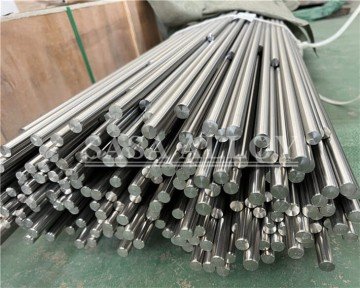
SAKYALLOY supplies precision-machined titanium bars tailored for aerospace applications, ensuring dimensional accuracy and surface integrity for final component fabrication.
8. Comparison with Other Aerospace Materials
| Property | Grade 23 Titanium | Aluminum Alloy 7075 | Stainless Steel 17-4PH | Inconel 718 |
|---|---|---|---|---|
| Density (g/cm³) | 4.43 | 2.80 | 7.80 | 8.19 |
| Tensile Strength (MPa) | 950 | 570 | 1000 | 1240 |
| Operating Temperature (°C) | Up to 400 | Up to 200 | Up to 300 | Up to 700 |
| Corrosion Resistance | Excellent | Moderate | Good | Excellent |
| Fatigue Strength | Excellent | Moderate | Good | Excellent |
While aluminum is lighter, it cannot match the strength or corrosion resistance of titanium. Steel and nickel alloys offer higher strength but add significant weight. Grade 23 titanium bar offers the best compromise — high strength at low weight — making it the most efficient material for aerospace use.
9. Standards and Certifications for Aerospace Titanium
SAKYALLOY manufactures Grade 23 titanium bars according to the world’s leading aerospace standards:
-
ASTM B348 – Titanium and titanium alloy bars and billets.
-
AMS 4930 / AMS 6931 – Aerospace material specifications for Ti-6Al-4V ELI.
-
ISO 5832-3 – Biocompatible titanium alloy standard (also used in aerospace medical cross-applications).
Each batch is fully tested for chemical composition, mechanical properties, ultrasonic integrity, and surface quality, ensuring compliance with aerospace and defense quality systems.
10. SAKYALLOY — Excellence in Titanium for Aerospace
SAKYALLOY is a globally recognized manufacturer and supplier of Grade 23 titanium bars used in aerospace, medical, and industrial applications. With advanced production equipment, strict quality control, and decades of metallurgical expertise, SAKYALLOY guarantees titanium materials that meet the highest international standards.
Key advantages include:
-
State-of-the-art vacuum melting and forging technology.
-
Controlled heat treatment for uniform strength and toughness.
-
Full traceability and certification for aerospace-grade materials.
-
Custom machining, surface finishing, and size specifications.
Through continuous innovation and precision engineering, SAKYALLOY delivers titanium solutions that power aerospace performance worldwide.
11. Future Outlook: Titanium in Next-Generation Aircraft and Spacecraft
As aerospace design evolves toward lighter, faster, and more fuel-efficient systems, titanium continues to play an increasingly vital role. The combination of strength, lightness, and thermal resistance makes Grade 23 titanium indispensable for new-generation technologies such as:
-
Electric and hybrid aircraft structures.
-
Reusable space vehicles.
-
3D-printed titanium engine components.
-
High-temperature turbine and propulsion systems.
With ongoing advancements in additive manufacturing and material science, titanium’s role in aerospace will continue to expand — offering new possibilities for performance optimization and sustainability.
12. Conclusion
Grade 23 titanium bar represents the perfect fusion of light weight, strength, and corrosion resistance, meeting the extreme demands of modern aerospace engineering. From airframes and engines to spacecraft systems, its unique combination of properties enables safer, stronger, and more efficient flight.
Through precision manufacturing and strict quality assurance, SAKYALLOY remains a trusted global partner for supplying Grade 23 titanium materials that meet aerospace and defense standards.
In an industry defined by performance and innovation, SAKYALLOY continues to deliver titanium products that help the world reach new heights — combining the power of science, precision, and strength in every alloy.