
Applications of Ti-3Al-2.5V Rod in Automotive Exhaust and Intake Systems
In the era of lightweight engineering and fuel efficiency, the automotive industry continues to seek advanced materials that combine strength, durability, and heat resistance without compromising performance. Among these, Ti-3Al-2.5V, commonly known as Grade 9 titanium, has become one of the most versatile and valuable materials for automotive exhaust and intake systems.
Renowned for its exceptional strength-to-weight ratio, corrosion resistance, and thermal stability, this titanium alloy is increasingly used in high-performance and luxury vehicles, particularly in sports cars, supercars, and racing applications.
As a global leader in titanium and specialty alloys, sakyalloy provides Ti-3Al-2.5V rods that meet the demanding requirements of the automotive industry. Through precision manufacturing and advanced metallurgical control, sakyalloy ensures superior product performance for components exposed to extreme heat, vibration, and corrosive exhaust gases.
Understanding Ti-3Al-2.5V (Grade 9 Titanium Alloy)
Ti-3Al-2.5V, also referred to as Grade 9 titanium, is an alpha-beta titanium alloy originally developed for aerospace applications such as hydraulic tubing and aircraft structures. Its balance of formability and high mechanical strength makes it ideal for high-performance automotive systems that demand lightweight construction and long-term reliability.
Chemical Composition (%):
-
Titanium (Ti): Balance
-
Aluminum (Al): 2.5 – 3.5
-
Vanadium (V): 2.0 – 3.0
-
Iron (Fe): ≤ 0.25
-
Oxygen (O): ≤ 0.20
Key Mechanical Properties (Annealed Condition):
| Property | Typical Value |
|---|---|
| Density | 4.48 g/cm³ |
| Tensile Strength | 620–670 MPa |
| Yield Strength | 485–550 MPa |
| Elongation | 15–20% |
| Hardness | 200–250 HB |
The alloy’s combination of strength, ductility, and corrosion resistance makes it one of the best materials for fabricating thin-walled tubes, rods, and structural parts in modern vehicles.
The Role of Lightweight Materials in Modern Automotive Engineering
The automotive sector faces increasing pressure to reduce vehicle weight in order to meet stricter emissions and fuel economy standards. Lightweight metals such as aluminum and magnesium have become common, but titanium offers an even greater strength-to-weight advantage, allowing engineers to design parts that are 30–40% lighter than steel yet equally strong.
This weight reduction improves:
-
Fuel efficiency through lower vehicle mass.
-
Acceleration and braking performance due to reduced inertia.
-
Handling and stability, especially in sports and electric vehicles.
-
Component longevity, thanks to better fatigue resistance.
Ti-3Al-2.5V rods are particularly suited to exhaust and intake systems, where high temperature, pressure, and vibration demand materials that are both light and resilient.
Applications of Ti-3Al-2.5V Rod in Exhaust Systems
Exhaust systems operate under some of the most severe conditions in a vehicle — constant exposure to high heat, moisture, vibration, and corrosive gases. Ti-3Al-2.5V excels in this environment, offering unique benefits compared to conventional stainless steel or Inconel alloys.
1. Exhaust Manifolds and Headers
Ti-3Al-2.5V rods are formed into tubing or welded structures for exhaust headers, which direct hot gases from the engine cylinders to the exhaust outlet.
Advantages:
-
High heat tolerance up to 400°C continuous operation.
-
Resistance to oxidation and scaling.
-
Reduced system weight — up to 40% lighter than stainless steel.
-
Improved gas flow efficiency through thinner wall thickness.
2. Exhaust Piping and Tailpipes
Titanium’s corrosion resistance eliminates the risk of rust or cracking that affects traditional materials, especially under wet or salty road conditions. The use of titanium piping also enhances sound quality, producing a cleaner, sharper exhaust note highly valued in sports cars.
3. Catalytic Converter Casings
Ti-3Al-2.5V rods are machined and rolled into housings that protect catalytic converter elements. Titanium’s resistance to high-temperature corrosion ensures long service life and consistent emissions performance.
4. Mufflers and Resonators
The alloy’s acoustic damping characteristics make it suitable for performance mufflers, where engineers aim to reduce weight while maintaining premium sound control.
In summary, titanium exhaust systems built using sakyalloy Ti-3Al-2.5V rods offer exceptional durability, lower weight, and enhanced aesthetics — ideal for both performance and luxury automotive markets.
Applications of Ti-3Al-2.5V Rod in Intake Systems
Just as exhaust systems handle high heat, intake systems demand precision, strength, and airflow efficiency. Titanium’s superior properties make it a valuable material for components that influence combustion and engine response.
1. Intake Valves
Titanium intake valves made from Ti-3Al-2.5V rods are lighter than steel equivalents, allowing faster opening and closing during high RPM operation. This results in:
-
Higher engine efficiency and responsiveness.
-
Reduced valve train wear.
-
Improved fuel combustion and air flow.
2. Throttle Bodies and Air Intake Tubes
Titanium offers excellent stiffness and corrosion resistance, preventing deformation and ensuring stable airflow. Its low thermal conductivity helps maintain cooler intake air, improving engine power output.
3. Turbocharger Components
Ti-3Al-2.5V rods are also used for turbine housings, shafts, and compressor blades, thanks to their ability to withstand high rotational speeds and thermal stresses without fatigue.
4. Cold Air Intake Systems
Lightweight titanium tubing provides both aesthetic appeal and performance, especially in custom racing or high-performance vehicles. The metallic luster and durability of titanium make it a signature feature in premium car design.
Advantages of Ti-3Al-2.5V in Automotive Exhaust and Intake Systems
-
Exceptional Strength-to-Weight Ratio
Titanium delivers strength comparable to steel at nearly half the weight, allowing engineers to design thinner and lighter components without sacrificing safety. -
Superior Heat and Corrosion Resistance
The alloy’s protective oxide layer prevents oxidation, scaling, and corrosion in high-temperature exhaust gases. -
Extended Component Lifespan
Ti-3Al-2.5V retains mechanical integrity under thermal cycling, reducing fatigue and failure rates compared to conventional alloys. -
Enhanced Engine Response
Lightweight titanium components enable faster engine revs, smoother air intake, and improved acceleration in racing applications. -
Aesthetic and Acoustic Appeal
Titanium exhausts not only reduce weight but also produce a distinctive sound and visually striking finish — both prized features in high-end automotive design. -
Eco-Friendly Material
Titanium is 100% recyclable and contributes to the development of greener vehicles through weight reduction and fuel efficiency.
Production and Quality Assurance by sakyalloy
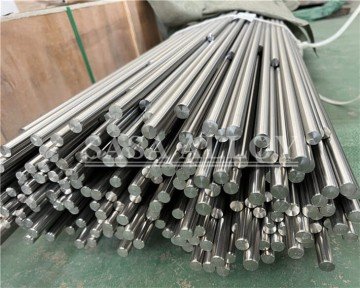
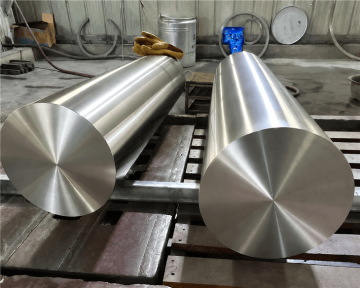
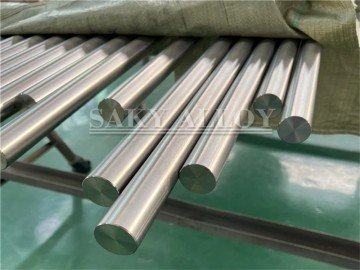
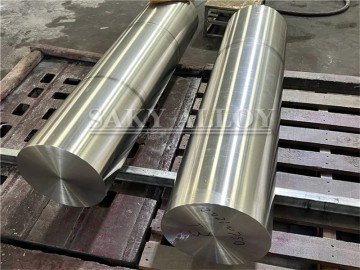
As a trusted global supplier, sakyalloy manufactures Ti-3Al-2.5V rods using advanced production technologies that ensure consistent performance for automotive applications.
Manufacturing Process:
-
Vacuum Melting and Refining
Titanium ingots are melted under vacuum to remove impurities, ensuring chemical purity and homogeneity. -
Hot Forging and Rolling
The alloy is forged and rolled into rods with a fine, uniform grain structure that enhances mechanical performance. -
Heat Treatment (Annealing)
Carefully controlled annealing restores ductility and optimizes fatigue strength, making the rods ideal for forming and welding. -
Precision Machining
Rods are machined to exact dimensions and tolerances, ready for extrusion, bending, or component fabrication. -
Non-Destructive Testing (NDT)
Each rod undergoes ultrasonic and eddy current testing to ensure structural integrity with zero internal defects. -
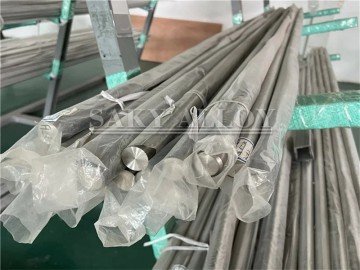
Surface Finishing and Packaging
Polishing, pickling, or sandblasting enhances appearance and prevents oxidation during storage and shipment.
sakyalloy delivers products that meet ASTM B348, AMS 4928, and ISO 9001 quality standards, ensuring every titanium rod performs flawlessly under extreme automotive conditions.
Case Studies and Industry Examples
1. Racing and Motorsport
Formula 1 and endurance racing teams use titanium exhausts and intake valves to gain milliseconds per lap by reducing engine weight and improving response.
2. Luxury Supercars
Brands such as Ferrari, McLaren, and Lamborghini employ titanium in their exhaust systems for both weight savings and signature exhaust acoustics.
3. Electric and Hybrid Vehicles
Lightweight titanium structures are being explored to reduce overall vehicle mass, improving energy efficiency and extending battery range.
These examples demonstrate how Ti-3Al-2.5V rods from sakyalloy are driving innovation in next-generation automotive design.
Comparison with Other Materials
| Property | Ti-3Al-2.5V | Stainless Steel | Inconel 625 | Aluminum |
|---|---|---|---|---|
| Density (g/cm³) | 4.48 | 7.90 | 8.44 | 2.70 |
| Tensile Strength (MPa) | 620 | 550 | 830 | 310 |
| Corrosion Resistance | Excellent | Good | Excellent | Fair |
| Max Operating Temp (°C) | 400 | 800 | 1000 | 150 |
| Fatigue Strength | High | Moderate | High | Low |
| Weight Reduction vs Steel | 40% | — | 45% | 65% |
| Cost Efficiency (Lifecycle) | High | Medium | Medium | Low |
Ti-3Al-2.5V offers the best balance between weight, durability, and corrosion resistance, making it ideal for exhaust and intake applications where both performance and longevity are priorities.
Future Outlook
As the automotive industry transitions toward electrification and sustainable design, titanium will play an even greater role in lightweight vehicle architecture. Advances in 3D printing and precision forging will further expand the use of Ti-3Al-2.5V in battery enclosures, suspension systems, and hybrid engine components.
With continued innovation and supply chain reliability from producers like sakyalloy, titanium is set to become a core material in the future of high-performance and energy-efficient vehicles.
The sakyalloy Advantage
sakyalloy combines metallurgical expertise, strict process control, and global logistics to serve the world’s most demanding industries — from aerospace to automotive.
Why Choose sakyalloy:
-
Decades of experience in titanium alloy production.
-
Certified to ISO 9001, ISO 14001, and AS9100.
-
In-house testing and quality control laboratories.
-
Customized diameters, tolerances, and surface finishes.
-
Fast global delivery for OEM and aftermarket projects.
Through innovation and quality assurance, sakyalloy continues to empower engineers and designers with titanium solutions that redefine automotive performance.
Conclusion
The integration of Ti-3Al-2.5V rods in automotive exhaust and intake systems marks a significant advancement in modern vehicle engineering. With its exceptional combination of lightweight strength, corrosion resistance, and high-temperature performance, Grade 9 titanium enables the creation of components that are not only efficient and durable but also elegant and eco-friendly.
By leveraging cutting-edge production and inspection technology, sakyalloy ensures that each titanium rod meets the stringent requirements of high-performance automotive manufacturers. From racing circuits to luxury highways, components made from sakyalloy Ti-3Al-2.5V continue to set the benchmark for reliability, innovation, and engineering excellence.