
Complete Titanium Product Guide: Bar, Plate, Pipe, Wire, Flange and Forging
Introduction
A titanium product is a semi-finished or finished material manufactured from commercially pure titanium or a titanium alloy and supplied as bar, plate, sheet, pipe, tube, wire, flange, fitting, forging or a drawing-based component. Titanium products are used in chemical processing, marine equipment, desalination, power generation, aerospace, medical equipment, heat exchangers and industrial machinery because titanium offers low density, a high strength-to-weight ratio and strong corrosion resistance in many oxidizing and chloride-containing environments.
To specify a titanium product correctly, buyers should provide the grade, UNS number, applicable product standard, dimensions, tolerance, delivery condition, surface finish, quantity, inspection requirements and certificate type. A request such as “Grade 2 titanium” is incomplete because Grade 2 plate, bar, heat-exchanger tube, seamless pipe, flange and forging are governed by different product standards and dimensional requirements.
Key Takeaways
- Titanium grade and product form must be specified together.
- ASTM B265, B348, B338, B381, B861, B862 and B363 cover different titanium products.
- Commercially pure grades and titanium alloys serve different corrosion, strength and fabrication requirements.
- MTC, heat-number traceability and supplementary inspection should be agreed before production.
- Flanges, forgings and custom parts require more information than the grade and finished dimensions alone.
Main Types of Titanium Products
| Product Form | Typical Supply Description | Common Applications | Main Specification Fields |
|---|---|---|---|
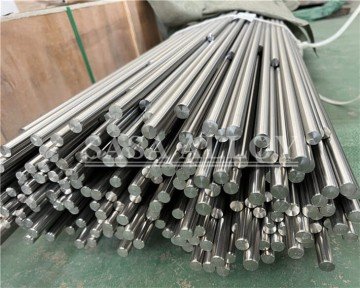
| Bar and rod | Round, square, rectangular, hexagonal or forged solid section | Shafts, fasteners, fittings, valve parts and CNC components | Grade, diameter, condition, length, tolerance and surface |
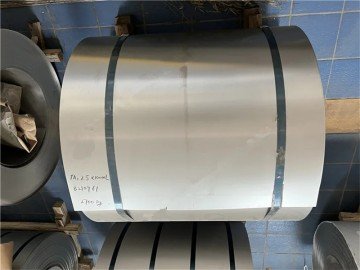
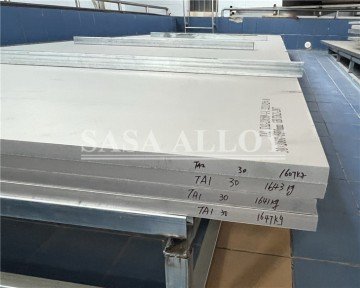
| Plate and sheet | Flat-rolled material supplied as full sheets, plates or cut blanks | Tanks, vessels, tube sheets, covers and machined components | Thickness, width, length, flatness, condition and surface |
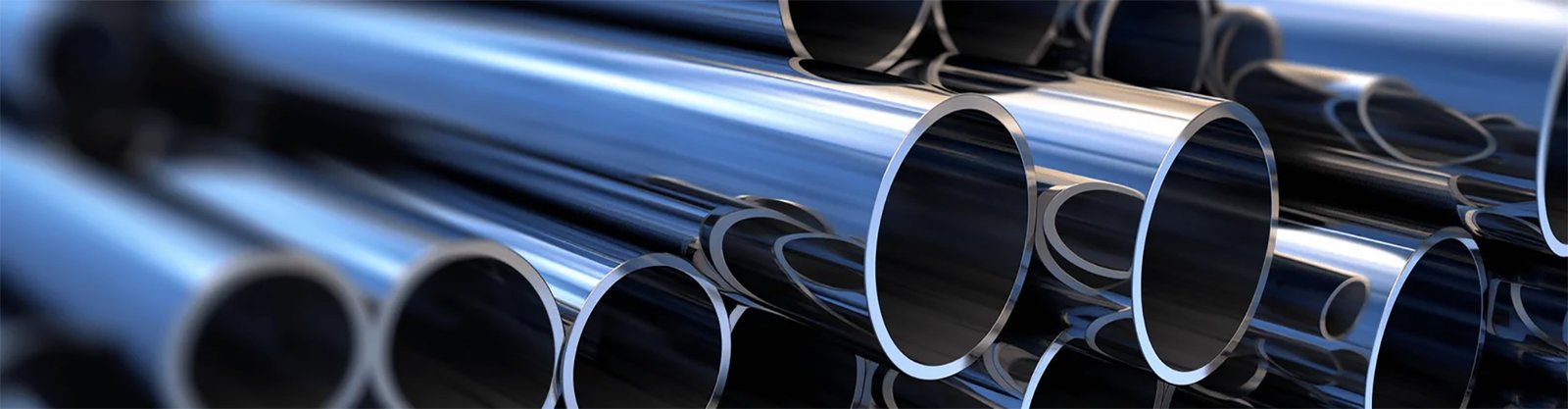
| Pipe and tube | Seamless or welded hollow product in straight lengths | Process piping, condensers, heat exchangers and fluid systems | OD, wall, length, manufacturing method, condition and testing |
| Wire | Drawn wire supplied in coils, spools or straightened lengths | Welding, fasteners, springs, mesh and medical or precision parts | Diameter, tolerance, condition, surface, coil or spool weight |
| Flange | Weld neck, slip-on, blind, socket weld, threaded or custom flange | Chemical piping, seawater systems and pressure equipment | Nominal size, pressure class, facing, bore, material and dimensions |
| Forging | Forged bar, block, ring, disc, hub or near-net blank | High-load parts, rings, pressure components and machining blanks | Drawing, forging ratio, condition, test location and allowance |
Titanium Bar and Rod
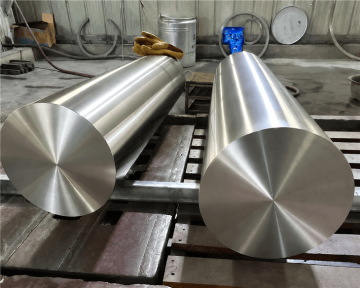
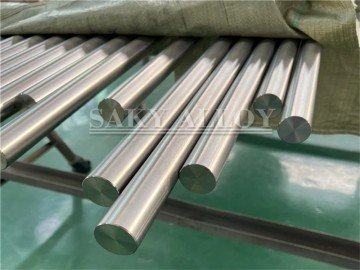
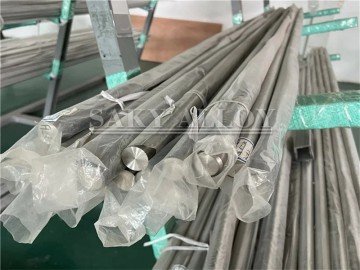
Titanium bar is commonly produced by forging, rolling, drawing, turning, peeling or grinding. Round bar is used for shafts, bolts, valve parts, pump components and machined fittings, while square, flat and hexagonal bars support specialized fabrication and fastening requirements.
Commercially pure Grade 2 bar is widely used for corrosion-resistant industrial components. Grade 5 Ti-6Al-4V bar is selected when higher strength-to-weight performance is required. Grade 9 Ti-3Al-2.5V offers an intermediate combination of strength and formability, while Grade 23 is an extra-low-interstitial Ti-6Al-4V grade used under applicable medical or aerospace specifications.
A titanium bar RFQ should state the finished diameter, length, tolerance, straightness, condition and surface. Requirements such as peeled, turned or ground should be supported by measurable dimensional and roughness limits. Ultrasonic testing should be specified when internal soundness is critical.
Titanium Plate and Sheet
Titanium plate and sheet are flat-rolled products used for welded vessels, heat-exchanger components, process equipment, marine structures, cladding, covers and machined blanks. Sheet is generally selected for forming and fabrication, while thicker plate is used for structural or machined applications.
Grade 1 provides high ductility and formability. Grade 2 is a widely used commercially pure grade for chemical and marine equipment. Grade 5 offers higher strength, while Grade 7 and Grade 11 contain palladium additions for selected aggressive corrosion environments. Grade 12 contains molybdenum and nickel additions and may be considered for particular chemical and elevated-temperature conditions.
Buyers should identify whether the required thickness and flatness are standard mill requirements or finished machining requirements. Waterjet cutting, plasma cutting, sawing and machining may affect the quoted input weight, tolerance and edge condition.
Titanium Pipe and Tube
Titanium pipe is typically used for process piping and fluid transfer, while titanium tube is frequently used in heat exchangers, condensers, evaporators and precision equipment. Buyers should not rely only on the words “pipe” or “tube”; the applicable standard and actual dimensional basis must be stated.
Seamless titanium pipe and tube are manufactured without a longitudinal weld. Welded products are formed from titanium plate or strip and joined along a seam. The correct manufacturing route depends on dimensions, pressure, corrosion conditions, inspection requirements and project specifications.
Grade 2 is commonly used for heat exchangers, chemical piping and seawater equipment. Grade 7 may be selected for more demanding corrosion conditions, while Grade 9 is used for lightweight tubing where higher strength and formability are required. The RFQ should define OD, wall thickness, length, ovality, straightness, end preparation and applicable leak, pressure or nondestructive examinations.
Titanium Wire
Titanium wire is produced by drawing titanium rod through progressively smaller dies. It may be supplied in an annealed, cold-worked, straightened or application-specific condition. Surface condition and dimensional consistency are especially important for welding wire, medical wire and fine-diameter products.
Commercially pure titanium wire can be used in mesh, fasteners and corrosion-resistant industrial assemblies. Grade 5 and Grade 23 wire may be used for high-strength or medical applications under the appropriate specification. Welding wire must match the base material, welding procedure and consumable standard rather than being selected by diameter alone.
A wire inquiry should state the grade, specification, diameter, tolerance, tensile or annealed condition, surface, coil or spool format and unit weight. Straightened wire should also include length and straightness requirements.
Titanium Flanges
Titanium flanges connect pipes, valves, vessels and equipment in corrosive piping systems. Common forms include weld-neck, slip-on, blind, socket-weld and threaded flanges. Material grade, pressure class and dimensional standard must all be identified.
A flange should not be purchased using only the words “Grade 2 titanium flange.” The RFQ should state the nominal size, pressure class, facing type, bore, flange form, applicable dimensional standard, material specification and required examination. Raised face, flat face, ring-type joint and custom sealing surfaces require different machining.
Flanges may be produced from forgings, rings, plate or machined blanks depending on the applicable specification and project approval. For pressure-critical applications, the required forging route, traceability and inspection should be stated before production.
Titanium Forgings
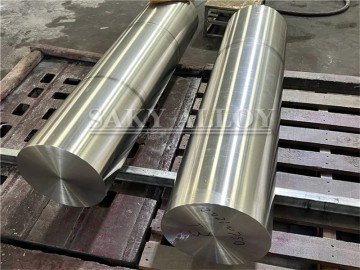
Titanium forgings are produced by controlled deformation of billet or forging stock. Forging can improve material flow and provide suitable blanks for rings, shafts, hubs, discs, blocks and high-load machined components.
The purchase specification should identify the titanium grade, finished drawing, forging geometry, machining allowance, heat treatment, test locations, nondestructive examination and required mechanical properties. A finished component drawing alone may not define the appropriate forging stock size or grain-flow direction.
Open-die forgings can be suitable for low-volume and large components, while closed-die forging may be economical for repeat production when tooling is justified. MOQ and lead time therefore depend on geometry, billet availability, tooling, testing and order quantity.
Common Titanium Grades
| Grade | UNS | General Characteristics | Common Product Uses |
|---|---|---|---|
| Grade 1 | R50250 | Commercially pure titanium with high ductility | Formed sheet, plate, linings and corrosion-resistant parts |
| Grade 2 | R50400 | General commercially pure titanium with balanced strength and formability | Plate, bar, pipe, tube, flange and process equipment |
| Grade 5 | R56400 | Ti-6Al-4V with high strength-to-weight performance | Bars, forgings, machined components and aerospace structures |
| Grade 7 | R52400 | Grade 2-type titanium with palladium addition | Chemical equipment, piping and selected aggressive media |
| Grade 9 | R56320 | Ti-3Al-2.5V with useful strength and formability | Tubing, lightweight structures and formed components |
| Grade 12 | R53400 | Titanium alloyed with nominal molybdenum and nickel additions | Selected chemical, piping and heat-transfer applications |
| Grade 23 | R56407 | Ti-6Al-4V ELI with tighter interstitial-element control | Medical and aerospace products under applicable specifications |
Titanium Product Standards
| Standard | General Product Scope | Buyer Check |
|---|---|---|
| ASTM B265 | Titanium and titanium-alloy strip, sheet and plate | Grade, thickness, dimensions, condition and surface |
| ASTM B348/B348M | Titanium and titanium-alloy bars and billets | Grade, size, condition, chemistry and mechanical properties |
| ASTM B338 | Seamless and welded tubes for condensers and heat exchangers | Construction, OD, wall, condition and tube testing |
| ASTM B861 | Titanium and titanium-alloy seamless pipe | Dimensions, grade, condition and examinations |
| ASTM B862 | Titanium and titanium-alloy welded pipe | Welding route, dimensions, heat treatment and testing |
| ASTM B863 | Titanium and titanium-alloy wire | Grade, diameter, condition and supply format |
| ASTM B381 | Titanium and titanium-alloy forgings | Grade, heat treatment, dimensions and test locations |
| ASTM B363 | Seamless and welded titanium-alloy welding fittings | Fitting type, grade, construction, dimensions and inspection |
Flange dimensions may be specified by ASME B16.5, ASME B16.47 or another project standard where applicable, while the titanium starting material must also meet the required material specification. The current standard edition and complete project requirements should be confirmed before purchase.
Certificates and Inspection
A titanium Mill Test Certificate should identify the grade, UNS number, product standard, heat or lot number, dimensions, condition, chemical composition and applicable mechanical properties. The certificate should correspond to the product and package markings.
For titanium, actual oxygen, nitrogen, hydrogen, carbon and iron results can be important because interstitial elements affect strength and ductility. PMI may support verification of major alloying elements, but it does not replace complete laboratory chemistry or reliably verify every controlled interstitial element.
EN 10204 3.1 documentation, dimensional reports, ultrasonic testing, penetrant testing, eddy-current examination, hydrostatic testing and third-party inspection should be stated before material allocation. The applicable inspection depends on whether the product is solid bar, plate, tube, pipe, forging or a finished component.
Certificate reminder: An MTC verifies the tested heat or lot under the stated material standard. It does not automatically certify finished machining dimensions, flange facing, profile geometry or customer-specific component tolerances. These inspections must be requested separately.
Applications by Product Form
| Industry | Common Titanium Products | Selection Priorities |
|---|---|---|
| Chemical processing | Plate, pipe, tube, flange, fitting and bar | Process chemistry, temperature, crevices and welding |
| Marine and desalination | Tube, pipe, plate, flange and fasteners | Seawater exposure, pressure, biofouling and galvanic contact |
| Heat exchangers | Thin-wall tube, tube sheet, plate and fittings | Wall tolerance, heat transfer, leak testing and cleanliness |
| Aerospace | Bar, plate, wire, forging and machined parts | Approved specifications, melting route, UT and traceability |
| Medical equipment | Bar, wire, plate and machined components | Application-specific standard, chemistry, cleanliness and traceability |
How to Specify a Titanium Product
- Titanium grade and UNS number
- Bar, plate, pipe, tube, wire, flange, fitting or forging
- Applicable ASTM, ASME, AMS or project specification
- Required standard edition
- Finished dimensions, tolerance and length
- Annealed, stress-relieved, solution-treated or aged condition
- Surface finish, roughness and machining allowance
- Quantity by piece, meter or total weight
- MTC or EN 10204 3.1 certificate
- UT, PT, PMI, eddy-current or pressure-testing requirements
- Heat-number marking and traceability
- Export packing, destination, Incoterm and requested schedule
Related Titanium Products
The following SAKY ALLOY pages provide additional information for titanium product selection and RFQ preparation:
- Titanium Product Range for bars, plates, pipes, tubes, wire, flanges, fittings and forgings.
- Titanium Bar for commercially pure and alloyed titanium bar requirements.
- Titanium Plate and Sheet for ASTM B265 flat-product inquiries.
- Titanium Pipe and Tube for seamless, welded and heat-exchanger products.
- Titanium Flange for industrial piping and pressure-system connections.
- Titanium Forgings for forged bars, rings, blocks and machining blanks.
Frequently Asked Questions
What is a titanium product?
A titanium product is a material made from commercially pure titanium or a titanium alloy and supplied as bar, plate, sheet, pipe, tube, wire, flange, fitting, forging or a custom component.
Which titanium grade is most widely used for industrial equipment?
Grade 2 is widely used for chemical, marine and heat-transfer equipment because it combines corrosion resistance, formability and moderate strength. The final grade should be selected according to the actual medium, temperature, pressure and fabrication requirements.
What is the difference between titanium pipe and tube?
Titanium pipe is commonly used for process piping and fluid transfer, while tube is often used for heat exchangers and precision equipment. The applicable product standard, OD, wall thickness and manufacturing route should always be stated.
Which standard applies to titanium bar?
ASTM B348/B348M is a common specification for titanium and titanium-alloy bars and billets. Aerospace, medical or customer-controlled applications may require additional standards.
Can titanium flanges be machined from plate?
Some noncritical or project-approved flanges may be machined from plate, while pressure-critical applications may require forged material. The dimensional code, material specification and project approval should determine the manufacturing route.
What should be checked on a titanium MTC?
Check the grade, UNS number, product standard, heat number, dimensions, condition, actual chemical composition and mechanical properties. The heat number should match the product or package marking.
Request a Titanium Product Review
A complete titanium RFQ helps determine the correct grade, product form, standard, production route, inspection and export packing. Send SAKY ALLOY the grade, UNS number, dimensions, application, quantity, certificate requirements and destination. Include drawings for flanges, forgings and custom-machined components.