
Corrosion Resistance and Oxidation Behavior of Grade 9 Titanium Rod
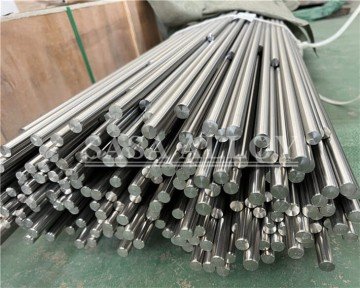
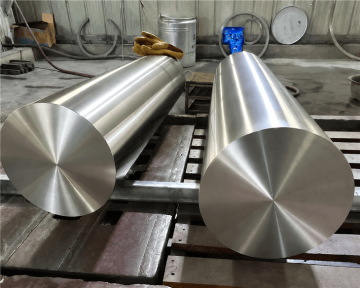
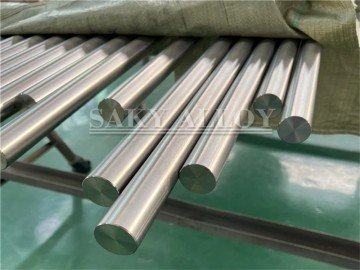
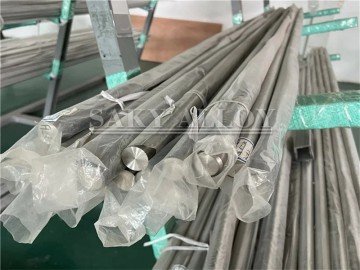
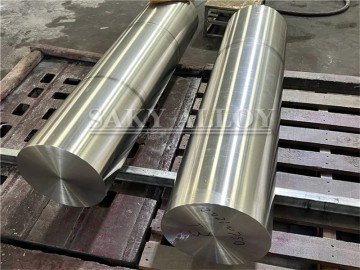
In industries where reliability and material endurance define long-term success, Grade 9 Titanium Rod (Ti-3Al-2.5V) has become a trusted choice. This alloy is well-known for its remarkable balance of strength, lightweight performance, and superior resistance to corrosion and oxidation. Its ability to perform under aggressive chemical and thermal conditions makes it indispensable in aerospace, marine, chemical, and industrial applications. In this article, sakyalloy examines the corrosion resistance and oxidation behavior of Grade 9 Titanium Rod, explaining why it remains one of the most durable and dependable titanium alloys in service today.
1. Overview of Grade 9 Titanium (Ti-3Al-2.5V)
Grade 9 Titanium, also known by its composition Ti-3Al-2.5V, is an alpha-beta titanium alloy that contains 3% aluminum and 2.5% vanadium. The aluminum acts as an alpha stabilizer to increase strength, while vanadium serves as a beta stabilizer to enhance ductility and formability.
The alloy combines high strength with low density, maintaining excellent corrosion resistance in chloride-rich, acidic, and marine environments. These properties make sakyalloy Grade 9 Titanium Rod an ideal material for aircraft hydraulic tubing, heat exchangers, marine hardware, and industrial chemical systems.
2. Chemical Composition and Its Role in Corrosion Resistance
| Element | Percentage (%) | Role in Corrosion/Oxidation Resistance |
|---|---|---|
| Titanium (Ti) | Balance | Forms a passive oxide film that resists corrosion. |
| Aluminum (Al) | 2.5 – 3.5 | Strengthens the alloy and improves oxidation resistance. |
| Vanadium (V) | 2.0 – 3.0 | Enhances ductility and stabilizes the beta phase. |
| Iron (Fe) | ≤ 0.25 | Improves mechanical strength. |
| Oxygen (O) | ≤ 0.20 | Strengthens the oxide film but controlled to maintain ductility. |
| Carbon (C) | ≤ 0.08 | Adds hardness but kept low to avoid embrittlement. |
| Hydrogen (H) | ≤ 0.015 | Minimized to prevent hydrogen-induced cracking. |
The combination of titanium, aluminum, and vanadium results in a stable, self-healing oxide layer that provides exceptional protection against corrosion and oxidation in both wet and high-temperature environments.
3. The Protective Oxide Film: The Secret Behind Titanium’s Durability
One of the most unique properties of titanium alloys, including Grade 9, is the formation of a passive oxide film (TiO₂) on the surface when exposed to oxygen or moisture.
This film:
-
Is chemically stable, preventing further oxidation.
-
Re-forms automatically if scratched or damaged.
-
Protects against acids, chlorides, and saline environments.
The oxide layer on Grade 9 Titanium is typically 2–10 nanometers thick under normal conditions but can grow thicker at elevated temperatures. Its continuous regeneration ensures that the material remains corrosion-free for decades, even in the harshest service environments.
4. Corrosion Resistance in Different Environments
a. Marine and Seawater Environments
Grade 9 Titanium offers outstanding seawater resistance, making it a top choice for offshore platforms, propeller shafts, and desalination plants. The TiO₂ layer prevents attack by chlorides and other halides that commonly corrode steel and aluminum alloys.
Even in stagnant or turbulent seawater, Grade 9 resists pitting and crevice corrosion — two common problems for conventional metals.
b. Chemical and Industrial Environments
In chemical plants and refineries, Grade 9 resists corrosion from:
-
Oxidizing acids such as nitric acid.
-
Mild reducing acids like acetic or formic acid.
-
Alkaline solutions and chlorinated solvents.
The alloy performs well even in acidic chloride environments, outperforming stainless steels and nickel alloys in terms of corrosion resistance-to-weight ratio.
c. Atmospheric and Moisture Conditions
When exposed to humid or atmospheric conditions, Grade 9’s passive oxide layer prevents rusting and surface degradation. It remains bright, stable, and maintenance-free, making it suitable for architectural and exposed industrial applications.
5. Resistance to Specific Corrosion Types
| Corrosion Type | Performance of Grade 9 Titanium |
|---|---|
| Uniform Corrosion | Excellent – uniform surface protection through TiO₂ layer. |
| Pitting Corrosion | Highly resistant even in chloride-rich environments. |
| Crevice Corrosion | Exceptional – oxide layer remains stable even in tight gaps. |
| Galvanic Corrosion | Resistant when coupled with less noble metals due to passivity. |
| Stress Corrosion Cracking (SCC) | Not susceptible under typical operating stresses. |
| Intergranular Corrosion | Negligible due to homogeneous microstructure. |
6. Oxidation Behavior at Elevated Temperatures
When titanium alloys are exposed to high temperatures, the oxidation rate increases due to oxygen diffusion into the metal surface. However, Grade 9’s controlled aluminum and vanadium levels significantly enhance high-temperature oxidation resistance.
a. Temperature Range and Oxidation Stability
| Temperature (°C) | Oxidation Behavior |
|---|---|
| Up to 300°C | Stable TiO₂ layer, negligible oxidation. |
| 400–500°C | Slow oxide thickening, no flaking. |
| 600–700°C | Moderate oxidation, still protective. |
| Above 800°C | Accelerated oxidation; protective film may degrade. |
Grade 9 can safely operate continuously up to 400°C and handle short-term exposure up to 480°C without significant degradation.
b. Role of Aluminum and Vanadium in Oxidation Control
-
Aluminum increases oxidation resistance by forming an alumina (Al₂O₃) layer that strengthens the TiO₂ film.
-
Vanadium improves the alloy’s microstructural stability, preventing oxidation-induced cracking.
Together, these elements enhance Grade 9’s resistance to scale formation and protect against thermal corrosion, making it suitable for aerospace exhaust systems, heat exchangers, and engine components.
7. Microstructural Stability During Oxidation
Grade 9’s alpha-beta microstructure provides high thermal stability. During oxidation, the alloy maintains:
-
Uniform grain structure to prevent localized attack.
-
Low oxygen diffusion due to aluminum’s presence.
-
Minimal embrittlement, even after long-term high-temperature exposure.
This structural integrity ensures that sakyalloy Grade 9 Titanium Rod retains both its mechanical strength and corrosion resistance after years of service.
8. Testing and Evaluation of Corrosion and Oxidation Resistance
To ensure performance reliability, Grade 9 Titanium Rods undergo various tests:
-
Salt spray testing (ASTM B117) to simulate marine corrosion.
-
Oxidation testing at 400–600°C to measure scale formation rates.
-
Electrochemical polarization tests to assess pitting potential.
-
Microscopic analysis of oxide film thickness and adherence.
These evaluations confirm that the Ti-3Al-2.5V alloy maintains its protective film even under cyclic temperature and chemical exposure.
9. Industrial Applications Relying on Corrosion and Oxidation Resistance
Because of its ability to resist both corrosion and oxidation, Grade 9 Titanium Rod is widely used in:
Aerospace Industry
-
Hydraulic and pneumatic tubing
-
Exhaust and cooling systems
-
Structural fasteners and brackets
Marine and Offshore
-
Heat exchangers, condensers, and piping
-
Offshore drilling equipment
-
Ship propulsion systems
Chemical Processing
-
Acidic solution handling equipment
-
Reactors, heat exchangers, and evaporators
-
Brine and seawater desalination systems
Power Generation and Energy
-
Gas turbine components
-
Heat recovery systems
-
Condenser tubing
The combination of resistance to oxidation, pitting, and galvanic attack makes Grade 9 the preferred choice for mission-critical operations.
10. Comparison with Other Titanium Grades
| Property | Grade 2 (CP Ti) | Grade 9 (Ti-3Al-2.5V) | Grade 5 (Ti-6Al-4V) |
|---|---|---|---|
| Tensile Strength (MPa) | 345 | 620–700 | 895 |
| Corrosion Resistance | Excellent | Excellent | Excellent |
| Oxidation Resistance | Good | Very Good | Very Good |
| Weldability | Excellent | Excellent | Moderate |
| High-Temperature Use | 300°C | 400°C | 480°C |
| Formability | Excellent | Very Good | Limited |
Grade 9 offers a perfect middle ground — it’s stronger than Grade 2 while easier to form and weld than Grade 5, without compromising corrosion or oxidation protection.
11. Maintenance and Service Life Advantages
The passive TiO₂ film provides self-sustaining protection, minimizing the need for coatings, corrosion inhibitors, or frequent maintenance. This leads to:
-
Extended service life in harsh environments.
-
Reduced downtime and operating costs.
-
Sustainable performance with minimal environmental impact.
This long-term durability is one of the key reasons industries rely on sakyalloy Grade 9 Titanium Rod for high-value applications.
12. Standards and Quality Assurance
All Grade 9 Titanium products from sakyalloy comply with international specifications, including:
-
ASTM B348 – Titanium and Titanium Alloy Bars and Rods
-
AMS 4943 / AMS 4944 – Aerospace-grade tubing standards
-
ISO 5832-11 – Medical and industrial titanium alloy standards
Each rod undergoes:
-
Chemical analysis to verify composition accuracy.
-
Ultrasonic and visual testing for internal and surface defects.
-
Corrosion and oxidation simulation tests to guarantee long-term stability.
Through strict quality control, sakyalloy ensures that every Grade 9 Titanium Rod meets the highest global standards for durability and reliability.
13. Conclusion
The corrosion resistance and oxidation behavior of Grade 9 Titanium Rod make it one of the most dependable and high-performance materials available for industrial use. Its Ti-3Al-2.5V composition forms a stable, self-healing oxide film that resists both chemical and thermal degradation, ensuring longevity in harsh environments.
Whether exposed to seawater, acids, or high-temperature oxidation, sakyalloy Grade 9 Titanium Rod maintains its integrity, strength, and luster over years of operation.
By combining innovation, precision manufacturing, and strict quality standards, sakyalloy continues to supply Grade 9 titanium solutions that deliver unmatched corrosion protection, oxidation resistance, and mechanical performance — making it the preferred choice for industries that demand excellence without compromise.