



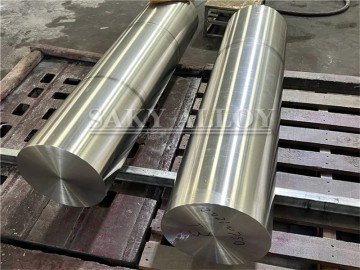
Differences Between ASTM F67 And ASTM B265 Titanium Plate
Titanium has become one of the most important engineering materials across industries such as aerospace, marine, chemical processing, and medical devices. Its high strength-to-weight ratio, excellent corrosion resistance, and biocompatibility make it an indispensable choice. However, titanium products are standardized under different specifications depending on their application. Two common standards for titanium plate are ASTM F67 and ASTM B265.
While both refer to titanium plates, they serve different purposes and industries. This article explores the differences between ASTM F67 and ASTM B265 titanium plate, analyzing their composition, mechanical properties, applications, and industry relevance.
Overview of ASTM Standards
-
ASTM International develops global standards for materials, products, systems, and services.
-
Standards such as ASTM B265 and ASTM F67 provide uniform requirements that ensure consistency, safety, and quality.
The key difference lies in the intended application:
-
ASTM B265 covers industrial and commercial titanium plates, sheets, and strips.
-
ASTM F67 covers titanium plates and sheets specifically for surgical implant applications.
ASTM B265 Titanium Plate
Scope
ASTM B265 is the specification for titanium and titanium alloy strip, sheet, and plate used in industrial applications.
Grades
Covers commercially pure titanium grades and some alloys, including:
-
Grade 1: Excellent corrosion resistance, highest ductility.
-
Grade 2: Most widely used, good balance of strength and corrosion resistance.
-
Grade 3: Higher strength, slightly lower ductility.
-
Grade 4: Highest strength among CP titanium grades.
-
Titanium alloys such as Grade 5 (Ti-6Al-4V) are sometimes referenced in relation to B265 plate.
Applications
-
Heat exchangers
-
Chemical processing equipment
-
Marine components
-
Aerospace structural parts
-
Industrial piping systems
ASTM F67 Titanium Plate
Scope
ASTM F67 is the specification for unalloyed titanium plates, sheets, and strips for surgical implant applications.
Grades
Covers CP (commercially pure) titanium, typically:
-
Grade 1: Highest ductility, lower strength.
-
Grade 2: Balanced properties, widely used in implants.
-
Grade 3: Higher strength with moderate ductility.
-
Grade 4: Maximum strength, suitable for load-bearing implants.
Applications
-
Orthopedic implants (bone plates, screws, and rods)
-
Dental implants
-
Cardiovascular devices
-
Surgical instruments requiring biocompatibility
Key Differences Between ASTM F67 and ASTM B265
| Feature | ASTM B265 Titanium Plate | ASTM F67 Titanium Plate |
|---|---|---|
| Intended Use | Industrial and commercial applications | Surgical and medical implants |
| Material Type | CP titanium and alloys | CP titanium only |
| Grades Covered | Grades 1–4 (and alloys) | Grades 1–4 only (CP) |
| Biocompatibility | Not specifically required | Mandatory for implants |
| Testing Requirements | Mechanical, chemical, and dimensional | Additional biocompatibility and microstructure checks |
| Typical Industries | Aerospace, marine, chemical, industrial | Medical, dental, surgical |
Mechanical Property Requirements
-
ASTM B265: Focuses on corrosion resistance, weldability, and mechanical strength suitable for industrial use.
-
ASTM F67: Ensures titanium is free of harmful inclusions, has fine grain structure, and meets strict tensile and yield strength requirements suitable for implants.
Biocompatibility and Microstructure
-
ASTM F67: Titanium must be biocompatible and free from delta ferrite or inclusions that could cause rejection in the human body.
-
ASTM B265: Biocompatibility is not a requirement, as the material is not intended for surgical applications.
Standards Compliance and Testing
-
ASTM B265 Testing:
-
Tensile strength
-
Yield strength
-
Elongation
-
Hardness
-
Chemical composition verification
-
-
ASTM F67 Testing:
-
All of the above, plus additional focus on microstructure and absence of harmful phases
-
Strict standards for oxygen and iron content (to control ductility and strength balance)
-
Cost Considerations
-
ASTM B265 Titanium Plate: Generally less expensive because it serves industrial markets without special biocompatibility requirements.
-
ASTM F67 Titanium Plate: More costly due to stringent quality control, testing, and certification for medical-grade use.
Choosing the Right Standard
-
Select ASTM B265 when:
-
The project involves aerospace, marine, chemical, or structural applications.
-
Corrosion resistance and strength are the primary requirements.
-
-
Select ASTM F67 when:
-
The titanium will be used for surgical implants.
-
Biocompatibility and human safety are mandatory.
-
Industry Implications
-
Aerospace and petrochemical companies rely heavily on ASTM B265 titanium plates for durability and performance.
-
Medical device manufacturers depend on ASTM F67 titanium plates to ensure safety and compliance with health regulations.
-
Procurement teams must verify the correct standard to avoid compliance issues and potential risks.
Future Outlook
With growing demand for titanium in both industrial and medical fields, these standards will remain essential. Advances in processing and refining will likely tighten tolerances further, ensuring higher performance in both categories.
Suppliers like sakyalloy provide both ASTM B265 and ASTM F67 titanium plates, meeting the diverse needs of industrial and medical sectors. By sourcing from sakyalloy, customers benefit from quality assurance, certification compliance, and reliable global supply.
Frequently Asked Questions
1. Can ASTM B265 titanium be used in medical implants?
No. ASTM F67 is specifically required for surgical applications due to its biocompatibility standards.
2. Is ASTM F67 more expensive than ASTM B265?
Yes, because of the additional testing and certification required for medical use.
3. Do both standards cover the same grades of titanium?
Yes, both cover Grades 1–4, but ASTM B265 also includes titanium alloys.
4. Which standard is best for aerospace?
ASTM B265 is the standard for aerospace titanium plate applications.
Conclusion
Understanding the differences between ASTM F67 and ASTM B265 titanium plate is crucial for selecting the right material. ASTM B265 is designed for industrial and commercial use, providing corrosion resistance and strength for aerospace, marine, and chemical industries. ASTM F67, on the other hand, is specifically for surgical implants, ensuring biocompatibility and safety in medical applications.
Choosing the correct standard ensures compliance, safety, and performance in the intended application. With expert suppliers such as sakyalloy, industries and medical device manufacturers can rely on certified titanium plates tailored to their needs, ensuring long-term success and reliability.