
Durability and Fatigue Resistance of Titanium Grade 11 Bars in Harsh Conditions
Introduction
In chemical processing, marine engineering, desalination, chlor-alkali production, heat exchanger systems, and offshore equipment, material failure can lead to costly downtime, safety risks, and unexpected replacement costs. For these demanding environments, Titanium Grade 11 bars are widely valued for their excellent durability, fatigue resistance, corrosion resistance, and long service life.
Titanium Grade 11 is a palladium-stabilized commercially pure titanium grade. It is similar to Titanium Grade 1 in strength level but offers significantly improved corrosion resistance in reducing acid, chloride-containing, and harsh chemical environments. This makes Titanium Grade 11 bar an excellent choice for components exposed to repeated stress, vibration, seawater, acidic media, and temperature changes.
For engineering buyers, durability and fatigue resistance are not only material properties on paper. They directly affect service life, maintenance intervals, equipment reliability, and total project cost. When supplied with proper heat number control, EN 10204 3.1 MTC, PMI testing, dimensional inspection, and third-party inspection, Titanium Grade 11 bars provide strong confidence for critical industrial applications.
What Is Titanium Grade 11 Bar?
Titanium Grade 11 bar is a commercially pure titanium bar with a small addition of palladium. It is designed for applications requiring excellent corrosion resistance, especially in environments where standard commercially pure titanium may not provide sufficient performance. The palladium addition improves resistance to crevice corrosion and reducing acid attack.
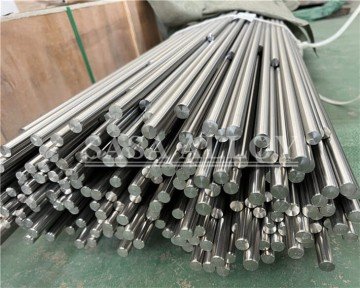
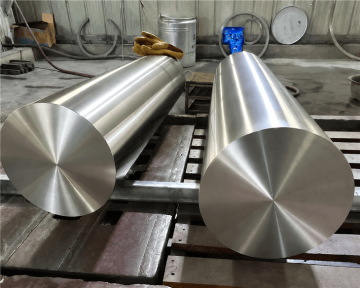
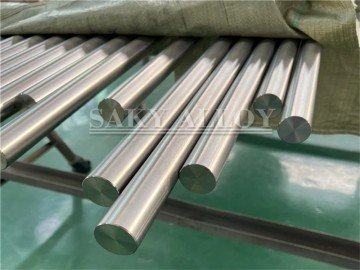
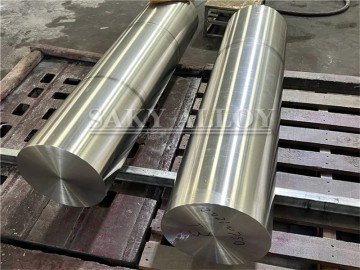
Titanium Grade 11 is commonly identified as UNS R52250. It is often supplied as round bar, flat bar, forged bar, machined bar, or custom-cut titanium stock. Depending on the project requirements, Titanium Grade 11 bars may be used for fasteners, shafts, valve components, pump parts, flanges, fittings, heat exchanger parts, anode components, and precision-machined corrosion-resistant components.
Key Features of Titanium Grade 11 Bars
- Excellent corrosion resistance in chloride and acidic environments
- Improved resistance to crevice corrosion compared with unalloyed titanium grades
- Good fatigue resistance under cyclic loading and vibration
- Low density with good strength-to-weight ratio
- Good formability and machinability for precision components
- Suitable for harsh chemical, marine, and industrial service conditions
Chemical Composition
The durability of Titanium Grade 11 bars starts from their controlled chemical composition. Titanium provides the main matrix and natural passive oxide film, while palladium improves corrosion resistance in more aggressive reducing environments. Low levels of oxygen, nitrogen, carbon, hydrogen, and iron help maintain ductility, toughness, and stable mechanical performance.
| Element | Typical Requirement | Function in Titanium Grade 11 |
|---|---|---|
| Titanium (Ti) | Balance | Main base metal, forming a stable passive oxide layer for corrosion resistance. |
| Palladium (Pd) | 0.12% – 0.25% | Improves resistance to reducing acids, crevice corrosion, and harsh chemical media. |
| Iron (Fe) | ≤ 0.20% | Controlled impurity affecting strength, ductility, and processing stability. |
| Oxygen (O) | ≤ 0.18% | Influences strength and ductility; controlled level helps maintain formability. |
| Carbon (C) | ≤ 0.08% | Controlled to maintain clean microstructure and reliable performance. |
| Nitrogen (N) | ≤ 0.03% | Controlled interstitial element to avoid excessive hardening and brittleness. |
| Hydrogen (H) | ≤ 0.015% | Strictly controlled to reduce risk of hydrogen embrittlement. |
Mechanical Properties
Titanium Grade 11 bars provide a combination of ductility, toughness, corrosion resistance, and stable mechanical behavior. Although Grade 11 is not selected for the highest strength among titanium alloys, it is valued for reliable performance in corrosive environments where fatigue resistance and durability are more important than maximum tensile strength.
In harsh conditions, fatigue resistance depends on material cleanliness, surface quality, bar straightness, machining quality, stress concentration control, and service environment. A polished or properly machined Titanium Grade 11 bar can perform better in cyclic loading environments than a poorly finished material with surface scratches or inclusions.
| Property | Typical Value / Requirement | Engineering Significance |
|---|---|---|
| Tensile Strength | Typically around 240 MPa minimum, depending on standard and condition | Provides sufficient strength for corrosion-resistant structural and machined parts. |
| Yield Strength | Typically around 170 MPa minimum, depending on standard and condition | Important for dimensional stability under working load. |
| Elongation | Good ductility, commonly around 24% minimum for many bar specifications | Supports forming, machining, and resistance to brittle failure. |
| Density | About 4.51 g/cm³ | Lower weight than steel and nickel alloys, useful for weight-sensitive equipment. |
| Fatigue Behavior | Strong performance when surface condition and stress design are controlled | Suitable for cyclic loading, vibration, and long-term harsh service conditions. |
Durability and Fatigue Resistance in Harsh Conditions
The durability of Titanium Grade 11 bars comes from a combination of corrosion resistance, stable passive film formation, low density, ductility, and resistance to localized attack. In many harsh service conditions, fatigue failure is accelerated by corrosion, surface defects, vibration, and stress concentration. Titanium Grade 11 helps reduce these risks by resisting corrosion-driven crack initiation.
Corrosion-Fatigue Performance
Corrosion fatigue occurs when cyclic stress and corrosive media act together. In seawater, acidic solutions, chloride environments, and chemical processing systems, ordinary metals may suffer from pitting or crevice corrosion that becomes the starting point for fatigue cracks. Titanium Grade 11 bars provide excellent resistance to these localized corrosion mechanisms, helping improve fatigue life under harsh operating conditions.
Surface Quality and Fatigue Life
For titanium bars used in rotating parts, fasteners, shafts, pump components, or precision-machined parts, surface quality is critical. Scratches, sharp corners, tool marks, and surface contamination can reduce fatigue resistance. Therefore, Titanium Grade 11 bars should be supplied with controlled surface finish, proper dimensional tolerance, and clean packaging to protect the material before machining or installation.
Temperature and Environmental Stability
Titanium Grade 11 can perform well in many moderately elevated temperature environments, especially where corrosion resistance is more important than high-temperature strength. For severe high-temperature structural service, other titanium alloys or nickel alloys may be considered. However, for many chemical and marine applications, Grade 11 provides an excellent balance of durability, corrosion resistance, and process stability.
Applicable Standards
Titanium Grade 11 bars should be ordered according to recognized international standards to ensure proper chemical composition, mechanical properties, dimensions, and certification documents. For export projects, buyers often require ASTM, ASME, AMS, EN, DIN, JIS, or GB standard references depending on the application and destination market.
| Item | Details | Buyer Reference |
|---|---|---|
| Grade | Titanium Grade 11 | Palladium-stabilized commercially pure titanium |
| UNS Number | UNS R52250 | Useful for international material identification |
| Bar Standard | ASTM B348 / ASME SB348 | Common standard for titanium and titanium alloy bars and billets |
| Medical / Special Use Reference | Project-specific requirements if applicable | Confirm customer application before final grade selection |
| Certificate | EN 10204 3.1 MTC | Confirms chemical composition, mechanical properties, heat number and inspection data |
| Equivalent / Similar Grade | Titanium Grade 1 + Pd concept, but not directly interchangeable without approval | Engineering confirmation required before substitution |
Quality Testing and Material Traceability
For critical applications in chemical processing, marine engineering, and high-value industrial equipment, Titanium Grade 11 bars must be supplied with reliable quality control. The risk of wrong grade, poor surface quality, uncontrolled chemistry, or missing traceability can affect safety and long-term service performance.
Recommended Inspection Items
| Inspection Item | Purpose | Procurement Value |
|---|---|---|
| Heat Number Control | Links each bar to the original production batch | Ensures traceability from raw material to final delivery |
| Chemical Composition Analysis | Confirms Ti, Pd, Fe, O, C, N and H levels | Prevents wrong grade or nonconforming material |
| Mechanical Testing | Checks tensile strength, yield strength and elongation | Confirms performance according to standard requirements |
| PMI Testing | Verifies grade identity before shipment | Supports anti-fake material control and customer confidence |
| UT Testing | Checks internal soundness when required | Useful for critical bars, machining stock and high-reliability components |
| Dimensional Inspection | Checks diameter, length, straightness and tolerance | Reduces machining waste and fit-up problems |
| Third-party Inspection | Independent verification by SGS, BV, TUV or customer-appointed agency | Important for project orders and international procurement |
A complete Titanium Grade 11 bar supply package may include EN 10204 3.1 MTC, PMI report, mechanical test report, dimensional report, UT report if required, surface inspection photos, packing list, and export packaging records. These documents help buyers verify quality before shipment and support project documentation after delivery.
Comparison With Similar Materials
Titanium Grade 11 bars are often compared with Titanium Grade 1, Grade 2, Grade 7, Grade 12, and Grade 5. The best choice depends on corrosion environment, required strength, fatigue loading, temperature, machining requirements, and project budget.
| Material | Main Advantage | Limitation | Typical Selection Reason |
|---|---|---|---|
| Titanium Grade 11 | Excellent corrosion resistance with palladium addition and good durability | Higher cost than standard commercially pure titanium grades | Selected for harsh chemical, chloride, and corrosion-fatigue conditions |
| Titanium Grade 1 | Excellent ductility and formability | Lower corrosion resistance in some reducing acid conditions compared with Grade 11 | Used for general corrosion-resistant forming applications |
| Titanium Grade 2 | Good balance of strength, availability, and corrosion resistance | May not perform as well as Grade 11 in aggressive reducing environments | Common choice for general industrial titanium bars and plates |
| Titanium Grade 7 | Palladium-stabilized titanium with higher strength than Grade 11 conceptually linked to Grade 2 base | May be more than required when lower strength and high ductility are preferred | Used in severe corrosion conditions requiring stronger commercially pure titanium |
| Titanium Grade 12 | Improved strength and crevice corrosion resistance with Ni and Mo additions | Different alloy concept, not a direct substitute without engineering approval | Used for heat exchangers and industrial corrosion-resistant equipment |
| Titanium Grade 5 | High strength and excellent strength-to-weight ratio | Not always the best choice for severe chemical corrosion compared with Pd-stabilized titanium grades | Aerospace, high-strength fasteners, medical and mechanical components |
Industrial Applications
Titanium Grade 11 bars are used where corrosion resistance, fatigue durability, and long service life are more important than low initial material cost. Their performance is especially valuable in systems exposed to chloride ions, acidic media, seawater, and repeated mechanical stress.
| Industry | Typical Components | Why Titanium Grade 11 Is Used |
|---|---|---|
| Chemical Processing | Valve parts, shafts, fasteners, pump components and reactor fittings | Excellent resistance to reducing acids, chloride media and localized corrosion |
| Marine Engineering | Marine hardware, seawater system parts, shaft components and fasteners | Strong resistance to seawater corrosion and corrosion fatigue |
| Desalination | Heat exchanger components, brine system parts and corrosion-resistant fittings | Performs well in high-chloride and high-salinity conditions |
| Chlor-Alkali Industry | Anode components, fixtures, bars and custom-machined titanium parts | Reliable corrosion resistance in aggressive electrochemical environments |
| Petrochemical Industry | Corrosion-resistant bars, machined parts, flanges and fittings | Supports long service life in harsh chemical and chloride-containing environments |
| Power and Environmental Equipment | Scrubber components, water treatment parts and heat exchanger accessories | Reduces maintenance in wet, chloride-rich and acidic service conditions |
Why Choose Titanium Grade 11 Bars?
Titanium Grade 11 bars are selected when customers need a material that combines corrosion resistance, fatigue resistance, durability, and stable performance in harsh conditions. Although the initial cost is higher than standard titanium or stainless steel materials, the long-term value can be significant when reduced maintenance, fewer replacements, and improved equipment reliability are considered.
Main Advantages for Engineering Buyers
- Superior corrosion resistance compared with standard commercially pure titanium in harsh reducing environments
- Good fatigue resistance in cyclic loading and vibration service
- Excellent resistance to seawater, chloride media and many chemical process environments
- Lower density than stainless steel and nickel alloy alternatives
- Suitable for precision machining, custom sizes and corrosion-resistant components
- Available with EN 10204 3.1 MTC, PMI testing, UT testing and third-party inspection
Procurement Considerations
Before purchasing Titanium Grade 11 bars, buyers should confirm the required standard, diameter, length, tolerance, surface condition, inspection requirement, certificate format, packaging method, and final application. For fatigue-sensitive parts, surface finish and machining allowance should also be discussed clearly.
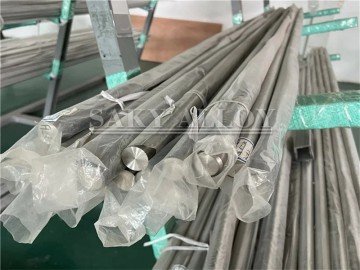
For international orders, export packaging is also important. Titanium bars should be packed with surface protection, moisture-resistant wrapping, wooden cases or pallets, and clear product labels showing grade, heat number, size, quantity, and order reference.
Conclusion
The durability and fatigue resistance of Titanium Grade 11 bars in harsh conditions make them a reliable choice for chemical processing, marine engineering, desalination, chlor-alkali systems, petrochemical equipment, and high-value industrial components. Their palladium-stabilized composition provides enhanced corrosion resistance, especially where localized corrosion and corrosion fatigue are major concerns.
For buyers who require long service life, stable material quality, traceability, and dependable performance, Titanium Grade 11 bar is a strong engineering solution. By choosing a professional titanium supplier with EN 10204 3.1 MTC, PMI testing, UT testing, dimensional inspection, and export packaging capability, customers can reduce procurement risk and improve project reliability.
Call To Action
If you need Titanium Grade 11 bars, UNS R52250 titanium bars, titanium round bars, titanium forged bars, or custom titanium machining stock for harsh industrial conditions, contact our technical team for material selection and quotation support.
We can provide titanium materials with chemical composition analysis, mechanical testing, EN 10204 3.1 MTC, PMI testing, UT testing, dimensional inspection, third-party inspection, customized sizes, export packaging, and reliable delivery support.
FAQ
1. What is Titanium Grade 11 bar used for?
Titanium Grade 11 bar is used for chemical processing components, marine parts, desalination equipment, chlor-alkali systems, corrosion-resistant fasteners, valve components, pump parts, and custom-machined industrial components.
2. Why does Titanium Grade 11 have good durability in harsh conditions?
Titanium Grade 11 contains a small palladium addition that improves resistance to crevice corrosion and reducing acid environments. Its stable titanium oxide film also helps protect the material in chloride and seawater conditions.
3. Is Titanium Grade 11 better than Titanium Grade 2?
Titanium Grade 2 is widely used for general corrosion-resistant applications, while Titanium Grade 11 is preferred when stronger resistance to reducing acids, crevice corrosion, and harsh chemical conditions is required.
4. Can Titanium Grade 11 bars be supplied with EN 10204 3.1 MTC?
Yes. Professional titanium suppliers can provide EN 10204 3.1 Material Test Certificates, heat number traceability, chemical analysis, mechanical testing reports, PMI testing, and third-party inspection when required.
5. What affects fatigue resistance of Titanium Grade 11 bars?
Fatigue resistance is affected by material cleanliness, surface finish, machining quality, stress concentration, corrosion environment, bar straightness, and component design. Proper inspection and surface control are important for fatigue-sensitive applications.
6. What information should buyers confirm before ordering Titanium Grade 11 bars?
Buyers should confirm grade, UNS number, standard, diameter, length, tolerance, surface condition, quantity, certificate requirement, PMI or UT testing needs, packaging method, and final application environment.