
From Surgery to Space: The Dual Role of Gr23 Titanium Bar in Modern Engineering
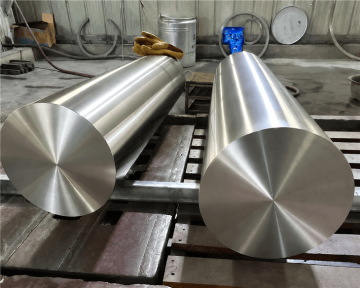
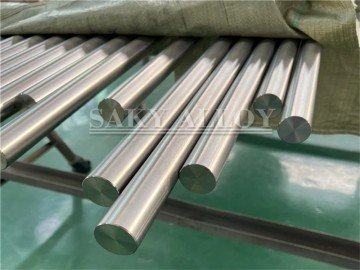
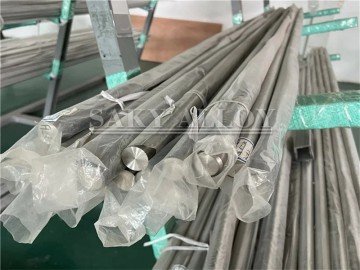
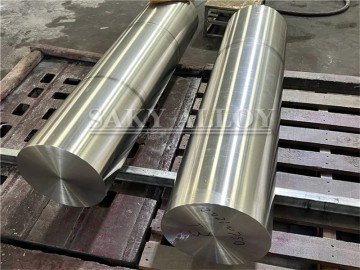
Few materials embody versatility and performance across industries as remarkably as Grade 23 Titanium Bar (Ti-6Al-4V ELI). Known for its exceptional strength, low weight, and biocompatibility, this alloy has become an essential material for both medical implants and aerospace components.
From delicate surgical instruments and artificial joints to aircraft frames and spacecraft fasteners, Gr23 titanium bar bridges the gap between life-saving precision and high-performance engineering. Its ability to thrive in both biological and extreme mechanical environments showcases why it is regarded as one of the most advanced alloys of our time.
In this article, sakyalloy explores how Gr23 titanium bars are revolutionizing two of the most demanding fields—medical technology and aerospace engineering—and why their superior mechanical and chemical properties make them indispensable to modern innovation.
1. What Is Grade 23 Titanium (Ti-6Al-4V ELI)?
Grade 23 Titanium, also known as Ti-6Al-4V ELI (Extra Low Interstitial), is a variant of the popular Grade 5 titanium alloy but with lower oxygen, nitrogen, and iron content. These reduced interstitial elements improve its fracture toughness, ductility, and biocompatibility, making it suitable for both medical implants and aerospace structures.
Chemical Composition (%)
| Element | Content |
|---|---|
| Titanium (Ti) | Balance |
| Aluminum (Al) | 5.5 – 6.5 |
| Vanadium (V) | 3.5 – 4.5 |
| Oxygen (O) | ≤ 0.13 |
| Nitrogen (N) | ≤ 0.05 |
| Carbon (C) | ≤ 0.08 |
| Iron (Fe) | ≤ 0.25 |
| Hydrogen (H) | ≤ 0.0125 |
This unique chemical balance gives Gr23 titanium its signature blend of lightweight strength, biological compatibility, and excellent resistance to fatigue and corrosion.
2. Key Mechanical and Physical Properties
| Property | Typical Value |
|---|---|
| Density | 4.43 g/cm³ |
| Tensile Strength | 860 – 900 MPa |
| Yield Strength | 795 MPa |
| Elongation | 10 – 14% |
| Modulus of Elasticity | 113 GPa |
| Hardness (HV) | 330 |
| Melting Point | 1660°C |
| Thermal Conductivity | 6.7 W/m·K |
These characteristics make Gr23 titanium bars strong yet lightweight, ideal for load-bearing implants in the human body and high-stress structures in aircraft and spacecraft.
3. Why Grade 23 Titanium Is Unique
The key difference between Gr23 (ELI) and Gr5 titanium lies in its lower interstitial content, which enhances its fracture toughness and biocompatibility. This makes it ideal for applications requiring:
-
Extreme reliability under stress
-
High fatigue resistance under cyclic loads
-
Compatibility with biological tissues
-
Resistance to extreme environments, from saline fluids to outer space vacuum
sakyalloy ensures that every batch of Gr23 titanium bar meets these stringent requirements through precision melting, forging, and ultrasonic inspection.
4. Applications in Medical and Surgical Engineering
4.1 Orthopedic Implants
Gr23 titanium bars are extensively used in hip joints, bone screws, spinal rods, and knee implants. Their combination of strength, flexibility, and bio-inertness ensures they integrate seamlessly with human bone without triggering allergic reactions or corrosion.
4.2 Dental Implants
In dentistry, Gr23 titanium provides strong and durable bases for tooth implants and abutments. Its excellent osseointegration allows bone tissue to bond naturally with the implant, ensuring stability and longevity.
4.3 Surgical Instruments
The alloy’s non-magnetic and corrosion-resistant nature makes it ideal for MRI-compatible surgical tools, bone drills, and precision surgical devices. Gr23 titanium tools maintain sharpness and structural integrity after repeated sterilization cycles.
4.4 Biomedical Devices
It is also used in pacemaker casings, heart valve frames, and prosthetic devices, where long-term biocompatibility and reliability are vital.
4.5 Advantages in the Medical Field
| Benefit | Description |
|---|---|
| Biocompatibility | Non-toxic and non-reactive with bodily fluids |
| Lightweight Strength | Reduces strain on surrounding tissues |
| Fatigue Resistance | Withstands cyclic mechanical stress |
| Corrosion Resistance | Performs well in physiological conditions |
| MRI Compatibility | Non-magnetic properties enable safe imaging |
For these reasons, Gr23 titanium bars from sakyalloy are trusted by medical device manufacturers worldwide.
5. Applications in Aerospace and Space Engineering
In aerospace engineering, weight reduction without compromising strength is the ultimate goal. Gr23 titanium bar provides a perfect solution for aircraft, spacecraft, and satellite components.
5.1 Aircraft Structural Components
Used in airframes, landing gear, and engine mounts, Gr23 titanium bars provide excellent fatigue strength and high tensile stability, enabling lighter and more fuel-efficient designs.
5.2 Jet Engine and Turbine Parts
Thanks to its high-temperature stability and resistance to oxidation, Gr23 titanium is used in compressor blades, discs, and fasteners that endure extreme heat and pressure.
5.3 Spacecraft and Satellite Structures
In space, materials face intense radiation, thermal variation, and vacuum exposure. Gr23 titanium maintains its mechanical integrity and dimensional stability, making it suitable for satellite frames, docking systems, and fuel tanks.
5.4 Rocket and Propulsion Systems
The alloy’s strength-to-weight ratio supports fuel efficiency and payload optimization. It is used in rocket engine casings, valves, and cryogenic systems where reliability is critical.
5.5 Advantages in Aerospace Applications
| Benefit | Description |
|---|---|
| Lightweight Strength | Reduces total aircraft mass |
| Thermal Stability | Maintains properties at extreme temperatures |
| Corrosion Resistance | Prevents degradation from fuel and chemicals |
| Fatigue Durability | Endures repeated stress cycles during flight |
| Non-Magnetic Nature | Ideal for sensitive navigation instruments |
sakyalloy supplies aerospace-grade Gr23 titanium bars manufactured according to ASTM F136, AMS 4930, and ISO 5832-3 standards for flight-critical components.
6. Shared Benefits Across Both Fields
Although medicine and aerospace engineering differ vastly, their technical requirements often overlap. Both fields require materials that are:
-
Lightweight yet high-strength
-
Fatigue and corrosion resistant
-
Non-reactive and dimensionally stable
-
Reliable over long service lifetimes
Gr23 titanium bar uniquely meets these demands, demonstrating its unmatched adaptability across diverse environments—from the human body to the vacuum of space.
7. Manufacturing and Quality Assurance by sakyalloy
sakyalloy employs advanced metallurgical processes to produce high-purity Gr23 titanium bars with tight dimensional tolerances and consistent microstructure.
Production Process
-
Vacuum Arc Melting (VAR) – Ensures purity and removes interstitial impurities.
-
Hot Forging and Rolling – Improves grain uniformity and mechanical properties.
-
Precision Machining – Achieves exact diameters and smooth surface finishes.
-
Heat Treatment (Annealing) – Enhances ductility and toughness.
-
Non-Destructive Testing (NDT) – Includes ultrasonic and eddy-current inspection to ensure zero defects.
Certifications
-
ASTM F136 – Surgical implant applications
-
AMS 4930 – Aerospace use
-
ISO 9001:2015 – Quality management
-
EN 10204 3.1 – Material traceability
Every sakyalloy Gr23 titanium bar undergoes complete quality testing before delivery, guaranteeing consistency and reliability.
8. Surface Finishing and Customization
To meet the diverse needs of medical and aerospace clients, sakyalloy offers multiple surface finishes:
| Finish Type | Description | Typical Use |
|---|---|---|
| Polished | Mirror-like smooth surface | Medical implants and instruments |
| Ground | Precise dimensional tolerance | Aerospace fasteners |
| Pickled and Passivated | Removes oxides and improves corrosion resistance | Industrial and chemical applications |
| Machined Finish | For tight assembly fits | Engine and structural components |
Customized diameters, lengths, and mechanical properties can be provided to meet specific project requirements.
9. Case Studies: From Surgery to Space
Case Study 1 – Orthopedic Implant Manufacturer
A European medical device company switched to Gr23 titanium bars from sakyalloy for hip and spinal implants. The improved fatigue resistance and surface polishability resulted in a 20% longer implant lifespan and better osseointegration.
Case Study 2 – Jet Engine Component Supplier
An aerospace manufacturer selected Gr23 titanium bars for turbine fasteners. The alloy’s superior strength-to-weight ratio reduced aircraft component weight by 15%, enhancing fuel efficiency and reducing maintenance cycles.
Case Study 3 – Space Exploration Program
A satellite project incorporated Gr23 titanium bars for load-bearing structures and docking clamps. After years in orbit, no degradation or fatigue cracking was detected—a testament to the alloy’s reliability in extreme space environments.
10. Comparison: Gr23 vs Other Titanium Grades
| Property | Gr23 Titanium (Ti-6Al-4V ELI) | Gr5 Titanium (Ti-6Al-4V) | Pure Titanium (Grade 2) |
|---|---|---|---|
| Strength | High | High | Moderate |
| Ductility | Excellent | Good | Excellent |
| Oxygen Content | Low | Standard | Low |
| Biocompatibility | Excellent | Good | Excellent |
| Fatigue Resistance | Very High | High | Moderate |
| Application | Medical, Aerospace | Industrial, Aerospace | Chemical, Food |
Gr23 titanium surpasses both Gr5 and Grade 2 when biocompatibility and fracture toughness are critical, making it the alloy of choice for precision engineering and high-performance designs.
11. Sustainability and Longevity
Titanium alloys, particularly Gr23, contribute to sustainability and energy efficiency:
-
Recyclable Material: 100% recyclable without loss of performance.
-
Reduced Maintenance: Extended service life means fewer replacements.
-
Energy Efficiency: Lightweight structures lower fuel consumption in aerospace applications.
-
Reduced Waste: Long implant life minimizes surgical revisions and resource usage.
sakyalloy promotes environmentally responsible production by minimizing waste and using energy-efficient vacuum melting technologies.
12. Future Outlook
As industries push boundaries—from personalized medical devices to deep-space missions—the role of Gr23 titanium will only expand. Emerging technologies like 3D printing (additive manufacturing) already utilize Gr23 titanium powder for customized implants and aerospace components, marking a new era of innovation.
With its unique combination of human compatibility and high-performance durability, Gr23 titanium will continue to connect two frontiers: life sciences and aerospace engineering.
Conclusion
From surgical operating rooms to spacecraft orbiting Earth, Gr23 Titanium Bar (Ti-6Al-4V ELI) has proven its ability to perform in the most demanding environments. Its extraordinary biocompatibility, fatigue strength, corrosion resistance, and lightweight nature make it a cornerstone material in both medical and aerospace innovation.
Through advanced production technology, strict quality control, and global supply expertise, sakyalloy continues to deliver premium-grade Gr23 titanium bars that meet international standards for precision and reliability.
As technology evolves, this extraordinary alloy—crafted by sakyalloy—will remain at the forefront of human progress, empowering breakthroughs that extend from surgery to space.