
Grade 1 Titanium Rod: High Ductility and Formability Explained
Introduction
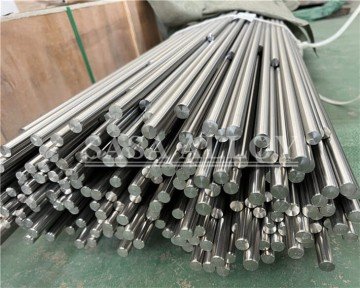
Grade 1 Titanium Rod is a commercially pure titanium rod known for its excellent ductility, superior formability, good weldability and strong corrosion resistance in oxidizing, chloride-containing and seawater environments. It is widely used in chemical processing, marine equipment, heat exchangers, electrochemical components, medical-related fabrication, aerospace support parts and industrial systems where easy forming, reliable corrosion resistance and clean material traceability are required.
For engineers and purchasing teams, Grade 1 titanium rod is often selected when the design requires the highest formability among commercially pure titanium grades rather than maximum strength. Compared with Grade 2 titanium rod, Grade 1 offers lower strength but better elongation and cold forming performance, making it suitable for bending, forming, machining, welding and precision fabrication.
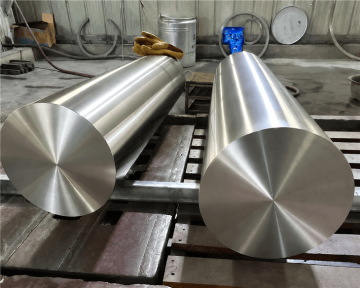
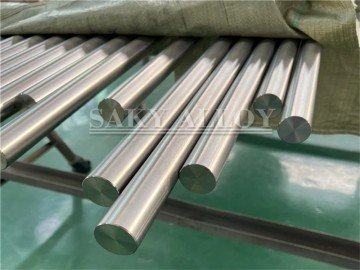
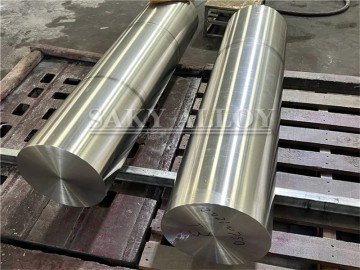
At SAKY ALLOY, Grade 1 Titanium Rod can be supplied in round bar, straight rod, forged bar, turned bar, polished rod and cut-to-length pieces according to customer drawings, ASTM requirements, EN 10204 3.1 MTC documentation and export packaging requirements.
What Is Grade 1 Titanium Rod?
Grade 1 Titanium Rod is a solid bar product manufactured from commercially pure titanium with very low interstitial elements. It is usually supplied under ASTM B348 for titanium and titanium alloy bars and billets. The material is also associated with UNS R50250 and is recognized for its balance of corrosion resistance, weldability and high ductility.
Unlike titanium alloys such as Ti-6Al-4V Grade 5, Grade 1 titanium does not rely on aluminum or vanadium alloying additions for strength. Its main value comes from purity, corrosion performance and ease of fabrication. This makes it suitable for industrial parts that require forming or welding before final assembly.
Common Product Forms
| Product Form | Typical Supply Condition | Purchasing Notes |
|---|---|---|
| Grade 1 Titanium Round Rod | Hot rolled, forged, annealed, straightened | Used for machining, fasteners, shafts, pins and fabricated components. |
| Turned Titanium Bar | Peeled or turned surface | Recommended when tighter diameter tolerance and cleaner surface are required. |
| Polished Titanium Rod | Bright polished or centerless ground | Suitable for visible parts, precision components and clean industrial applications. |
| Cut-to-Length Rod | Customized length according to drawings | Helps reduce customer machining time and material waste. |
Chemical Composition of Grade 1 Titanium Rod
The chemical composition of Grade 1 titanium rod is controlled to maintain high purity and low strength variation. Lower oxygen content is one of the main reasons Grade 1 has better ductility and formability than Grade 2 or Grade 3 commercially pure titanium.
| Element | Typical Limit for Grade 1 Titanium | Function / Influence |
|---|---|---|
| Titanium Ti | Balance | Base element providing corrosion resistance and low density. |
| Oxygen O | Max. 0.18% | Lower oxygen improves ductility and formability. |
| Iron Fe | Max. 0.20% | Controlled to maintain corrosion resistance and mechanical consistency. |
| Carbon C | Max. 0.08% | Kept low to support clean microstructure and weldability. |
| Nitrogen N | Max. 0.03% | Excess nitrogen may increase strength but reduce ductility. |
| Hydrogen H | Max. 0.015% | Strictly controlled to reduce risk of hydrogen embrittlement. |
Mechanical Properties
The key performance advantage of Grade 1 Titanium Rod is not high strength, but high elongation and easy forming. This material is especially useful for components that must be bent, cold formed, welded or machined into corrosion-resistant parts.
| Property | Typical Requirement / Range | Engineering Meaning |
|---|---|---|
| Tensile Strength | Approx. 240 MPa minimum | Lower than Grade 2, suitable for non-high-load corrosion-resistant parts. |
| Yield Strength | Approx. 170 MPa minimum | Supports light structural and fabricated components. |
| Elongation | Approx. 24% minimum | Excellent for forming, bending and fabrication. |
| Density | Approx. 4.51 g/cm³ | Lower weight than stainless steel and nickel alloys. |
| Weldability | Excellent with proper shielding | Suitable for welded assemblies, chemical equipment and marine parts. |
Why High Ductility Matters
High ductility allows Grade 1 titanium rod to be formed with lower risk of cracking compared with stronger titanium grades. This is important for parts that require shaping, bending, flaring, threading, machining or secondary fabrication. For many corrosion-resistant systems, formability can be more valuable than high tensile strength.
Applicable Standards and Equivalent Grades
When specifying Grade 1 Titanium Rod, buyers should clearly state the applicable standard, UNS designation, diameter tolerance, length tolerance, surface condition, heat treatment condition and required inspection documents. For export projects, EN 10204 3.1 MTC and heat number traceability are commonly requested.
| Standard / System | Designation | Notes for Procurement |
|---|---|---|
| ASTM | ASTM B348 Grade 1 | Common standard for titanium and titanium alloy bars and billets. |
| UNS | UNS R50250 | Useful for international material identification and MTC review. |
| ASME | ASME SB-348 Grade 1 | Often used for pressure equipment and engineering documentation. |
| EN / ISO Reference | Commercially Pure Titanium Grade 1 | Confirm chemical and mechanical requirements with project specification. |
| Common Certificate | EN 10204 3.1 MTC | Shows heat number, chemical composition, mechanical properties and inspection results. |
How to Specify Grade 1 Titanium Rod for RFQ
A clear RFQ helps avoid wrong material supply, unsuitable tolerance, missing certificates or incorrect surface condition. For Grade 1 Titanium Rod, the purchasing specification should include the material grade, standard, diameter, length, quantity, surface finish, testing requirement and delivery condition.
| RFQ Item | Recommended Information | Example |
|---|---|---|
| Material Grade | State grade and UNS number if possible. | Grade 1 Titanium Rod, UNS R50250 |
| Standard | Specify ASTM, ASME or project standard. | ASTM B348 Grade 1 |
| Size | Diameter, length, tolerance and straightness. | Dia. 20 mm x 3000 mm, cut length accepted |
| Surface Finish | Black, pickled, turned, polished or ground. | Turned and polished surface |
| Certificate | Confirm MTC and inspection level. | EN 10204 3.1 MTC, heat number traceability |
| Inspection | PMI, UT, dimension inspection or third-party inspection. | PMI testing and third-party inspection before shipment |
Quality Testing and Material Traceability
For titanium rod procurement, material traceability is as important as price. SAKY ALLOY controls Grade 1 Titanium Rod through heat number management, chemical verification, mechanical testing, dimensional inspection and document review before shipment. This helps customers avoid mixed materials, fake certificates and unsuitable substitutes.
Available Quality Documents and Inspection Options
| Quality Item | Purpose | Recommended For |
|---|---|---|
| EN 10204 3.1 MTC | Confirms chemical composition, mechanical properties, heat number and specification compliance. | Export orders, engineering projects and regulated industrial use. |
| PMI Testing | Verifies material identity and prevents grade mix-up. | Projects requiring anti-fake material control. |
| UT Testing | Checks internal soundness of bars where required by project specification. | Large diameter rods, forged bars and critical machined parts. |
| Dimension Inspection | Confirms diameter, length, ovality, surface and straightness. | Precision machining and cut-to-length orders. |
| Third-party Inspection | Independent inspection by SGS, BV, TÜV or customer-appointed agency. | Government, marine, energy and international project supply. |
Comparison With Similar Titanium Materials
Grade 1 Titanium Rod is not the only commercially pure titanium option. Buyers often compare it with Grade 2, Grade 3 and Grade 5 titanium depending on strength, corrosion resistance, formability and cost. The correct choice depends on whether the part needs high ductility, higher strength or alloy-grade mechanical performance.
| Material | Main Advantage | Limitation | Typical Selection Reason |
|---|---|---|---|
| Grade 1 Titanium Rod | Best ductility and formability among commercially pure titanium grades. | Lower strength than Grade 2 and Grade 5. | Chosen for forming, welding and corrosion-resistant fabrication. |
| Grade 2 Titanium Rod | Good balance of strength, corrosion resistance and availability. | Less formable than Grade 1. | Common choice for general industrial titanium bar applications. |
| Grade 3 Titanium Rod | Higher strength than Grade 1 and Grade 2. | Lower ductility than Grade 1. | Used when higher strength is needed without moving to alloy titanium. |
| Grade 5 Titanium Rod | High strength-to-weight ratio. | More difficult to form and weld than commercially pure titanium. | Selected for aerospace, high-strength fasteners and performance components. |
Industrial Applications
Grade 1 Titanium Rod is widely used where corrosion resistance, light weight and fabrication performance are required. Its excellent resistance to many chloride-containing environments makes it suitable for marine and chemical service, while its formability supports complex part production.
| Industry | Typical Components | Why Grade 1 Titanium Rod Is Used |
|---|---|---|
| Chemical Processing | Fittings, supports, fasteners, shafts and machined parts | Corrosion resistance in many oxidizing and chloride-containing environments. |
| Marine Engineering | Seawater components, brackets, pins and equipment parts | Good resistance to seawater corrosion and low weight. |
| Heat Exchanger Fabrication | Tube supports, spacers and fabricated rod parts | Compatible with titanium heat transfer equipment and welded assemblies. |
| Electrochemical Equipment | Anode supports, conductive fixtures and electrolysis components | Stable performance in selected electrochemical environments. |
| Industrial Fabrication | Formed parts, welded parts, threaded rods and custom machined pieces | Excellent ductility and machinability for customized components. |
Surface Finish, Packaging and Delivery Capability
Surface condition directly affects machining cost, visual appearance and downstream processing. Grade 1 titanium rod can be supplied with black surface, pickled surface, turned surface, polished surface or ground finish depending on order requirements.
Available Surface Options
| Surface Finish | Description | Suitable Use |
|---|---|---|
| Black Surface | Hot worked surface, usually lower processing cost. | Further machining or forging. |
| Pickled Surface | Oxide scale removed by chemical treatment. | General industrial use and welding preparation. |
| Turned / Peeled Surface | Surface layer removed by machining. | Machined parts requiring cleaner surface and better tolerance. |
| Polished / Ground Surface | Bright and smooth surface finish. | Precision parts, visible components and clean applications. |
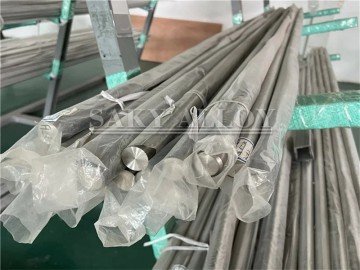
For export orders, SAKY ALLOY can provide bundle protection, plastic wrapping, wooden case packing, waterproof paper, end protection and shipping marks according to customer requirements. For cut-to-length Grade 1 titanium rods, each bundle can be marked by size, grade, heat number and order number to support warehouse identification and project traceability.
Why Choose Grade 1 Titanium Rod?
Grade 1 Titanium Rod is a practical choice when the application requires corrosion resistance and fabrication flexibility rather than high mechanical strength. It is easier to form than stronger titanium grades and can be welded with proper inert gas protection. For chemical plants, seawater systems and fabricated titanium equipment, this can reduce processing difficulty and improve long-term service reliability.
Key Advantages for Industrial Buyers
- High ductility and excellent formability for bending, forming and fabrication.
- Good corrosion resistance in seawater, chlorides and many oxidizing media.
- Reliable weldability when proper shielding and cleaning procedures are used.
- Lower density than stainless steel and nickel alloy materials.
- Available with EN 10204 3.1 MTC, heat number control and inspection support.
- Can be supplied as full-length rod, machined bar or cut-to-size titanium pieces.
FAQ About Grade 1 Titanium Rod
1. What is Grade 1 Titanium Rod used for?
Grade 1 Titanium Rod is used for chemical processing parts, marine components, heat exchanger support parts, electrochemical equipment, formed parts, welded assemblies and custom machined titanium components.
2. Is Grade 1 titanium stronger than Grade 2 titanium?
No. Grade 1 titanium has lower strength than Grade 2 titanium, but it offers better ductility and formability. If the component requires easier forming or bending, Grade 1 may be more suitable. If higher strength is required, Grade 2 or Grade 5 may be considered.
3. Which standard should be used for Grade 1 Titanium Rod?
ASTM B348 Grade 1 is commonly used for titanium bars and billets. For pressure equipment or project documentation, ASME SB-348 Grade 1 may also be specified. Buyers should confirm the exact standard in the RFQ.
4. Can Grade 1 Titanium Rod be welded?
Yes. Grade 1 titanium has excellent weldability, but welding must be performed with proper inert gas shielding to prevent contamination from oxygen, nitrogen and hydrogen. Clean surface preparation is important before welding.
5. What certificates can be supplied with Grade 1 Titanium Rod?
SAKY ALLOY can provide EN 10204 3.1 MTC, heat number traceability, chemical analysis, mechanical test results, PMI testing reports, UT reports when required, dimension inspection records and third-party inspection support.
6. What information should I provide for a quotation?
Please provide grade, standard, diameter, length, quantity, tolerance, surface finish, testing requirement, certificate requirement, delivery destination and packaging requirement. Drawings are helpful for customized titanium rod components.
Related Titanium Products
For customers who are sourcing titanium rods for complete projects, SAKY ALLOY can also support related titanium products for fabrication, machining and industrial assembly.
- Titanium Bar for machining and industrial components.
- Titanium Wire for welding, springs, medical-related and precision uses.
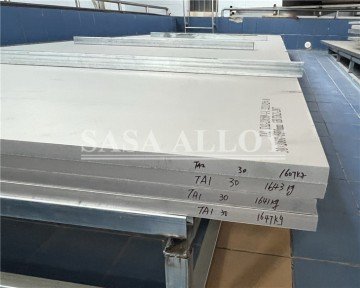
- Titanium Plate for chemical equipment, marine systems and fabrication.
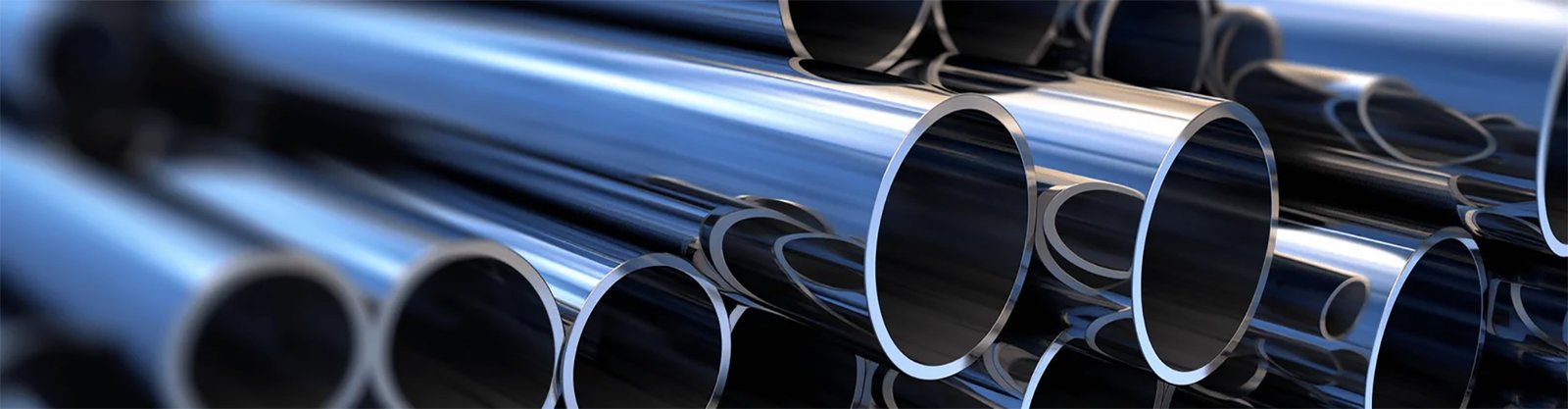
- Titanium Pipe for heat exchangers, chemical pipelines and seawater systems.
- Titanium Fittings for elbows, tees, reducers and piping connections.
Conclusion
Grade 1 Titanium Rod is a high-ductility, high-formability commercially pure titanium product designed for corrosion-resistant fabrication and engineering applications. It is especially suitable when the project requires easy forming, reliable weldability, clean surface options and full material traceability.
For industrial buyers, the most important purchasing points are not only price and size, but also correct grade identification, applicable standards, heat number control, EN 10204 3.1 MTC, inspection requirements, surface finish and export packaging. A clear specification helps ensure that the supplied titanium rod matches the engineering and procurement requirements of the project.
Call To Action
Request a Quote for Grade 1 Titanium Rod
Contact SAKY ALLOY for quotation, EN 10204 3.1 MTC, PMI testing, customized diameter, cut-to-length service, polished surface, export packaging and delivery support. Our technical team can help you confirm the correct grade, standard, size tolerance and inspection requirements for your project.
Please send your RFQ with grade, standard, diameter, length, quantity, surface finish and certificate requirements.