
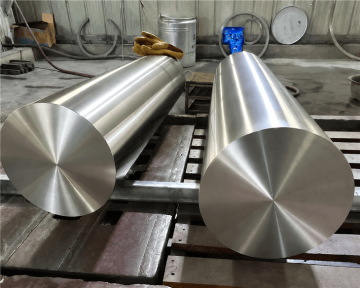
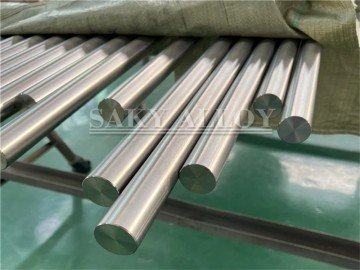
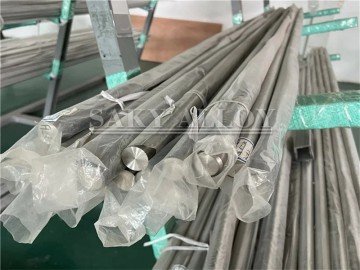
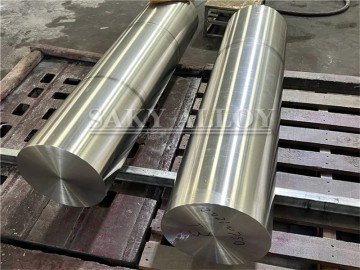
Grade 11 Titanium Bars for Heat Exchangers in Aggressive Media
Heat exchangers are critical components in a wide range of industrial processes, from chemical plants and seawater desalination facilities to power generation and pharmaceutical production. These systems operate under demanding conditions, often involving exposure to aggressive media, high temperatures, and corrosive chemicals. Selecting the right material for heat exchanger components is essential to ensure long-term reliability, efficiency, and safety. Among the most trusted materials for such applications are Grade 11 titanium bars, known for their outstanding corrosion resistance, mechanical strength, and durability.
Leading suppliers like sakyalloy provide high-quality Grade 11 titanium bars that are specifically designed for use in heat exchangers operating in aggressive environments. This article examines the benefits, applications, and performance characteristics of Grade 11 titanium bars in industrial heat exchangers and explains why they are a preferred choice for engineers worldwide.
Exceptional Corrosion Resistance in Aggressive Media
Grade 11 titanium bars offer superior corrosion resistance, making them ideal for heat exchangers exposed to aggressive media such as seawater, acidic solutions, and chemical processing fluids. The alloy contains small amounts of palladium, which enhances its ability to resist oxidizing acids and prevents pitting, crevice corrosion, and surface degradation caused by harsh chemicals.
Heat exchangers in chemical plants, seawater desalination facilities, and power stations often face high-chloride and acidic environments. Traditional stainless steels such as 316L may suffer from pitting and rapid corrosion under these conditions, reducing equipment life and requiring frequent maintenance. In contrast, Grade 11 titanium bars maintain their structural integrity and performance, ensuring long-term reliability and operational efficiency.
Suppliers such as sakyalloy ensure that each Grade 11 titanium bar meets strict quality standards, providing consistent corrosion resistance and mechanical performance even in highly aggressive media.
Mechanical Strength and Durability
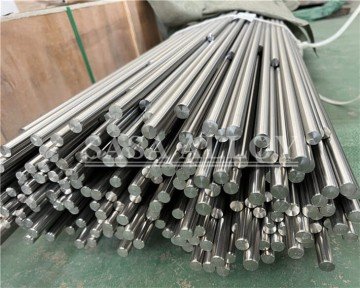
Heat exchanger components must withstand mechanical stress, high pressures, and thermal fluctuations during operation. Grade 11 titanium bars exhibit exceptional tensile strength and mechanical stability, making them suitable for critical components such as tubes, plates, support structures, and tubing sheets.
The combination of strength and flexibility allows Grade 11 titanium bars to resist deformation, cracking, and failure under dynamic loads. Applications include:
-
Heat exchanger tubes and tube sheets
-
Plate and frame heat exchangers
-
Piping connections and manifolds
-
Structural supports in high-pressure systems
This mechanical reliability ensures that heat exchangers fabricated from Grade 11 titanium bars can operate safely and efficiently over extended periods, minimizing downtime and maintenance costs.
High Temperature Performance
Many industrial processes require heat exchangers to operate under elevated temperatures. Grade 11 titanium bars retain both mechanical strength and corrosion resistance at high temperatures, making them suitable for applications in chemical processing, power generation, and seawater desalination.
The material’s thermal stability ensures that components maintain dimensional accuracy, resist thermal fatigue, and avoid warping under repeated temperature cycles. This contributes to efficient heat transfer, reliable operation, and extended equipment life.
Applications in Seawater Desalination Plants
Seawater desalination is one of the most challenging environments for heat exchanger materials. High salinity, chloride concentration, and biofouling present significant risks to conventional materials. Grade 11 titanium bars are widely used in desalination heat exchangers due to their excellent resistance to seawater corrosion and pitting.
Components manufactured from Grade 11 titanium bars maintain smooth surfaces, resist biofouling and scaling, and deliver efficient heat transfer over the long term. This reduces the frequency of cleaning, minimizes operational interruptions, and ensures continuous production of freshwater.
Chemical Processing Applications
In chemical processing plants, heat exchangers often come into contact with highly corrosive acids, alkalis, and other aggressive chemicals. Grade 11 titanium bars provide reliable protection against chemical attack, allowing heat exchangers to operate efficiently in:
-
Sulfuric acid and hydrochloric acid processes
-
Alkali and caustic solutions
-
Oxidizing and reducing chemical environments
Using Grade 11 titanium bars ensures equipment longevity, reduces the risk of leaks or failures, and lowers maintenance and replacement costs.
Biofouling and Scaling Resistance
Heat exchangers in aggressive media are susceptible to biofouling and scaling, which reduce efficiency and increase maintenance requirements. Grade 11 titanium bars exhibit smooth surfaces and superior corrosion resistance, which help minimize the adhesion of marine organisms and mineral deposits.
This property is particularly important for seawater and industrial heat exchangers, where biofouling and scaling can significantly reduce heat transfer efficiency and increase operational costs. Using Grade 11 titanium bars ensures stable performance and long-term operational reliability.
Sustainability and Cost-Effectiveness
Although Grade 11 titanium bars may have a higher initial cost compared to conventional stainless steels, their long-term benefits make them a cost-effective solution. Reduced maintenance, longer service life, and lower risk of failure contribute to overall savings.
Titanium is also fully recyclable, which supports sustainable industrial practices. By choosing Grade 11 titanium bars for heat exchangers, companies can achieve high performance while minimizing environmental impact.
Global Industry Adoption
Grade 11 titanium bars are widely adopted in heat exchangers across industries, including:
-
Seawater desalination plants
-
Chemical and petrochemical processing facilities
-
Power generation and thermal plants
-
Pharmaceutical and food processing industries
-
Offshore platforms and marine applications
Their versatility, durability, and corrosion resistance make Grade 11 titanium bars an essential material for modern heat exchanger design.
Conclusion
Grade 11 titanium bars are a superior choice for heat exchangers operating in aggressive media. Their exceptional corrosion resistance, mechanical strength, thermal stability, and resistance to biofouling and scaling ensure reliable, long-term performance in demanding environments.
With the support of trusted suppliers such as sakyalloy, engineers and plant operators can rely on Grade 11 titanium bars to deliver safe, efficient, and cost-effective heat exchanger solutions. From chemical processing to seawater desalination and power generation, Grade 11 titanium bars provide the performance, durability, and sustainability required for critical industrial applications.