
Grade 2 vs Grade 5 Titanium: Strength, Corrosion and Cost Comparison
Introduction
When comparing Grade 2 vs Grade 5 Titanium, buyers should choose Grade 2 titanium when corrosion resistance, weldability, formability and cost efficiency are more important than high strength. Choose Grade 5 titanium when high strength-to-weight ratio, fatigue resistance, aerospace performance, fastener strength, shaft strength or precision machining performance are required. In simple terms, Grade 2 is the better choice for chemical processing, marine corrosion service, heat exchangers and welded equipment, while Grade 5 Ti-6Al-4V is the better choice for aerospace parts, high-strength fasteners, shafts, medical-related components and load-bearing machined parts.
Both Grade 2 and Grade 5 titanium are widely used in industrial metal procurement, but they are not interchangeable. Grade 2 is a commercially pure titanium grade with excellent corrosion resistance and good ductility. Grade 5, also known as Ti-6Al-4V or UNS R56400, is an alpha-beta titanium alloy strengthened by aluminum and vanadium, offering much higher tensile strength and yield strength than Grade 2.
For correct material selection, buyers should compare chemical composition, mechanical properties, corrosion environment, welding method, machining requirement, product form, applicable ASTM standard, EN 10204 3.1 MTC, heat number control, PMI testing, UT testing, third-party inspection, surface finish, export packaging and delivery capability before confirming Grade 2 or Grade 5 titanium.
What Are Grade 2 and Grade 5 Titanium?
Grade 2 titanium, also known as commercially pure titanium Grade 2 or UNS R50400, is one of the most widely used CP titanium grades. It offers a strong balance of corrosion resistance, moderate strength, good ductility, good weldability and reliable fabrication performance. It is commonly used for titanium pipe, titanium plate, titanium bar, titanium fittings, heat exchanger tubes, marine components and chemical processing equipment.
Grade 5 titanium, also known as Ti-6Al-4V, 6Al-4V titanium or UNS R56400, is the most widely used titanium alloy. It contains aluminum and vanadium, which provide much higher strength than commercially pure titanium grades. Grade 5 titanium is widely used in aerospace, medical devices, high-strength fasteners, precision machined parts, marine hardware, automotive components and high-performance industrial equipment.
Fast Buyer Recommendation
| Application Condition | Recommended Grade | Reason |
|---|---|---|
| Chemical processing equipment | Grade 2 Titanium | Excellent corrosion resistance, good weldability and suitable cost-performance balance |
| Aerospace and high-strength parts | Grade 5 Titanium | High strength-to-weight ratio and better fatigue performance |
| Welded tanks, heat exchangers and piping | Grade 2 Titanium | Easier welding and fabrication than Grade 5 in many industrial applications |
| High-strength fasteners, shafts and machined parts | Grade 5 Titanium | Much higher tensile and yield strength than Grade 2 |
| Cost-sensitive corrosion-resistant parts | Grade 2 Titanium | Usually more economical when Grade 5 strength is not required |
Chemical Composition Comparison
The main difference between Grade 2 and Grade 5 titanium comes from alloying elements. Grade 2 is commercially pure titanium with controlled oxygen, iron, carbon, nitrogen and hydrogen. Grade 5 contains aluminum and vanadium, which significantly increase strength and make it suitable for aerospace and high-load applications.
| Element | Grade 2 Titanium Typical Requirement | Grade 5 Titanium Typical Requirement | Material Selection Note |
|---|---|---|---|
| Titanium (Ti) | Balance | Balance | Base metal providing low density, corrosion resistance and biocompatibility |
| Aluminum (Al) | Not alloyed | 5.50 – 6.75% | Major strengthening element in Grade 5 Ti-6Al-4V |
| Vanadium (V) | Not alloyed | 3.50 – 4.50% | Improves beta phase stability and mechanical strength |
| Iron (Fe) | Max 0.30% | Max 0.40% | Controlled to maintain toughness, ductility and consistency |
| Oxygen (O) | Max 0.25% | Max 0.20% | Higher oxygen increases strength but may reduce ductility |
| Carbon (C) | Max 0.08% | Max 0.08% | Controlled interstitial element |
| Nitrogen (N) | Max 0.03% | Max 0.05% | Should be controlled for ductility and toughness |
| Hydrogen (H) | Max 0.015% | Max 0.015% | Strict control helps reduce hydrogen embrittlement risk |
Mechanical Properties of Grade 2 vs Grade 5 Titanium
Mechanical properties are the most important reason buyers compare Grade 2 vs Grade 5 titanium. Grade 2 provides moderate strength with excellent ductility and corrosion resistance. Grade 5 provides much higher tensile strength and yield strength, making it suitable for high-load and precision applications. However, Grade 5 is usually more difficult to form and machine than Grade 2.
| Property | Grade 2 Titanium | Grade 5 Titanium | Buyer Selection Note |
|---|---|---|---|
| Tensile Strength | Moderate, commonly around 345 MPa minimum depending on standard and product form | High, commonly around 895 MPa minimum depending on standard and condition | Choose Grade 5 when high mechanical strength is required |
| Yield Strength | Moderate, suitable for CP titanium equipment parts | Much higher than Grade 2 | Important for fasteners, shafts, brackets and load-bearing components |
| Elongation | Good ductility and formability | Lower ductility than Grade 2 | Choose Grade 2 for forming, bending and easier fabrication |
| Hardness | Lower | Higher | Grade 5 is better for high-strength machined parts but may increase machining difficulty |
| Weldability | Excellent | Weldable, but requires stricter process control | Grade 2 is generally preferred for welded chemical equipment |
| Density | Approx. 4.51 g/cm³ | Approx. 4.43 g/cm³ | Both materials are lightweight compared with stainless steel and nickel alloys |
Applicable Standards and Equivalent Grades
Grade 2 and Grade 5 titanium are supplied under different ASTM, ASME, AMS, EN, DIN, JIS and GB standards depending on product form and application. Buyers should confirm whether the inquiry is for titanium bar, plate, sheet, pipe, tube, wire, forging or flange because each product form may follow a different standard.
| Item | Grade 2 Titanium | Grade 5 Titanium | Common Product Scope |
|---|---|---|---|
| UNS | R50400 | R56400 | General international material identification |
| Common Name | Commercially Pure Titanium Grade 2 | Ti-6Al-4V / 6Al-4V Titanium | Material comparison and purchase specification |
| ASTM Bar Standard | ASTM B348 Grade 2 | ASTM B348 Grade 5 | Round bar, rod, billet and forging stock |
| ASTM Plate / Sheet Standard | ASTM B265 Grade 2 | ASTM B265 Grade 5 | Titanium sheet, plate and strip |
| ASTM Tube Standard | ASTM B338 Grade 2 | ASTM B338 Grade 5 where applicable by project requirement | Titanium seamless and welded tubes |
| EN / W.Nr. | 3.7035 | 3.7165 | European drawings and equipment specifications |
| GB Grade | TA2 | TC4 | China-origin titanium supply and export documentation |
Quality Testing and Material Traceability
For Grade 2 and Grade 5 titanium, traceability is essential because the two materials have very different chemistry, strength and applications. The heat number on the material, label, packing list and EN 10204 3.1 MTC should match. For aerospace, medical, chemical processing and marine projects, buyers should also confirm PMI testing, UT testing, dimensional inspection and third-party inspection when required.
Certificate and Inspection Checklist
| Inspection / Document Item | What to Check | Why It Matters |
|---|---|---|
| EN 10204 3.1 MTC | Grade, UNS number, standard, heat number, chemical composition, mechanical properties and size | Confirms batch-specific quality and supports project documentation |
| Heat Number Control | Heat number on material marking, label, packing list and MTC must match | Prevents mixed material delivery and supports traceability |
| PMI Testing | Verify titanium grade and alloying elements such as aluminum and vanadium in Grade 5 | Helps distinguish commercially pure Grade 2 from Ti-6Al-4V Grade 5 |
| UT Testing | Check internal soundness for bars, plates, forgings and critical parts | Important for aerospace, shafts, precision machining and high-reliability components |
| Dimensional Inspection | Diameter, thickness, width, length, straightness, flatness and tolerance | Ensures machining, assembly, welding and installation requirements are met |
| Surface Inspection | Check scratches, cracks, oxidation, pits, peeling marks, grinding marks and end condition | Important for precision machining, medical parts and visible components |
| Third-party Inspection | SGS, BV, TUV, Intertek or customer-appointed inspection before shipment | Provides additional confidence for export orders and engineering projects |
Comparison With Similar Titanium Materials
Grade 2 and Grade 5 are two of the most common titanium grades, but buyers may also compare them with Grade 1, Grade 3, Grade 4, Grade 7, Grade 9 and Grade 23. The correct grade should be selected according to corrosion environment, strength requirement, weldability, medical requirement, cost target and final product form.
| Material | Strength | Corrosion Resistance | Cost Level | Best-use Recommendation |
|---|---|---|---|---|
| Grade 1 Titanium | Low | Excellent | Moderate to high | Forming parts, chemical equipment and applications requiring maximum ductility |
| Grade 2 Titanium | Medium for commercially pure titanium | Excellent | Usually lower than Grade 5 in many product forms | Chemical processing, marine parts, heat exchangers, pipes, plates and welded equipment |
| Grade 5 Ti-6Al-4V | High | Good | Higher than commercially pure titanium in many cases | Aerospace, fasteners, shafts, medical-related parts and high-strength machined components |
| Grade 7 Titanium | Similar to Grade 2 range depending on condition | Excellent in selected reducing acid environments | High | Chemical processing where Grade 2 may not provide enough corrosion resistance |
| Grade 9 Ti-3Al-2.5V | Medium to high | Good | Moderate to high | Tubing, hydraulic systems, lightweight structures and sports components |
| Grade 23 Ti-6Al-4V ELI | High | Good | High | Medical implants and high-reliability components requiring ELI control |
Industrial Applications of Grade 2 and Grade 5 Titanium
Both Grade 2 and Grade 5 titanium are used in industrial projects, but their application focus is different. Grade 2 is usually selected for corrosion resistance, fabrication and welded process equipment. Grade 5 is selected for high-strength, lightweight, precision and fatigue-resistant applications.
| Application Scenario | Recommended Grade | Typical Products | Selection Reason |
|---|---|---|---|
| Chemical Processing | Grade 2 Titanium | Pipes, plates, bars, fittings, heat exchanger parts and tanks | Excellent corrosion resistance and good weldability |
| Aerospace | Grade 5 Titanium | Fasteners, brackets, shafts, forged parts, rings and machined components | High strength-to-weight ratio and fatigue resistance |
| Marine Engineering | Grade 2 or Grade 5 depending on load | Marine hardware, shafts, bolts, fittings, pump parts and support components | Grade 2 for corrosion; Grade 5 for higher strength marine components |
| Medical and Dental | Grade 2, Grade 5 or Grade 23 depending on standard | Instruments, rods, screws, plates and implant-related components | Biocompatibility, corrosion resistance and strength; medical implants may require Grade 23 ELI |
| Industrial Machinery | Grade 2 or Grade 5 | Shafts, blocks, connectors, support rods, fasteners and CNC machined parts | Select Grade 2 for corrosion and fabrication; select Grade 5 for load-bearing strength |
| Heat Exchangers | Grade 2 Titanium | Tubes, tube sheets, plates, baffles and corrosion-resistant components | Excellent corrosion resistance and good fabrication performance |
Why Choose Grade 2 or Grade 5 Titanium?
The right titanium grade depends on whether the project prioritizes corrosion resistance, weldability, formability, mechanical strength, fatigue resistance or cost. Grade 2 is the practical industrial titanium grade for corrosion-resistant equipment. Grade 5 is the high-strength titanium alloy for lightweight load-bearing parts.
Corrosion, Strength and Cost Comparison
| Selection Factor | Grade 2 Titanium | Grade 5 Titanium | Buyer Decision |
|---|---|---|---|
| Corrosion Resistance | Excellent in many chemical, marine and industrial environments | Good, but generally selected more for strength than maximum corrosion resistance | Choose Grade 2 when corrosion resistance and fabrication are the main priorities |
| Strength | Moderate | Much higher | Choose Grade 5 when strength-to-weight ratio is critical |
| Weldability | Excellent | Weldable with stricter control | Choose Grade 2 for welded process equipment and heat exchangers |
| Machinability | Easier than Grade 5 in many cases | More difficult due to higher strength and hardness | Confirm machining allowance, surface finish and tooling plan for Grade 5 parts |
| Cost | Usually more economical than Grade 5 | Usually higher because of alloying elements and processing requirements | Choose Grade 2 if Grade 5 strength is not technically required |
Common Buyer Mistakes
A common mistake is selecting Grade 5 only because it is stronger, even when Grade 2 already provides sufficient strength and better fabrication performance for corrosion-resistant equipment. Another mistake is selecting Grade 2 for high-strength aerospace or fastener applications where Grade 5 is technically required. Buyers should also avoid accepting titanium products without clear grade, UNS number, heat number, MTC, PMI testing and applicable standard.
Surface Finish, Processing and Export Packaging
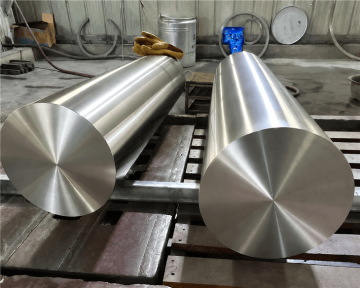
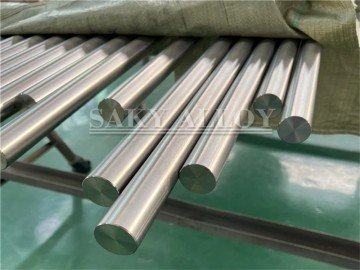
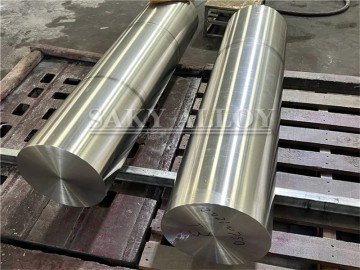
Grade 2 and Grade 5 titanium can be supplied with different surface finishes according to product form and application. Common bar finishes include black surface, pickled surface, peeled surface, turned surface, ground surface and polished surface. Plates and sheets may be supplied hot rolled, cold rolled, pickled, sandblasted or polished. Tubes may be supplied pickled, bright, polished or precision finished.
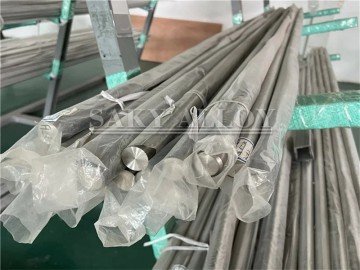
Processing services may include cutting, sawing, peeling, turning, grinding, polishing, straightening, drilling, CNC machining and custom length cutting. For export delivery, titanium products should be packed with waterproof wrapping, plastic protection, wooden cases, wooden pallets or strong bundles. Clear labels should show grade, standard, heat number, size, quantity and destination information.
Related Titanium Products
SAKY ALLOY supplies Grade 2 and Grade 5 titanium in different product forms for chemical processing, aerospace, marine engineering, medical equipment, heat exchangers, oil and gas, industrial machinery and precision machining applications. Buyers can select the correct product form according to drawing requirements and project standards.
| Product | Common Grades | Typical Use |
|---|---|---|
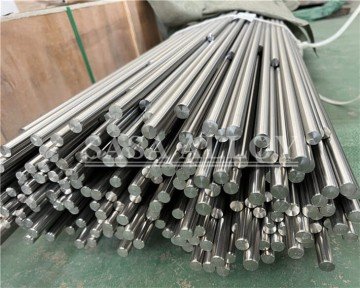
| Titanium Bar | Grade 1, Grade 2, Grade 5, Grade 7, Grade 9, Grade 23 | Shafts, fasteners, CNC parts, valve components, medical parts and aerospace components |
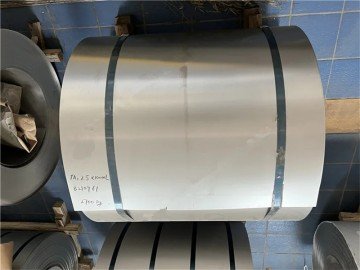
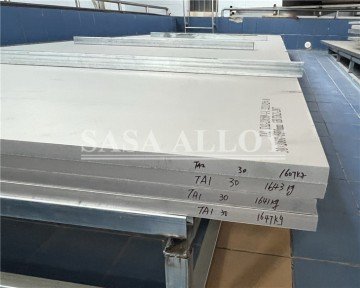
| Titanium Plate | Grade 1, Grade 2, Grade 5, Grade 7, Grade 12 | Chemical equipment, heat exchanger parts, marine plates and industrial structures |
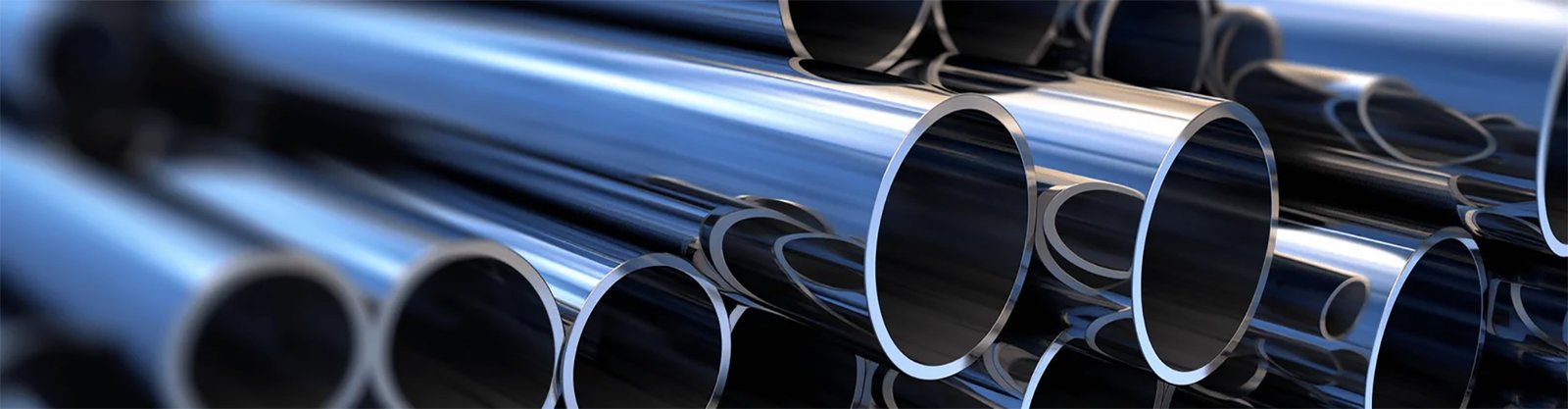
| Titanium Pipe and Tube | Grade 1, Grade 2, Grade 7, Grade 9, Grade 12 | Heat exchangers, condensers, chemical piping, marine systems and process equipment |
| Titanium Wire | Grade 1, Grade 2, Grade 5, Grade 23 | Medical wire, welding wire, springs, mesh, fasteners and precision components |
| Titanium Forging | Grade 2, Grade 5, Grade 23 and project-specific grades | Forged rings, discs, blocks, shafts and high-strength custom components |
FAQ About Grade 2 vs Grade 5 Titanium
1. Which is better, Grade 2 or Grade 5 titanium?
Neither grade is universally better. Grade 2 is better for corrosion resistance, welding, forming and cost-effective industrial equipment. Grade 5 is better for high strength, aerospace parts, fasteners, shafts and load-bearing machined components.
2. Is Grade 5 titanium stronger than Grade 2?
Yes. Grade 5 titanium is much stronger than Grade 2 because it contains aluminum and vanadium. It offers significantly higher tensile strength, yield strength and hardness, making it suitable for high-strength and high-performance applications.
3. Which grade has better corrosion resistance?
Grade 2 titanium is often preferred for corrosion-focused applications because it is commercially pure titanium with excellent resistance in many chemical and marine environments. Grade 5 also has good corrosion resistance, but it is usually selected mainly for strength.
4. Can Grade 2 and Grade 5 titanium be welded?
Both grades can be welded, but Grade 2 is generally easier to weld and fabricate. Grade 5 can be welded with proper process control, shielding gas protection and qualified welding procedures. For welded tanks, pipes and heat exchangers, Grade 2 is commonly preferred.
5. Is Grade 5 titanium more expensive than Grade 2?
In many cases, Grade 5 titanium is more expensive than Grade 2 because it contains alloying elements and requires stricter production control. If the application does not require Grade 5 strength, Grade 2 may be more cost-effective.
6. Which titanium grade should be used for medical applications?
Grade 2 and Grade 5 can both be used for some medical-related components depending on the standard and end use. However, implant applications often require Grade 23 Ti-6Al-4V ELI or specific medical standards. Buyers should confirm the exact medical specification before ordering.
7. What certificates should buyers request?
Buyers should request EN 10204 3.1 MTC showing grade, UNS number, standard, heat number, chemical composition, mechanical properties, size and delivery condition. PMI testing, UT testing and third-party inspection may also be required for critical applications.
8. What information is needed for a fast quotation?
A complete inquiry should include grade, standard, product form, size, quantity, tolerance, surface finish, condition, testing requirement, MTC requirement, destination port and packing requirement. For example: ASTM B348 Grade 5 titanium round bar, diameter 30 mm, length 3000 mm, peeled surface, EN 10204 3.1 MTC and PMI testing required.
Conclusion
Grade 2 and Grade 5 titanium are both important industrial titanium materials, but they serve different purposes. Grade 2 titanium is the better choice for corrosion resistance, weldability, formability and cost-effective chemical or marine equipment. Grade 5 titanium is the better choice for high strength, high fatigue resistance, aerospace components, precision machined parts, shafts and fasteners.
For successful procurement, buyers should confirm grade, UNS number, ASTM or EN standard, product form, size, tolerance, surface condition, EN 10204 3.1 MTC, heat number control, PMI testing, UT testing, dimensional inspection and export packaging. A professional titanium supplier should help buyers compare strength, corrosion resistance and cost before selecting Grade 2 or Grade 5 titanium.
Call To Action
Contact SAKY ALLOY for Grade 2 titanium, Grade 5 titanium, titanium bar, titanium plate, titanium pipe, titanium tube, titanium wire, titanium forging and customized titanium alloy products. We can support ASTM B348, ASTM B265, ASTM B338, EN 10204 3.1 MTC, PMI testing, UT testing, customized sizes, surface finish, third-party inspection, export packaging and delivery support.
Send your required grade, standard, product form, size, quantity, application environment and certificate requirements to our technical team. We can help you compare Grade 2 vs Grade 5 titanium, confirm the right specification, provide quotation and arrange suitable titanium supply solutions for your project.