
Hot Rolled vs Cold Drawn Titanium Bar: Which Is Better?
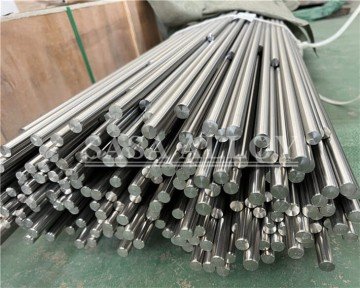
Titanium bars are essential components in high-performance industries such as aerospace, medical, chemical processing, and marine engineering. Their lightweight nature, corrosion resistance, and high strength-to-weight ratio make them a go-to material for demanding environments. However, not all titanium bars are created equal—they come in various forms depending on the manufacturing method. The two most common types are hot rolled and cold drawn titanium bars.
In this article, we will explore the differences between hot rolled and cold drawn titanium bars, evaluating their properties, applications, and advantages to help you determine which type is better suited for your project.
1. What Is a Hot Rolled Titanium Bar?
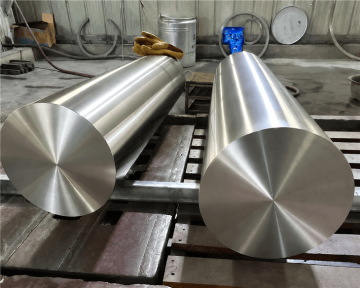
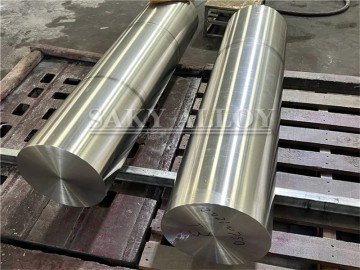
Hot rolling is a metal forming process that involves rolling titanium at elevated temperatures, typically above 900°C. At this high temperature, titanium becomes more malleable and easier to shape, resulting in:
-
Faster production rates
-
Less precise tolerances
-
A rough surface finish
Hot rolled titanium bars are typically produced in large volumes and are widely used for structural and industrial applications.
2. What Is a Cold Drawn Titanium Bar?
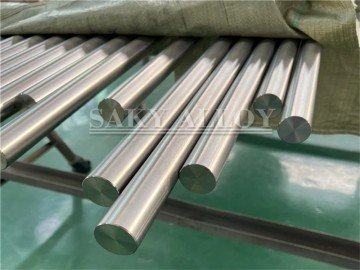
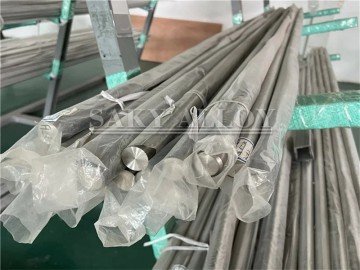
Cold drawing is a process that involves pulling a hot rolled titanium bar through a die at room temperature. This method enhances mechanical properties and produces a tighter dimensional tolerance and smoother surface finish.
Cold drawing introduces strain hardening, making the material stronger and more precise. However, it also makes the process more time-consuming and costly compared to hot rolling.
sakyalloy supplies both hot rolled and cold drawn titanium bars tailored to your specification, ensuring quality and performance across diverse applications.
3. Key Differences Between Hot Rolled and Cold Drawn Titanium Bars
| Feature | Hot Rolled Titanium Bar | Cold Drawn Titanium Bar |
|---|---|---|
| Manufacturing Temperature | High (above 900°C) | Room temperature |
| Surface Finish | Rough | Smooth |
| Dimensional Tolerance | Less accurate | Highly precise |
| Mechanical Strength | Lower | Higher due to strain hardening |
| Ductility | Higher | Lower due to work hardening |
| Production Cost | Lower | Higher |
| Machinability | Easier to machine | Harder to machine |
| Common Use | Structural and general applications | Aerospace, medical, precision parts |
4. Mechanical Properties Comparison
-
Yield Strength:
Cold drawn titanium bars typically have higher yield strength due to the work hardening introduced during the drawing process. -
Tensile Strength:
Cold drawn bars outperform hot rolled ones in tensile strength, making them ideal for load-bearing applications. -
Elongation:
Hot rolled titanium retains more ductility, which is useful in applications where formability is needed. -
Hardness:
Cold drawn titanium bars exhibit greater hardness, which contributes to their wear resistance.
5. Surface Finish and Tolerance
One of the most noticeable differences is in surface finish:
-
Hot Rolled Titanium Bar: Has a rough, oxidized surface due to high-temperature processing. Typically requires pickling or grinding for better surface quality.
-
Cold Drawn Titanium Bar: Comes with a bright, smooth finish and tighter dimensional control, which reduces the need for further machining.
At sakyalloy, our cold drawn bars are polished to industry-standard finishes, while hot rolled bars can be supplied as-is or surface-treated upon request.
6. Applications of Hot Rolled Titanium Bars
Hot rolled titanium bars are suitable for applications where high precision is not critical, but good strength and corrosion resistance are needed. Typical uses include:
-
Industrial equipment frames
-
Chemical plant components
-
Structural support in marine engineering
-
Heat exchanger tubing shells
-
Automotive parts
7. Applications of Cold Drawn Titanium Bars
Cold drawn titanium bars are preferred in industries that demand tight tolerances, high strength, and surface integrity, such as:
-
Aerospace Components: Landing gear shafts, fasteners, and turbine blades
-
Medical Implants: Bone plates, rods, surgical instruments
-
Precision Instruments: Measuring tools, gears, and high-accuracy mechanical components
-
Defense: Submarine components, armor plating, and projectiles
8. Cost Considerations
-
Hot Rolled Bars: Generally more economical due to lower energy consumption and faster production cycles. Ideal for bulk projects with minimal post-processing.
-
Cold Drawn Bars: Higher cost due to additional processing and slower throughput, but offer savings in machining, finishing, and performance in precision applications.
9. Which One Should You Choose?
Choose Hot Rolled Titanium Bar if:
-
Your project is cost-sensitive
-
Surface finish is not a critical factor
-
Machining or reshaping is part of the process
-
You require high ductility and formability
Choose Cold Drawn Titanium Bar if:
-
You need high strength and tight tolerances
-
A smooth surface finish is necessary
-
The component will undergo minimal machining
-
You’re producing medical, aerospace, or precision parts
10. Quality Assurance at sakyalloy
At sakyalloy, we ensure both hot rolled and cold drawn titanium bars are:
-
Manufactured to international standards (ASTM B348, AMS 4928, etc.)
-
100% inspected for dimensional accuracy and surface finish
-
Supplied with EN 10204 3.1 / 3.2 certification
-
Available in Grade 2, Grade 5 (Ti-6Al-4V) and other alloys
Our expert team can also provide guidance on cutting, machining, and forming titanium to suit your specific requirements.
Conclusion
Both hot rolled and cold drawn titanium bars serve important roles in modern engineering. Choosing the right type depends on your application needs, budget, and desired properties. Hot rolled bars offer economy and flexibility, while cold drawn bars provide strength, precision, and surface excellence.
Whatever your choice, sakyalloy is your trusted partner in delivering high-quality titanium bars that meet your performance and budget requirements. Our advanced production capabilities, strict quality control, and global shipping ensure that you get the right material—on time, every time.