
How to Safely Grind Titanium Bars
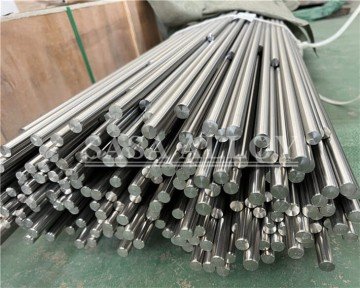
Titanium is a strong, lightweight, and corrosion-resistant metal widely used in aerospace, marine, medical, and industrial applications. However, when it comes to grinding titanium bars, the process becomes more challenging and risk-sensitive than grinding steel or aluminum.
Titanium’s unique properties—such as low thermal conductivity, high strength, and chemical reactivity at elevated temperatures—make it prone to overheating, smearing, wheel loading, and even fire hazards during grinding. Therefore, to ensure operator safety, surface integrity, and tool longevity, it is essential to follow strict guidelines when grinding titanium.
In this article, we provide a comprehensive guide on how to safely grind titanium bars, including the best practices, tools, precautions, and post-processing steps that ensure efficiency and safety.
Why Grinding Titanium Requires Special Care
Titanium behaves differently from most metals during machining and grinding due to several key factors:
-
Low thermal conductivity: Heat accumulates at the grinding zone
-
High chemical reactivity: Can bond to grinding wheels or combust under friction
-
Elastic modulus: Causes vibration and chatter
-
Work hardening: Surface becomes tougher during grinding
These characteristics mean that titanium not only wears out grinding wheels quickly but also increases the risk of fire and deformation if not handled correctly.
Safety Risks During Titanium Grinding
1. Fire Hazard
Titanium grinding dust is highly flammable, especially in dry conditions. Fine particles can ignite spontaneously or due to sparks from grinding wheels.
2. Wheel Loading and Smearing
Titanium can adhere to abrasive wheels, causing glazing or loading, which leads to inefficient grinding and increased heat buildup.
3. Overheating and Thermal Cracking
Poor heat dissipation can lead to thermal damage, loss of tolerance, surface burns, and microcracks in the titanium bar.
Preparation Before Grinding
1. Use Proper Equipment
Use a grinder specifically designed or adapted for titanium:
-
Enclosed grinding system with dust extraction
-
Variable speed control
-
Spark arrestors and coolant-compatible features
2. Select Appropriate Grinding Wheels
Recommended grinding wheels for titanium:
-
Aluminum oxide (white fused alumina)
-
Silicon carbide (for roughing applications)
-
CBN (Cubic Boron Nitride) for tighter tolerances
-
Avoid using soft or resin-bonded wheels
Use a hard grade wheel with open structure to reduce heat and loading.
3. Coolant and Lubrication
Always grind titanium wet, using high-pressure coolant systems. Water-soluble synthetic coolants or mineral oils with additives work best. Never grind titanium dry.
Step-by-Step: Safe Grinding of Titanium Bars
Step 1: Secure the Workpiece
-
Firmly clamp the titanium bar to prevent vibration or movement
-
Support long bars with roller tables or fixtures
-
Ensure the grinding area is free from oil-soaked rags or titanium chips
Step 2: Start with a Coarse Wheel
-
Begin with a coarse-grit wheel for stock removal
-
Use light passes to avoid friction heat buildup
-
Maintain consistent wheel-to-bar contact
Step 3: Monitor Temperature Constantly
-
Check the grinding area frequently
-
If smoke or discoloration appears, stop immediately
-
Use thermal cameras or IR sensors for high-precision applications
Step 4: Apply Continuous Coolant
-
Direct coolant at the interface between the wheel and the bar
-
Ensure coolant flow is uninterrupted
-
Check coolant concentration regularly for optimal performance
Step 5: Avoid Heavy In-Feed
-
Keep the depth of cut shallow
-
Multiple light passes are better than a single deep one
-
Reduce feed rate when nearing final dimension
Step 6: Use Slow Speeds When Needed
-
Lower grinding speeds minimize heat generation
-
Use variable-speed grinders to adjust based on bar thickness and hardness
Post-Grinding Precautions
1. Dust Collection
-
Collect titanium dust with a wet vacuum or dust extractor with spark suppression
-
Never sweep or use compressed air to remove titanium dust
-
Dispose of grinding waste in metal bins with tight lids
2. Deburring and Edge Finishing
-
Use hand tools or non-abrasive brushes to remove burrs
-
Check the bar for microcracks or stress marks
3. Surface Inspection
-
Visually inspect for burn marks or surface smearing
-
Use non-destructive testing (NDT) if required
-
Measure dimensions and straightness with calibrated tools
Grinding Parameters Recommended for Titanium
| Parameter | Recommended Range |
|---|---|
| Wheel speed | 1,500 – 2,500 m/min |
| Feed rate | 0.01 – 0.05 mm/rev |
| Depth of cut | 0.005 – 0.02 mm |
| Coolant flow rate | High-pressure, continuous |
| Wheel grit size | 46 – 80 for roughing, 100+ for finishing |
Adjust parameters based on titanium grade (e.g., CP Grade 2 vs Ti-6Al-4V) and required tolerance.
Best Practices for Fire Prevention
-
Keep a Class D fire extinguisher near the grinding area
-
Do not use water to extinguish a titanium fire
-
Remove flammable materials from the grinding zone
-
Store titanium dust in sealed, non-reactive containers
-
Use spark-resistant tools and no exposed electrical wiring
At sakyalloy, fire safety training and proper grinding room setup are standard practices when working with titanium bars.
Applications Where Ground Titanium Bars Are Used
After precision grinding, titanium bars are used in:
-
Heat exchangers
-
Medical implants
-
Aerospace fasteners
-
Chemical processing shafts
-
Marine hardware
-
Automotive racing components
The final surface condition achieved by safe grinding enhances product reliability and extends service life in demanding environments.
Conclusion
Grinding titanium bars is a technically demanding but essential process for achieving the required dimensional accuracy and surface finish in high-performance applications. However, due to titanium’s reactivity and low thermal conductivity, safety must be the top priority.
By using the right equipment, grinding wheels, coolants, and protective procedures, operators can safely and efficiently process titanium bars without compromising safety or product quality.
At sakyalloy, we apply industry-leading grinding techniques and safety protocols to deliver titanium bars with precision surface finishes, tight tolerances, and zero-defect quality—ready for immediate use in critical industries.