
Non-Destructive Testing Methods for Titanium Grade 11 Bars
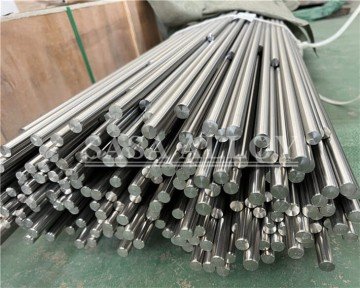
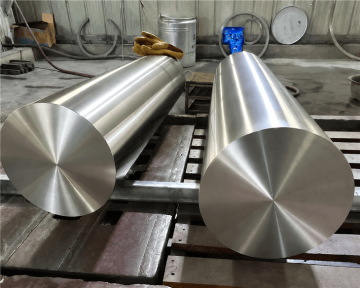
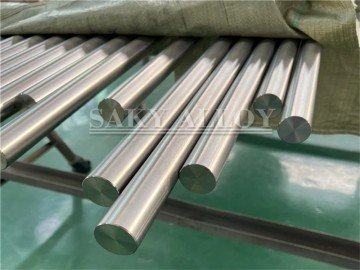
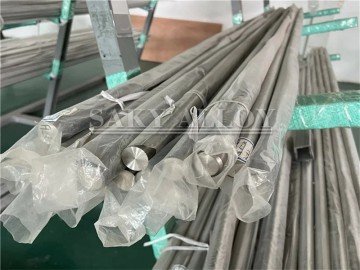
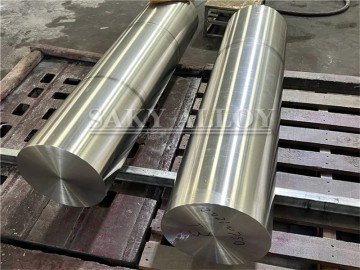
Titanium Grade 11 is a commercially pure titanium alloy known for its exceptional corrosion resistance, lightweight properties, and excellent mechanical strength. It is widely used in chemical processing, marine, aerospace, and industrial applications where reliability and performance are critical.
Ensuring the integrity and quality of Titanium Grade 11 bars requires rigorous testing. Non-destructive testing (NDT) methods allow manufacturers to evaluate material properties, detect defects, and guarantee performance without damaging the bars. Leading suppliers like sakyalloy employ advanced NDT techniques to deliver high-quality titanium bars that meet stringent international standards.
Importance of Non-Destructive Testing
Ensuring Structural Integrity
NDT helps detect internal and surface defects such as cracks, voids, inclusions, and porosity that could compromise mechanical performance. Identifying these issues early prevents failure in critical applications.
Maintaining Corrosion Resistance
Surface defects or internal imperfections can reduce corrosion resistance, especially in chemical and marine environments. NDT ensures that bars maintain optimal protective oxide layers and are free of defects that could accelerate degradation.
Compliance with Standards
Non-destructive testing ensures compliance with ASTM B265, ASME, ISO, and NACE standards. These standards mandate rigorous inspection to guarantee safety, reliability, and performance in high-demand environments.
Common Non-Destructive Testing Methods for Titanium Grade 11
Ultrasonic Testing (UT)
UT uses high-frequency sound waves to detect internal defects such as voids, inclusions, and cracks. The process involves:
-
Sending ultrasonic waves through the titanium bar
-
Measuring the time and amplitude of reflected waves
-
Identifying and locating discontinuities
Benefits of UT include:
-
High sensitivity to internal defects
-
Accurate defect sizing and location
-
Applicable to bars of varying diameters and lengths
Radiographic Testing (RT)
RT employs X-rays or gamma rays to capture internal images of titanium bars. It is effective for detecting:
-
Porosity and voids
-
Cracks and inclusions
-
Welding defects in fabricated bars
RT provides a permanent visual record, supporting traceability and quality documentation.
Eddy Current Testing (ECT)
ECT is used to detect surface and near-surface defects in conductive materials. For titanium bars, ECT:
-
Detects cracks, pits, and corrosion near the surface
-
Allows rapid inspection without contact in some configurations
-
Complements other NDT methods to ensure full coverage
Dye Penetrant Testing (PT)
PT is a simple and effective method for detecting surface-breaking defects. The process includes:
-
Applying a liquid dye to the bar surface
-
Allowing penetration into cracks and defects
-
Removing excess dye and applying a developer to reveal defects
PT is widely used to verify surface integrity and prepare bars for final finishing or passivation.
Magnetic Particle Testing (MPT)
Although titanium is non-ferromagnetic, MPT can be applied if ferromagnetic inserts or coatings are present. It detects surface and near-surface defects by observing magnetic flux leakage patterns.
Advanced NDT Techniques
Phased Array Ultrasonic Testing (PAUT)
PAUT is an advanced form of ultrasonic testing that uses multiple elements in an array to create detailed images of internal structures. Benefits include:
-
High-resolution defect detection
-
Precise sizing and location of defects
-
Faster inspection of long or complex bars
Computed Radiography (CR)
CR uses digital imaging to improve the efficiency and accuracy of radiographic inspection. Advantages include:
-
Digital storage and easy sharing of inspection results
-
Enhanced contrast and defect visualization
-
Reduced radiation exposure compared to conventional RT
Automated Eddy Current Scanning
Automated ECT systems can scan entire bar surfaces, increasing inspection speed and consistency. Automated scanning ensures that every section of the bar is evaluated for defects and irregularities.
NDT in Manufacturing and Quality Assurance
Integration in Production
NDT is applied at multiple stages during the manufacturing of Titanium Grade 11 bars:
-
After forging to detect internal defects
-
After rolling to identify surface imperfections
-
Post-heat treatment to verify structural integrity
Traceability and Documentation
Results from NDT inspections are documented and stored for traceability. Sakyalloy maintains detailed inspection records, including:
-
Type of NDT performed
-
Locations and types of detected defects
-
Measurements and tolerance verification
This documentation supports audits, certification, and customer assurance.
Enhancing Performance and Safety
By combining multiple NDT techniques, manufacturers can ensure that titanium bars are defect-free, dimensionally accurate, and capable of performing under extreme conditions. This reduces the risk of failure in critical chemical, marine, and aerospace applications.
Standards and Compliance
ASTM Standards
-
ASTM B265 specifies material requirements and testing for commercially pure titanium, including NDT guidelines.
ASME and ISO Standards
-
ASME and ISO standards define procedures, acceptance criteria, and reporting methods for NDT of titanium bars.
NACE Requirements
-
For chemical and marine applications, NACE standards ensure resistance to stress corrosion cracking and other forms of degradation.
Compliance with these standards ensures that Titanium Grade 11 bars meet global quality expectations.
Applications of NDT-Verified Titanium Grade 11 Bars
Chemical Processing
-
Piping, reactors, and tanks resistant to acids and chlorine
-
Heat exchangers and process equipment requiring defect-free materials
Marine and Offshore
-
Desalination plants, seawater piping, and marine hardware
-
Components exposed to aggressive saltwater environments
Aerospace
-
Structural components requiring high reliability and defect-free integrity
-
Corrosion-resistant parts for aircraft and spacecraft
Power Generation
-
High-temperature steam and water piping systems
-
Industrial equipment exposed to harsh environments
Ensuring defect-free bars through NDT improves reliability, safety, and service life in all these critical applications.
Advantages of Comprehensive NDT
-
Early Detection of Defects – Prevents failure during fabrication or service
-
Enhanced Safety – Reduces risk of catastrophic failure in critical applications
-
Improved Corrosion Resistance – Surface and internal integrity preserved
-
Compliance with International Standards – ASTM, ASME, ISO, and NACE
-
Customer Confidence – Traceable inspection records and certified quality
-
Long-Term Reliability – Bars perform consistently under demanding conditions
Sakyalloy implements comprehensive NDT methods to guarantee that every Titanium Grade 11 bar meets high-quality standards for critical industrial applications.
Role of Sakyalloy
Expertise and Quality Assurance
Sakyalloy integrates multiple NDT techniques in their production process to ensure that Titanium Grade 11 bars are free of surface and internal defects.
Traceability and Documentation
-
Detailed inspection records for each bar
-
Compliance with ASTM, ASME, ISO, and NACE standards
-
Assurance of mechanical and chemical performance for demanding applications
Partnering with sakyalloy ensures that customers receive titanium bars that are fully certified, defect-free, and suitable for chemical, marine, aerospace, and industrial use.
Conclusion
Non-destructive testing is essential for verifying the integrity, dimensional accuracy, and surface quality of Titanium Grade 11 bars. Methods such as ultrasonic testing, radiographic testing, eddy current testing, and dye penetrant testing enable manufacturers to detect internal and surface defects without damaging the material.
By employing advanced NDT techniques and maintaining rigorous inspection protocols, suppliers like sakyalloy ensure that Titanium Grade 11 bars meet international standards and deliver reliable performance in chemical processing, marine, aerospace, and industrial applications. Comprehensive NDT guarantees defect-free, corrosion-resistant, and mechanically robust titanium bars suitable for critical environments.