
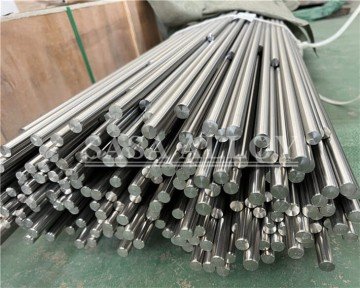
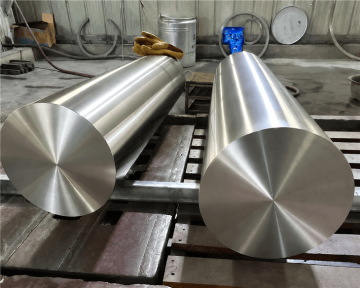
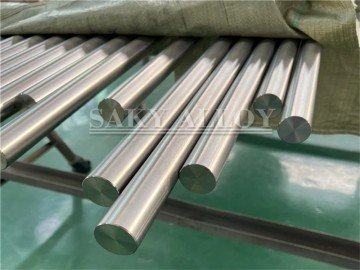
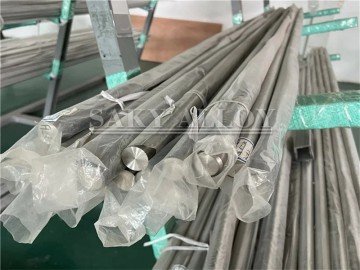
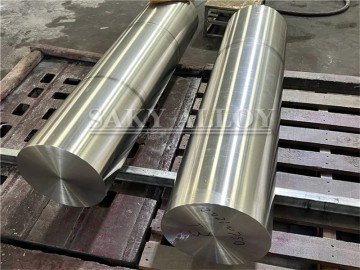
The Role of Oxygen Content in Determining the Quality of Ti-6Al-4V ELI Bars
Among the numerous titanium alloys used in modern engineering, Ti-6Al-4V ELI (Grade 23 Titanium) stands out for its exceptional balance of strength, ductility, and biocompatibility. It is widely used in aerospace, medical, and high-precision engineering due to its reliable mechanical performance and purity.
But what truly distinguishes Grade 23 (ELI) from the standard Grade 5 (Ti-6Al-4V) is one key factor — its low oxygen content. The term “ELI” means Extra Low Interstitial, referring to the controlled reduction of impurities such as oxygen, nitrogen, carbon, and iron, which profoundly influence the alloy’s properties.
In this article, SAKYALLOY explores the role of oxygen content in determining the quality of Ti-6Al-4V ELI Bars, explaining how even slight variations in oxygen levels can affect mechanical strength, toughness, fatigue life, and biocompatibility — and why maintaining precise control is vital for producing world-class titanium bars.
Understanding Ti-6Al-4V ELI Alloy
Ti-6Al-4V is an alpha-beta titanium alloy, composed primarily of titanium (Ti) with 6% aluminum and 4% vanadium. Aluminum strengthens the alpha phase and enhances oxidation resistance, while vanadium stabilizes the beta phase, improving ductility and formability.
The ELI (Extra Low Interstitial) version — known as Grade 23 Titanium — contains significantly lower oxygen and other interstitial elements than the standard Grade 5. These minor chemical adjustments give the alloy improved fracture toughness, ductility, and fatigue resistance, particularly under cryogenic or high-stress conditions.
SAKYALLOY Ti-6Al-4V ELI Bars are produced in strict accordance with ASTM B348 / ASTM F136 / AMS 4930 / ISO 5832-3 standards to guarantee purity, consistency, and reliability for both medical and aerospace applications.
Chemical Composition of Ti-6Al-4V ELI
| Element | Grade 5 (Ti-6Al-4V) | Grade 23 (Ti-6Al-4V ELI) | Function |
|---|---|---|---|
| Aluminum (Al) | 5.5 – 6.75% | 5.5 – 6.5% | Strengthens alpha phase |
| Vanadium (V) | 3.5 – 4.5% | 3.5 – 4.5% | Stabilizes beta phase |
| Iron (Fe) | ≤ 0.40% | ≤ 0.25% | Affects toughness |
| Oxygen (O) | ≤ 0.20% | ≤ 0.13% | Influences ductility and fatigue strength |
| Carbon (C) | ≤ 0.10% | ≤ 0.08% | Increases hardness |
| Nitrogen (N) | ≤ 0.05% | ≤ 0.05% | Alters yield strength |
| Hydrogen (H) | ≤ 0.015% | ≤ 0.0125% | Prevents embrittlement |
| Titanium (Ti) | Balance | Balance | Base metal providing corrosion resistance |
The reduction in oxygen — from 0.20% in Grade 5 to 0.13% or lower in Grade 23 — may appear minimal, but its impact on material performance is significant.
The Role of Oxygen as an Interstitial Element
Oxygen is one of the most influential interstitial elements in titanium alloys. It occupies spaces between titanium atoms within the crystal lattice, which alters the alloy’s strength, hardness, and ductility.
-
Higher oxygen content → increases strength and hardness but reduces ductility.
-
Lower oxygen content → enhances toughness and fatigue life while slightly reducing yield strength.
Thus, controlling oxygen is a balancing act: too much can make the alloy brittle; too little can reduce strength. Ti-6Al-4V ELI strikes the ideal balance for high-performance and medical-grade use.
How Oxygen Content Affects Mechanical Properties
The mechanical performance of Ti-6Al-4V ELI Bars is directly linked to oxygen content.
| Property | High Oxygen (0.20%) | Low Oxygen (0.13%) | Effect |
|---|---|---|---|
| Tensile Strength | High (900–950 MPa) | Moderate (860–900 MPa) | Slight reduction |
| Yield Strength | High | Slightly lower | Improved ductility |
| Elongation | Moderate (10–12%) | Excellent (14–15%) | Better formability |
| Fracture Toughness | Low | High | Improved impact resistance |
| Fatigue Life | Shorter | Longer | Better endurance under cyclic stress |
| Hardness | Higher | Moderate | Easier to machine and weld |
| Biocompatibility | Good | Excellent | Safer for implants |
By lowering oxygen levels, Grade 23 Titanium Bars achieve superior fracture toughness and fatigue strength, essential for both aerospace stress cycles and medical load-bearing performance.
Microstructural Effects of Oxygen
Oxygen content also plays a key role in determining the microstructure of Ti-6Al-4V alloys.
-
High oxygen levels strengthen the alpha phase, but this increases brittleness and reduces fracture toughness.
-
Low oxygen levels, as in Grade 23, result in a finer alpha-beta structure, promoting better ductility and crack resistance.
-
The grain boundaries remain more flexible, preventing microcrack propagation under cyclic stress.
This refined microstructure ensures that SAKYALLOY Ti-6Al-4V ELI Bars maintain mechanical stability even in demanding environments, such as aircraft engine assemblies and medical implants.
Oxygen and Fracture Toughness
Fracture toughness — the ability of a material to resist crack growth — is one of the most critical properties in engineering materials.
In titanium alloys, oxygen acts as a solid-solution strengthener but also as a toughness reducer. A higher oxygen concentration makes the alloy harder and stronger but more prone to brittle fracture.
Grade 23 Titanium with its Extra Low Oxygen (≤0.13%) exhibits much greater fracture toughness than standard Grade 5. This allows it to withstand:
-
Dynamic mechanical shocks in aerospace systems.
-
Cyclic loading in orthopedic implants and dental components.
-
Cryogenic stresses in liquid gas and space applications.
The balance achieved by SAKYALLOY through precise oxygen control ensures both structural reliability and flexibility across all use cases.
Oxygen and Fatigue Resistance
Fatigue failure — caused by repeated cyclic stress — is one of the most common failure mechanisms in metals.
Lower oxygen levels in Ti-6Al-4V ELI help:
-
Reduce microcrack initiation.
-
Delay fatigue crack propagation.
-
Maintain surface integrity under repeated loading.
This is particularly beneficial for aircraft fasteners, engine components, and implants, where parts experience millions of stress cycles during their service life.
SAKYALLOY ELI Bars are rigorously fatigue-tested under ASTM E466 to ensure endurance in the most challenging operating environments.
Oxygen and Biocompatibility
In medical applications, oxygen content directly influences the biocompatibility and corrosion behavior of titanium alloys.
-
Lower oxygen levels lead to a cleaner and more uniform oxide film, enhancing corrosion resistance in body fluids.
-
The reduced impurity content minimizes ion release, ensuring complete tissue compatibility.
-
Implants made from Ti-6Al-4V ELI integrate naturally with bone (osseointegration), reducing healing time and improving patient outcomes.
Because of these factors, SAKYALLOY Ti-6Al-4V ELI Bars are the preferred choice for orthopedic implants, dental fixtures, and surgical tools, meeting ASTM F136 / ISO 5832-3 medical-grade standards.
Oxygen and Weldability
High oxygen content can lead to embrittlement in the heat-affected zone (HAZ) during welding, causing cracks or porosity. The lower oxygen levels in Grade 23 titanium make it more weldable and formable, especially under inert gas protection (TIG, plasma, or electron-beam welding).
This property is essential in aerospace manufacturing, where titanium components are frequently welded into assemblies without post-weld heat treatment.
Industrial and Aerospace Implications
In aerospace engineering, precision and reliability are everything. The low oxygen content in Ti-6Al-4V ELI Bars provides:
-
Better dimensional stability under temperature changes.
-
Longer fatigue life for rotating and load-bearing components.
-
Enhanced safety margins for critical flight and space structures.
Common Aerospace Applications Include:
-
Aircraft fasteners and landing gear components.
-
Jet engine compressor blades.
-
Spacecraft and satellite structures.
-
Cryogenic fuel system components.
Each SAKYALLOY Ti-6Al-4V ELI Bar used in aerospace production undergoes ultrasonic, radiographic, and chemical inspection to ensure consistent oxygen control and performance integrity.
Quality Control of Oxygen Content at SAKYALLOY
Maintaining precise oxygen levels requires advanced metallurgical control. SAKYALLOY ensures purity through every stage of production:
1. Controlled Melting and Refining
-
Utilizes Vacuum Arc Remelting (VAR) and Electron Beam Melting (EBM) to eliminate gas inclusions and minimize oxygen contamination.
2. Clean Forging and Forming Environment
-
Hot forging is performed in inert or vacuum-controlled atmospheres, preventing oxidation during shaping.
3. Precise Testing and Analysis
-
Oxygen content is verified using inert gas fusion analysis (ASTM E1409).
-
All mechanical and metallurgical properties are validated against ASTM B348 / AMS 4930 standards.
4. Documentation and Certification
Each batch of SAKYALLOY Ti-6Al-4V ELI Bars is supplied with full EN 10204 3.1/3.2 certificates, ensuring traceability and compliance with international specifications.
Comparison: Grade 5 vs. Grade 23 Titanium
| Property | Grade 5 (0.20% O₂) | Grade 23 (0.13% O₂) | Result |
|---|---|---|---|
| Strength | Slightly higher | Moderate | Comparable for most uses |
| Ductility | Moderate | Excellent | ELI more formable |
| Fracture Toughness | Lower | High | ELI preferred for critical parts |
| Fatigue Life | Moderate | Superior | ELI lasts longer under cyclic stress |
| Biocompatibility | Good | Excellent | ELI ideal for implants |
| Cryogenic Performance | Limited | Outstanding | ELI suitable for low-temp use |
The data clearly show that oxygen reduction is the key factor that makes Ti-6Al-4V ELI Bars the superior choice for precision, biomedical, and aerospace applications.
Why Choose SAKYALLOY
SAKYALLOY is a globally recognized manufacturer of titanium, nickel, and stainless steel products, with advanced facilities and decades of metallurgical expertise.
Our Advantages Include:
-
ISO 9001:2015 certified production lines.
-
In-house vacuum melting and forging capabilities.
-
Strict quality inspection and mechanical testing.
-
Compliance with ASTM, AMS, and ISO standards.
-
Global supply network and technical support.
By maintaining absolute control over oxygen and impurity levels, SAKYALLOY ensures that every Ti-6Al-4V ELI Bar meets the highest international standards for purity, performance, and reliability.
Conclusion
The oxygen content in titanium alloys may appear to be a minor detail, but it is the defining factor that determines the quality, performance, and application scope of Ti-6Al-4V ELI Bars. Lower oxygen levels enhance toughness, ductility, fatigue life, weldability, and biocompatibility, making Grade 23 the preferred titanium grade for medical implants, aerospace structures, and cryogenic systems.
Through advanced production technology and precise control of oxygen content, SAKYALLOY delivers Ti-6Al-4V ELI Bars that offer unmatched consistency, mechanical integrity, and purity — ensuring success in the most demanding environments on Earth and beyond.