
The Science Behind Titanium Pipe Strength
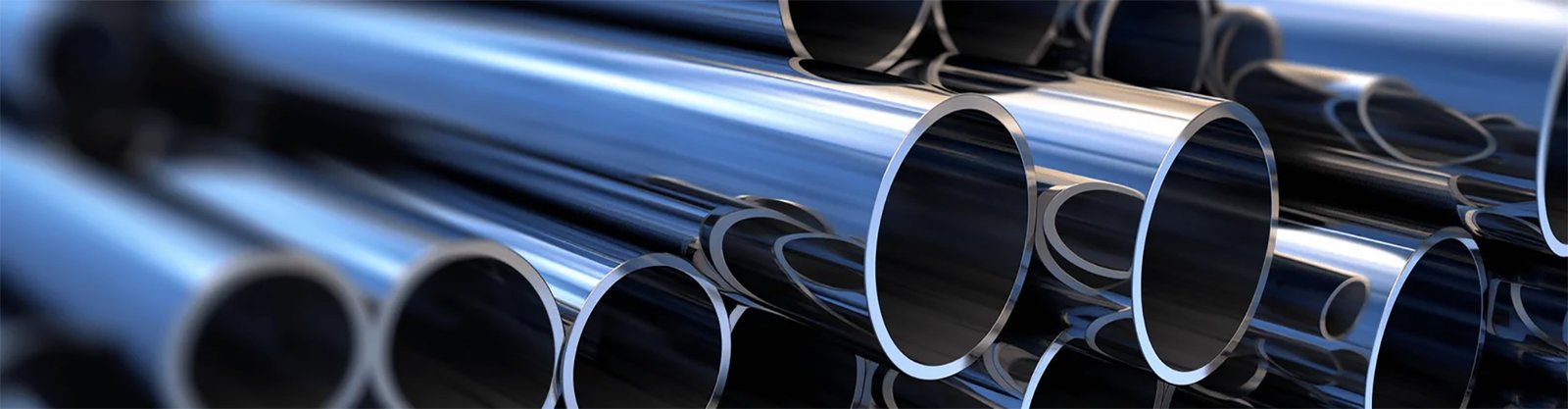
Titanium pipe is renowned for its impressive combination of lightweight design and exceptional mechanical performance. From aerospace to desalination, it has become the material of choice where high strength, corrosion resistance, and long service life are critical. But what exactly gives titanium pipe its strength? Is it just the element itself—or is there deeper science at play?
In this article, we explore the fundamental science behind titanium pipe strength, including its atomic structure, alloying elements, manufacturing techniques, and how different grades achieve specific mechanical performance. We also highlight how sakyalloy ensures titanium pipe strength through rigorous quality control and metallurgical precision.
1. Titanium’s Atomic and Crystal Structure
Titanium (Ti), with atomic number 22, is a transition metal known for its hexagonal close-packed (HCP) crystal structure at room temperature. This structure plays a significant role in defining its mechanical properties.
-
At low temperatures (below 882°C), titanium exists in the alpha phase (HCP), which provides good strength and toughness.
-
Above 882°C, titanium transforms into the beta phase (body-centered cubic, BCC), which allows more ductility and ease of forming.
This dual-phase capability is why titanium alloys can be heat-treated to balance strength, flexibility, and formability.
2. Pure Titanium vs Titanium Alloys
Commercially pure titanium (Grades 1 to 4) offers moderate strength but outstanding corrosion resistance. However, for demanding applications, titanium is alloyed with elements such as:
-
Aluminum (Al) – increases strength and reduces density
-
Vanadium (V) – improves hardenability and corrosion resistance
-
Molybdenum (Mo) – enhances creep resistance and thermal strength
-
Palladium (Pd) – improves corrosion protection in reducing acids
A well-known alloy is Grade 5 (Ti-6Al-4V), which provides a high tensile strength of over 950 MPa—nearly double that of most stainless steels—while remaining much lighter.
3. Mechanical Properties That Matter
When evaluating titanium pipe strength, engineers focus on key mechanical values:
-
Tensile Strength – the maximum stress the pipe can withstand without breaking
-
Yield Strength – the stress at which permanent deformation begins
-
Elongation – the ductility or ability to stretch before breaking
-
Fatigue Resistance – endurance under cyclic loading
-
Creep Resistance – ability to withstand high temperature under load over time
Titanium pipe excels in all these areas, especially when used in chemically aggressive or high-pressure environments.
4. Heat Treatment and Work Hardening
One reason titanium pipe is so strong lies in the thermomechanical processing used during manufacturing:
-
Cold working strengthens the pipe through plastic deformation, aligning the grains and increasing dislocation density.
-
Annealing reduces internal stress, improving ductility while maintaining strength.
-
Solution treatment and aging (STA) is used for beta alloys to enhance hardness and yield strength.
sakyalloy uses precise heat treatment protocols tailored to each grade and pipe size to deliver optimal strength for end-use requirements.
5. Welding and Joint Strength
Unlike many metals, titanium pipe retains its mechanical strength even after welding, provided proper shielding gases (like argon) and techniques are used. This makes it suitable for high-integrity applications like:
-
Heat exchanger networks
-
High-pressure chemical lines
-
Aerospace hydraulic systems
Poor welding can degrade the heat-affected zone (HAZ), but expert techniques—used by suppliers like sakyalloy—ensure full strength across welded joints with minimal grain coarsening or embrittlement.
6. Wall Thickness and Strength Correlation
Wall thickness also plays a direct role in strength. Titanium pipes follow various wall schedule standards (such as SCH10, SCH40, SCH80), which dictate their pressure rating and burst strength.
-
Thicker walls allow for higher internal pressure
-
Thinner walls reduce weight and cost but may require support
-
Proper strength calculations consider pipe diameter, wall thickness, temperature, and internal pressure for safe design
sakyalloy provides engineering support for pipe sizing and pressure rating calculations, ensuring both mechanical strength and material efficiency.
7. Titanium vs Other Materials
When strength-to-weight ratio is a deciding factor, titanium is difficult to beat:
| Material | Density (g/cm³) | Tensile Strength (MPa) | Strength-to-Weight Ratio |
|---|---|---|---|
| Titanium (Grade 5) | 4.43 | ~950 | High |
| Stainless Steel | 7.9 | ~600 | Moderate |
| Aluminum Alloy | 2.7 | ~300 | Low |
| Carbon Steel | 7.85 | ~450 | Moderate |
Despite being lighter than steel, titanium offers superior strength, especially in environments where corrosion would otherwise weaken traditional metals.
8. Real-World Applications Requiring Strength
Titanium pipe is chosen for strength-critical applications across industries:
-
Offshore Oil & Gas: Deep-sea risers and umbilicals
-
Power Generation: Condenser pipes in geothermal plants
-
Aerospace: Hydraulic lines and cooling ducts
-
Military: Submarine piping and missile systems
-
Medical: Pressure tubing in surgical sterilization units
These applications demand performance over decades, often under extreme temperature, pressure, and corrosive exposure—making titanium’s strength essential.
9. How sakyalloy Ensures Strength Standards
As a global supplier of premium titanium pipe, sakyalloy follows strict quality control protocols to ensure mechanical integrity:
-
Raw Material Traceability – only certified sponge and alloy inputs
-
Non-destructive Testing (NDT) – including ultrasonic and eddy current inspection
-
Tensile and Hardness Testing – per ASTM B338, B861, and B862
-
3rd Party Certification – EN 10204 3.1/3.2 documentation available
-
Precision Cold Working & Annealing – to control grain structure and wall thickness
By managing the process from ingot to final tube, sakyalloy delivers titanium pipe products with consistent, verifiable mechanical strength.
Conclusion
The strength of titanium pipe is not just a byproduct of the element itself—it’s the result of advanced metallurgy, smart alloying, and precise manufacturing control. Its superior performance in high-stress, corrosive, and long-lifecycle environments makes it a strategic investment, not a luxury.
Whether you’re building desalination infrastructure, designing a jet engine, or laying out piping for next-gen energy systems, titanium pipe delivers lightweight power with unmatched reliability.
And when you source from sakyalloy, you’re getting titanium pipe that meets the highest global standards for strength, safety, and performance—backed by expertise that ensures your project succeeds.