
Titanium Alloy Innovations: The Rising Popularity of Grade 23 in High-Performance Industries
Titanium alloys have revolutionized modern manufacturing, combining lightweight strength, corrosion resistance, and biocompatibility in ways that no other metal can match. From aerospace to medical implants, titanium’s versatility has made it indispensable across industries that demand performance, reliability, and durability.
Among these alloys, Grade 23 Titanium (Ti-6Al-4V ELI) has rapidly emerged as the material of choice for high-performance applications. Known as the “Extra Low Interstitial” version of Grade 5 Titanium, Grade 23 offers exceptional purity, toughness, and fatigue strength — properties that make it ideal for critical environments where safety and precision are paramount.
In this article, we explore the innovations driving the popularity of Grade 23 Titanium alloy, its advantages over traditional grades, its expanding industrial applications, and how sakyalloy, a leading global titanium supplier, is helping industries adopt this advanced material for next-generation engineering solutions.
What Makes Grade 23 Titanium Unique
Grade 23 Titanium (Ti-6Al-4V ELI) is a high-purity alpha-beta titanium alloy derived from Grade 5 (Ti-6Al-4V). The “ELI” in its name stands for Extra Low Interstitials, referring to the extremely low levels of impurities such as oxygen, nitrogen, hydrogen, and iron.
This reduced impurity level gives Grade 23 distinct advantages over standard titanium alloys, including:
-
Improved fracture toughness
-
Superior fatigue performance
-
Enhanced ductility
-
Excellent biocompatibility
These properties make it a preferred material for aerospace fasteners, biomedical implants, and advanced engineering components that operate under extreme stress or corrosive environments.
Chemical Composition of Grade 23 Titanium
| Element | Percentage (%) |
|---|---|
| Titanium (Ti) | Balance |
| Aluminum (Al) | 5.5 – 6.5 |
| Vanadium (V) | 3.5 – 4.5 |
| Iron (Fe) | ≤ 0.25 |
| Oxygen (O) | ≤ 0.13 |
| Nitrogen (N) | ≤ 0.05 |
| Hydrogen (H) | ≤ 0.012 |
| Carbon (C) | ≤ 0.08 |
By lowering oxygen and iron levels, Grade 23 becomes more ductile and resistant to crack propagation, ensuring long-term reliability in both structural and medical applications.
Mechanical Properties
| Property | Grade 5 (Ti-6Al-4V) | Grade 23 (Ti-6Al-4V ELI) |
|---|---|---|
| Tensile Strength (MPa) | 895 | 860 |
| Yield Strength (MPa) | 828 | 795 |
| Elongation (%) | 10 | 14 |
| Reduction in Area (%) | 25 | 35 |
| Fracture Toughness | Moderate | High |
The slightly lower strength of Grade 23 compared to Grade 5 is offset by its higher ductility and toughness, making it safer and more reliable for components that experience dynamic stress or require long service life.
Why Grade 23 Is Gaining Popularity
1. Demand for Purity and Reliability
As industries move toward higher safety and performance standards, materials must meet stringent purity and consistency requirements. The Extra Low Interstitial (ELI) composition of Grade 23 delivers a clean, homogeneous microstructure, ensuring predictable behavior even under the harshest conditions.
This is particularly important for:
-
Medical implants, where tissue compatibility and corrosion resistance are vital.
-
Aerospace components, where fatigue resistance ensures flight safety.
-
Cryogenic systems, where ductility at low temperatures prevents brittle fracture.
2. Advancements in Manufacturing Technology
The adoption of Grade 23 has been accelerated by modern production methods such as:
-
Vacuum Arc Remelting (VAR) and Electron Beam Melting (EBM) for higher purity.
-
Hot Isostatic Pressing (HIP) for densification and microstructural uniformity.
-
Additive manufacturing (3D printing), using Grade 23 powder or wire feedstock to create complex, lightweight designs.
These innovations allow manufacturers to fully exploit the potential of Grade 23 Titanium — producing parts with optimized strength-to-weight ratios and minimal defects.
3. Expanding Aerospace and Defense Applications
In aerospace and defense sectors, every gram counts. The superior strength-to-weight ratio of titanium makes it an ideal replacement for steel and nickel alloys in aircraft structures.
Grade 23 Titanium goes a step further by offering:
-
Enhanced fatigue life for flight-critical components.
-
Resistance to stress corrosion cracking in marine or humid environments.
-
Compatibility with cryogenic fuels and oxidizers for space applications.
Applications include:
-
Jet engine compressor parts
-
Structural fasteners and brackets
-
Satellite frames and propulsion systems
As aviation and space exploration evolve, the use of Grade 23 Titanium continues to expand, driven by its reliability and performance under extreme conditions.
4. Breakthroughs in Biomedical Engineering
The medical field is one of the fastest-growing markets for Grade 23 Titanium, thanks to its exceptional biocompatibility and non-toxic nature.
Because of its high purity and stable oxide layer, the alloy integrates seamlessly with bone and tissue, reducing the risk of rejection or inflammation.
Common medical applications:
-
Orthopedic implants (hip and knee replacements)
-
Dental implants and abutments
-
Spinal fixation systems
-
Cranial reconstruction plates
Additive manufacturing using Grade 23 Titanium powder now allows for custom, patient-specific implants with porous structures that promote faster bone growth.
This combination of biocompatibility and design flexibility has made Grade 23 Titanium indispensable in modern medical device production.
5. Energy and Industrial Use
In chemical, offshore, and energy industries, corrosion resistance and durability are vital. Grade 23 performs exceptionally well in acidic, saline, and high-temperature environments, making it ideal for:
-
Heat exchangers and pressure vessels
-
Subsea connectors and drilling components
-
Power generation and desalination plants
The alloy’s low hydrogen absorption and resistance to chloride attack ensure long-term service life with minimal maintenance, reducing overall operational costs.
Sustainability and Lightweight Efficiency
With global industries shifting toward sustainable materials, titanium’s recyclability and efficiency give it an advantage over traditional metals.
Grade 23 Titanium not only extends component lifespan but also:
-
Reduces material waste during manufacturing.
-
Supports lightweight design, cutting fuel consumption in transportation and aerospace.
-
Minimizes environmental impact through long-term corrosion resistance.
By combining performance with sustainability, Grade 23 aligns perfectly with modern engineering goals.
The Role of sakyalloy in Advancing Titanium Innovation
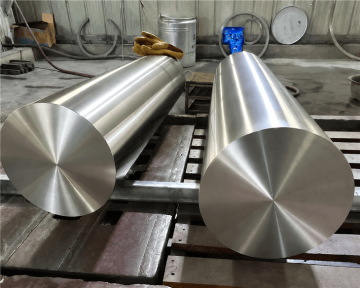
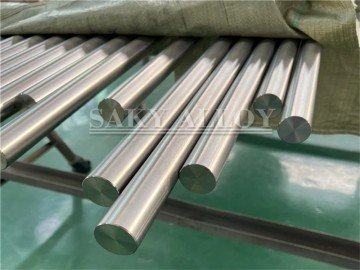
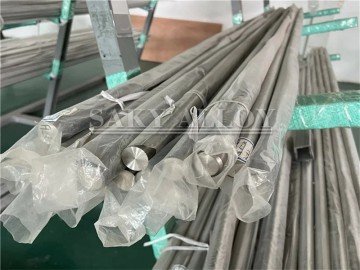
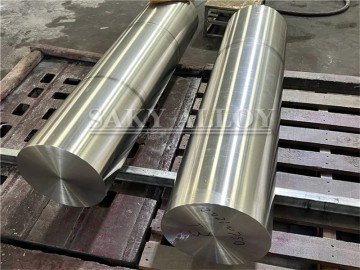
As a professional manufacturer and exporter of titanium and specialty alloys, sakyalloy has been at the forefront of developing and supplying Grade 23 Titanium bars, billets, and precision components to industries worldwide.
Quality Assurance and Production Highlights:
-
Vacuum melting and refining to achieve Extra Low Interstitial purity.
-
Heat treatment and surface finishing for uniform mechanical properties.
-
Ultrasonic and tensile testing to ensure defect-free material integrity.
-
Full certification in compliance with ASTM F136, ASTM B348, and ISO 5832-3 standards.
-
Customized machining and dimensions for aerospace, medical, and energy projects.
By combining cutting-edge production technology with strict quality control, sakyalloy guarantees consistency, performance, and reliability in every Grade 23 Titanium product.
Why Industries Trust sakyalloy
-
Global experience serving customers in aerospace, medical, and marine sectors.
-
Advanced technical expertise in titanium metallurgy and processing.
-
Flexible production capabilities — from prototype to mass production.
-
Dedicated R&D support for custom alloy development and testing.
-
Fast international delivery and traceable documentation.
For companies seeking premium-quality titanium materials that meet the highest performance demands, sakyalloy continues to be a trusted global partner.
Future Outlook: Titanium’s Expanding Frontier
The growing popularity of Grade 23 Titanium is only the beginning. With the rise of additive manufacturing, AI-driven design optimization, and sustainable engineering, the role of advanced titanium alloys will expand dramatically in the coming decade.
Key trends shaping the future include:
-
Integration into electric vehicle (EV) structures for lightweight durability.
-
Use in next-generation aircraft and spacecraft for weight reduction and strength.
-
Development of nanostructured titanium for higher fatigue life and wear resistance.
-
Expansion in personalized medicine, including 3D-printed implants tailored to patients.
As industries continue to evolve, Grade 23 Titanium will remain a cornerstone of material innovation — balancing strength, purity, and sustainability like no other alloy.
Conclusion
The rise of Grade 23 Titanium (Ti-6Al-4V ELI) marks a new era in material science and high-performance engineering. Its combination of high purity, superior toughness, and outstanding biocompatibility has made it a preferred choice in industries where failure is not an option.
From aerospace fasteners and medical implants to chemical processing and additive manufacturing, Grade 23 Titanium is redefining what’s possible in modern design and production.
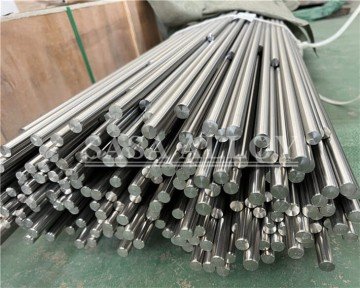
Through its advanced manufacturing expertise and unwavering commitment to quality, sakyalloy continues to supply Grade 23 Titanium bars that meet the world’s most demanding standards — helping engineers, innovators, and manufacturers achieve excellence in every project.