
Titanium Bar Heat Treatment Procedures
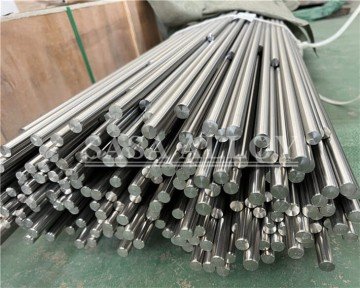
Titanium bars are essential components in numerous industries, ranging from aerospace and medical devices to chemical processing and marine engineering. Known for their strength, corrosion resistance, and lightweight properties, titanium bars require precise heat treatment procedures to optimize their performance and ensure they meet the demanding standards of high-stress applications. Heat treatment of titanium is a critical step that influences the mechanical properties, such as strength, toughness, and ductility, as well as the material’s ability to withstand extreme temperatures and environmental conditions.
In this article, we will explore the various heat treatment procedures for titanium bars, how these processes affect the material, and the role they play in enhancing the performance of titanium components. We will also look at how SAKYALLOY provides high-quality titanium bars that undergo rigorous heat treatment to ensure superior quality and reliability.
1. Why is Heat Treatment Important for Titanium Bars?
Titanium is a highly reactive metal that can be altered through controlled heating and cooling processes to improve its mechanical properties. Heat treatment affects the microstructure of titanium, which in turn determines its strength, toughness, fatigue resistance, and overall durability.
Without proper heat treatment, titanium bars may not perform as expected in demanding applications such as aircraft components, surgical implants, and marine equipment. The right heat treatment procedures help titanium bars achieve optimal properties, such as:
-
Increased Strength: Heat treatment can enhance the tensile strength of titanium, making it more suitable for load-bearing applications.
-
Improved Ductility: Proper heat treatment can make titanium more malleable, allowing it to be formed into complex shapes without cracking.
-
Enhanced Fatigue Resistance: Titanium bars that undergo heat treatment are better able to resist cyclic loading and stress, extending the life of components.
-
Corrosion Resistance: Heat treatment can improve the material’s ability to withstand exposure to harsh chemicals, seawater, and other corrosive environments.
2. Common Heat Treatment Procedures for Titanium Bars
The heat treatment of titanium bars involves various processes designed to modify the microstructure of the metal. Below are some of the most commonly used heat treatment techniques for titanium bars:
2.1 Annealing
Annealing is a heat treatment process that involves heating titanium bars to a specific temperature and then allowing them to cool slowly. This process is used to relieve internal stresses, soften the material, and improve its ductility. Annealing also helps reduce the hardness of titanium, making it easier to machine and form into the desired shape.
Annealing Process for Titanium:
-
Temperature: Titanium bars are typically heated to temperatures between 540°C (1000°F) and 700°C (1300°F), depending on the titanium alloy and desired properties.
-
Cooling: After reaching the target temperature, the bars are slowly cooled in air or a controlled environment to prevent rapid cooling, which could introduce internal stresses.
Advantages of Annealing:
-
Improved machinability and formability.
-
Stress relief that prevents warping and cracking during subsequent processes.
-
Enhanced uniformity in microstructure.
SAKYALLOY ensures that all our titanium bars undergo precise annealing to optimize their performance and ensure ease of machining and forming.
2.2 Solution Annealing
Solution annealing, or solution heat treatment, is another crucial process for titanium alloys. It involves heating the titanium bar to a high temperature, typically between 850°C (1562°F) and 950°C (1742°F), to dissolve any alloying elements and create a homogeneous structure. After heating, the material is rapidly cooled, usually in water or air, to retain the dissolved structure.
This process is particularly important for titanium alloys such as Ti-6Al-4V, which are commonly used in aerospace applications. Solution annealing helps to refine the microstructure, ensuring optimal strength and corrosion resistance.
Solution Annealing Process for Titanium:
-
Temperature: The titanium bars are heated to the solutionizing temperature (usually around 850°C to 950°C) to allow the alloying elements to fully dissolve.
-
Rapid Cooling: The material is then rapidly cooled to retain the uniform microstructure.
Advantages of Solution Annealing:
-
Uniform structure for improved mechanical properties.
-
Increased resistance to stress and strain during service.
-
Improved fatigue strength and resistance to corrosion.
2.3 Aging (Age Hardening)
Aging, or age hardening, is a heat treatment process that involves heating titanium alloys to a specific temperature and then allowing them to cool slowly over time. This process is used to increase the material’s strength and hardness. Aging is particularly useful for titanium alloys such as Ti-6Al-4V, where it enhances the strength of the alloy by precipitating phases within the metal’s microstructure.
Aging Process for Titanium:
-
Temperature: Titanium alloys are heated to an aging temperature, typically between 400°C (752°F) and 600°C (1112°F).
-
Time: The material is held at the aging temperature for a specified period, which can range from a few hours to several days, depending on the alloy and desired properties.
-
Cooling: After aging, the material is cooled to room temperature.
Advantages of Aging:
-
Increased hardness and strength without compromising ductility.
-
Enhanced resistance to wear and fatigue.
-
Improved mechanical properties for high-performance applications.
2.4 Beta Annealing
Beta annealing is a specialized heat treatment process used for beta-phase titanium alloys, which are typically used in high-strength applications. This process involves heating the titanium bar to a high temperature within the beta-phase temperature range (approximately 1000°C to 1200°C) and then cooling it at a controlled rate.
Beta annealing is used to improve the strength, toughness, and resistance to crack propagation in titanium alloys, making it ideal for critical applications in aerospace and military industries.
Beta Annealing Process for Titanium:
-
Temperature: Titanium is heated to temperatures above the beta transus (approximately 1000°C to 1200°C), where the alloy transitions to a single-phase structure.
-
Cooling: The material is cooled at a controlled rate to optimize the microstructure.
Advantages of Beta Annealing:
-
Enhanced strength and toughness.
-
Improved resistance to crack growth.
-
Ideal for high-performance titanium alloys.
2.5 Stress Relieving
Stress relieving is a heat treatment process used to reduce internal stresses in titanium bars that may have been induced during welding, machining, or forming. This process involves heating the material to a moderate temperature (typically around 450°C to 650°C) and then allowing it to cool slowly.
Stress relieving is often done after other processing steps, such as welding or cold working, to prevent deformation and ensure that the titanium bars retain their strength and integrity.
Stress Relieving Process for Titanium:
-
Temperature: The titanium bars are heated to a low temperature, typically between 450°C and 650°C, to relieve internal stresses.
-
Cooling: The material is then allowed to cool slowly to prevent the formation of new stresses.
Advantages of Stress Relieving:
-
Reduced internal stresses that may cause warping or cracking.
-
Maintains dimensional stability of the material.
-
Prevents distortion during subsequent processing.
3. Why Choose SAKYALLOY for Titanium Bar Heat Treatment?
At SAKYALLOY, we specialize in providing high-quality titanium bars that undergo rigorous heat treatment processes to ensure optimal mechanical properties, strength, and durability. Our titanium bars are carefully processed using the latest heat treatment techniques, including annealing, solution annealing, aging, beta annealing, and stress relieving, to meet the specific requirements of various industries.
Whether you require titanium bars for aerospace components, medical implants, or industrial machinery, SAKYALLOY ensures that each product meets the highest standards of quality and performance. Our state-of-the-art facilities and experienced technicians guarantee that your titanium bars undergo precise heat treatment to maximize their potential.
4. Conclusion
Heat treatment plays a crucial role in enhancing the performance of titanium bars, improving their strength, toughness, and resistance to wear and corrosion. The right heat treatment procedure can optimize the mechanical properties of titanium, ensuring that it performs reliably in demanding applications. By understanding the various heat treatment methods—such as annealing, solution annealing, aging, beta annealing, and stress relieving—manufacturers can produce titanium bars that meet the highest standards of quality and durability.
SAKYALLOY is dedicated to providing premium titanium bars that undergo thorough heat treatment processes, ensuring that each bar is ready to meet the rigorous demands of industries such as aerospace, medical, and heavy machinery. Choose SAKYALLOY for your titanium bar needs and experience the difference in quality, reliability, and performance.