

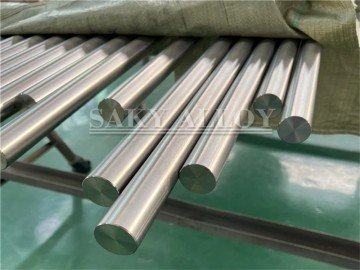

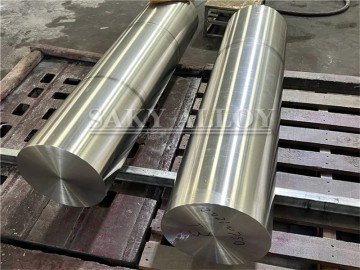
Titanium Bar Magnetic Properties Explained
Titanium is a widely used metal in industries ranging from aerospace to biomedical engineering, thanks to its unique blend of strength, lightness, and corrosion resistance. Among the many questions raised by engineers, designers, and procurement professionals is this:
What are the magnetic properties of titanium bars?
This question is critical in applications involving magnetic fields or electromagnetic interference, such as in medical imaging, electronics, naval vessels, and specialized aerospace systems. In this article, we’ll explore whether titanium is magnetic, how its magnetic properties are measured, and why this characteristic makes titanium bars valuable in advanced industries.
Is Titanium Bar Magnetic?
The short and simple answer is:
No, titanium bars are not magnetic under normal conditions.
Titanium is classified as a paramagnetic material, meaning it is not ferromagnetic like iron, nickel, or cobalt. This means:
-
Titanium does not retain magnetization
-
Titanium does not strongly attract magnets
-
Titanium does not interfere significantly with magnetic fields
This property is consistent across commercially pure titanium (such as Grade 2) and titanium alloys like Ti-6Al-4V (Grade 5), although the presence of certain alloying elements can slightly affect magnetic response.
What Is Paramagnetism?
To understand titanium’s magnetic behavior, we must understand the concept of paramagnetism.
Paramagnetic materials have:
-
Unpaired electrons, allowing a weak magnetic alignment
-
No spontaneous magnetization
-
No residual magnetism once the external field is removed
In a magnetic field, a titanium bar may exhibit a very faint attraction, but the effect is negligible and temporary. This makes titanium safe for use in environments where strong magnetic interference is undesirable.
Magnetic Permeability of Titanium
Magnetic permeability is the measure of how easily a material can support the formation of a magnetic field within itself.
-
Titanium’s relative magnetic permeability is approximately 1.00005, which is very close to that of a vacuum (1.00000)
-
For comparison:
-
Iron: ~1000 to 5000
-
Stainless steel (ferritic types): 500+
-
Titanium: ~1.00005
-
This means titanium bars do not distort or concentrate magnetic fields, making them ideal for sensitive applications.
Factors That Affect Magnetic Behavior of Titanium
While pure titanium is paramagnetic, certain conditions and alloy compositions may influence its magnetic properties:
1. Alloying Elements
-
Small amounts of iron, cobalt, or nickel in titanium alloys can slightly raise magnetic susceptibility
-
However, in most common alloys like Grade 5, the overall magnetic response remains weak
2. Cold Working or Heat Treatment
-
Mechanical processing such as forging, rolling, or grinding can alter microstructure, slightly affecting magnetic properties
-
Heat treatments can also impact grain orientation but typically do not make titanium magnetic
3. Impurities and Inclusions
-
Trace amounts of ferromagnetic impurities introduced during processing may create localized magnetic spots, although rare with high-quality materials like those from sakyalloy
Applications Requiring Non-Magnetic Titanium Bars
Titanium’s non-magnetic nature is a crucial advantage in many modern applications:
1. Medical and MRI Environments
-
MRI machines rely on powerful magnetic fields; any ferromagnetic material can distort images or pose safety risks
-
Titanium implants, tools, and housings are safe and compatible with MRI equipment
-
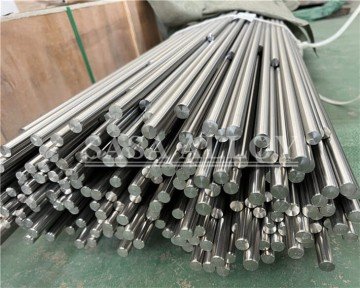
Titanium bars are often machined into orthopedic rods, surgical instruments, and dental components
2. Electronics and Sensors
-
Titanium is used in enclosures for sensitive instruments to prevent electromagnetic interference
-
Ideal for signal shielding in communication devices or satellites
3. Aerospace and Defense Systems
-
Titanium bars are used in aircraft and naval applications where magnetic signatures must be minimized (e.g., submarines)
-
Reduces detection by magnetic sensors and enhances stealth
4. Nuclear Industry
-
Titanium’s low magnetic permeability ensures radiation detection equipment and control systems operate without interference
Comparison: Titanium vs. Stainless Steel in Magnetism
| Property | Titanium Bar | Stainless Steel (304) | Stainless Steel (410) |
|---|---|---|---|
| Magnetic Behavior | Paramagnetic | Mostly non-magnetic | Magnetic (ferritic) |
| Retains Magnetization | No | No (304), Yes (410) | Yes |
| Relative Permeability | ~1.00005 | ~1.02 (304) | 100–1000+ |
| MRI Compatibility | Excellent | Conditional | Poor |
Conclusion: Titanium is consistently more suitable for non-magnetic applications than many stainless steels.
Testing Magnetic Properties of Titanium
To ensure titanium bars meet non-magnetic requirements, sakyalloy uses the following test methods:
-
Magnetic permeability testing using a magnetoscope
-
Gaussmeter readings to measure surface field strength
-
Visual inspection for any inclusions or contaminations
Test reports can be provided with material certification, especially for critical aerospace or medical-grade applications.
Why Choose sakyalloy for Titanium Bars?
At sakyalloy, we manufacture and supply titanium bars that adhere to strict standards in magnetic purity, composition, and mechanical performance. Our products are ideal for:
-
MRI-compatible components
-
Aerospace-grade structures
-
Electronic shielding systems
-
Medical implants and equipment
-
Non-destructive testing applications
We offer Grades 1, 2, 5, 7, and 9 titanium bars with full traceability, inspection reports, and custom sizes on request.
Company Logo: sakyalloy
Conclusion
To sum up, titanium bars are non-magnetic under normal use, thanks to their paramagnetic nature and low permeability. This makes them ideal for environments where magnetic interference must be minimized or completely avoided. Whether in medical imaging rooms, precision electronics, or stealth equipment, titanium’s magnetic neutrality ensures reliable performance and safety.