

Titanium Standard Parts: Bolts, Nuts and Fasteners Selection Guide
Titanium Standard Parts: Bolts, Nuts and Fasteners Selection Guide
Introduction
Titanium Standard Parts include bolts, nuts, screws, studs, washers and threaded components produced to defined material, dimensional and mechanical requirements. Buyers should verify the titanium grade, fastener standard, thread system, load requirement, surface condition, anti-galling treatment and certificate scope before approving an order. ASTM F468 or F468M may be used for commercial wrought nonferrous bolts and studs, while ASTM F467 or F467M applies to compatible nuts for general service.
Key Takeaways: Grade 2 is commonly used where corrosion resistance and moderate mechanical strength are required. Grade 5 provides substantially higher strength for aerospace, motorsport, marine and industrial assemblies. Grade 7 is considered for selected reducing acid environments. Grade 23 is used when extra-low-interstitial chemistry, medical compliance or improved toughness is required. A raw-material certificate under ASTM B348 does not replace mechanical and dimensional acceptance of the finished fastener.
Titanium fasteners provide low density, strong corrosion resistance and a high strength-to-weight ratio, but they are not direct replacements for steel fasteners of the same dimensions. Joint preload, thread friction, elastic modulus, galling risk, mating material and operating temperature must be reviewed during selection.
What Are Titanium Standard Parts?
Titanium standard parts are finished fastening components manufactured by machining, cold forming, hot forming, thread rolling or a combination of these processes. Common products include hex-head bolts, socket-head cap screws, countersunk screws, threaded rods, double-end studs, hex nuts, lock nuts, flat washers and custom drawing-based fasteners.
The word “standard” may refer to material performance, dimensional geometry or both. ASTM F468 controls material and mechanical requirements for certain nonferrous bolts, screws and studs. A dimensional reference such as ISO 4014, ISO 4017, ISO 4762, DIN 931, DIN 933 or a customer drawing defines shape and dimensions but does not automatically establish titanium chemistry or strength.
Product Data and Specification Checkpoints
| Item | Common Options | Buyer Check |
|---|---|---|
| Fastener Type | Bolt, cap screw, stud, threaded rod, nut, washer or custom component | State the dimensional standard or attach a controlled drawing. |
| Material Grade | Grade 2, Grade 5, Grade 7, Grade 12, Grade 23 or approved alloy | Use the UNS designation and material specification where possible. |
| Thread System | ISO metric, UNC, UNF, UNJF or project-specific thread | Specify nominal diameter, pitch, tolerance class and thread length. |
| Manufacturing Route | Machined, cold formed, hot formed or roll threaded | Critical aerospace parts may require controlled grain flow and rolled threads. |
| Surface Condition | Machined, polished, pickled, anodized, coated or lubricated | Define friction-control and anti-galling requirements separately. |
Recommended Titanium Grades
Grade selection should follow joint load, environment, temperature, fatigue duty and regulatory requirements. Commercially pure titanium provides excellent corrosion resistance but lower strength. Alpha-beta Grade 5 offers much higher strength but has different forming, machining and galling behavior.
| Grade | UNS | Primary Advantage | Typical Fastener Use |
|---|---|---|---|
| Grade 2 | R50400 | Corrosion resistance, formability and weldability | Chemical equipment, seawater systems and general industrial assemblies. |
| Grade 5 | R56400 | High strength-to-weight ratio | Aerospace, motorsport, marine, energy and high-load machinery. |
| Grade 7 | R52400 | Palladium-enhanced corrosion resistance | Selected reducing acid and chemical-processing environments. |
| Grade 12 | R53400 | Improved strength and crevice-corrosion resistance in selected media | Heat exchangers, chemical systems and special industrial assemblies. |
| Grade 23 | R56401 | Extra-low interstitial chemistry and improved toughness | Medical screws and fatigue-sensitive precision components. |
Chemical Composition
Fastener performance begins with raw-material chemistry. Grade 2 is commercially pure titanium with controlled oxygen, iron, carbon, nitrogen and hydrogen. Grade 5 gains strength from aluminum and vanadium. Grade 7 uses a palladium addition, while Grade 12 contains controlled molybdenum and nickel. Values shown below are general material descriptions; final acceptance must follow the ordered specification and actual heat analysis.
| Grade | Main Chemical Character | Fastener Relevance |
|---|---|---|
| Grade 2 | Commercially pure titanium with controlled interstitial elements | Supports corrosion resistance and useful ductility. |
| Grade 5 | Approximately 6% aluminum and 4% vanadium | Provides high tensile and yield strength for loaded joints. |
| Grade 7 | Commercially pure titanium with approximately 0.12-0.25% palladium | Improves resistance in selected reducing chemical environments. |
| Grade 12 | Titanium with controlled molybdenum and nickel additions | Provides higher strength than common CP titanium and useful corrosion performance. |
| Grade 23 | Ti-6Al-4V with tighter oxygen, iron, nitrogen and hydrogen limits | Supports improved toughness and medical material control. |
Mechanical Properties and Joint Design
The strength of a titanium assembly depends on more than the tensile value of the raw bar. Thread-root geometry, rolled or cut threads, head-to-shank transition, surface defects, heat treatment, nut strength and assembly preload all influence performance. Finished fasteners should be tested according to the ordered fastener standard or customer drawing.
| Grade | Typical Mechanical Character | Joint Design Note |
|---|---|---|
| Grade 2 | Moderate tensile strength with good ductility | Suitable for corrosion-controlled joints with moderate loading. |
| Grade 5 | High tensile and yield strength with lower ductility than Grade 2 | Preferred for weight-sensitive high-load joints after preload verification. |
| Grade 7 | Mechanical behavior broadly comparable with Grade 2 | Selected for corrosion duty rather than high strength. |
| Grade 12 | Higher strength than common commercially pure grades | Useful when corrosion resistance and moderate structural strength are both required. |
| Grade 23 | High strength with improved ductility and toughness potential | Suitable for medical and fatigue-sensitive parts under an approved specification. |
Applicable Standards and Scope
ASTM F468 and F468M cover commercial wrought nonferrous bolts, cap screws and studs for general-use applications within stated dimensional ranges. ASTM F467 and F467M cover compatible nonferrous nuts. These standards include material, manufacturing and mechanical acceptance requirements for covered alloys and products.
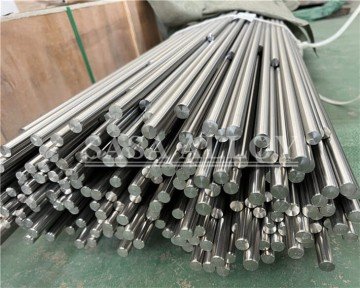
ASTM B348 covers titanium and titanium-alloy bars and billets used as raw material. It does not by itself define the geometry, proof load, tensile performance or dimensional acceptance of the finished bolt. Aerospace fasteners may require ISO 9152, an AMS fastener specification, an OEM standard or a controlled engineering drawing.
| Standard | Scope | Procurement Check |
|---|---|---|
| ASTM F468 / F468M | Nonferrous bolts, cap screws, socket-head cap screws where covered, and studs for general use | Confirm alloy, diameter range, manufacturing method and mechanical tests. |
| ASTM F467 / F467M | Commercial wrought nonferrous nuts for general use | Match nut material and proof requirements with the selected bolt. |
| ASTM B348 / B348M | Titanium and titanium-alloy bars and billets | Use for raw-material control, not as the only finished-fastener standard. |
| ISO 9152 | Aerospace titanium-alloy bolts with MJ threads and specified strength classification | Apply only when the aerospace design and procurement documents require it. |
| ISO / DIN Dimensional Standards | Head style, thread, length and dimensional geometry | A dimensional designation does not establish titanium grade or strength. |
Quality Testing and Certificate Checklist
Finished fasteners must remain traceable to the titanium heat through cutting, heading, machining, heat treatment, thread rolling and packing. Small parts can lose their material identity easily, so lot numbers, route cards, packaging labels and certificate references must be controlled.
| Certificate or Test | Required Check | Risk Controlled |
|---|---|---|
| EN 10204 3.1 MTC | Grade, UNS number, heat number, chemistry, condition and raw-material properties | Grade substitution and incomplete raw-material traceability. |
| Finished Mechanical Test | Tensile, proof load, wedge tensile or hardness where required | Fasteners that meet raw-bar chemistry but fail finished-part strength. |
| Dimensional Inspection | Thread gauges, pitch diameter, head dimensions, length and straightness | Assembly failure, interference and incorrect thread engagement. |
| PMI Testing | Confirmation of titanium alloy family and major alloying elements | Mixing Grade 5 with commercially pure titanium. |
| UT Inspection | Raw bar or large critical fastener inspection where specified | Internal discontinuities in fatigue-sensitive applications. |
| Third-Party Inspection | Material, testing, dimensions, marking, quantity and packing review | Shipment disputes and project-document nonconformity. |
Titanium Fasteners Compared With Stainless Steel
| Comparison Factor | Titanium Fasteners | Stainless Steel Fasteners | Selection Impact |
|---|---|---|---|
| Density | Approximately 4.5 g/cm³ | Approximately 8.0 g/cm³ | Titanium provides major weight reduction at equal volume. |
| Corrosion Resistance | Excellent in seawater and many chloride environments | Grade-dependent; pitting and crevice corrosion may occur | Titanium is often preferred for critical marine and chemical joints. |
| Elastic Modulus | Lower than steel | Higher stiffness | Joint elongation and preload behavior require recalculation. |
| Galling Risk | High without suitable lubrication or surface pairing | Also possible, especially in austenitic stainless assemblies | Specify lubricant, coating and tightening procedure. |
| Purchase Cost | Higher raw material and machining cost | Lower cost and broader stock availability | Evaluate weight, maintenance and corrosion-failure costs. |
Industrial Applications
| Application | Recommended Starting Grade | Main Requirement | Specification Focus |
|---|---|---|---|
| Marine and Offshore Equipment | Grade 2 or Grade 5 | Seawater resistance and reduced maintenance | Galvanic isolation, preload, galling control and inspection access. |
| Aerospace Structures | Grade 5 or approved aerospace titanium alloy | High strength, low weight and fatigue performance | OEM specification, rolled threads, UT and lot acceptance. |
| Chemical Processing | Grade 2, Grade 7 or Grade 12 | Resistance to chlorides, acids and process contamination | Chemical concentration, temperature and gasket compatibility. |
| Medical Devices | Grade 23 under the approved medical specification | Traceability, toughness and validated cleanliness | Interstitial analysis, surface condition and regulatory documentation. |
| Motorsport and Lightweight Machinery | Grade 5 | Weight reduction and high mechanical strength | Joint load, fatigue, tightening torque and thread lubrication. |
Common Buyer Mistakes
Ordering by dimensional standard only: ISO or DIN geometry does not identify titanium grade, strength or inspection requirements.
Using an ASTM B348 certificate as complete fastener certification: B348 controls raw bar and billet. Finished bolts still require dimensional and mechanical acceptance.
Applying steel tightening torque: Titanium has different thread friction and elastic behavior. Torque values must be validated for the exact lubricant, coating and joint.
Ignoring galling: Titanium-on-titanium threads can seize during tightening. Controlled lubrication, compatible coatings or different mating materials may be needed.
Assuming PMI confirms every grade: Handheld PMI can identify Grade 5 alloying elements but cannot reliably confirm low interstitial limits or distinguish all commercially pure grades.
Mixing incompatible metals: Titanium is relatively noble in seawater. Carbon steel, aluminum or zinc connected to a large titanium surface can experience accelerated galvanic corrosion.
Titanium Fastener RFQ Checklist
✅ State the titanium grade, UNS designation and material standard.
✅ Specify bolt, screw, stud, nut or washer with the exact dimensional standard.
✅ Define metric, UNC, UNF or UNJF thread, pitch and tolerance class.
✅ List diameter, length, thread length, head type and quantity.
✅ State mechanical tests, proof load, hardness or tensile requirements.
✅ Define surface finish, anodizing, lubricant or anti-galling treatment.
✅ Request MTC, finished-part inspection, traceability and third-party witnessing where required.
✅ Confirm export packing by labeled bags, cartons, wooden cases or project-specific kits.
Why Choose Titanium Standard Parts?
Titanium standard parts are valuable where corrosion, weight or nonmagnetic behavior creates a measurable engineering benefit. Grade 2 fasteners can reduce corrosion-related maintenance in seawater and chemical equipment. Grade 5 bolts can provide high strength at substantially lower weight than many steel fasteners. Grade 7 and Grade 12 support selected chemical-service requirements, while Grade 23 serves controlled medical and precision applications.
Titanium should not be selected only because it is corrosion resistant. The joint must account for preload, stiffness, fatigue, galling, galvanic interaction and service temperature. A technically complete order connects raw-material chemistry, finished-part performance, dimensions, surface control and traceability.
FAQ
Which titanium grade is best for standard bolts?
Grade 2 is suitable for corrosion-resistant, moderately loaded assemblies. Grade 5 is preferred for high-strength and weight-sensitive applications. The correct grade depends on load, environment, fatigue duty and governing standard.
Are ASTM F468 titanium bolts suitable for aerospace use?
ASTM F468 covers general-use nonferrous fasteners. Aerospace hardware may require ISO 9152, an AMS specification, an OEM standard or a drawing with tighter fatigue, process and inspection controls.
Why do titanium threads gall?
Titanium has a strong tendency toward adhesive wear under sliding pressure. Unlubricated mating threads can transfer material and seize. Lubrication, surface treatment, controlled speed and suitable material pairing reduce the risk.
Can titanium bolts use the same torque as steel bolts?
Not automatically. Torque depends on grade, diameter, thread, lubricant, coating, nut factor and target preload. The assembly procedure should be validated for the actual joint.
Can PMI distinguish Grade 2 from Grade 5?
Yes, Grade 5 contains significant aluminum and vanadium that can support alloy identification. PMI does not replace the MTC and cannot reliably verify low interstitial elements or every commercially pure grade.
What packaging is suitable for titanium fasteners?
Fasteners are commonly packed in labeled sealed bags or small cartons, then placed in reinforced export cartons or wooden cases. Labels should show grade, size, lot number, quantity and purchase-order reference.
Related Titanium Products
| Product | Typical Procurement Use |
|---|---|
| Titanium Standard Parts | Titanium bolts, nuts, screws, studs, washers and drawing-based fastening components. |
| Grade 5 Titanium Machining Parts | CNC-machined Grade 5 components produced according to customer drawings and dimensional requirements. |
Conclusion
Titanium standard parts provide a practical solution for corrosion-resistant, lightweight and high-strength fastening systems. Grade 2 supports marine and chemical assemblies, while Grade 5 serves high-load aerospace, motorsport and machinery applications. Specialized grades such as Grade 7, Grade 12 and Grade 23 address specific corrosion, strength or medical requirements.
Request the Titanium Fastener Specification Checklist
Contact SAKY ALLOY to request a downloadable RFQ checklist, quotation, EN 10204 3.1 MTC, mechanical testing, PMI, customized threads, surface treatment, anti-galling options, export packaging and delivery support.
Send the titanium grade, standard, thread system, diameter, pitch, length, head type, quantity, load requirement, operating environment, surface condition, inspection scope and destination port. Our team will review the specification and prepare a suitable titanium fastener supply proposal.
“`