
Ultrasonic and Eddy Current Testing for Grade 9 Titanium Rod Quality Assurance
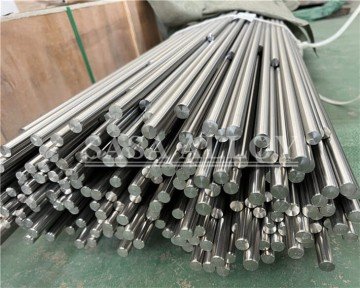
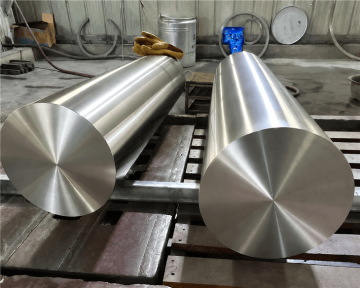
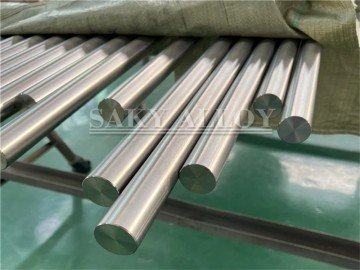
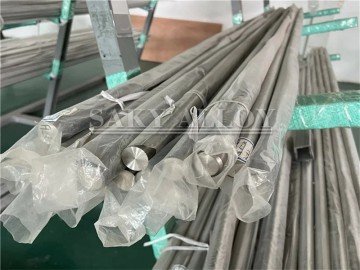
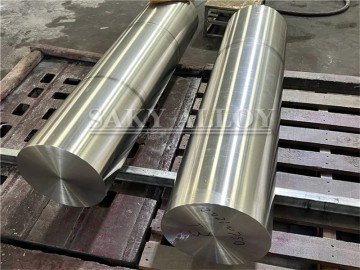
Grade 9 titanium rods, also known as Ti-3Al-2.5V, are widely used in aerospace hydraulic systems, high-performance bicycle frames, medical devices, marine components, heat exchangers, and industrial equipment where high strength, excellent corrosion resistance, and lightweight performance are required. Ensuring the structural integrity and surface quality of Grade 9 titanium rods is essential for maintaining safety and durability in these demanding applications. Among the many inspection methods used in titanium manufacturing, ultrasonic testing UT and eddy current testing ECT are the most effective non-destructive testing NDT techniques for detecting internal and surface-level defects. As a professional titanium materials supplier, sakyalloy employs strict UT and ECT procedures to ensure each Grade 9 titanium rod meets international quality standards.
Introduction to Grade 9 Titanium Rod Applications
Grade 9 titanium is a near-alpha titanium alloy composed of titanium with aluminum and vanadium. Its exceptional properties include:
-
High specific strength
-
Excellent corrosion resistance, especially in marine and chemical environments
-
Superior fatigue strength
-
Good weldability
-
Outstanding cold formability
These characteristics make it one of the most commonly used titanium alloys in industries requiring precision, lightweight, and high reliability performance. Because Grade 9 rods often undergo stress, bending, welding, and pressure loading, NDT plays a crucial role in preventing early failure.
Importance of NDT in Grade 9 Titanium Rod Production
Non-destructive testing ensures material integrity without altering or damaging the rod. For high-performance titanium rods, NDT is essential for:
-
Detecting internal voids and inclusions
-
Identifying surface cracks or defects
-
Ensuring consistency in mechanical properties
-
Preventing failures during service
-
Complying with aerospace, medical, and industrial standards
-
Supporting traceability and quality documentation
Given the safety-critical nature of titanium applications, UT and ECT are indispensable in the titanium production process.
Ultrasonic Testing UT for Grade 9 Titanium Rods
Ultrasonic testing is the most widely used method for detecting internal defects within titanium rods.
How Ultrasonic Testing Works
Ultrasonic testing uses high-frequency sound waves that penetrate the titanium rod. When the waves encounter changes in density—such as voids or inclusions—they are reflected back to the probe.
UT Can Detect:
-
Internal cracks
-
Discontinuities
-
Voids and porosity
-
Shrinkage cavities
-
Nonmetallic inclusions
-
Segregation defects
This makes UT highly effective for aerospace and pressure-bearing components.
Types of UT Techniques Used for Titanium Rods
1. Pulse-Echo Method
The probe sends sound waves into the rod and measures reflected waves. This method identifies the depth and size of internal defects.
2. Immersion Ultrasonic Testing
The rod is submerged in water, which acts as a coupling agent to improve sound transmission and detection accuracy.
3. Phased Array UT (Advanced)
Delivers high-resolution imaging and allows multiple angles of inspection for complex evaluations.
Benefits of Ultrasonic Testing for Grade 9 Rods
-
Detects deep internal defects that surface testing cannot find
-
Highly reliable for aerospace-grade titanium
-
Offers precise depth and size measurements
-
Suitable for large volumes and long rod lengths
-
Provides comprehensive internal structural evaluation
Manufacturers such as sakyalloy apply UT as a mandatory step for all Grade 9 titanium rods intended for critical applications.
Eddy Current Testing ECT for Grade 9 Titanium Rods
While ultrasonic testing focuses on internal defects, eddy current testing is used for identifying surface and near-surface discontinuities.
How Eddy Current Testing Works
ECT uses electromagnetic induction. When the probe generates an alternating magnetic field:
-
It induces circulating currents (eddy currents) within the titanium rod
-
Surface defects disrupt the flow of these currents
-
The equipment senses changes and identifies flaws
ECT is extremely sensitive to small surface imperfections.
Eddy Current Testing Detects:
-
Micro cracks
-
Surface porosity
-
Welding defects (in finished components)
-
Scratches or grinding damage
-
Local hardness changes
-
Alloy inconsistencies
Because Grade 9 rods are often drawn, polished, or centerless ground, ECT helps confirm uniform surface quality.
Advantages of Eddy Current Testing for Titanium Rods
-
Non-contact testing method
-
Fast and suitable for high-volume production
-
Extremely sensitive to small cracks
-
Capable of detecting defects missed by visual inspection
-
Suitable for thin-wall rods and precision applications
-
Allows simultaneous conductivity measurement
ECT is indispensable for industries where tight surface tolerances are required, such as bicycle frames and medical devices.
Why UT and ECT Are Both Required for Grade 9 Titanium Rod Quality
Using only one method cannot guarantee full material integrity. Combining UT + ECT provides complete inspection coverage.
UT provides:
-
Deep, internal defect detection
-
Structural integrity analysis
ECT provides:
-
Surface quality verification
-
Detection of micro-cracks and surface abnormalities
Combined Benefits:
-
Full-depth inspection
-
Increased safety in critical structural applications
-
Compliance with aerospace and medical standards
-
Reliable quality guarantee
This dual NDT approach ensures titanium rods meet strict requirements for fatigue strength, welding quality, and corrosion resistance.
NDT Standards for Grade 9 Titanium Rods
Grade 9 titanium rods must conform to various international standards, such as:
-
ASTM B348
-
ASTM B337
-
AMS 4943 (aerospace)
-
AMS-T-9047
-
ISO 5832 (medical titanium)
These standards outline NDT acceptance criteria for both internal and surface imperfections.
NDT Testing Workflow in Titanium Rod Production
A typical Grade 9 titanium rod production line includes:
-
Ultrasonic testing after hot rolling or forging
-
Ensures internal structure is defect-free
-
-
Eddy current testing after cold finishing
-
Confirms surface integrity
-
-
Final UT/ECT before packaging
-
Guarantees no damage occurred during forming or machining
-
-
Reporting and certification
-
NDT results included in MTC EN10204 3.1 or 3.2
-
This ensures every rod is fully compliant and traceable.
Applications That Require UT and ECT Certified Grade 9 Titanium Rods
Aerospace
-
Hydraulic tubes
-
Structural supports
Medical
-
Surgical instruments
-
Orthopedic devices
Sports and Outdoor
-
High-performance bicycle frames
-
Lightweight sports components
Marine
-
Anti-corrosion fasteners
-
Structural rods exposed to seawater
Industrial
-
Heat exchanger tubing
-
High-pressure piping
Every application benefits from robust NDT assurance.
How Sakyalloy Ensures Top-Quality Titanium Rod NDT Performance
As a trusted titanium alloy supplier, sakyalloy implements:
-
Full UT and ECT for every production batch
-
Advanced phased-array or immersion UT for aerospace materials
-
Computerized eddy current testing systems
-
Traceability through heat numbers and MTC documentation
-
Third-party inspection services upon request
-
Strict compliance with ASTM and AMS standards
This guarantees that every Grade 9 titanium rod meets global engineering and safety requirements.
Conclusion
Ultrasonic and eddy current testing play a crucial role in ensuring the quality and reliability of Grade 9 titanium rods. These two NDT techniques complement each other, providing complete assessment of both internal structure and surface integrity. Through advanced UT and ECT inspection systems, titanium rods can be safely used in aerospace, medical, marine, sports, and industrial applications without risk of hidden defects. With its strong manufacturing capability and strict quality assurance system, sakyalloy guarantees that every Grade 9 titanium rod undergoes comprehensive NDT evaluation, ensuring maximum performance, safety, and long-term durability.