
Using Grade 9 Titanium Rods in Space and Defense Applications
In the high-stakes industries of space exploration and defense technology, material performance is everything. Components used in spacecraft, satellites, and military systems must endure extreme temperatures, high stress, and corrosive or vacuum environments—often without maintenance for years. In these demanding conditions, Grade 9 titanium (Ti-3Al-2.5V) has become a material of choice for engineers seeking a balance of lightweight strength, corrosion resistance, and fatigue durability.
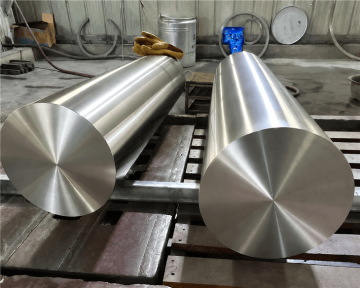
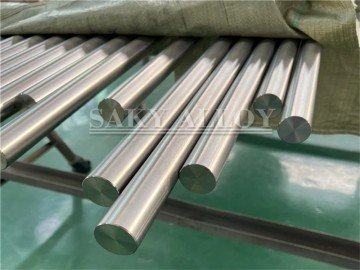
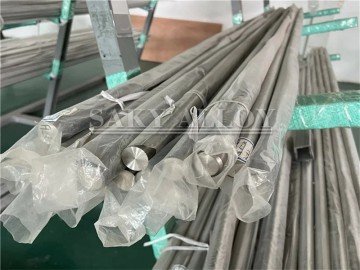
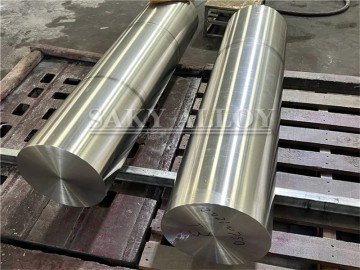
This alloy, composed of 3% aluminum and 2.5% vanadium, delivers the perfect blend of high mechanical performance and excellent formability, making it suitable for tubing, fasteners, frames, and structural components in both aerospace and defense systems. As a trusted supplier of titanium materials for critical industries, sakyalloy provides Grade 9 titanium rods that meet the strict standards of ASTM B348, AMS 4943, AMS 4944, and ISO 5832-11, supporting innovation in cutting-edge space and defense programs worldwide.
Overview of Grade 9 Titanium (Ti-3Al-2.5V)
Grade 9 titanium is an alpha-beta titanium alloy engineered to offer high specific strength while maintaining good ductility and weldability. It is stronger than commercially pure titanium (Grades 2 and 3) but more workable than the higher-strength Grade 5 (Ti-6Al-4V) alloy. This makes it ideal for applications where weight reduction, corrosion resistance, and moderate-to-high strength are critical.
Chemical Composition (%):
-
Titanium (Ti): Balance
-
Aluminum (Al): 2.5–3.5
-
Vanadium (V): 2.0–3.0
-
Iron (Fe): ≤ 0.25
-
Oxygen (O): ≤ 0.20
-
Carbon (C): ≤ 0.08
-
Hydrogen (H): ≤ 0.015
Mechanical Properties (Typical):
| Property | Value |
|---|---|
| Density | 4.48 g/cm³ |
| Yield Strength | 480–620 MPa |
| Tensile Strength | 620–760 MPa |
| Elongation | 15–20% |
| Modulus of Elasticity | 105 GPa |
| Working Temperature | Up to 400°C |
This combination of strength, toughness, and low density makes Grade 9 titanium a key enabler in the modern space and defense sectors.
Why Titanium Is Vital in Space and Defense Engineering
Space and defense applications demand materials that can perform in harsh, unpredictable environments, such as:
-
Vacuum exposure with no atmospheric protection
-
Extreme thermal fluctuations from -200°C to +400°C
-
High vibration and mechanical stress during launches or impact
-
Exposure to corrosive agents, radiation, and oxidizing gases
-
Long-term fatigue performance with zero failure tolerance
Titanium, with its unique combination of strength, lightness, and corrosion resistance, has proven to be one of the few materials capable of meeting these conditions. Grade 9 titanium, in particular, provides the formability and weldability needed for complex aerospace and defense designs.
Advantages of Using Grade 9 Titanium Rods
1. High Strength-to-Weight Ratio
Titanium has a density of 4.48 g/cm³—about 60% that of steel—but with similar tensile strength. This allows engineers to design lighter yet stronger structures, improving fuel efficiency for spacecraft and mobility in defense systems.
2. Exceptional Corrosion and Oxidation Resistance
Space and defense components are often exposed to oxidizing atmospheres, saltwater environments, and cryogenic fluids. Grade 9 titanium’s naturally forming oxide layer provides long-lasting protection against corrosion, even in vacuum or seawater.
3. Outstanding Fatigue Resistance
In missile systems, jet engines, and space vehicles, materials face millions of load cycles during vibration, launch, and flight. Grade 9 titanium resists crack formation and propagation, ensuring long service life and structural integrity.
4. Excellent Weldability and Fabrication
Unlike higher-strength titanium alloys, Grade 9 can be cold-formed, drawn, and welded without post-weld heat treatment. This makes it ideal for fabricating thin-walled tubing and precision components in aerospace assemblies.
5. Thermal and Cryogenic Stability
Titanium retains mechanical stability at both high and low temperatures, performing consistently in cryogenic fuel systems, outer spacecraft structures, and engine environments.
6. Electromagnetic Compatibility
Titanium’s non-magnetic and low electrical conductivity properties make it suitable for stealth technology and sensitive defense systems, minimizing radar cross-sections and electromagnetic interference.
Applications in Space Industry
The space industry requires materials that can endure launch forces, vacuum conditions, and long-term exposure to cosmic radiation. Grade 9 titanium rods and tubes have become indispensable for a variety of spacecraft and satellite components.
1. Satellite Structural Frames
Grade 9 titanium is used for satellite skeletons and load-bearing beams, offering the rigidity needed to withstand launch vibrations while maintaining low overall mass.
2. Propellant and Fuel Systems
Titanium’s corrosion resistance makes it ideal for cryogenic fuel tanks, propellant feed lines, and valves, ensuring compatibility with liquid oxygen, nitrogen, and hydrogen propellants.
3. Thruster and Engine Components
Thruster assemblies require materials that resist thermal cycling and oxidation. Ti-3Al-2.5V rods are used for mounting structures, manifolds, and combustion chamber supports.
4. Spacecraft Tubing and Connectors
Lightweight titanium tubing is utilized for hydraulic and pneumatic lines in spacecraft where pressure containment and reliability are crucial.
5. Antenna and Solar Panel Mounts
The alloy’s excellent strength-to-weight ratio and dimensional stability make it ideal for deployable structures and mounting brackets, ensuring precise alignment and minimal thermal expansion.
Applications in Defense and Military Technology
Defense systems demand materials that can withstand battlefield stress, impact, and corrosion while remaining lightweight and durable. Grade 9 titanium fulfills these criteria across land, sea, and air platforms.
1. Aircraft and Jet Fighters
Grade 9 titanium rods are used for hydraulic systems, airframe reinforcements, and engine tubing in military aircraft. The alloy’s strength and fatigue resistance enhance reliability under extreme maneuvers and high-G forces.
2. Naval Applications
In submarines, warships, and torpedoes, titanium’s corrosion resistance in saltwater ensures long-term performance with minimal maintenance. Ti-3Al-2.5V is used for pressure housings, piping, and sonar casings.
3. Missile and Rocket Systems
Missile casings, launch tubes, and control structures rely on titanium’s high strength and heat resistance. Grade 9 titanium rods maintain structural integrity during acceleration and aerodynamic heating.
4. Armored Vehicle Components
Lightweight titanium rods are incorporated into armor reinforcements and suspension systems, offering better mobility and protection without excessive weight penalties.
5. Stealth and Electronic Systems
Titanium’s non-magnetic properties and radar transparency make it ideal for stealth aircraft frames and radar housings, reducing detectability while maintaining mechanical robustness.
6. UAVs and Drones
With the increasing demand for unmanned aerial vehicles (UAVs), Grade 9 titanium’s light weight and strength support efficient battery performance and longer flight times.
Comparison: Grade 9 Titanium vs. Other Defense Alloys
| Property | Grade 9 Titanium (Ti-3Al-2.5V) | Aluminum Alloy (7075-T6) | Stainless Steel (316L) |
|---|---|---|---|
| Density (g/cm³) | 4.48 | 2.80 | 8.00 |
| Tensile Strength (MPa) | 620–760 | 540 | 600 |
| Corrosion Resistance | Excellent | Moderate | Good |
| Fatigue Resistance | High | Medium | Medium |
| Temperature Range (°C) | -200 to +400 | -80 to +150 | -50 to +300 |
| Magnetic Properties | Non-Magnetic | Non-Magnetic | Slightly Magnetic |
| Weldability | Excellent | Good | Fair |
Conclusion:
Grade 9 titanium provides the best combination of lightweight design, mechanical strength, and corrosion resistance, outperforming aluminum and stainless steel in the most extreme environments.
Testing and Quality Assurance
Every Grade 9 titanium rod produced by sakyalloy undergoes rigorous testing to ensure compliance with aerospace and defense standards:
-
Ultrasonic Testing (UT): Detects internal flaws and inclusions
-
Tensile and Hardness Testing: Confirms mechanical strength and ductility
-
Microstructure Analysis: Verifies grain uniformity and alpha-beta phase balance
-
Dimensional and Surface Inspection: Ensures precision and consistency
-
Mill Test Certificate (EN 10204 3.1/3.2): Guarantees traceability and standard conformity
All products comply with AMS 4943, AMS 4944, ASTM B348, and ISO 9001-certified quality systems, ensuring reliability in mission-critical applications.
sakyalloy – Supporting Space and Defense Innovation
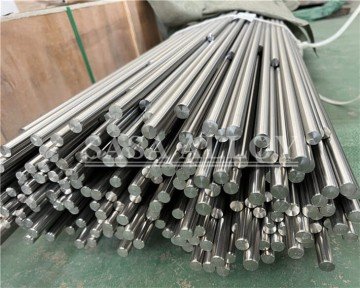
As a trusted global supplier, sakyalloy specializes in producing high-performance titanium materials for aerospace, space, and defense industries. Our Grade 9 titanium rods are manufactured using advanced vacuum melting, forging, and precision machining technologies to achieve superior strength, consistency, and surface quality.
sakyalloy Advantages:
-
Full range of diameters: 3 mm to 200 mm, lengths up to 6,000 mm
-
Global certifications and aerospace-grade standards compliance
-
Custom machining and finishing for specialized defense and space projects
-
Rapid delivery and worldwide logistics support
-
Technical guidance from material experts for engineering design
Through innovation, reliability, and precision, sakyalloy helps aerospace and defense manufacturers achieve lighter, stronger, and more durable designs, supporting global advancements in security and exploration.
Future Outlook: Titanium’s Expanding Role in Space and Defense
As the boundaries of human exploration and defense technology extend, titanium’s role is expected to grow significantly. The next generation of applications includes:
-
Reusable spacecraft and lunar exploration vehicles
-
Hypersonic weapons and propulsion systems
-
Hydrogen fuel storage systems for defense and space missions
-
Additive manufacturing (3D printing) of titanium components for custom structures
Grade 9 titanium’s versatility and sustainability make it a cornerstone material for future aerospace and defense innovation, combining performance with environmental responsibility.
Conclusion
The use of Grade 9 titanium rods (Ti-3Al-2.5V) in space and defense applications exemplifies how advanced materials enable the technologies that protect nations and push humanity beyond Earth’s atmosphere. Its combination of high strength-to-weight ratio, corrosion resistance, thermal stability, and fatigue endurance makes it indispensable for spacecraft, satellites, and defense systems operating under the harshest conditions.
From rocket structures and fuel systems to aircraft hydraulics and missile housings, Grade 9 titanium ensures superior performance, reliability, and safety where failure is not an option.
With extensive experience and cutting-edge production capabilities, sakyalloy continues to provide world-class titanium solutions that empower engineers and innovators in space exploration and defense technology — driving progress with precision, reliability, and strength that defies limits.