
What Makes Grade 23 Titanium Bar Different from Grade 5 (Ti-6Al-4V)?
Titanium and its alloys have revolutionized modern engineering, from aerospace and medical implants to automotive and marine components. Among the many titanium grades available, Grade 5 (Ti-6Al-4V) and Grade 23 (Ti-6Al-4V ELI) are the most widely used high-strength variants.
While they share the same basic alloy composition — titanium with 6% aluminum and 4% vanadium — subtle yet crucial differences in purity, microstructure, and performance separate them. These differences define their suitability for different applications, especially where biocompatibility, toughness, and fatigue resistance are vital.
In this detailed article, SAKYALLOY explores what makes Grade 23 Titanium Bar different from Grade 5, examining their chemical composition, mechanical properties, manufacturing standards, and specific application advantages.
Overview of Titanium Grades
Titanium alloys are categorized based on their chemical composition and mechanical behavior, with Grades 1 to 4 representing commercially pure titanium and Grades 5 to 38 representing alloyed types.
-
Grade 5 (Ti-6Al-4V): The standard aerospace alloy, known for high strength and excellent corrosion resistance.
-
Grade 23 (Ti-6Al-4V ELI): The “Extra Low Interstitial” version of Grade 5, developed for medical and cryogenic applications where purity and toughness are critical.
Both alloys belong to the alpha-beta titanium alloy group, combining the strength of the beta phase with the toughness of the alpha phase.
Chemical Composition Comparison
The key distinction between Grade 5 and Grade 23 lies in the level of interstitial impurities — mainly oxygen, nitrogen, carbon, and iron.
| Element | Grade 5 (Ti-6Al-4V) | Grade 23 (Ti-6Al-4V ELI) |
|---|---|---|
| Aluminum (Al) | 5.5 – 6.75% | 5.5 – 6.5% |
| Vanadium (V) | 3.5 – 4.5% | 3.5 – 4.5% |
| Iron (Fe) | ≤ 0.40% | ≤ 0.25% |
| Oxygen (O) | ≤ 0.20% | ≤ 0.13% |
| Carbon (C) | ≤ 0.10% | ≤ 0.08% |
| Nitrogen (N) | ≤ 0.05% | ≤ 0.05% |
| Hydrogen (H) | ≤ 0.015% | ≤ 0.0125% |
| Titanium (Ti) | Balance | Balance |
The lower impurity content in Grade 23 (ELI) improves its toughness, ductility, and biocompatibility, making it ideal for applications requiring extreme purity and impact resistance.
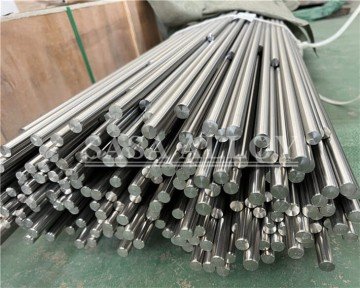
SAKYALLOY Titanium Bars are produced with strict chemical control under ASTM B348 / AMS 4930 / ISO 5832-3 standards to ensure consistent alloy quality and low interstitial levels.
Microstructural Differences
Both alloys have a dual-phase microstructure consisting of alpha (α) and beta (β) phases. However, due to the reduced interstitial elements, Grade 23 exhibits:
-
Finer grain size, enhancing fatigue resistance and toughness.
-
Lower alpha-phase hardening, improving elongation and impact performance.
-
Improved fracture resistance, crucial for cryogenic and medical environments.
These microstructural refinements result in a cleaner, purer alloy with superior reliability in applications where even microscopic flaws can cause failure.
Mechanical Properties Comparison
| Property | Grade 5 (Ti-6Al-4V) | Grade 23 (Ti-6Al-4V ELI) |
|---|---|---|
| Tensile Strength (MPa) | 895 – 930 | 860 – 900 |
| Yield Strength (MPa) | 830 – 880 | 795 – 830 |
| Elongation (%) | 10 – 14 | 14 – 15 |
| Reduction of Area (%) | 25 – 30 | 35 – 40 |
| Hardness (HRC) | 34 – 36 | 30 – 32 |
| Density (g/cm³) | 4.43 | 4.43 |
From the comparison, we can see that Grade 23 offers slightly lower strength but significantly higher ductility and toughness. This makes it less prone to brittle fracture — an essential feature for implants, cryogenic systems, and precision components.
SAKYALLOY Grade 23 Titanium Bars undergo heat treatment and ultrasonic testing to guarantee mechanical uniformity and flaw-free internal structure.
Corrosion Resistance and Fatigue Behavior
1. Corrosion Resistance
Both grades exhibit outstanding resistance to corrosion in oxidizing, neutral, and mildly reducing environments, including:
-
Seawater and marine atmospheres
-
Body fluids and physiological saline
-
Oxidizing acids (nitric acid) and chlorides
However, Grade 23’s higher purity reduces susceptibility to micro-galvanic corrosion, ensuring longer service life in biomedical and precision aerospace environments.
2. Fatigue Strength
Grade 23 provides superior fatigue performance, especially under cyclic loads. Its fine-grain structure and low impurity levels prevent crack initiation and propagation — vital for aircraft fasteners, surgical screws, and rotating aerospace parts.
SAKYALLOY’s fatigue-optimized titanium bars are tested according to ASTM E466 and used by leading medical and aerospace manufacturers worldwide.
Biocompatibility and Medical Use
Grade 23 Titanium (Ti-6Al-4V ELI) is specifically designed for biomedical applications, thanks to its exceptional biocompatibility, corrosion resistance, and non-toxic nature.
Key advantages include:
-
Excellent compatibility with human tissues and bone.
-
No release of harmful ions in body fluids.
-
Superior fatigue and impact resistance for long-term implantation.
-
Suitable for orthopedic, dental, and spinal implants.
In contrast, Grade 5 is often restricted to non-implant medical tools and external fixation devices due to slightly higher oxygen and iron levels, which can reduce long-term biocompatibility.
SAKYALLOY Titanium Grade 23 Bars meet global medical standards, including ASTM F136 / ISO 5832-3, ensuring safety and traceability for healthcare applications.
Applications of Grade 5 vs. Grade 23 Titanium
| Industry | Grade 5 (Ti-6Al-4V) | Grade 23 (Ti-6Al-4V ELI) |
|---|---|---|
| Aerospace | Airframes, landing gear, turbine blades | Cryogenic fuel systems, precision actuators |
| Medical | Surgical instruments, dental tools | Bone implants, joint replacements, pacemaker cases |
| Marine | Offshore equipment, propeller shafts | Deep-sea pressure housings |
| Industrial | Fasteners, valves, heat exchangers | Chemical reactors requiring purity |
| Automotive | Racing components, engine valves | Motorsport suspension systems |
While Grade 5 Titanium Bars are chosen for high-strength structural uses, Grade 23 excels in environments requiring purity, toughness, and fatigue resistance.
Processing and Machinability
Both alloys are challenging to machine due to titanium’s low thermal conductivity and high work hardening rate. However, Grade 23’s slightly lower hardness makes it easier to machine and polish, a critical advantage in precision and medical manufacturing.
Recommended Processing Techniques:
-
Turning and Milling: Use low cutting speeds, high coolant flow, and sharp carbide tools.
-
Heat Treatment: Both grades can be annealed or stress-relieved to optimize ductility and fatigue life.
-
Welding: TIG or electron-beam welding with inert shielding is preferred.
-
Surface Finishing: Grade 23 responds better to electropolishing and anodizing, achieving high biocompatibility and aesthetic appeal for implants.
SAKYALLOY employs advanced CNC machining, vacuum annealing, and surface finishing technologies to ensure precision and consistency in both Grade 5 and Grade 23 titanium products.
Standards and Quality Assurance
SAKYALLOY Titanium Bars conform to major international standards:
| Standard | Applicable Grade | Description |
|---|---|---|
| ASTM B348 / ASME SB348 | Both | General titanium bar and billet specifications |
| AMS 4928 / AMS 4930 | Both | Aerospace and high-performance specifications |
| ASTM F136 / ISO 5832-3 | Grade 23 | Medical implant-grade titanium alloy |
| ASTM F1472 | Grade 5 | Non-implant biomedical components |
Every bar undergoes ultrasonic, dimensional, and chemical testing. Full EN 10204 3.1/3.2 certification guarantees complete traceability from melting to final inspection.
Why Choose Grade 23 Over Grade 5
Although Grade 5 Titanium remains the most popular structural alloy, Grade 23 (ELI) offers several distinct advantages:
-
Higher Toughness: Resists cracking under impact or cyclic stress.
-
Improved Fatigue Strength: Ensures reliability under dynamic loading.
-
Superior Biocompatibility: Safe for long-term implantation.
-
Enhanced Purity: Reduced interstitial elements improve corrosion resistance.
-
Better Cryogenic Performance: Stable and ductile at extremely low temperatures.
These properties make SAKYALLOY Grade 23 Titanium Bars the top choice for medical, cryogenic, and precision aerospace industries.
SAKYALLOY Quality Commitment
SAKYALLOY is a trusted global supplier of titanium, nickel alloy, and stainless steel bars, tubes, and forgings. Our titanium products are used across aerospace, marine, and medical sectors for their consistent performance and certified quality.
Our Strengths:
-
ISO 9001:2015 Certified Facilities
-
Advanced Vacuum Melting and Forging Technology
-
Tight Dimensional and Surface Tolerances
-
In-House Ultrasonic and Mechanical Testing
-
Global Supply Chain and Fast Delivery
Every SAKYALLOY Titanium Bar, whether Grade 5 or Grade 23, is produced under stringent control to meet the highest international standards.
Conclusion
Although Grade 5 (Ti-6Al-4V) and Grade 23 (Ti-6Al-4V ELI) share the same primary alloy system, their differences in impurity levels and mechanical behavior define their suitability for different industries.
Grade 5 is ideal for aerospace and industrial applications demanding high strength and rigidity, while Grade 23 excels in medical, cryogenic, and precision engineering where purity, toughness, and fatigue resistance are vital.
By offering both grades with consistent quality, SAKYALLOY enables engineers and manufacturers to choose the perfect material for their specific needs — ensuring superior performance, safety, and reliability across every project.