
Why Titanium Bar Is Used in Space Telescopes
Space telescopes are some of the most advanced scientific instruments ever built. Designed to operate far beyond the Earth’s atmosphere, these telescopes must withstand extreme conditions such as zero gravity, intense radiation, dramatic temperature fluctuations, and the complete absence of atmospheric protection. Every component—down to the structural materials—must be carefully chosen to guarantee long-term performance and accuracy.
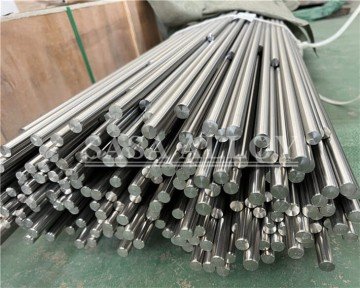
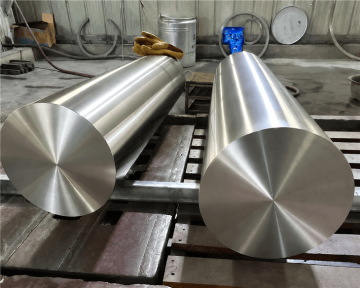
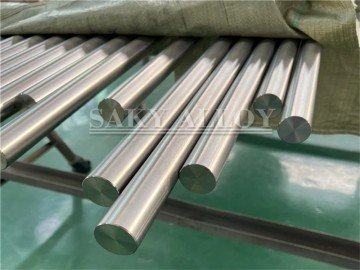
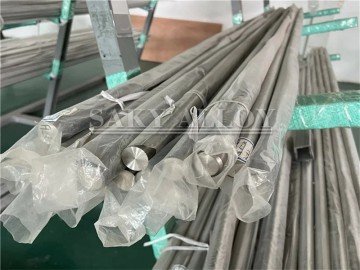
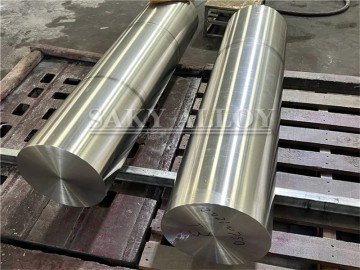
One material that plays a critical role in space telescope construction is the titanium bar. Thanks to its unmatched balance of strength, weight, and resistance to environmental extremes, titanium has become a top choice for spacecraft engineers and scientists. This article explores why titanium bars are used in space telescopes, the advantages they offer, and the engineering considerations behind this choice.
1. The Role of Structural Materials in Space Telescopes
A space telescope’s structural frame supports highly sensitive optical systems such as mirrors, lenses, detectors, and instrumentation. The frame must:
-
Provide rigidity to maintain optical alignment.
-
Resist warping under thermal stress.
-
Minimize weight to reduce launch costs.
-
Endure the mechanical vibrations of launch.
-
Resist corrosion and degradation in space.
Titanium bars meet all of these requirements while offering several unique benefits.
2. Key Properties of Titanium Bars for Space Telescope Applications
a. High Strength-to-Weight Ratio
Every kilogram sent into orbit costs thousands of dollars in launch expenses. Titanium has the strength of many steels but is significantly lighter, allowing engineers to design a strong yet lightweight telescope frame. This makes titanium a critical contributor to reducing launch mass without compromising structural stability.
b. Low Thermal Expansion
In space, telescopes experience extreme temperature changes—from the blistering heat of direct sunlight to the freezing cold of shadowed regions. Titanium has a low coefficient of thermal expansion, meaning it changes shape very little as temperatures fluctuate. This stability helps maintain precise mirror alignment, which is crucial for accurate imaging.
c. Corrosion and Radiation Resistance
Unlike in Earth’s atmosphere, corrosion in space results from atomic oxygen, radiation exposure, and micrometeoroid impacts. Titanium naturally resists these forms of degradation, ensuring that structural components last for decades in orbit.
d. Excellent Fatigue Resistance
Spacecraft structures endure intense mechanical loads during launch. Titanium’s fatigue resistance ensures that the material can withstand repeated stress cycles without cracking or failure.
e. Compatibility with Precision Manufacturing
Titanium bars can be machined, welded, and formed with high precision, enabling the creation of complex components with tight tolerances required in space optics.
3. Applications of Titanium Bars in Space Telescopes
-
Primary Structure Frames – Titanium bars form the backbone of the telescope’s body, providing rigid support for the optical and electronic systems.
-
Mirror Mounting Systems – Titanium ensures that mirror supports remain stable despite temperature fluctuations.
-
Instrument Brackets and Arms – Lightweight titanium reduces the mass of movable arms that position instruments for observation.
-
Support Trusses – Titanium bars are used in trusses to maintain a stable configuration of optical components.
4. Benefits Over Other Materials
| Property | Titanium | Aluminum | Stainless Steel | Carbon Fiber Composites |
|---|---|---|---|---|
| Strength-to-Weight | Excellent | Good | Good | Excellent |
| Thermal Stability | Excellent | Fair | Good | Very Good |
| Corrosion Resistance | Excellent | Moderate | Good | Excellent |
| Machinability | Good | Excellent | Good | Limited |
| Longevity in Space | Excellent | Good | Good | Very Good |
Titanium offers an ideal balance of machinability, thermal stability, and resistance to space-related degradation, making it a superior choice for long-term missions compared to many other materials.
5. Case Studies in Space Missions
Many well-known space observatories have incorporated titanium in their designs:
-
Hubble Space Telescope – Titanium components helped maintain the structural alignment of its primary mirror system.
-
James Webb Space Telescope (JWST) – Titanium alloys are used in mounting hardware and support frames to ensure minimal thermal distortion.
-
Chandra X-ray Observatory – Uses titanium structures for stability in high-energy imaging systems.
6. Engineering Considerations When Using Titanium Bars in Space Telescopes
-
Material Certification – Space-grade titanium must meet standards such as ASTM B348 Grade 5 (Ti-6Al-4V) for optimal performance.
-
Surface Treatments – Although titanium is naturally corrosion-resistant, surface finishing may be applied to enhance atomic oxygen resistance.
-
Precision Fabrication – High-accuracy machining and welding are necessary to meet strict aerospace tolerances.
-
Vibration Testing – Components must pass rigorous vibration tests to simulate launch conditions.
7. Challenges in Using Titanium Bars
While titanium offers clear benefits, it also has challenges:
-
Higher Cost – Titanium is more expensive than aluminum or steel.
-
Difficult Machining – Titanium’s hardness and low thermal conductivity require specialized tools.
-
Supply Chain Considerations – Aerospace-grade titanium requires consistent, certified sourcing.
Despite these factors, its performance advantages often outweigh the drawbacks in high-stakes space applications.
8. Future Outlook for Titanium in Space Telescopes
With the increasing demand for next-generation space telescopes—ranging from Earth observation to deep-space exploration—the role of titanium is expected to grow. Advances in titanium machining and additive manufacturing may reduce costs, making it even more viable for complex space structures.
Conclusion
Titanium bars are a material of choice for space telescopes because they combine high strength, light weight, thermal stability, corrosion resistance, and long-term durability in the harsh conditions of space. These qualities ensure that telescopes maintain their precision alignment and structural integrity over decades of operation.
With proven expertise in supplying aerospace-grade titanium, sakyalloy delivers titanium bars that meet the stringent requirements of space technology. Whether for primary telescope frames, precision mounting systems, or supporting components, titanium remains a cornerstone material in humanity’s quest to explore the universe with ever-greater clarity and accuracy.