
Why Titanium Bar Is Used in Vacuum Chambers
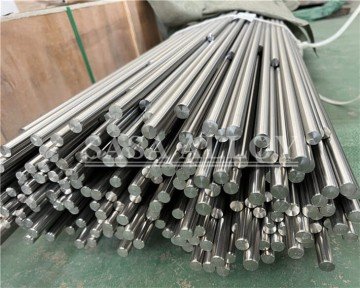
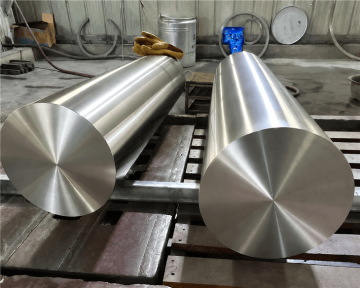
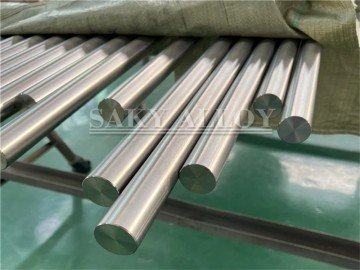
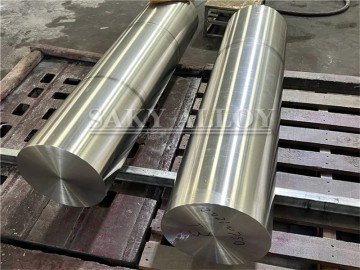
Titanium bars are widely recognized for their exceptional mechanical and chemical properties, making them indispensable in highly specialized applications. One area where titanium bars excel is in the manufacturing of vacuum chambers. These chambers are used in industries such as semiconductor manufacturing, aerospace engineering, scientific research, and advanced material processing. The unique combination of properties in titanium makes it an ideal choice for ensuring vacuum chamber performance, reliability, and longevity.
This article explores the reasons why titanium bars are used in vacuum chambers, their advantages over other materials, and the applications where they are most valuable.
Understanding Vacuum Chambers
A vacuum chamber is a sealed enclosure from which air and other gases are removed using vacuum pumps. These chambers allow scientists and engineers to create controlled environments for experiments, production, or testing. Vacuum levels can range from low vacuum to ultra-high vacuum (UHV), depending on the process requirements.
In such controlled environments, the material used to construct the chamber must meet specific criteria:
-
Low outgassing rate
-
High corrosion resistance
-
Mechanical stability under pressure differentials
-
Compatibility with high-vacuum sealing and welding techniques
Titanium bars meet these criteria more effectively than many alternative metals.
Key Reasons Titanium Bars Are Preferred for Vacuum Chambers
1. Extremely Low Outgassing
Outgassing occurs when trapped gases or volatile substances are released from a material’s surface under vacuum. Titanium has an extremely low outgassing rate, which is essential for maintaining a stable vacuum environment. This prevents contamination and ensures precision in sensitive applications like semiconductor fabrication or space simulation.
2. Excellent Corrosion Resistance
Vacuum chambers often operate in environments where they are exposed to reactive chemicals, plasma processes, or residual moisture. Titanium naturally forms a stable, protective oxide layer that prevents corrosion. This makes it ideal for long-term use without degradation, even in aggressive environments.
3. High Strength-to-Weight Ratio
Titanium bars are as strong as many steels but nearly 45% lighter. For large vacuum chambers, this reduces overall structural weight without sacrificing strength, making handling, installation, and maintenance easier.
4. Magnetic Neutrality
Many vacuum processes—especially in electronics and scientific experiments—require materials that are non-magnetic to avoid interference with sensitive instruments. Titanium is non-magnetic, making it ideal for such applications.
5. High Thermal Stability
Vacuum chambers are often subjected to high-temperature processes, including bake-outs used to remove residual gases. Titanium bars can withstand temperatures up to 600°C without losing structural integrity, ensuring durability under thermal cycling.
6. Weldability and Fabrication Ease
Titanium can be welded using inert gas techniques such as GTAW (TIG) without compromising its corrosion resistance. This is important for constructing large vacuum chambers from titanium bar stock and other titanium components.
Applications of Titanium Bars in Vacuum Chambers
-
Semiconductor Industry
-
Vacuum chambers used in wafer processing, sputtering, and etching benefit from titanium’s purity and low contamination risk.
-
-
Aerospace Testing
-
Space simulation chambers mimic the vacuum conditions of outer space, requiring materials like titanium that can withstand thermal extremes and maintain vacuum integrity.
-
-
Surface Science and Research
-
Ultra-high vacuum (UHV) chambers for electron microscopy, X-ray spectroscopy, and material science experiments use titanium for its minimal outgassing and magnetic neutrality.
-
-
Nuclear and Fusion Research
-
Titanium’s resistance to neutron radiation and chemical stability make it suitable for specialized vacuum applications in energy research.
-
Comparison with Alternative Materials
| Property | Titanium | Stainless Steel | Aluminum |
|---|---|---|---|
| Outgassing Rate | Very Low | Low | Moderate |
| Corrosion Resistance | Excellent | Good | Moderate |
| Magnetic Properties | Non-Magnetic | Magnetic (some grades) | Non-Magnetic |
| Strength-to-Weight | Excellent | Good | Good |
| High-Temp Resistance | Excellent | Good | Fair |
From this comparison, it is clear that titanium provides superior overall performance for high-precision vacuum chamber applications.
Challenges of Using Titanium Bars in Vacuum Chambers
While titanium offers unmatched advantages, engineers must also consider:
-
Cost – Titanium is more expensive than stainless steel or aluminum.
-
Machining Requirements – Specialized tooling is needed to machine titanium effectively.
-
Welding Expertise – Titanium welding requires an inert atmosphere to prevent contamination.
Despite these challenges, the performance benefits often outweigh the drawbacks, especially for mission-critical equipment.
Best Practices for Using Titanium Bars in Vacuum Chamber Construction
-
Material Certification – Always use titanium bars that meet standards like ASTM B348 to ensure quality and performance.
-
Surface Preparation – Keep titanium surfaces clean and free from contaminants to avoid outgassing issues.
-
Controlled Welding Environment – Use high-purity argon or helium shielding gas during welding.
-
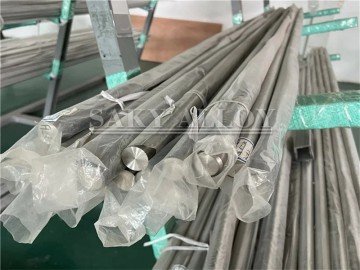
Proper Storage – Store titanium bars in dry, clean areas to prevent surface oxidation or contamination before fabrication.
Conclusion
Titanium bars are the material of choice for high-performance vacuum chambers due to their low outgassing rate, corrosion resistance, strength, and non-magnetic nature. These properties make them indispensable in advanced industries such as aerospace, semiconductor manufacturing, and scientific research, where precision and reliability are critical.
With extensive experience in supplying premium-grade titanium bars for specialized applications, sakyalloy ensures that every product meets stringent quality requirements. Choosing titanium for vacuum chambers is not just a matter of preference—it is a performance-driven decision that ensures long-term operational success in some of the most demanding environments.