

Titanium Forgings vs Machined-from-Bar: Cost and Performance Comparison
Introduction
Titanium forgings vs machined-from-bar is an important cost and performance comparison for buyers sourcing titanium custom parts, aerospace components, medical blanks, marine fittings, valve parts, pump parts, fasteners, shafts, rings and high-strength structural components. The direct answer is: titanium forgings are usually selected when the part requires improved grain flow, higher structural reliability, better fatigue performance and reduced material waste for complex or large parts, while machined-from-bar titanium parts are often selected when buyers need faster delivery, lower tooling cost, simpler geometry, prototype production or small-to-medium batch machining.
Both routes can produce reliable titanium parts when the correct grade, standard, heat treatment, machining allowance, inspection plan and certificate package are specified. The best choice depends on part geometry, quantity, load direction, fatigue requirement, corrosion environment, machining complexity, raw material availability, lead time and total cost. Buyers should not compare only raw material price; they should compare total part cost, yield loss, machining time, inspection scope and service risk.
Best-use recommendation:
• Choose titanium forgings for high-load, fatigue-critical, aerospace, rotating, pressure, ring-shaped or structural parts requiring controlled grain flow.
• Choose machined-from-bar titanium parts for prototypes, small batches, simple shafts, spacers, pins, bushings, fittings and precision parts with moderate performance requirements.
• Use forgings when machining from oversized bar would create high material waste or poor grain orientation for the part.
• Use bar machining when fast lead time, flexible quantity and lower setup cost are more important than forged-shape efficiency.
• Confirm titanium grade, product standard, drawing tolerance, heat treatment, UT/PT, mechanical testing, MTC and final application before selecting the route.
Side-by-Side Table: Titanium Forgings vs Machined-from-Bar
| Comparison Item | Titanium Forgings | Machined-from-Bar Titanium Parts | Buyer Decision |
|---|---|---|---|
| Production Route | Forged billet, ring, disc, block, bar or near-net shape followed by machining | Standard titanium bar or rod cut and machined to final shape | Forgings need more process planning; bar machining is simpler and faster. |
| Strength Direction | Can improve directional properties through grain flow control | Depends on bar processing route and machining orientation | Forging is preferred when load direction and fatigue are critical. |
| Material Utilization | Often better for large, ring-shaped or complex parts | Can create high waste when machining complex shapes from oversized bar | Forging may reduce total cost for high-value or high-volume parts. |
| Tooling / Setup Cost | Higher setup cost, especially for closed-die or custom shapes | Lower setup cost for simple parts and prototypes | Bar machining is usually better for small quantity and urgent orders. |
| Lead Time | Longer due to forging, heat treatment, rough machining and testing | Usually shorter if suitable bar stock is available | Choose bar machining when delivery speed is the main priority. |
| Best Quantity Range | Medium to large batches or high-value critical parts | Prototype, small batch and flexible custom orders | Quantity and repeat order volume affect the best route. |
| Inspection Requirement | Often requires UT, grain flow review, mechanical testing and heat treatment records | Usually requires MTC, dimensional inspection, PMI and optional UT/PT | Critical parts should have an agreed inspection plan before production. |
Cost, Strength and Corrosion Comparison
The cost difference between titanium forgings and machined-from-bar parts depends on part shape, quantity, bar availability and machining waste. Performance difference depends on load direction, fatigue requirement, heat treatment and inspection level. Corrosion resistance is mainly controlled by titanium grade and surface condition rather than whether the part is forged or machined from bar.
| Factor | Titanium Forgings | Machined-from-Bar | Practical Summary |
|---|---|---|---|
| Raw Material Cost | May be higher per piece at low volume due to forging setup | Lower initial cost when standard bar stock is available | Bar is usually cheaper for prototype and small orders. |
| Total Finished Cost | Can be lower for complex, large or repeated parts due to less machining waste | Can become expensive if most of the bar is removed during machining | Compare finished-part cost, not only raw material price. |
| Strength and Fatigue | Better potential for fatigue-critical and directional load components | Good for many parts when bar grade, condition and orientation are suitable | Forging is preferred for critical structural and fatigue applications. |
| Corrosion Resistance | Depends on grade, surface condition and heat treatment | Depends on grade, surface condition and heat treatment | Route does not replace correct grade selection for corrosion service. |
| Design Flexibility | Good for near-net shapes, rings, blocks, discs and structural blanks | Very flexible for simple custom parts and quick design changes | Bar machining is convenient for development and small-batch changes. |
Best-Use Recommendation by Part Type
| Part Type | Recommended Route | Reason |
|---|---|---|
| Aerospace Structural Brackets | Forging or approved bar route | Use forging when fatigue, grain flow and structural reliability are critical; follow drawing. |
| Shafts, Pins and Spacers | Machined-from-bar | Bar stock is efficient for simple cylindrical parts and fast machining. |
| Rings and Flange Blanks | Forging | Forged rings reduce material waste and improve structure for ring-shaped parts. |
| Prototype Custom Parts | Machined-from-bar | Lower setup cost, faster delivery and easier design revision. |
| Valve and Pump Components | Forging or bar machining | Forging for high-pressure or critical bodies; bar machining for shafts, sleeves and smaller parts. |
| Medical and Precision Blanks | Machined-from-bar or forging depending on design | Bar is common for small precision blanks; forging may be used for special load-bearing implants or custom shapes. |
Titanium Forgings: When to Choose Them
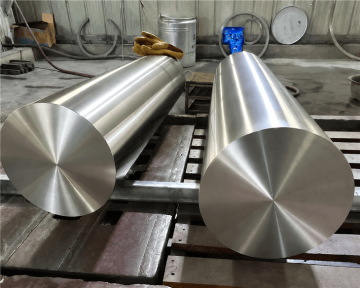
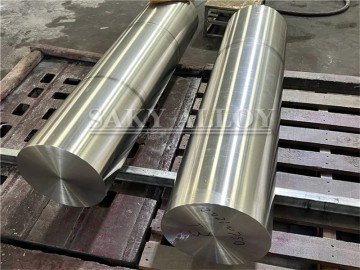
Titanium forgings are preferred when the part must provide strong mechanical performance, better fatigue resistance, controlled grain flow or efficient material use for a near-net shape. Forgings may be supplied as discs, rings, blocks, forged bars, forged shafts, rolled rings, open-die forgings or custom forged blanks.
• Suitable for aerospace, marine, chemical, pressure, power, medical and high-performance structural parts.
• Useful for large or complex parts where machining from a solid bar would waste too much titanium.
• Helps improve grain direction and fatigue performance when properly designed and processed.
• Often requires more complete inspection, including UT, mechanical testing and heat treatment records.
• Best for repeat orders, high-value parts or applications where performance risk is more important than fastest delivery.
Machined-from-Bar Titanium Parts: When to Choose Them
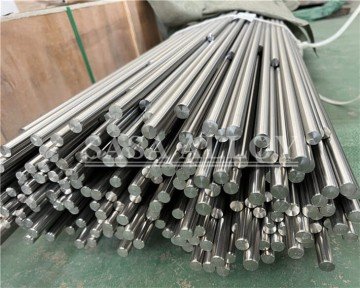
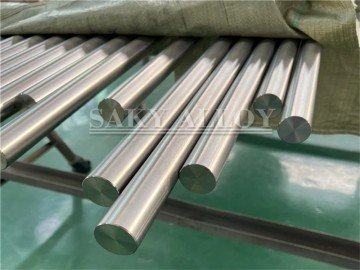
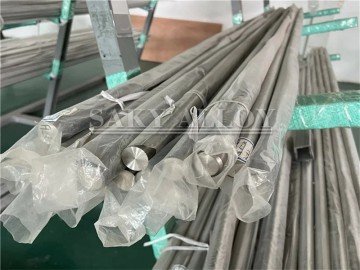
Machined-from-bar titanium parts are produced by cutting titanium round bar, flat bar, square bar or rod into blanks and then machining to final dimensions. This route is common for shafts, pins, threaded parts, spacers, bushings, small fittings, prototypes and precision CNC components.
• Good for urgent orders when the correct titanium bar stock is available.
• Suitable for simple geometry, small batches, prototypes and drawing development.
• Lower setup cost than forging for many low-volume parts.
• Easier to revise if the customer changes dimensions or design details.
• May create high material waste when the final part is much smaller or very different from the starting bar shape.
Recommended Titanium Grades
Both forging and machined-from-bar routes can use common titanium grades. The correct grade should be selected by strength, corrosion resistance, temperature, weldability, medical requirement and standard.
| Grade | UNS | Typical Route | Selection Note |
|---|---|---|---|
| Grade 2 | UNS R50400 | Bar machining, plate machining, forged blanks and fittings | Commercially pure titanium for corrosion-resistant industrial parts. |
| Grade 5 / Ti-6Al-4V | UNS R56400 | Forgings, bars, machined parts, aerospace blanks and high-strength components | Most common high-strength titanium alloy for structural and machined parts. |
| Grade 7 | UNS R52400 | Forged or machined corrosion-resistant chemical parts | Palladium-bearing grade for selected severe corrosion environments. |
| Grade 9 / Ti-3Al-2.5V | UNS R56320 | Machined parts, tube-related parts and lightweight structural components | Good balance of strength, formability and lightweight performance. |
| Grade 23 / Ti-6Al-4V ELI | UNS R56401 | Medical bar blanks, precision parts and selected forgings | Extra-low interstitial alloy for medical and high-toughness applications. |
Inspection and Certificate Requirements
Inspection requirements should match the risk level of the final part. A simple titanium spacer may only need MTC and dimensional inspection. A critical forged aircraft component may need UT, mechanical testing, heat treatment records, grain flow documentation and third-party inspection.
| Document / Test | Forgings | Machined-from-Bar |
|---|---|---|
| EN 10204 3.1 MTC | Required for heat, chemistry, mechanical properties and traceability | Required for bar grade, heat number and material verification |
| Ultrasonic Testing | Common for forged blanks, rings, discs and critical parts | Optional for bar stock or required by drawing/project |
| Dimensional Inspection | Checks forged blank, machining allowance and final machined dimensions | Checks machined dimensions, tolerance, surface and thread details |
| PT / Surface Inspection | Useful for surface cracks after forging and machining | Useful for machined surfaces, threads and critical edges |
| Heat Treatment Record | Important for forged parts requiring controlled properties | Needed if the bar or final part requires heat treatment after machining |
| Packing Photos | Protects heavy or irregular forged blanks and machined faces | Protects precision parts, threads, polished surfaces and labels |
How to Specify the Right Route in an RFQ
A clear RFQ allows the supplier to compare forging and bar-machining options correctly. Buyers should send drawings, application details and acceptance requirements before requesting price.
✅ Drawing file: PDF, STEP, DWG, CAD model or detailed sketch.
✅ Titanium grade: Grade 2, Grade 5, Grade 7, Grade 9, Grade 12, Grade 23 or project-specified grade.
✅ Standard: ASTM B348, ASTM B381, ASTM B265, ASTM B363, AMS, ISO, EN or drawing standard.
✅ Quantity: prototype, trial batch, repeat production or long-term demand forecast.
✅ Performance: static load, fatigue load, pressure, corrosion service, temperature and safety factor.
✅ Required route: forging only, machined-from-bar only or supplier recommendation allowed.
✅ Inspection: MTC, UT, PT, dimensional report, hardness, tensile, grain flow, third-party inspection or project ITP.
✅ Packing: individual wrapping, wooden case, labels, part number, heat number and export marks.
Common Buyer Mistakes
Choosing only by unit price: A low bar price may become expensive if the final part requires heavy machining and creates high scrap.
Assuming forgings are always better: Forgings can improve performance for critical parts, but they may not be cost-effective for simple prototypes or small quantities.
Ignoring grain direction: For fatigue and high-load parts, grain flow and load direction can be more important than raw material shape.
Not allowing enough machining stock: Forged blanks and bars need proper machining allowance to achieve final dimensions and surface quality.
Forgetting inspection scope: Critical titanium forgings may need UT, PT, heat treatment records and mechanical testing beyond standard MTC.
Substituting route without approval: If a drawing requires forging, machined-from-bar should not be used without engineering approval.
FAQ
What is the difference between titanium forgings and machined-from-bar parts?
Titanium forgings are shaped by forging before final machining, which can improve grain flow, structural reliability and material utilization for critical or complex parts. Machined-from-bar parts are made by cutting standard titanium bar and machining it to the final shape, which is often faster and more flexible for simple or small-batch parts.
Are titanium forgings stronger than machined-from-bar parts?
Titanium forgings can offer better directional strength and fatigue performance when the forging process and grain flow are properly designed. However, machined-from-bar parts can also meet high performance requirements when the correct grade, condition, orientation and inspection are specified.
Which route is cheaper?
Machined-from-bar is usually cheaper for prototypes, simple shapes and small quantities. Forging may become more cost-effective for large, complex, ring-shaped or repeat parts because it can reduce material waste and machining time.
When should buyers choose titanium forgings?
Buyers should choose titanium forgings for fatigue-critical, high-load, pressure, aerospace, marine, rotating or structural parts where grain flow, reliability and material utilization are important.
When should buyers choose machined-from-bar titanium parts?
Machined-from-bar titanium parts are suitable for prototypes, urgent orders, small batches, simple cylindrical parts, shafts, pins, spacers, bushings, fittings and CNC components where standard bar stock is available.
Does forging improve corrosion resistance?
Forging itself does not replace correct titanium grade selection for corrosion service. Corrosion resistance depends mainly on grade, surface condition, heat treatment, contamination control and service environment.
What documents should be supplied with titanium forgings or machined parts?
Typical documents include EN 10204 3.1 MTC, chemical composition, mechanical properties, heat number, dimensional inspection report, UT/PT reports if required, heat treatment record, packing list and part labels.
Related Titanium Product Links
| Related Product | Procurement Use |
|---|---|
| Titanium Bar and Rod | Titanium round bar and rod for shafts, pins, spacers, bushings, CNC machining and custom machined parts. |
| Titanium Forging | Titanium forged rings, blocks, discs, shafts and custom forged blanks for high-performance parts. |
| Titanium Grade 5 | Ti-6Al-4V products for high-strength aerospace, marine, medical and industrial custom parts. |
| Titanium Plate and Sheet | Titanium plate and sheet for cut blanks, fabricated components, covers, brackets and machined parts. |
| Choosing a Titanium Supplier in China | Guide to supplier selection, RFQ fields, verification, packaging and lead time for custom titanium parts. |
| Titanium Bar Straightness and Tolerance Guide | Guide to titanium bar tolerance, straightness, supplier verification, packing and RFQ requirements. |
Conclusion
Titanium forgings and machined-from-bar titanium parts both have strong advantages. Forgings are better for high-load, fatigue-critical, large, ring-shaped, structural or repeat parts where grain flow, reliability and material utilization are important. Machined-from-bar parts are better for prototypes, small batches, simple geometry, fast delivery and flexible CNC machining.
For reliable procurement, buyers should compare total finished cost, not only raw material price. A complete RFQ should include drawing, grade, standard, quantity, load condition, tolerance, surface finish, inspection scope, certificate requirement and packing method. If a drawing specifies forging or machined-from-bar, substitution should be approved by engineering before production.
Request Titanium Forgings or Machined-from-Bar Parts
SAKY ALLOY supplies titanium Grade 2, Grade 5, Grade 7, Grade 9, Grade 12, Grade 23 and other titanium bars, forgings, plates, tubes, fittings and custom machined parts for aerospace, medical, marine, chemical and industrial applications.
Send your drawing, grade, standard, quantity, tolerance, application, preferred production route, inspection requirement, certificate type and destination port for technical review and quotation.