
ASTM Standards for Titanium Bars: A Quick Overview
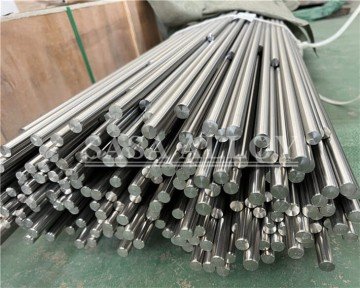
Titanium bars are widely used in high-performance applications across aerospace, marine, medical, chemical processing, and industrial engineering sectors. Their exceptional strength-to-weight ratio, corrosion resistance, and biocompatibility make them a preferred choice for demanding environments. However, to ensure safety, consistency, and performance, titanium bars must meet strict quality standards—most notably those defined by ASTM International.
This article provides a comprehensive overview of the ASTM standards for titanium bars, helping engineers, buyers, and manufacturers understand the classification system, testing requirements, and compliance expectations. If you’re sourcing or specifying titanium bars, knowledge of these standards is essential.
This guide is brought to you by sakyalloy, a trusted global supplier of high-performance titanium and alloy bars compliant with ASTM, AMS, and ISO specifications.
What Is ASTM and Why Does It Matter?
ASTM International (formerly the American Society for Testing and Materials) develops technical standards for materials, products, systems, and services. For titanium bars, ASTM standards:
-
Define chemical composition limits
-
Set mechanical property requirements
-
Specify testing procedures
-
Ensure traceability and quality control
By adhering to ASTM standards, manufacturers ensure interchangeability, safety, and global acceptance of their titanium products.
Common ASTM Standards for Titanium Bars
There are several key ASTM specifications applicable to titanium bars. The most frequently used include:
1. ASTM B348 – Standard Specification for Titanium and Titanium Alloy Bars and Billets
-
Scope: Covers titanium bars and billets for general industrial, aerospace, and commercial use
-
Grades Covered: Commercially pure (Grades 1 to 4) and alloys (Grade 5, 7, 23, etc.)
-
Key Requirements:
-
Chemical composition
-
Tensile strength, yield strength, elongation
-
Dimensional tolerances
-
Surface condition (hot rolled, pickled, turned, polished)
-
sakyalloy supplies ASTM B348-compliant titanium bars with full traceability and EN10204 3.1/3.2 test certificates.
2. ASTM F67 – Unalloyed Titanium for Surgical Implant Applications
-
Scope: Specifies CP titanium for medical and surgical implants
-
Grades: Grade 1 through Grade 4
-
Features:
-
High biocompatibility
-
Requirements for tensile properties and microstructure
-
Low interstitial element limits
-
Used in: orthopedic rods, bone screws, spinal implants
3. ASTM F136 – Titanium-6Al-4V ELI Alloy for Surgical Implants
-
Grade: Titanium Grade 23 (Ti-6Al-4V ELI)
-
Application: Surgical implants requiring extra-low interstitials
-
Features:
-
Higher fracture toughness
-
Better fatigue strength
-
Strict purity and microstructure controls
-
Used in: load-bearing implants, dental bars, and medical pins
4. ASTM B381 – Forgings of Titanium and Titanium Alloys
-
Scope: Covers titanium bars produced by forging
-
Grades: Same as B348 (Grades 1–5, 7, 9, 23, etc.)
-
Testing: Includes ultrasonic testing and grain structure control
-
Applications: Aerospace and heavy industrial components
While ASTM B348 covers rolled and hot-worked bars, B381 focuses on forged titanium products.
5. ASTM B265 – Titanium and Titanium Alloy Strip, Sheet, and Plate
Although not for bars, this standard is often cited alongside B348 for comprehensive titanium supply.
Used for: flat bar conversion, valve plates, structural panels.
ASTM Grades of Titanium Bars and Their Properties
| Grade | Specification | Composition | Strength Level | Typical Application |
|---|---|---|---|---|
| Grade 1 | ASTM B348, F67 | CP Titanium | Low | Heat exchangers, marine |
| Grade 2 | ASTM B348, F67 | CP Titanium | Medium | Chemical tanks, piping |
| Grade 3 | ASTM B348 | CP Titanium | Medium-High | Aerospace frames |
| Grade 4 | ASTM B348, F67 | CP Titanium | High | Surgical tools, structures |
| Grade 5 | ASTM B348, F136 | Ti-6Al-4V | Very High | Aircraft, motorsports |
| Grade 23 | ASTM B348, F136 | Ti-6Al-4V ELI | High, medical-grade | Implants, dental |
| Grade 7 | ASTM B348 | Ti-Pd alloy | Corrosion-resistant | Chlorine environments |
| Grade 12 | ASTM B348 | Ti-Ni-Mo | Moderate strength | Acidic conditions |
sakyalloy offers all major grades of titanium bars with ASTM compliance and optional machining or custom lengths.
Mechanical Properties Required by ASTM B348
| Grade | Yield Strength (MPa) | Tensile Strength (MPa) | Elongation (%) |
|---|---|---|---|
| Grade 1 | 170 | 240 | 24 |
| Grade 2 | 275 | 345 | 20 |
| Grade 3 | 380 | 450 | 18 |
| Grade 4 | 480 | 550 | 15 |
| Grade 5 | 830 | 895 | 10 |
| Grade 23 | 795 | 860 | 10 |
All values are tested at room temperature according to ASTM E8/E8M standards.
ASTM Testing Requirements
To meet ASTM B348 and related standards, titanium bars must undergo:
-
Chemical composition analysis (ICP-OES or XRF)
-
Tensile testing (yield, UTS, elongation)
-
Microstructure examination (grain size, alpha-beta phase balance)
-
Hardness testing (as applicable)
-
Ultrasonic testing (UT): For detecting internal flaws (per AMS 2631 or ASTM E2375)
-
Visual inspection: For surface defects, straightness, and finish
sakyalloy performs 100% inspection for critical applications and includes full test reports.
Marking and Certification
As per ASTM B348:
-
Each bar must be marked with grade, heat number, manufacturer’s symbol, and lot number
-
Bars are delivered with:
-
Mill Test Certificate (MTC)
-
EN10204 3.1/3.2 documentation
-
Optional third-party inspection
-
sakyalloy ensures every bar is correctly labeled, traceable, and meets the order specification.
Advantages of Using ASTM-Compliant Titanium Bars
-
Consistent quality across suppliers
-
Global acceptance for engineering design and certification
-
Interchangeability with OEM and aerospace parts
-
Reliable mechanical and chemical performance
-
Reduced liability through standards-based compliance
Choosing the Right ASTM Standard for Your Project
| Application Area | Recommended ASTM Standard |
|---|---|
| General industry | ASTM B348 |
| Aerospace | ASTM B348, AMS 4928 |
| Surgical implants | ASTM F67, ASTM F136 |
| Forgings | ASTM B381 |
| Corrosive environments | ASTM B348 Grade 7 or 12 |
| Ultra-high strength | ASTM B348 Grade 5 |
Need help? Contact sakyalloy to identify the best material and ASTM grade for your application.
Why Choose sakyalloy?
-
Full inventory of ASTM B348, B381, F67, F136 titanium bars
-
Precision cutting, straightening, and polishing
-
Fast delivery, global shipping, and export packaging
-
Complete testing with certified MTCs
-
Expert support in selecting the correct grade and standard
Whether you’re designing a medical implant, aerospace assembly, or offshore platform, sakyalloy provides ASTM-certified titanium bars with guaranteed quality.
Conclusion
ASTM standards play a vital role in ensuring the consistency, safety, and performance of titanium bars across various industries. From commercial-grade titanium to aerospace and medical-specific alloys, standards like ASTM B348, F67, and F136 define what’s acceptable and reliable.
Understanding these standards allows engineers and procurement teams to make informed decisions, ensuring successful applications with minimal risk.
For fully certified, precision-machined, and ASTM-compliant titanium bars, sakyalloy is your trusted global partner.