
Can Grade 23 Titanium Bar Be Used for 3D Printing or Additive Manufacturing?
In recent years, 3D printing, also known as additive manufacturing (AM), has revolutionized how industries design and produce complex metal components. From aerospace to medical implants, additive manufacturing enables engineers to create lightweight, high-strength structures that were once impossible to fabricate using conventional machining.
One of the most widely used materials in metal 3D printing is Grade 23 Titanium (Ti-6Al-4V ELI). Known for its exceptional biocompatibility, strength, and corrosion resistance, this alloy is a favorite among manufacturers producing high-performance and precision-critical parts.
But can Grade 23 Titanium bar — traditionally used for machining and forging — also be utilized effectively for 3D printing and additive manufacturing applications?
In this article, we will explore the relationship between Grade 23 Titanium bar and additive manufacturing, its properties, processing methods, and the advantages of using this high-purity titanium alloy for 3D-printed parts. We’ll also discuss how sakyalloy, a global titanium supplier, supports industries with top-quality Grade 23 materials optimized for both conventional and advanced manufacturing technologies.
Understanding Grade 23 Titanium (Ti-6Al-4V ELI)
Grade 23 Titanium, also known as Ti-6Al-4V ELI (Extra Low Interstitial), is a high-purity variant of the popular Grade 5 titanium alloy. The “ELI” designation indicates lower levels of oxygen, nitrogen, and iron impurities, resulting in improved toughness, ductility, and fatigue performance.
Chemical Composition of Grade 23 Titanium:
| Element | Percentage (%) |
|---|---|
| Titanium (Ti) | Balance |
| Aluminum (Al) | 5.5 – 6.5 |
| Vanadium (V) | 3.5 – 4.5 |
| Iron (Fe) | ≤ 0.25 |
| Oxygen (O) | ≤ 0.13 |
| Nitrogen (N) | ≤ 0.05 |
| Hydrogen (H) | ≤ 0.012 |
| Carbon (C) | ≤ 0.08 |
This controlled chemistry gives Grade 23 an edge in medical implants, aerospace parts, and precision-engineered components, where fracture toughness and biocompatibility are vital.
Grade 23 Titanium in Additive Manufacturing
Additive Manufacturing (AM) is the process of building components layer by layer using a feedstock material such as powder, wire, or filament. In the case of metals, powder-bed fusion (PBF) and directed energy deposition (DED) are the most common AM techniques for titanium alloys.
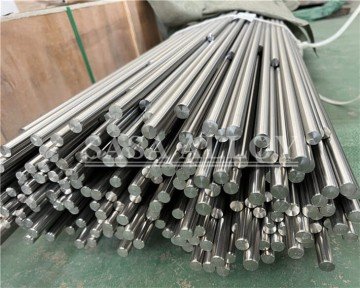
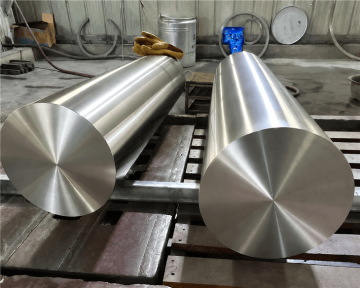
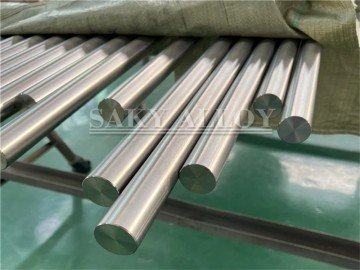
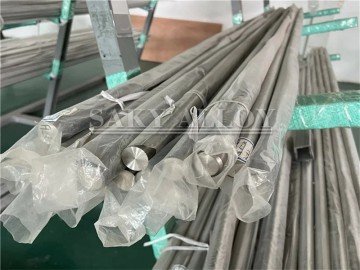
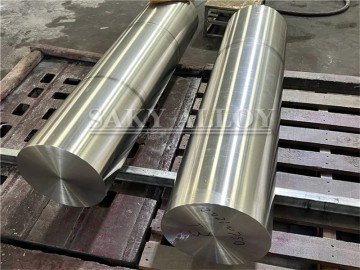
While Grade 23 Titanium bar is typically used in forging, machining, or extrusion, it can also serve as the feedstock source for titanium powder or wire — the essential material used in 3D printing systems.
How It Works:
-
Conversion of Bar to Powder or Wire:
-
Titanium bars are atomized into fine powder using gas atomization or plasma rotating electrode process (PREP).
-
Alternatively, they can be drawn into wire feedstock for DED or wire-based AM systems.
-
-
Layer-by-Layer Printing:
-
In powder-bed fusion, the powder is melted by a laser or electron beam to form each layer.
-
In wire-based systems, the titanium wire is melted as it’s fed into the deposition area.
-
-
Post-Processing:
-
The printed parts are heat-treated, machined, and polished to meet final specifications.
-
This process enables the production of complex, lightweight, and high-strength titanium components directly from digital designs.
Why Grade 23 Titanium Is Ideal for 3D Printing
Grade 23 is the preferred titanium alloy for additive manufacturing due to its unique balance of mechanical strength, toughness, and purity.
1. Excellent Mechanical Properties
| Property | Grade 23 (3D Printed) | Conventional Grade 23 Bar |
|---|---|---|
| Density | 4.43 g/cm³ | 4.43 g/cm³ |
| Tensile Strength (MPa) | 860–930 | 860 |
| Yield Strength (MPa) | 780–830 | 795 |
| Elongation (%) | 10–14 | 14 |
| Hardness (HRC) | 33–36 | 34 |
The 3D-printed version retains — and often exceeds — the strength of forged bars while offering design flexibility that traditional manufacturing cannot achieve.
2. Superior Fatigue and Fracture Resistance
The low interstitial content in Grade 23 provides excellent fatigue life and crack resistance, even under cyclic loading. This is crucial for 3D-printed aerospace brackets, orthopedic implants, and turbine components that experience constant stress.
3. Biocompatibility for Medical Applications
Grade 23 Titanium is fully biocompatible and non-toxic, making it the top choice for 3D-printed medical implants such as:
-
Hip and knee joints
-
Spinal cages
-
Dental implants
-
Cranial reconstruction plates
Additive manufacturing enables custom-fit implants tailored to each patient, a revolution in personalized medicine made possible by alloys like Grade 23.
4. Excellent Corrosion Resistance
In both conventional and 3D-printed forms, Grade 23 forms a stable oxide film on its surface, providing excellent resistance to body fluids, seawater, and acidic environments.
5. Weldability and Printability
The alloy’s balanced chemistry ensures consistent melting behavior during laser or electron beam fusion, minimizing porosity and cracking. This results in high-density printed parts (>99.9%) with superior structural integrity.
Applications of Grade 23 Titanium in Additive Manufacturing
1. Aerospace and Defense
Additive manufacturing with Grade 23 allows for the production of lightweight structural components with optimized geometry and internal channels.
-
Turbine blades and housings
-
Fuel system manifolds
-
Structural brackets and mounts
2. Medical and Dental Implants
Due to its excellent biocompatibility and fatigue performance, Grade 23 is widely used in 3D-printed medical implants.
-
Custom orthopedic and spinal implants
-
Patient-specific bone scaffolds
-
Dental abutments and jaw implants
3. Motorsport and High-Performance Engineering
In motorsport and racing, 3D-printed Grade 23 components provide weight savings and thermal efficiency, essential for performance-critical applications.
-
Suspension systems
-
Engine brackets and exhaust components
4. Industrial and Chemical Processing
The corrosion resistance of Grade 23 makes it ideal for additive-manufactured valves, heat exchangers, and chemical reactor parts, especially in acid or chloride-rich environments.
From Bar to Powder — The Material Transformation
Although Grade 23 Titanium bar is not directly used in printers, it serves as the primary raw material for producing the powder or wire used in AM systems.
Conversion Process Steps:
-
Bar Sourcing: High-purity Grade 23 Titanium bar produced by sakyalloy.
-
Melting: Using plasma arc melting or electron beam melting to remove impurities.
-
Atomization: The molten titanium is atomized into spherical powder with controlled particle size.
-
Sieving and Classification: Powder is filtered to meet the printer’s requirements (typically 15–45 µm for laser systems).
-
Quality Control: Each batch is tested for flowability, oxygen content, and size uniformity.
This ensures that the resulting powder retains the superior purity and mechanical integrity of the original sakyalloy Grade 23 bar.
Advantages of Using Grade 23 Titanium in Additive Manufacturing
-
Lightweight, high-strength parts for aerospace and medical use.
-
Complex geometries with internal channels or lattice structures.
-
Reduced material waste compared to subtractive machining.
-
Faster prototyping and production for customized components.
-
Improved sustainability through efficient material utilization.
These benefits make Grade 23 Titanium one of the most important metals in the future of industrial 3D printing.
Challenges and Considerations
Despite its many advantages, using Grade 23 in 3D printing requires careful process control.
-
Powder quality: Impurities or irregular particle sizes can affect print density.
-
Process optimization: Laser power, scan speed, and layer thickness must be fine-tuned.
-
Post-processing: Heat treatment (annealing) and hot isostatic pressing (HIP) may be required to relieve residual stresses.
With proper manufacturing expertise, these challenges are easily overcome — ensuring printed parts meet or exceed the performance of forged or machined ones.
sakyalloy: Reliable Supplier of Grade 23 Titanium for Additive Manufacturing
As a professional titanium manufacturer and exporter, sakyalloy provides Grade 23 Titanium bars, billets, and powders that meet the strictest aerospace and medical standards.
Quality Highlights:
-
Vacuum Arc Remelting (VAR) and Electron Beam Melting (EBM) for purity control.
-
Production according to ASTM F136, ASTM B348, and ISO 5832-3.
-
Ultra-low interstitial content verified by advanced chemical analysis.
-
100% ultrasonic and mechanical testing for defect-free integrity.
With decades of experience in titanium metallurgy, sakyalloy ensures that its Grade 23 materials deliver consistent performance in both traditional and additive manufacturing applications.
Future Outlook
As additive manufacturing continues to evolve, the use of Grade 23 Titanium will expand across multiple industries. The combination of lightweight strength, biocompatibility, and design freedom makes it indispensable for the next generation of engineering and medical innovation.
Future developments such as multi-material printing, gradient alloy structures, and AI-optimized designs will further enhance how Grade 23 Titanium is utilized in 3D printing — pushing the boundaries of what’s possible in modern manufacturing.
Conclusion
Yes — Grade 23 Titanium bar can absolutely be used for 3D printing or additive manufacturing, though not directly as a solid bar. Instead, it serves as the feedstock material for producing the powder or wire that enables advanced additive manufacturing processes.
Its high purity, excellent toughness, and superior corrosion resistance make it the alloy of choice for aerospace, medical, and high-performance engineering. With its proven biocompatibility and mechanical stability, Grade 23 Titanium is setting new standards for 3D-printed components that must perform flawlessly in extreme conditions.
Through continuous innovation and strict quality control, sakyalloy remains a trusted supplier for high-quality Grade 23 Titanium materials, ensuring that every additive-manufactured part meets the world’s highest standards for strength, safety, and performance.