
Cold Working vs Hot Working Titanium Pipe: A Comprehensive Guide
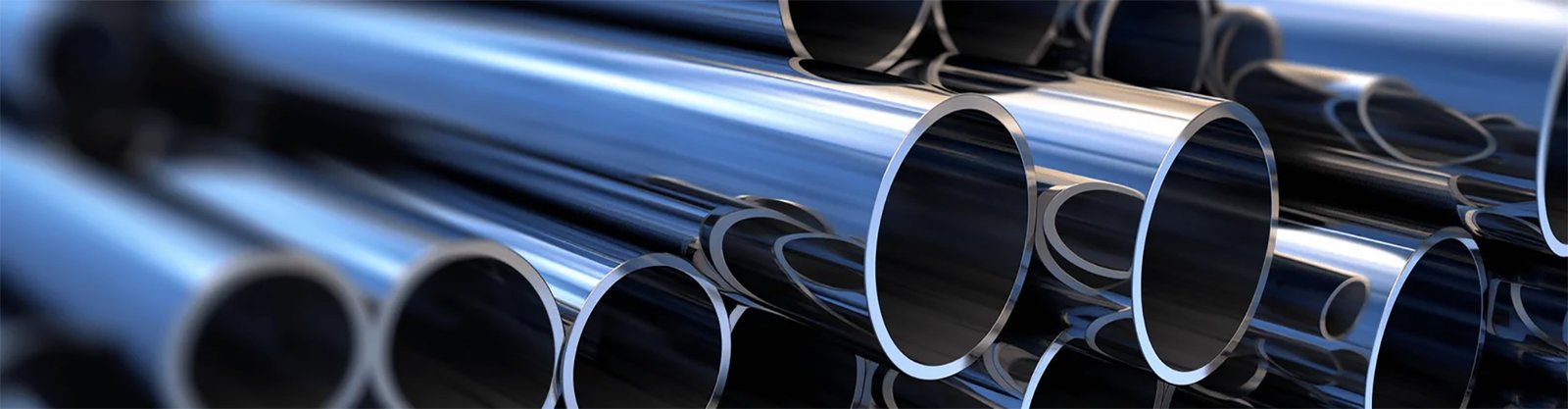
Titanium pipe is a critical component in industries that demand high performance, including aerospace, chemical processing, marine, and medical applications. Its unique properties — such as high strength-to-weight ratio, excellent corrosion resistance, and biocompatibility — make it a material of choice for challenging environments. However, achieving the desired shapes, sizes, and mechanical properties often requires forming processes. Among these, cold working and hot working titanium pipe are the most common. In this article, we provide an in-depth comparison of these two processes, exploring when and why each is used, their benefits, limitations, and best practices.
Why Titanium Pipe Requires Specialized Forming Techniques
Titanium’s material characteristics make it both valuable and challenging to form:
-
High strength and toughness mean greater force is required to deform titanium compared to many other metals.
-
Low modulus of elasticity results in significant springback after forming.
-
Work hardening during deformation can make subsequent forming or machining more difficult.
-
Reactive nature at high temperatures necessitates careful control of the working atmosphere to prevent contamination.
Understanding these factors helps engineers and fabricators choose between cold working and hot working to achieve optimal results.
What Is Cold Working Titanium Pipe?
Cold working refers to the process of shaping titanium pipe at or near room temperature. Common cold working techniques include:
-
Drawing
-
Bending
-
Rolling
-
Stamping
-
Swaging
These processes rely on mechanical force without significant heating of the material.
Benefits of Cold Working Titanium Pipe
-
Improved strength through work hardening: Cold working increases dislocation density, enhancing tensile strength and hardness.
-
Excellent dimensional accuracy: Cold working processes produce tight tolerances and consistent shapes.
-
Smooth surface finishes: Minimal oxidation and scale formation occur, reducing the need for extensive post-process cleaning.
-
Cost-effectiveness for thin-walled or small-diameter pipes: Cold working can efficiently produce precision tubing without high energy input.
Challenges of Cold Working Titanium Pipe
-
Reduced ductility: As titanium is work hardened, it becomes less ductile and more susceptible to cracking if overworked.
-
Residual stresses: Cold working can introduce internal stresses that may lead to distortion or cracking during service.
-
Springback: Significant elastic recovery requires over-bending or compensation in tooling design.
-
Limited formability for complex shapes: Without heating, titanium’s formability is restricted, especially for tight-radius bends or thick-walled pipes.
What Is Hot Working Titanium Pipe?
Hot working involves forming titanium pipe at elevated temperatures, typically between 400°C and 900°C (750°F to 1650°F), depending on the alloy. Common hot working methods include:
-
Hot rolling
-
Hot extrusion
-
Forging
-
Hot bending
Heating the material reduces yield strength and increases ductility, making deformation easier.
Benefits of Hot Working Titanium Pipe
-
Enhanced formability: Higher temperatures allow for complex shapes, tight radii, and large deformations without cracking.
-
Reduced forming force requirements: Heating lowers resistance to deformation, reducing tool and equipment loads.
-
Grain refinement: Controlled hot working can improve microstructure, enhancing toughness and fatigue resistance.
-
Stress relief: Hot working can help minimize or eliminate residual stresses within the material.
Challenges of Hot Working Titanium Pipe
-
Risk of contamination: Titanium is highly reactive at elevated temperatures, forming brittle surface layers (alpha case) if exposed to air, nitrogen, oxygen, or hydrogen.
-
Equipment requirements: Hot working demands specialized furnaces, dies, and protective atmospheres (vacuum or inert gas).
-
Post-process cleaning: Oxide layers formed during hot working must often be removed by pickling or machining.
-
Dimensional control: Hot working can result in greater variability in dimensions due to thermal expansion and contraction.
Cold Working vs Hot Working: Key Differences
Let’s summarize the major distinctions between cold working and hot working titanium pipe:
Temperature Range
-
Cold working: Performed at or near room temperature.
-
Hot working: Performed at elevated temperatures where titanium’s ductility is significantly enhanced.
Material Strength
-
Cold working: Increases strength and hardness through work hardening.
-
Hot working: Allows for shaping without substantial strengthening, unless followed by specific heat treatment.
Formability
-
Cold working: Suitable for minor deformations, small diameter pipes, and applications needing tight tolerances.
-
Hot working: Ideal for significant deformation, complex shapes, or large components.
Surface Condition
-
Cold working: Produces a clean surface with minimal oxidation.
-
Hot working: Requires removal of scale and alpha case layers.
Tooling and Equipment
-
Cold working: Uses standard presses, rolls, or benders with higher force requirements.
-
Hot working: Requires heat-resistant tooling, protective atmospheres, and thermal management.
When to Choose Cold Working
Cold working titanium pipe is typically preferred when:
-
Precision and tight tolerances are required.
-
Surface finish quality is important (e.g., medical, food, or decorative applications).
-
Thin-walled or small-diameter pipes are being produced.
-
Strengthening through work hardening is desired without additional heat treatment.
-
Cost and simplicity are priorities, and complex shapes are not required.
When to Choose Hot Working
Hot working titanium pipe is the better option when:
-
Large deformations are needed that cold working cannot achieve without cracking.
-
Thick-walled pipes require forming.
-
Complex shapes or tight-radius bends are specified.
-
Grain refinement and improved toughness are required for demanding service conditions.
-
Residual stresses from prior processing need to be reduced through hot deformation.
Combining Cold and Hot Working
In many cases, titanium pipe manufacturing involves both cold and hot working:
-
Hot working is used initially to create the basic pipe shape and reduce wall thickness.
-
Cold working follows for precision sizing, finishing, and achieving final mechanical properties.
This hybrid approach allows manufacturers to balance formability, strength, accuracy, and surface quality.
Best Practices for Forming Titanium Pipe
Whether cold working or hot working titanium pipe, certain best practices help ensure success:
Cold Working
-
Use sharp, high-quality tooling to reduce friction and minimize surface defects.
-
Plan for intermediate stress-relief annealing if substantial deformation is required.
-
Compensate for springback in tooling and process design.
-
Apply consistent lubrication to reduce galling and tool wear.
Hot Working
-
Maintain controlled atmosphere (vacuum or inert gas) to prevent contamination.
-
Heat uniformly to the target temperature to avoid thermal gradients and distortion.
-
Cool the material at controlled rates to avoid cracking or undesirable microstructural changes.
-
Remove alpha case layers after forming through chemical or mechanical means.
Applications for Cold and Hot Worked Titanium Pipe
Cold worked titanium pipe is commonly used in:
-
Medical and dental tubing
-
Aerospace hydraulic lines
-
Heat exchanger tubing where precision is critical
-
Architectural and decorative piping
Hot worked titanium pipe is preferred in:
-
Marine and offshore piping systems
-
Chemical processing plant piping
-
Large-diameter or thick-walled aerospace ducting
-
Power generation piping where toughness and fatigue resistance are essential
The Role of sakyalloy in Titanium Pipe Solutions
At sakyalloy, we provide titanium pipe products tailored to the needs of both cold and hot working processes. Our titanium pipes are produced with consistent quality, clean surfaces, and controlled microstructure, ensuring they are ready for forming, machining, or welding as required by your project.
sakyalloy works closely with customers to specify the most suitable titanium grades and processing routes, delivering solutions that combine high performance with cost-effectiveness.
Conclusion
Understanding the differences between cold working and hot working titanium pipe is essential for fabricators, engineers, and buyers aiming to achieve optimal performance in their applications. Each method offers distinct advantages, and the right choice depends on the specific requirements of the project — including formability, precision, surface finish, and mechanical properties.
By partnering with experienced suppliers like sakyalloy, industries can ensure that their titanium piping systems are manufactured and formed to meet the highest standards of quality and reliability, no matter how demanding the environment.