
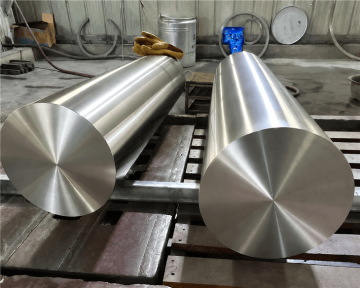
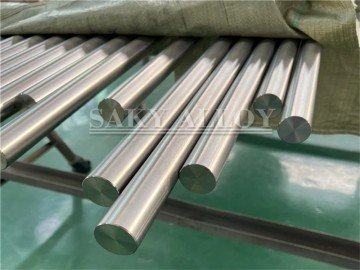
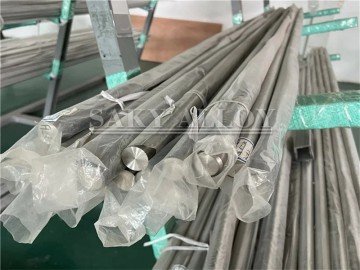
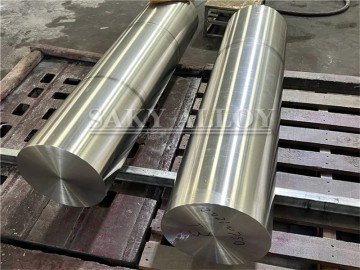
Dimensional Accuracy and Surface Finish Standards for Grade 11 Bars
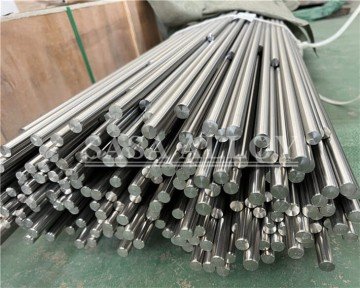
Titanium Grade 11 bars are widely recognized for their exceptional corrosion resistance, high strength, and excellent performance in chemical, marine, aerospace, and industrial applications. Achieving consistent quality requires strict adherence to dimensional accuracy and surface finish standards.
Precision in dimensions and surface quality is critical for ensuring proper fit, assembly, and performance in high-demand applications. Leading suppliers like sakyalloy apply advanced manufacturing processes and rigorous quality control to produce Grade 11 bars that meet international standards for dimensional accuracy and surface finish. This article explores the standards, manufacturing considerations, and inspection practices that guarantee high-quality titanium bars.
Importance of Dimensional Accuracy in Grade 11 Bars
Ensuring Proper Fit and Assembly
Dimensional accuracy ensures that Grade 11 bars meet specified diameters, lengths, and tolerances. Accurate dimensions allow components to fit precisely in piping systems, mechanical assemblies, and structural applications, reducing the risk of misalignment and operational failure.
Enhancing Mechanical Performance
Bars with consistent dimensions exhibit uniform mechanical properties such as tensile strength and yield strength. Dimensional control prevents weak points or stress concentrations, ensuring reliable performance under high loads and harsh environments.
Compliance with International Standards
Adherence to standards such as ASTM B265 and ASME specifications ensures global acceptance of Grade 11 bars. Meeting these standards guarantees compatibility with equipment, fittings, and assemblies in chemical, marine, and aerospace industries.
Surface Finish Standards
Role of Surface Finish
Surface finish affects corrosion resistance, weldability, and fatigue life. Smooth, uniform surfaces reduce the risk of crack initiation and improve resistance to chemical and environmental corrosion.
Common Surface Finish Standards for Grade 11 Bars
-
Ra (Roughness Average): Typically, Grade 11 bars are manufactured with surface roughness between 0.8 and 3.2 micrometers depending on application.
-
Visual Surface Quality: Free from scratches, pits, and scaling that could compromise corrosion resistance.
-
Passivation and Pickling: Chemical treatments enhance the protective oxide layer and maintain surface integrity.
Benefits of Proper Surface Finish
-
Reduces the likelihood of localized corrosion
-
Improves fatigue strength for cyclic loading applications
-
Enhances aesthetic and functional quality for visible components
-
Supports superior weldability and fabrication performance
Manufacturing Considerations for Dimensional Accuracy
Precision Forging
Forging Grade 11 bars aligns the metal grain structure, enhancing strength while providing near-net shape. Controlled forging reduces variations in cross-sectional dimensions, producing bars with excellent dimensional consistency.
Rolling and Sizing
Hot and cold rolling processes refine dimensions and achieve target diameters. Key considerations include:
-
Maintaining uniform reduction ratios to prevent deformation
-
Controlling rolling speed and temperature to avoid surface defects
-
Ensuring straightness and uniform cross-sectional area
Heat Treatment
Solution treatment and stress relieving minimize residual stress that could lead to warping or dimensional instability. Proper heat treatment ensures that bars retain their intended size and shape during subsequent handling and machining.
Surface Finish Control in Manufacturing
Mechanical Finishing
Processes such as grinding, polishing, and turning remove surface irregularities, burrs, and oxidation layers. These methods produce smooth surfaces that meet strict roughness specifications.
Chemical Treatment
Pickling and passivation enhance corrosion resistance and remove embedded contaminants. Passivation creates a protective oxide layer, improving the long-term durability of Grade 11 bars in harsh chemical and marine environments.
Inspection and Verification
Surface finish is verified using:
-
Profilometers to measure roughness
-
Visual inspection for defects such as scratches or pits
-
Chemical analysis to confirm passivation effectiveness
Sakyalloy applies comprehensive finishing procedures to ensure that all Grade 11 bars meet customer requirements for surface integrity and aesthetic quality.
Quality Control and Inspection
Dimensional Inspection
Dimensional accuracy is verified at multiple stages of production:
-
Pre-rolling and forging measurements for consistency
-
Post-rolling verification for diameter, length, and straightness
-
Tolerance checks according to ASTM B265 standards
Precision instruments such as micrometers, calipers, and coordinate measuring machines (CMM) are used to ensure exact compliance with specifications.
Non-Destructive Testing (NDT)
NDT techniques confirm the integrity of bars without causing damage:
-
Ultrasonic testing detects internal voids and inclusions
-
Dye penetrant or eddy current testing reveals surface defects
-
Ensures that both dimensional accuracy and surface finish meet quality standards
Documentation and Traceability
Complete records of measurements, inspections, and surface treatment procedures are maintained. This provides traceability from raw material to finished product, supporting quality audits and compliance verification.
Standards and Compliance
ASTM Standards
-
ASTM B265 specifies chemical composition, mechanical properties, and manufacturing requirements for commercially pure titanium, including Grade 11.
ASME and ISO Standards
-
ASME and ISO standards define dimensional tolerances, surface finish, and quality assurance procedures for titanium bars used in piping, structural, and industrial applications.
NACE Compliance
-
For applications in chemical processing or marine environments, NACE standards ensure resistance to stress corrosion cracking and long-term durability.
Meeting these standards ensures that Grade 11 bars are suitable for critical applications in chemical, marine, aerospace, and power industries.
Applications of High-Quality Grade 11 Bars
Chemical Processing
-
Reactor vessels, piping, and heat exchangers
-
Storage tanks and acid handling equipment
Marine and Offshore
-
Desalination plants and seawater piping
-
Marine hardware exposed to corrosive environments
Aerospace
-
Structural and corrosion-resistant components
-
High-strength bars for aircraft and spacecraft
Industrial Machinery and Power Generation
-
Steam and water piping in power plants
-
High-temperature and high-pressure components
Dimensionally accurate and properly finished bars ensure reliable assembly, long-term durability, and operational efficiency in all these applications.
Advantages of Strict Dimensional and Surface Finish Standards
-
Reliable Fit and Assembly – Precise dimensions prevent misalignment and installation issues
-
Improved Mechanical Performance – Consistent size and shape reduce stress concentrations
-
Enhanced Corrosion Resistance – Smooth, passivated surfaces resist chemical and environmental attack
-
Compliance with Standards – ASTM, ASME, ISO, and NACE standards ensure global acceptance
-
Customer Confidence – Traceable quality and documented inspections guarantee performance
-
Long-Term Durability – Proper dimensions and surface finish extend service life in demanding environments
Sakyalloy’s adherence to these standards ensures that Grade 11 bars meet or exceed customer expectations for quality and reliability.
Role of Sakyalloy
Expertise in Production
Sakyalloy combines precision forging, controlled rolling, heat treatment, and surface finishing to produce Grade 11 bars with consistent dimensions and superior surface quality.
Quality Assurance
-
Comprehensive inspection protocols at every production stage
-
Detailed documentation and traceability from raw material to finished bar
-
Delivery of bars that meet mechanical, chemical, and dimensional specifications for critical industrial applications
Partnering with sakyalloy guarantees Grade 11 bars that are dimensionally accurate, corrosion-resistant, and ready for demanding chemical, marine, aerospace, and power applications.
Conclusion
Dimensional accuracy and surface finish are critical to the performance and reliability of Titanium Grade 11 bars. Proper control of forging, rolling, heat treatment, and surface finishing processes ensures that bars meet international standards and deliver consistent mechanical properties.
Suppliers like sakyalloy implement advanced manufacturing techniques, rigorous inspection procedures, and full documentation to guarantee that Grade 11 bars are dimensionally precise, surface-perfect, and suitable for chemical, marine, aerospace, and industrial applications. Adherence to these standards ensures reliable performance, long-term durability, and customer confidence in all critical environments.