
Does Titanium Bar Expand with Heat?
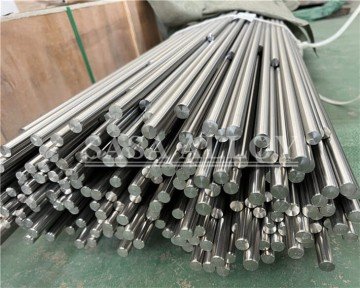
Yes, titanium bar expands with heat—just like all metals. But what sets titanium apart is its controlled and predictable thermal expansion, making it ideal for demanding industrial applications. Whether used in aerospace, marine, chemical, or structural engineering, understanding the thermal expansion behavior of titanium bar is essential for designing safe, precise, and long-lasting systems.
This article explores in depth how titanium bar responds to heat, what its thermal expansion coefficient is, how it compares with other metals, and why this matters in real-world applications. You’ll also discover how sakyalloy titanium bar provides unmatched stability and reliability in high-temperature environments.
What Is Thermal Expansion?
Thermal expansion is the tendency of materials to change in shape, area, or volume in response to temperature changes. When metals like titanium are heated:
-
Atomic vibrations increase, causing atoms to move farther apart
-
This leads to expansion in length and volume
-
Upon cooling, the material contracts again
This behavior must be considered during the design of components that undergo thermal cycling or operate at high temperatures, to avoid deformation, misalignment, or failure.
Does Titanium Bar Expand with Heat?
Yes, titanium bars do expand when heated. The degree of expansion depends on the temperature rise and the thermal expansion coefficient (CTE) of the material.
Titanium Thermal Expansion Coefficient:
-
Grade 2 Titanium: ~8.6 × 10⁻⁶ /°C (from 20°C to 300°C)
-
Grade 5 (Ti-6Al-4V): ~9.0 × 10⁻⁶ /°C
This means for every 1°C increase in temperature, 1 meter of titanium bar will expand by about 8.6 to 9.0 microns.
In comparison to other metals, titanium’s thermal expansion is moderate, offering a balanced performance.
Titanium vs Other Metals: Thermal Expansion Comparison
| Material | Thermal Expansion Coefficient (/°C) | Notes |
|---|---|---|
| Titanium (Grade 2) | ~8.6 × 10⁻⁶ | Moderate and stable |
| Stainless Steel 304 | ~17.2 × 10⁻⁶ | Expands about twice as much |
| Aluminum | ~23.0 × 10⁻⁶ | High expansion, risk of warping |
| Copper | ~16.5 × 10⁻⁶ | High conductivity but expands fast |
| Inconel 625 | ~13.0 × 10⁻⁶ | Lower than steel, higher than titanium |
| Zirconium | ~5.7 × 10⁻⁶ | Lower, but less commonly used |
This table shows that titanium bar expands less than steel or aluminum, reducing the risk of thermal-induced mechanical issues.
Why Titanium’s Controlled Expansion Matters
1. Dimensional Stability in Heat
In components like heat exchangers, aircraft parts, and high-temperature piping, dimensional shifts can cause:
-
Seal failure
-
Bolted joint loosening
-
Structural deformation
-
Thermal fatigue cracking
Titanium’s low thermal expansion minimizes such risks.
2. Thermal Cycling Resistance
Titanium bar can withstand repeated heating and cooling without significant fatigue or loss of performance. It resists:
-
Warping
-
Embrittlement
-
Stress-related cracking
This is especially critical in jet engines, nuclear reactors, and exhaust systems.
3. Compatibility with Other Materials
In multi-material assemblies (e.g., titanium + glass, titanium + ceramics), mismatch in expansion can lead to delamination or stress fractures. Titanium’s moderate expansion makes it more compatible with ceramics and composites than aluminum or steel.
Real-World Applications That Benefit from Titanium’s Thermal Expansion Properties
1. Aerospace and Aviation
Titanium bars are widely used in:
-
Jet engine components
-
Structural airframe parts
-
Exhaust ducts and heat shields
In these applications, precise control over expansion is crucial for flight safety and efficiency.
2. Heat Exchangers
Titanium bar supports or frames in heat exchangers benefit from:
-
Corrosion resistance + low expansion
-
Tight sealing under thermal load
-
Stable performance in seawater or acidic environments
3. Chemical Processing Equipment
Reactors, pressure vessels, and piping that undergo thermal cycling need materials that can:
-
Expand predictably
-
Maintain structural integrity under heat
-
Resist chemical attack simultaneously
Titanium bar is a preferred choice due to this balance.
4. Medical Implants and Devices
Even in the human body, temperature variations and sterilization cycles make titanium’s expansion properties vital for:
-
Bone plates
-
Dental implants
-
Surgical instruments
sakyalloy titanium bar is often used for such precision-critical applications.
Thermal Conductivity vs Expansion: A Balanced Property
One reason titanium is unique is that it combines low thermal expansion with low thermal conductivity.
-
Thermal conductivity of Grade 2 titanium: ~15 W/m·K
-
Much lower than copper (~400 W/m·K) or aluminum (~237 W/m·K)
This means titanium:
-
Heats and cools gradually, reducing thermal shock
-
Does not transfer localized heat quickly, avoiding hotspots
-
Is suitable for thermal insulation designs in high-performance applications
Can Titanium Bar Be Used at High Temperatures?
Yes. Titanium bar remains structurally stable up to:
-
~400°C in long-term service
-
Up to 600°C for short-duration operations
For applications above 600°C, titanium alloys such as Ti-6Al-2Sn-4Zr-6Mo (Ti 6246) or intermetallic titanium aluminides are used.
sakyalloy offers high-temperature titanium bar grades on request.
Handling and Installation Considerations
When designing systems using titanium bars, engineers should:
-
Use expansion joints or flexible couplings where thermal expansion must be absorbed
-
Account for thermal clearance in fittings
-
Avoid mixing with high-expansion materials without buffers
-
Use titanium fasteners where matched expansion is critical
Summary: Key Titanium Bar Thermal Expansion Facts
-
Yes, titanium bar expands with heat, but less than steel or aluminum
-
Thermal expansion coefficient: ~8.6–9.0 × 10⁻⁶ /°C
-
Offers stable, predictable performance in hot and fluctuating environments
-
Prevents warping, cracking, and misalignment in heat-sensitive systems
-
Widely used in aerospace, marine, energy, and medical sectors
-
Compatible with heat-cycling applications and tight tolerance designs
-
Available in various grades from sakyalloy with technical support and certificates
Why Choose sakyalloy Titanium Bar?
sakyalloy is a professional titanium material supplier committed to providing:
-
Precision-cut titanium bars in Grades 2, 5, and high-temp alloys
-
Full material certifications (ASTM B348, ISO 5832, AMS 4928)
-
Custom machining, thermal stability testing, and dimensional inspection
-
Fast delivery and expert consultation for engineering solutions
With sakyalloy, you’re not just buying titanium bar—you’re investing in quality, safety, and performance backed by years of metallurgical expertise.
Conclusion
Titanium bar does expand with heat, but its low and stable thermal expansion coefficient makes it an excellent material for demanding environments. Whether you’re building aerospace components, desalination systems, or high-performance reactors, titanium bar from sakyalloy delivers unmatched thermal integrity, corrosion resistance, and mechanical strength.