
Does Titanium Bend?
Exploring the Flexibility and Limits of a High-Strength Metal
Titanium is widely regarded as one of the strongest and most reliable metals in modern engineering. Its high strength-to-weight ratio, corrosion resistance, and biocompatibility have earned it a key role in industries like aerospace, medicine, and marine engineering. But one question often arises among designers, fabricators, and curious minds: does titanium bend?
The answer is more nuanced than a simple yes or no. While titanium is known for its strength and rigidity, it also possesses a unique combination of flexibility and resilience under the right conditions. In this article, we’ll break down how titanium behaves under bending forces, what factors influence its formability, and when bending is a viable processing method.
Understanding Titanium’s Mechanical Behavior
To answer whether titanium bends, we must first understand its mechanical properties. Titanium is not a brittle material. In fact, one of its defining features is its ability to deform elastically under stress. This means titanium can bend—but how much and how easily it bends depends on several key factors:
-
The specific grade of titanium
-
Whether the titanium is annealed (softened) or cold-worked
-
The thickness and shape of the material
-
The bending technique and tools used
-
The desired radius of curvature
So yes, titanium can bend—but doing it properly requires knowledge, experience, and the right equipment.
Pure Titanium vs. Titanium Alloys: Which Bends Better?
Titanium comes in many grades, ranging from commercially pure grades (like Grade 1 and Grade 2) to high-strength alloys like Grade 5 (Ti-6Al-4V).
Commercially pure titanium, especially Grade 1 and Grade 2, is relatively soft and ductile, making it more suitable for bending and forming. These grades are often used in architectural panels, medical devices, and chemical process equipment where formability is a priority.
In contrast, titanium alloys, such as Grade 5, are much harder and stronger. These are engineered for load-bearing applications but are more difficult to bend without cracking, especially if cold-worked or thick-walled. Successful forming of alloyed titanium usually requires hot forming, which involves heating the metal to increase ductility.
Can Titanium Be Bent Without Breaking?
Yes, but it must be done with careful control of conditions. Titanium can tolerate elastic bending, but if the stress exceeds a certain point, it will permanently deform (plastic deformation). If pushed too far beyond this threshold—especially with hard alloys or improper tooling—it can crack or split.
Fabricators often perform bending on annealed titanium, which has been heat-treated to reduce hardness and improve ductility. This makes the metal more flexible and less likely to fracture during forming.
Another technique is incremental bending, which involves applying force gradually over several steps to prevent stress concentration and reduce the risk of cracking.
Is Titanium Easy to Bend?
In general, titanium is more difficult to bend than metals like aluminum or mild steel. Its spring-back tendency—where the metal tries to return to its original shape after bending—is quite high. This makes it more challenging to achieve accurate angles or tight curves without overcompensating or using specialized dies.
That said, with the right approach, titanium can be successfully bent for applications like:
-
Custom medical components (bone plates, clips)
-
Tubing for aerospace or chemical use
-
Architectural cladding and fasteners
-
High-performance sports equipment frames
-
Industrial brackets or flanges
The key is working with titanium’s properties rather than against them.
Can Titanium Be Bent by Hand?
Only very thin sheets or wires of pure titanium can be bent by hand—and even then, it requires considerable force. For example, a Grade 1 titanium foil may be hand-bendable, but a Grade 5 titanium rod is far too strong for manual bending.
In most industrial settings, press brakes, rotary draw benders, or mandrel benders are used to apply consistent force with precision. For tubing, internal mandrels help prevent buckling or collapsing during bends.
For small-scale custom work, titanium can be heated using a torch or furnace to reduce stiffness and then shaped manually using jigs and bending forms.
Does Heat Help Titanium Bend?
Absolutely. Heat is one of the most effective ways to improve titanium’s bendability. Hot forming is a common practice, especially for titanium alloys like Grade 5. By heating the titanium to around 600°C–900°C, fabricators can reduce the metal’s resistance to deformation.
At elevated temperatures, titanium becomes significantly more ductile, allowing for tighter bends and more complex shapes without cracking. However, care must be taken to control the temperature precisely, as overheating can cause grain growth or oxidation.
Additionally, heat-assisted bending should be followed by proper cooling and post-forming treatments to maintain the structural integrity and corrosion resistance of the titanium part.
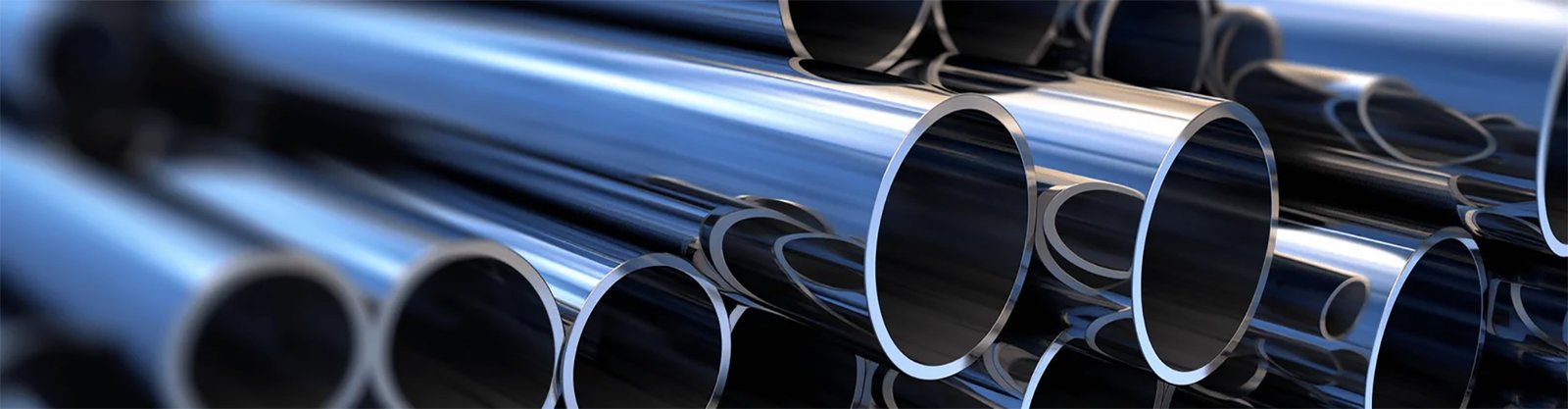
Titanium Tubes and Pipes: Can They Be Bent?
Yes, titanium tubing is commonly bent in industries like aerospace, marine, medical devices, and chemical processing. However, due to titanium’s strength and spring-back, tubing must be bent using controlled processes like:
-
Mandrel bending: Prevents collapse of the tube wall.
-
Roll bending: Suitable for long-radius curves.
-
Compression bending: Used for larger diameter pipes.
Titanium’s resistance to internal and external corrosion makes it ideal for pipes and tubes that carry fluids or gases in harsh environments. But bending them requires expertise and precision tooling.
What Happens If You Bend Titanium Too Far?
When titanium is bent beyond its yield strength, it begins to permanently deform. This is acceptable in some forming operations. However, if pushed too far beyond that point—especially without heat treatment—titanium can develop cracks, splits, or fatigue weaknesses that compromise performance.
This is especially important in load-bearing applications, such as:
-
Aircraft landing gear
-
Bone support implants
-
Subsea pipeline systems
In these scenarios, even minor imperfections from poor bending technique can result in long-term failure or safety risks. That’s why most critical titanium parts are manufactured to exact tolerances using CNC machining or controlled hot forming, not casual bending.
Why Work with SAKYALLOY for Titanium Bending Projects?
At sakyalloy, we understand that titanium is not just strong—it’s also sensitive to how it’s formed. That’s why we offer custom titanium processing services, including cold and hot forming, CNC bending, and precision cutting.
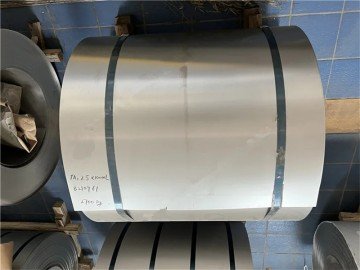
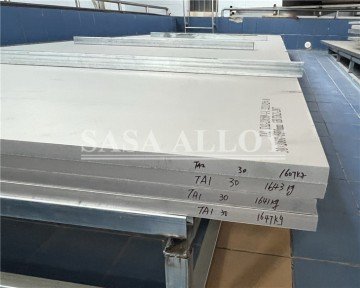
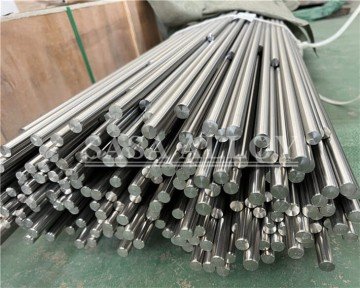
Whether you need titanium sheets, rods, tubes, or complex formed parts, we deliver products that meet international standards such as ASTM, ISO, and AMS. Every piece is traceable, inspected, and ready for critical-use environments.
From aerospace brackets to orthopedic implants, we work with clients across industries to supply bend-ready titanium materials with reliable dimensional accuracy and surface finish.
Final Thoughts: Can Titanium Bend?
So, does titanium bend? Yes—it certainly can. But bending titanium requires the right conditions, the right equipment, and the right knowledge. While commercially pure titanium can be formed with relative ease, titanium alloys require careful heat treatment and professional handling.
Whether you are fabricating a lightweight aerospace component or a medical device, understanding how titanium responds to bending forces can help you make smarter design decisions and avoid costly mistakes.
Need help sourcing titanium materials that are suitable for bending?
Explore the full range of titanium products at www.sakysteel.com or contact our technical team at sales@sakysteel.com.