
Elastic Properties And Processing Technology Of Titanium Alloys Gr5 And Gr1
Titanium alloys have become one of the most important materials in aerospace, marine, medical, and industrial engineering. Among the many grades available, Gr5 (Ti-6Al-4V) and Gr1 (commercially pure titanium) stand out due to their unique mechanical properties and processing characteristics. Understanding their elastic properties and processing technologies helps engineers and manufacturers optimize performance, reduce costs, and ensure reliability in critical applications.
This article explores the elastic behavior of Gr5 and Gr1 titanium alloys, compares their mechanical characteristics, and explains the latest processing technologies that enable their widespread use.
Overview of Titanium Alloy Grades
Gr1 – Commercially Pure Titanium
-
Composition: More than 99% titanium with trace elements.
-
Characteristics: Excellent corrosion resistance, high ductility, and ease of fabrication.
-
Applications: Chemical processing equipment, marine components, medical devices, and architectural applications.
Gr5 – Ti-6Al-4V Alloy
-
Composition: 6% aluminum, 4% vanadium, balance titanium.
-
Characteristics: High strength-to-weight ratio, good corrosion resistance, and superior mechanical properties.
-
Applications: Aerospace structures, turbine blades, automotive components, biomedical implants.
Elastic Properties of Gr5 and Gr1
Elastic properties determine how materials respond to stress and strain within the elastic limit, where deformation is reversible.
Elastic Modulus (Young’s Modulus)
-
Gr1: ~105 GPa
-
Gr5: ~113 GPa
Both are lower than steel (~200 GPa), which gives titanium alloys their flexibility while maintaining strength.
Poisson’s Ratio
-
Gr1: ~0.34
-
Gr5: ~0.32
These values indicate that both alloys exhibit moderate lateral expansion under axial loading.
Shear Modulus
-
Gr1: ~41 GPa
-
Gr5: ~44 GPa
Titanium alloys have lower shear moduli compared to steels, contributing to better energy absorption in dynamic loading.
Elastic Recovery
Titanium alloys exhibit excellent elastic recovery, making them suitable for spring-like applications, aerospace fasteners, and biomedical devices where resilience is vital.
Comparison of Elastic Properties
| Property | Gr1 Titanium | Gr5 Titanium (Ti-6Al-4V) |
|---|---|---|
| Elastic Modulus | 105 GPa | 113 GPa |
| Poisson’s Ratio | 0.34 | 0.32 |
| Shear Modulus | 41 GPa | 44 GPa |
| Density | 4.51 g/cm³ | 4.43 g/cm³ |
| Tensile Strength | ~240 MPa | ~895 MPa |
| Ductility (Elong.) | Very High | Moderate |
-
Gr1 offers higher ductility and corrosion resistance but lower strength.
-
Gr5 balances elasticity with significantly higher strength, making it the preferred aerospace alloy.
Processing Technology of Gr1 and Gr5
1. Forging
-
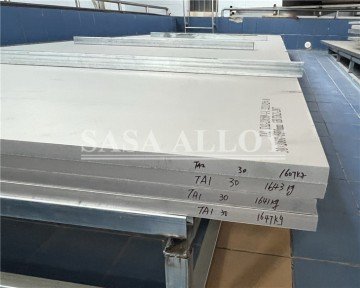
Gr1: Forging is relatively easy due to its ductility. Used for making plates, tubes, and simple components.
-
Gr5: Requires controlled forging temperatures (900–950°C) to maintain the alpha-beta structure. Common in aerospace components like discs and rings.
2. Machining
-
Both alloys are more difficult to machine compared to steel due to work hardening and low thermal conductivity.
-
Cutting speeds must be lower, with specialized carbide or coated tools.
-
Coolants are essential to prevent tool wear and overheating.
3. Welding
-
Gr1: Excellent weldability with TIG or electron beam welding. Widely used in pressure vessels and marine equipment.
-
Gr5: Weldable but requires strict shielding with inert gases to prevent oxidation. Post-weld heat treatment may be necessary to restore mechanical properties.
4. Heat Treatment
-
Gr1: No significant heat treatment required; properties are stable in annealed condition.
-
Gr5: Responsive to solution treatment and aging, which increases strength and hardness for aerospace use.
5. Forming and Fabrication
-
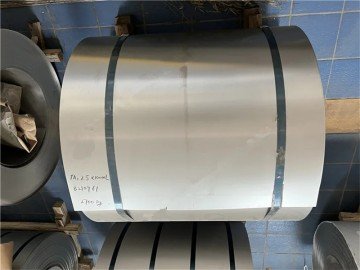
Gr1: Highly formable, suitable for cold forming into sheets, coils, and tubing.
-
Gr5: Limited formability compared to Gr1 but can be hot-formed to achieve complex geometries.
6. Additive Manufacturing (3D Printing)
-
Both alloys are now used in powder-bed fusion and directed energy deposition technologies.
-
Gr5 is widely adopted in aerospace and biomedical implants for lightweight, complex structures.
-
Gr1 is preferred for corrosion-resistant parts in chemical industries.
Industrial Applications
Gr1 Titanium
-
Heat exchangers and condensers in chemical plants.
-
Marine hardware resistant to seawater.
-
Medical instruments requiring biocompatibility.
-
Architectural panels and artistic structures.
Gr5 Titanium
-
Aircraft structures such as wings, fuselages, and landing gear.
-
Jet engine compressor blades and discs.
-
Automotive racing components for high strength-to-weight performance.
-
Orthopedic implants and surgical tools.
Advantages of Using Gr1 and Gr5
-
Lightweight Strength: Both alloys deliver high strength with low density compared to steels.
-
Corrosion Resistance: Especially strong in Gr1, making it ideal for harsh chemical environments.
-
Elastic Resilience: Excellent elastic recovery ensures durability under stress.
-
Biocompatibility: Both alloys are suitable for medical implants.
-
Versatility in Processing: Forging, machining, welding, and additive manufacturing enable wide-ranging applications.
Challenges in Processing
-
Cost: Titanium is more expensive than aluminum or steel.
-
Machining Difficulty: Requires specialized tools and techniques.
-
Welding Sensitivity: Susceptible to oxygen and nitrogen contamination during welding.
-
Supply Chain Limitations: Dependent on titanium ore extraction and processing.
Future Trends
-
Improved Alloys: Development of new titanium alloys with higher elasticity and better fatigue resistance.
-
Recycling Technologies: Expanding recycling of titanium scrap to reduce costs.
-
Hybrid Structures: Use of titanium with carbon composites in aerospace for weight optimization.
-
Additive Manufacturing: Increasing adoption for lightweight, complex geometries.
-
Expanded Medical Applications: Growth in orthopedic and dental implants using titanium alloys.
Manufacturers like sakyalloy are investing in innovative titanium solutions to meet the growing global demand for lightweight, elastic, and corrosion-resistant materials.
Conclusion
Titanium alloys Gr1 and Gr5 represent two ends of the performance spectrum: Gr1 provides exceptional ductility and corrosion resistance, while Gr5 delivers superior strength and balanced elastic properties. Their unique characteristics, combined with advanced processing technologies, make them indispensable across aerospace, marine, medical, and industrial applications.
Understanding their elastic properties and manufacturing techniques helps engineers choose the right alloy for each project. As technology advances, these titanium alloys will continue to evolve, supporting industries in achieving greater efficiency, performance, and sustainability.
Companies like sakyalloy remain committed to providing high-quality titanium alloys that meet international standards, ensuring reliable solutions for critical applications worldwide.