
EN Standards for Titanium Round Bars
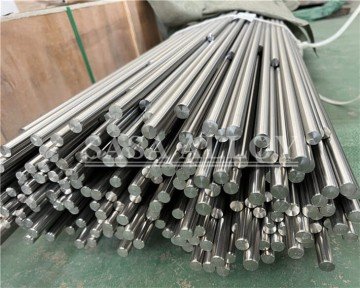
Titanium round bars are used across a wide range of industries, from aerospace and medical to marine and industrial manufacturing. To ensure consistent quality, mechanical performance, and safety, manufacturers and buyers rely on international standards. In Europe, EN standards define the requirements for titanium round bars, covering aspects such as chemical composition, mechanical properties, dimensional tolerances, and testing procedures.
This article provides an in-depth look at EN standards for titanium round bars, how they compare to other specifications, and why compliance is critical for high-performance applications.
Importance of EN Standards for Titanium Round Bars
EN standards are developed by the European Committee for Standardization (CEN) and are recognized across European countries and many global markets. For titanium round bars, EN standards ensure:
-
Uniform material quality across different manufacturers
-
Interchangeability of components sourced from different suppliers
-
Safety and reliability in critical applications
-
Regulatory compliance for products sold in European markets
Manufacturers such as sakyalloy follow EN requirements to meet the expectations of international customers and guarantee product performance.
Overview of Relevant EN Standards
Several EN standards apply to titanium and titanium alloy round bars, depending on the grade, intended use, and industry sector.
1. EN 10204
-
Focus: Defines types of inspection documents and certification formats.
-
Importance: Specifies the type of Material Test Certificate (MTC) required, such as 3.1 or 3.2 certificates for full traceability.
2. EN 3311 / EN ISO 24034
-
Focus: Technical delivery conditions for wrought titanium and titanium alloy products.
-
Content: Specifies chemical composition, mechanical properties, and manufacturing processes for titanium round bars.
3. EN ISO 5832
-
Focus: Implants for surgery — unalloyed titanium and titanium alloys.
-
Application: Medical-grade titanium bars used in surgical implants and devices.
4. EN ISO 24034
-
Focus: Aerospace series — wrought titanium and titanium alloys.
-
Application: Titanium bars for aerospace structural and engine components.
Grades of Titanium Covered in EN Standards
EN standards include both commercially pure (CP) titanium grades and titanium alloys:
-
CP Grades: EN equivalents for Grade 1, Grade 2, Grade 3, Grade 4
Used for corrosion resistance in chemical processing and marine environments. -
Alloy Grades: Ti-6Al-4V (Grade 5), Ti-6Al-4V ELI (Grade 23), Ti-3Al-2.5V, Ti-0.2Pd
Preferred for aerospace, medical, and high-performance engineering applications.
Chemical Composition Requirements
EN standards define strict limits for interstitial elements such as oxygen, nitrogen, and hydrogen, as well as alloying elements:
| Element | CP Titanium (max %) | Ti-6Al-4V (max %) |
|---|---|---|
| Oxygen (O) | 0.18–0.40 | 0.20 |
| Nitrogen (N) | 0.03–0.05 | 0.05 |
| Hydrogen (H) | 0.015 | 0.015 |
| Iron (Fe) | 0.20–0.50 | 0.40 |
| Aluminum (Al) | — | 5.5–6.75 |
| Vanadium (V) | — | 3.5–4.5 |
These limits ensure the bar achieves the desired balance of strength, ductility, and corrosion resistance.
Mechanical Property Requirements
EN standards also specify minimum mechanical properties, typically determined at room temperature unless otherwise stated:
-
Tensile Strength (MPa): Varies by grade; for Ti-6Al-4V, around 895 MPa minimum.
-
Yield Strength (MPa): Typically around 825 MPa for aerospace grades.
-
Elongation (%): Generally 10–20% depending on grade and condition.
-
Reduction of Area (%): Ensures ductility and toughness.
Dimensional and Tolerance Requirements
EN standards define permissible variations in:
-
Diameter
-
Roundness
-
Straightness
-
Surface finish
For precision applications, tighter tolerances may be agreed upon between manufacturer and customer.
Testing and Inspection Methods
To verify compliance, EN standards require multiple tests:
-
Chemical Analysis: Using OES, ICP, or inert gas fusion.
-
Mechanical Testing: Tensile, yield, elongation, and hardness tests.
-
Non-Destructive Testing (NDT): Ultrasonic or eddy current testing for internal defects.
-
Surface Inspection: Visual and dimensional checks to ensure no cracks, laps, or surface defects.
Marking and Identification
Titanium round bars compliant with EN standards must be clearly marked with:
-
Manufacturer’s identification
-
Grade designation
-
Standard reference (e.g., EN ISO 24034)
-
Heat number for traceability
Comparison with Other Standards
| Feature | EN Standard | ASTM Standard | AMS Standard |
|---|---|---|---|
| Region | Europe | USA | Aerospace-focused |
| Scope | Broad, covers multiple industries | General industrial and commercial | Aerospace-specific |
| Format | Metric units | Imperial and metric | Imperial and metric |
For global projects, dual certification (EN + ASTM/AMS) is often used to meet multiple market requirements.
Applications of EN-Compliant Titanium Round Bars
-
Aerospace: Landing gear components, engine parts, airframe structures.
-
Medical: Implants, surgical tools, dental fixtures.
-
Marine: Offshore platforms, shipbuilding.
-
Industrial: Chemical processing equipment, heat exchangers.
-
Sports Equipment: High-end bicycles, racing components.
Advantages of Sourcing EN Standard Titanium Bars
-
Guaranteed compliance with European regulations
-
Consistent quality and mechanical performance
-
Full traceability and documentation
-
Compatibility with European customers and markets
Suppliers like sakyalloy ensure all titanium round bars meet EN specifications, backed by complete certification and rigorous testing procedures.
Quality Assurance in EN-Compliant Production
To maintain compliance:
-
Implement ISO 9001-certified quality systems
-
Conduct 100% inspection for critical dimensions
-
Retain full batch records for traceability
-
Use advanced melting and forging methods to ensure purity and homogeneity
Conclusion
EN standards for titanium round bars provide a critical framework for ensuring consistent quality, mechanical properties, and safety across industries. By specifying chemical composition limits, mechanical property requirements, dimensional tolerances, and testing procedures, EN standards give manufacturers and buyers a common language for titanium product quality.
For businesses seeking reliable titanium round bars, choosing EN-compliant products from trusted suppliers like sakyalloy ensures performance, safety, and global market compatibility.