
Grade 23 Titanium Bar vs Grade 5: Medical and Aerospace Differences
Grade 23 Titanium Bar vs Grade 5: Medical and Aerospace Differences
Introduction
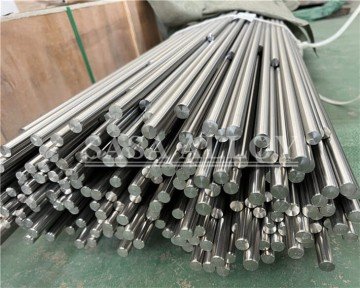
The choice between Grade 23 Titanium Bar vs Grade 5 is mainly a choice between tighter interstitial control and general-purpose Ti-6Al-4V performance. Grade 23, also called Ti-6Al-4V ELI, is normally preferred for surgical implants, medical devices and critical aerospace components requiring improved ductility, fracture toughness or fatigue-crack resistance. Grade 5 is the standard Ti-6Al-4V alloy used for aerospace structures, fasteners, machined parts, marine equipment and industrial components where high strength and broad availability are the main priorities.
Key Takeaways: Both grades contain approximately 6% aluminum and 4% vanadium. Grade 23 has lower allowable oxygen, nitrogen, hydrogen and iron levels. These tighter chemistry limits generally improve toughness and damage tolerance but may slightly reduce minimum strength compared with some Grade 5 product specifications. Grade 23 is commonly associated with ASTM F136 for surgical implant material, while ASTM B348 covers titanium alloy bars and billets for industrial procurement, including Grade 5 and Grade 23.
Buyers should not select the grade from the words “medical grade” or “aerospace grade” alone. The purchase order must identify the product standard, material condition, heat treatment, dimensions, testing, certification and final component requirements. Regulatory acceptance for an implant or flight component depends on the complete manufacturing and validation route, not only the titanium grade.
What Are Grade 23 and Grade 5 Titanium Bars?
Grade 5 titanium, UNS R56400, is the conventional Ti-6Al-4V alpha-beta titanium alloy. Aluminum stabilizes the alpha phase, while vanadium stabilizes the beta phase. The resulting microstructure provides a practical balance of strength, toughness, corrosion resistance, heat-treatment response and machinability.
Grade 23 titanium, UNS R56401, has the same nominal aluminum and vanadium content but is produced with extra-low interstitial elements. Oxygen, nitrogen and hydrogen occupy interstitial positions in the titanium lattice. Higher interstitial content increases strength but can reduce ductility and fracture toughness. Grade 23 limits these elements more tightly to support critical medical and aerospace service.
Side-by-Side Selection Table
| Selection Factor | Grade 23 Titanium Bar | Grade 5 Titanium Bar | Best-Use Recommendation |
|---|---|---|---|
| UNS Designation | UNS R56401 | UNS R56400 | Use the UNS number on the RFQ and MTC to prevent mixing. |
| Interstitial Control | Extra-low oxygen, nitrogen, hydrogen and controlled iron. | Standard Ti-6Al-4V chemistry limits. | Choose Grade 23 for improved toughness and critical fatigue service. |
| Medical Implants | Commonly specified under ASTM F136. | May be covered by ASTM F1472 for surgical implant applications. | Grade 23 is normally the preferred starting point for permanent load-bearing implants. |
| Aerospace Structures | Used when damage tolerance and toughness are critical. | Widely used for structural parts, fasteners and machined components. | Grade 5 usually provides better availability for general aerospace requirements. |
| Relative Cost | Usually higher because of tighter melting and quality controls. | Generally lower and more widely available. | Use Grade 23 only where its additional performance or approval is required. |
Chemical Composition Comparison
The nominal aluminum and vanadium ranges are similar. The technical difference is the control of interstitial and residual elements. The values below are common industry references; final acceptance must follow the applicable edition of the ordered ASTM, AMS or customer specification and the actual heat analysis.
| Element | Grade 23 Typical Limit | Grade 5 Typical Limit | Technical Effect |
|---|---|---|---|
| Aluminum | Approximately 5.5-6.5% | Approximately 5.5-6.75% | Alpha stabilizer that contributes to strength and heat resistance. |
| Vanadium | Approximately 3.5-4.5% | Approximately 3.5-4.5% | Beta stabilizer that supports strength and heat-treatment response. |
| Oxygen | Commonly limited to about 0.13% maximum. | Commonly permitted up to about 0.20% maximum. | Lower oxygen supports improved ductility and fracture toughness. |
| Iron | Commonly limited to about 0.25% maximum. | Commonly permitted up to about 0.40% maximum. | Tighter control supports cleaner microstructure and toughness. |
| Nitrogen | Commonly limited to about 0.03% maximum. | Commonly limited to about 0.05% maximum. | Lower nitrogen reduces interstitial strengthening and brittleness risk. |
| Hydrogen | Tightly controlled under the applicable ELI specification. | Controlled under the applicable Grade 5 specification. | Excess hydrogen can form brittle hydrides and reduce toughness. |
Mechanical Properties and Fracture Performance
Both grades provide a high strength-to-weight ratio at a density of approximately 4.43 g/cm³. Their tensile properties depend on product form, section size, heat treatment and specification. Grade 5 may have slightly higher minimum strength requirements, while Grade 23 normally provides higher elongation and improved fracture-toughness potential.
| Property | Grade 23 Typical Behavior | Grade 5 Typical Behavior | Selection Relevance |
|---|---|---|---|
| Tensile Strength | Common minimum values are around 825-860 MPa, depending on specification and section. | Common minimum values are around 895 MPa in many annealed bar specifications. | Confirm the governing standard rather than relying on a generic datasheet. |
| Yield Strength | Typically lower than or comparable with Grade 5, depending on condition. | High yield strength for structural and machined aerospace parts. | Use certified values for design calculations. |
| Elongation | Generally higher because of lower interstitial content. | Good ductility but usually lower than ELI material. | Important for implants, notched parts and fatigue-sensitive components. |
| Fracture Toughness | Normally superior under comparable processing conditions. | Suitable for many structural applications but more chemistry-sensitive. | Grade 23 offers a larger damage-tolerance margin in critical service. |
| Fatigue Performance | Can provide improved fatigue-crack initiation and propagation behavior. | Strong general fatigue performance when surface and microstructure are controlled. | Surface finish, inclusions, residual stress and machining marks remain critical. |
Corrosion Resistance and Biocompatibility
Grade 5 and Grade 23 form a stable titanium-oxide passive film and provide similar general corrosion resistance in seawater, many chloride solutions and numerous industrial environments. The lower interstitial content of Grade 23 does not create a major universal improvement in corrosion rate. Its advantage is more closely connected to toughness, fatigue performance and medical material-control requirements.
Both grades are used in medical technology because titanium has a strong record of biocompatibility. Grade 23 is commonly preferred for permanent implants because its ELI chemistry and ASTM F136 control route provide a widely recognized basis for surgical implant production. Biocompatibility of the final device still depends on machining, cleaning, passivation, surface modification, sterilization and manufacturing validation.
Titanium can suffer hydrogen absorption or crevice-related attack in certain reducing acids and high-temperature chloride environments. Chemical-service buyers should provide concentration, temperature, aeration and contaminant information rather than assuming all titanium alloys are immune to corrosion.
Applicable Standards and Equivalent Grade References
| Reference | Grade 23 | Grade 5 | Buyer Check |
|---|---|---|---|
| UNS | R56401 | R56400 | Verify the final digit because the alloys have similar nominal chemistry. |
| ASTM B348 / B348M | Grade 23 titanium alloy bar and billet | Grade 5 titanium alloy bar and billet | Suitable for industrial bar procurement; verify application-specific additions. |
| ASTM F136 | Wrought Ti-6Al-4V ELI for surgical implant applications | Not the conventional Grade 5 standard | Specify F136 when implant material compliance is required. |
| ASTM F1472 | Not the primary ELI implant specification | Wrought Ti-6Al-4V for surgical implant applications | Do not treat F136 and F1472 as interchangeable. |
| Aerospace Specifications | Project-specific AMS or OEM specification may apply. | Multiple AMS and OEM specifications exist by product and condition. | Confirm exact specification number, revision and heat treatment before quotation. |
ASTM B348 compliance does not automatically establish medical-device or aerospace approval. Implant and flight hardware may require additional metallurgical controls, melting routes, microstructure limits, ultrasonic acceptance, source approval and process qualification.
Quality Testing and Material Traceability
Grade 23 and Grade 5 are visually indistinguishable. Heat-number control must remain intact through forging, rolling, heat treatment, peeling, grinding, cutting and packing. Anti-fake material control should combine original mill documentation, product marking, chemistry verification and traceability records.
| Inspection Item | Purpose | Buyer Verification |
|---|---|---|
| EN 10204 3.1 MTC or Project Certificate | Records heat number, chemistry, mechanical properties, condition and dimensions. | Check oxygen, iron, nitrogen and hydrogen limits carefully. |
| PMI Testing | Confirms titanium, aluminum and vanadium alloy family. | Handheld PMI cannot reliably distinguish ELI chemistry because oxygen and hydrogen require laboratory analysis. |
| Interstitial Analysis | Measures oxygen, nitrogen and hydrogen using suitable laboratory methods. | Essential for confirming Grade 23 ELI compliance. |
| Ultrasonic Testing | Detects internal discontinuities and supports aerospace or medical quality control. | State test method, reference standard and acceptance class in the PO. |
| Microstructure and Alpha-Case Control | Checks heat-treatment condition and oxygen-enriched surface layers. | Critical where fatigue, machining depth or implant cleanliness is controlled. |
| Third-Party Inspection | Provides independent review of material, tests, marking and packaging. | SGS, BV, TÜV or customer-appointed inspection may be arranged. |
Material Performance and Cost Comparison
| Comparison Factor | Grade 23 | Grade 5 | Purchasing Impact |
|---|---|---|---|
| Strength | High strength with ELI chemistry; minimum values depend on specification. | Often has higher standard minimum tensile strength. | Do not assume Grade 23 always meets a Grade 5 strength callout. |
| Toughness | Generally superior due to reduced interstitial content. | Good but more sensitive to oxygen and microstructure. | Grade 23 offers value in fatigue-sensitive and damage-tolerant designs. |
| Corrosion Resistance | Excellent general corrosion resistance. | Excellent and broadly comparable in most environments. | Corrosion alone rarely justifies the higher Grade 23 cost. |
| Availability | More specialized; medical-certified sizes may require mill production. | Widely stocked in common bar sizes and forms. | Confirm stock origin and certification before promising delivery. |
| Total Cost | Higher material, testing and traceability cost. | Lower general procurement cost. | Compare regulatory, fatigue and failure-risk costs, not price per kilogram alone. |
Medical and Aerospace Applications
| Application | Recommended Starting Grade | Selection Reason | Critical Specification Check |
|---|---|---|---|
| Bone Screws and Orthopedic Plates | Grade 23 | ELI chemistry, toughness and established implant specification route. | ASTM F136, interstitial analysis, microstructure and traceability. |
| Dental Implant Components | Grade 23 where Ti-6Al-4V ELI is approved | Fatigue performance and medical material control. | Regulatory specification, machining cleanliness and surface treatment. |
| Aircraft Structural Fittings | Grade 5 | High strength, broad supply and established aerospace processing. | AMS or OEM specification, UT class, heat treatment and grain flow. |
| Critical Aerospace Fasteners | Grade 5 or Grade 23 by design requirement | Grade 5 provides strength; Grade 23 provides a greater toughness margin. | Cold work, thread rolling, fatigue testing and source approval. |
| General Industrial Shafts and Parts | Grade 5 | Lower cost with adequate strength and corrosion resistance. | ASTM B348, diameter tolerance, surface and machining allowance. |
Material Selection Checklist
✅ Choose Grade 23 when ASTM F136, ELI chemistry or improved toughness is explicitly required.
✅ Choose Grade 5 for general aerospace and industrial components where standard Ti-6Al-4V is approved.
✅ State whether the order follows ASTM B348, ASTM F136, ASTM F1472, AMS or an OEM specification.
✅ Define annealed, solution-treated and aged, or another approved delivery condition.
✅ Specify bar diameter, length, tolerance, straightness, surface finish and machining allowance.
✅ Require interstitial analysis, tensile tests, UT, microstructure or alpha-case inspection where applicable.
✅ Confirm export packing, end protection, heat-number marking and certificate format before shipment.
Why Choose Grade 23 or Grade 5?
Choose Grade 23 titanium bar when the component requires ELI chemistry, medical implant compliance, improved ductility or a larger fracture-toughness margin. It is especially relevant for orthopedic implants, dental components, surgical instruments and fatigue-sensitive aerospace hardware.
Choose Grade 5 titanium bar when high strength, low density, availability and cost control are more important than ELI-level chemistry. It is the practical choice for many aircraft fittings, structural fasteners, marine components, industrial shafts and machined titanium parts.
Grade 23 should not be treated as an automatic premium substitute for Grade 5. A lower interstitial level may change strength and qualification data. Grade 5 should not be supplied for an ASTM F136 medical order. Material selection must follow the approved drawing, standard and component-validation route.
FAQ
Is Grade 23 titanium the same as Grade 5?
Both are Ti-6Al-4V alloys, but Grade 23 has tighter limits on oxygen, iron, nitrogen and hydrogen. This extra-low-interstitial chemistry generally improves ductility and fracture toughness.
Which grade is stronger?
Grade 5 often has higher minimum tensile and yield requirements in common annealed bar specifications. Grade 23 remains a high-strength alloy but prioritizes toughness and ductility through lower interstitial content.
Which grade is better for medical implants?
Grade 23 supplied to ASTM F136 is normally preferred for Ti-6Al-4V surgical implants. The final device must also meet regulatory, manufacturing, cleaning and validation requirements.
Which grade is better for aerospace parts?
Grade 5 is widely used for general aerospace structures and machined components. Grade 23 may be selected for critical parts requiring improved toughness, fatigue performance or damage tolerance.
Can PMI testing distinguish Grade 23 from Grade 5?
Standard handheld PMI can identify titanium, aluminum and vanadium but cannot reliably confirm the low oxygen and hydrogen levels that define Grade 23. Laboratory interstitial analysis and the original MTC are required.
What should be included in the RFQ?
Include grade, UNS number, standard, diameter, length, tolerance, condition, surface, heat treatment, quantity, UT requirement, certificate type, intended application, packing and destination port.
Related Titanium Bar Products
| Product | Typical Procurement Use |
|---|---|
| Grade 23 Titanium Bar | Ti-6Al-4V ELI bar for medical, aerospace and fatigue-sensitive machined components. |
| Titanium Bar Product Range | Grade 5, Grade 23 and other titanium bars in round, square, hexagonal and customized forms. |
Conclusion
Grade 23 and Grade 5 share the Ti-6Al-4V alloy system but serve different procurement priorities. Grade 23 provides tighter interstitial control, improved toughness potential and a recognized route for surgical implant production. Grade 5 provides high strength, broad aerospace acceptance, wider stock availability and lower general procurement cost.
Request a Grade 23 vs Grade 5 Material Review
Contact SAKY ALLOY for Grade 23 or Grade 5 titanium bar quotations, specification review, interstitial analysis, MTC, ultrasonic testing, customized diameters, precision tolerances, surface finishing, export packaging and delivery support.
Send the material standard, diameter, length, quantity, delivery condition, medical or aerospace application, testing requirements, certificate format and destination port. Our team will review the specification and prepare a suitable titanium bar supply proposal.
“`