
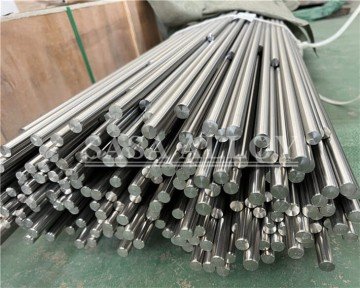
Grade 23 Titanium Bars Driving Advanced Manufacturing Trends
In today’s rapidly evolving industrial landscape, advanced manufacturing technologies are redefining how materials are designed, processed, and utilized. From aerospace to medical implants, modern engineering demands materials that combine lightweight strength, superior durability, and high purity — characteristics that few metals can deliver simultaneously.
One alloy that meets these challenges head-on is Grade 23 Titanium (Ti-6Al-4V ELI). Known for its Extra Low Interstitial (ELI) purity, this high-performance material has become a cornerstone in advanced manufacturing applications where reliability, precision, and biocompatibility are critical.
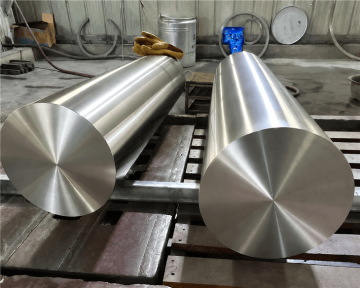
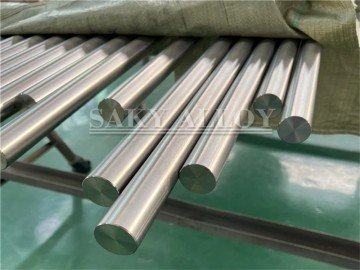
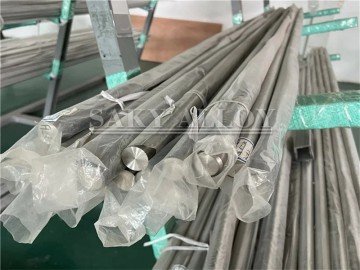
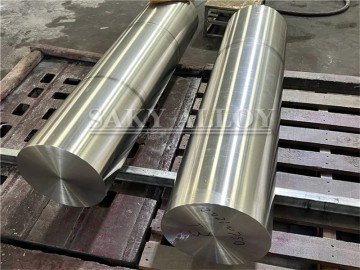
As industries shift toward additive manufacturing, precision machining, and sustainable production, Grade 23 Titanium bars supplied by sakyalloy are leading the way, offering exceptional performance for both traditional and next-generation manufacturing systems.
This article explores how Grade 23 Titanium bars are driving innovation across modern industries, the technologies enabling their adoption, and why they represent the future of high-value material engineering.
What Is Grade 23 Titanium (Ti-6Al-4V ELI)?
Grade 23 Titanium, also called Ti-6Al-4V ELI, is a refined version of the widely used Grade 5 Titanium. The difference lies in the “ELI” (Extra Low Interstitial) process, which significantly reduces impurity levels such as oxygen, nitrogen, hydrogen, and iron.
This results in a cleaner, more ductile alloy with improved fracture toughness, fatigue resistance, and biocompatibility. These properties make Grade 23 the ideal choice for medical implants, aerospace fasteners, and precision-engineered parts.
Chemical Composition:
| Element | Percentage (%) |
|---|---|
| Titanium (Ti) | Balance |
| Aluminum (Al) | 5.5–6.5 |
| Vanadium (V) | 3.5–4.5 |
| Iron (Fe) | ≤ 0.25 |
| Oxygen (O) | ≤ 0.13 |
| Nitrogen (N) | ≤ 0.05 |
| Hydrogen (H) | ≤ 0.012 |
| Carbon (C) | ≤ 0.08 |
The reduction of oxygen and iron compared to Grade 5 makes Grade 23 more resistant to cracking and ideal for dynamic or impact-loaded applications.
Mechanical Properties: A Perfect Balance
| Property | Grade 5 | Grade 23 |
|---|---|---|
| Tensile Strength (MPa) | 895 | 860 |
| Yield Strength (MPa) | 828 | 795 |
| Elongation (%) | 10 | 14 |
| Fracture Toughness | Moderate | High |
| Fatigue Resistance | Good | Excellent |
Grade 23 trades a small amount of strength for enhanced toughness and ductility, making it ideal for components that must endure cyclic stresses, vibration, and impact — key factors in advanced manufacturing environments.
The Role of Grade 23 Titanium in Advanced Manufacturing
The global shift toward high-efficiency production technologies — such as additive manufacturing, CNC machining, and hybrid forming — requires materials that perform consistently and withstand extreme processing conditions.
Grade 23 Titanium’s combination of purity, machinability, and structural reliability aligns perfectly with these new industrial demands.
1. Additive Manufacturing (3D Printing)
One of the most transformative areas in modern production is metal additive manufacturing. Grade 23 Titanium has become the preferred material for laser powder-bed fusion (LPBF) and electron beam melting (EBM) systems.
Advantages for 3D Printing:
-
Excellent powder flowability and uniform melting behavior.
-
High-density prints (>99.9%) with minimal porosity.
-
Superior fatigue performance in printed components.
-
Biocompatibility, allowing use in custom medical implants.
Applications:
-
Patient-specific orthopedic implants.
-
Lightweight aerospace brackets and turbine housings.
-
Motorsport and high-performance automotive parts.
Because of its Extra Low Interstitial composition, Grade 23 ensures clean microstructures and superior print consistency, critical for safety-critical 3D-printed components.
2. Precision Machining and Aerospace Engineering
Advanced aerospace manufacturing requires tight tolerances, fatigue resistance, and weight efficiency. Grade 23 Titanium meets all these criteria while being easier to machine and polish than harder alloys.
Key Benefits:
-
High strength-to-weight ratio for aircraft structural parts.
-
Exceptional stress corrosion cracking resistance in humid and marine environments.
-
Stable microstructure during heat treatment and machining.
Applications include:
-
Jet engine compressor blades and fasteners.
-
Satellite brackets and structural joints.
-
Aircraft landing gear and suspension components.
The combination of toughness and purity ensures that sakyalloy’s Grade 23 Titanium bars deliver unmatched reliability in demanding flight applications.
3. Medical and Biomedical Manufacturing
Modern medical manufacturing is driven by personalization and safety. Grade 23 Titanium is a biocompatible and hypoallergenic material, making it the global standard for medical implants and surgical tools.
Advantages for Medical Use:
-
Non-toxic and non-magnetic.
-
Exceptional corrosion resistance in body fluids.
-
Supports osseointegration (bone growth around the implant).
-
High fatigue resistance under cyclic human motion.
Applications:
-
Dental implants and abutments.
-
Spinal fixation systems.
-
Hip and knee replacements.
-
3D-printed bone scaffolds and cranial plates.
With the ability to create custom implants using additive manufacturing, sakyalloy’s Grade 23 Titanium enables medical manufacturers to achieve both precision and patient safety.
4. Cryogenic and Energy Applications
As industries explore extreme environments, from deep-sea drilling to space travel, Grade 23 Titanium provides superior toughness at low temperatures.
Advantages:
-
Maintains ductility at cryogenic conditions (–196°C).
-
Excellent resistance to hydrogen embrittlement.
-
Stable under high pressure and temperature variations.
Used in:
-
LNG storage and transfer systems.
-
Deep-sea connectors and sensors.
-
Spacecraft and propulsion components.
Its reliability under harsh conditions makes Grade 23 the go-to material for energy and exploration systems where performance failures are unacceptable.
5. Sustainable and Lightweight Design
Modern manufacturing emphasizes sustainability — reducing material waste and improving energy efficiency. Titanium alloys like Grade 23 contribute by:
-
Reducing weight, thus lowering fuel consumption in aircraft and vehicles.
-
Extending lifespan, minimizing replacement frequency.
-
Recyclability, as titanium can be re-melted without property loss.
As industries pursue green manufacturing, titanium’s role continues to grow, and Grade 23’s long-term durability perfectly supports eco-efficient production strategies.
Manufacturing Excellence with sakyalloy
As a professional titanium alloy manufacturer, sakyalloy produces Grade 23 Titanium bars, billets, and precision components that meet international standards for aerospace, medical, and industrial applications.
Production Capabilities:
-
Vacuum Arc Remelting (VAR) for high-purity titanium.
-
Hot forging and rolling to refine microstructure.
-
Heat treatment and annealing for strength optimization.
-
Ultrasonic and mechanical testing for quality assurance.
-
Mill Test Certificates (MTC) compliant with ASTM F136, ASTM B348, ISO 5832-3.
By combining advanced technology with strict process control, sakyalloy ensures that every Grade 23 Titanium bar delivers maximum purity, precision, and performance.
Why sakyalloy Leads in Titanium Innovation
-
Global expertise supplying materials to aerospace and biomedical leaders.
-
Comprehensive quality control, from raw material sourcing to final inspection.
-
Custom solutions tailored to specific mechanical or size requirements.
-
Sustainability commitment, promoting energy-efficient and eco-friendly production.
-
Technical support, helping customers select optimal alloys for their manufacturing processes.
Through continuous investment in research and technology, sakyalloy remains a global leader in high-performance titanium alloy manufacturing — supporting the world’s most advanced industries.
The Future of Advanced Manufacturing with Grade 23 Titanium
The demand for high-strength, lightweight, and sustainable materials will continue to shape the future of manufacturing. Grade 23 Titanium’s ability to combine purity, strength, and adaptability makes it an essential material for next-generation production technologies.
Emerging Trends:
-
Hybrid manufacturing, integrating 3D printing with CNC machining.
-
AI-driven design optimization, reducing weight while maintaining strength.
-
Automated quality inspection, ensuring defect-free titanium components.
-
Global expansion of medical 3D printing, powered by Grade 23’s biocompatibility.
From surgical implants to spacecraft structures, Grade 23 Titanium bars will remain at the heart of innovation — enabling stronger, lighter, and more sustainable designs across all high-tech industries.
Conclusion
The rise of Grade 23 Titanium bars symbolizes a major shift in material engineering and advanced manufacturing. Through its Extra Low Interstitial purity, this alloy provides an unmatched balance of toughness, fatigue resistance, and biocompatibility.
As manufacturers embrace new technologies like 3D printing and precision machining, Grade 23 Titanium continues to redefine what’s possible in aerospace, medical, and industrial applications.
With its commitment to innovation, quality, and customer success, sakyalloy remains a global leader in supplying Grade 23 Titanium materials — driving the next generation of advanced manufacturing forward with strength, precision, and purity.