

Grade 4 Titanium Round Rod: Higher Strength Pure Titanium Guide
Introduction
Grade 4 Titanium Round Rod is the highest-strength commercially pure titanium rod, used when buyers need better mechanical strength than Grade 1, Grade 2 or Grade 3 while still maintaining excellent corrosion resistance, biocompatibility and good fabricability. To specify it correctly, purchasing teams should confirm ASTM B348 Grade 4 / UNS R50700, diameter, length, tolerance, surface condition, testing requirements, EN 10204 3.1 MTC, heat number traceability, export packaging and delivery schedule before ordering.
Compared with titanium alloy Grade 5, Grade 4 titanium round rod is not an alpha-beta titanium alloy; it is commercially pure titanium with controlled interstitial elements that increase strength. This makes it suitable for medical, chemical processing, marine, aerospace support parts, fasteners, anodes, heat exchanger components and precision machined parts where corrosion resistance and purity are more important than the very high strength of Ti-6Al-4V.
This article explains what Grade 4 Titanium Round Rod is, how it is used, how to specify it for procurement, what standards and certificates are commonly required, and how it compares with other titanium grades.
What Is Grade 4 Titanium Round Rod?
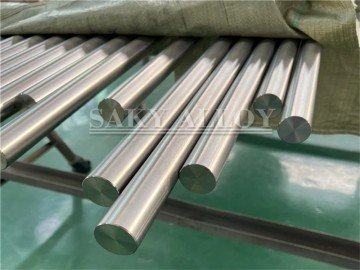
Grade 4 Titanium Round Rod is a solid round bar made from commercially pure titanium Grade 4, also identified as UNS R50700. It has higher oxygen and iron limits than lower commercially pure titanium grades, which increases strength while keeping the corrosion resistance and non-alloyed titanium characteristics required in demanding industrial and medical environments.
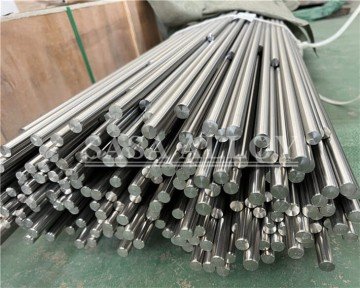
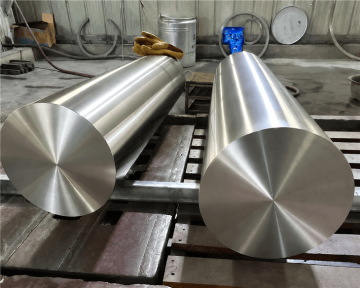
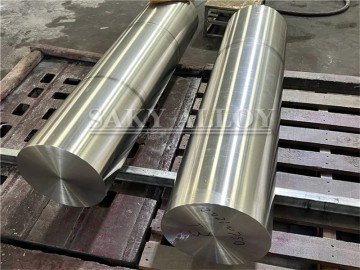
Grade 4 titanium rods are commonly supplied as hot rolled bar, forged bar, peeled bar, turned bar, ground bar or polished rod. Depending on the final application, buyers may request precise diameter tolerance, straightness control, smooth surface, ultrasonic testing, PMI testing, tensile testing and full material traceability.
Product Data Table for RFQ Preparation
| Item | Typical Details | Purchasing Note |
|---|---|---|
| Material | Grade 4 Titanium / Commercially Pure Titanium Grade 4 | Higher strength pure titanium, not Ti-6Al-4V alloy. |
| UNS Number | UNS R50700 | Use in RFQ, PO and MTC checking to avoid grade confusion. |
| Common Standard | ASTM B348 / ASME SB348 | Commonly used for titanium and titanium alloy bars and billets. |
| Product Form | Round rod, round bar, forged bar, turned bar, ground bar | Surface and tolerance should be selected according to machining requirement. |
| Surface | Black, pickled, peeled, turned, ground, polished | Ground or polished rod is preferred for precision components. |
Chemical Composition Table
The chemical composition of Grade 4 titanium round rod is controlled to maintain commercially pure titanium characteristics while improving strength. Oxygen and iron levels are especially important because they influence mechanical properties. Buyers should check actual chemical values on the mill test certificate and match them with the heat number marked on the material.
| Element | Typical ASTM B348 Grade 4 Limit | Material Function |
|---|---|---|
| Titanium (Ti) | Balance | Provides corrosion resistance, low density and biocompatibility. |
| Oxygen (O) | ≤ 0.40% | Increases strength but may reduce ductility if excessive. |
| Iron (Fe) | ≤ 0.50% | Contributes to strength and must remain within specification. |
| Carbon (C) | ≤ 0.08% | Controlled to maintain material quality and processing stability. |
| Nitrogen (N) | ≤ 0.05% | Controlled interstitial element affecting strength and ductility. |
| Hydrogen (H) | ≤ 0.015% | Must be controlled to reduce embrittlement risk. |
Mechanical Properties
Grade 4 titanium rod offers the highest strength among commercially pure titanium grades. It is stronger than Grade 1, Grade 2 and Grade 3, while still providing good ductility and corrosion resistance. For critical applications, actual tensile strength, yield strength, elongation and reduction of area should be checked from the EN 10204 3.1 MTC or equivalent mill certificate.
| Property | Typical Requirement / Range | Purchasing Note |
|---|---|---|
| Tensile Strength | Approx. ≥ 550 MPa | Higher than lower commercially pure titanium grades. |
| Yield Strength | Approx. ≥ 480 MPa | Important for load-bearing rods and machined parts. |
| Elongation | Approx. ≥ 15% | Lower than Grade 1 or Grade 2 but still suitable for many fabricated parts. |
| Hardness | Typically higher than Grade 2 titanium | Can influence machining speed, tool selection and surface finish. |
| Density | Approx. 4.51 g/cm³ | Useful for weight calculation and export packing planning. |
Applicable Standards and Certificates
Grade 4 Titanium Round Rod is usually ordered according to ASTM B348 or ASME SB348 for titanium and titanium alloy bars and billets. For medical applications, ASTM F67 may also be requested for unalloyed titanium used in surgical implant applications. Buyers should confirm whether the rod is for industrial, chemical, marine, medical or aerospace-related use before selecting the standard.
| Standard / Grade System | Equivalent / Description | Use in Procurement |
|---|---|---|
| ASTM B348 Grade 4 | Titanium and titanium alloy bars and billets | Common industrial bar standard for RFQ and purchase orders. |
| ASME SB348 Grade 4 | ASME version for titanium bars and billets | Used for pressure equipment and project documentation. |
| ASTM F67 Grade 4 | Unalloyed titanium for surgical implant applications | Specify only when medical or implant-related requirements apply. |
| UNS R50700 | Unified Numbering System for Grade 4 titanium | Useful for international grade confirmation and MTC review. |
| EN 10204 3.1 MTC | Material test certificate with actual test results | Recommended for export and engineering purchases. |
Quality Testing and Material Traceability
Because titanium materials are often used in corrosion-resistant, medical, marine and precision applications, traceability is a major purchasing requirement. A professional titanium rod supplier should maintain heat number control from raw material to cutting, machining, packing and shipment. The heat number on the rod label, bundle tag, MTC, packing list and inspection report should be consistent.
Recommended Inspection Items
| Inspection Item | Purpose | When to Request |
|---|---|---|
| EN 10204 3.1 MTC | Confirms heat number, chemical composition and mechanical properties. | Recommended for all Grade 4 titanium round rod export orders. |
| PMI Testing | Verifies material identity and prevents grade mix-up. | Useful for anti-fake material control and project acceptance. |
| UT Testing | Checks internal soundness of larger diameter rods. | Recommended for forged rods, large bars and critical machined parts. |
| Dimension Inspection | Checks diameter, length, tolerance, straightness and surface condition. | Important for machining stock and precision rods. |
| Third-Party Inspection | Provides independent verification before shipment. | Suitable for medical, marine, chemical and project orders. |
Anti-fake material control is especially important for titanium products because Grade 2, Grade 4 and Grade 5 may appear similar visually but have very different chemistry and strength. Buyers can request material marking photos, PMI reports, packing photos and loading photos before shipment.
Comparison With Similar Titanium Materials
Grade 4 Titanium Round Rod is often compared with Grade 1, Grade 2, Grade 3 and Grade 5 titanium rods. The correct selection depends on strength, formability, corrosion resistance, medical requirement, machining process and budget.
| Material | Main Advantage | Limitation | Typical Selection Reason |
|---|---|---|---|
| Grade 1 Titanium Rod | Best ductility and formability among commercially pure titanium grades. | Lower strength than Grade 4. | Deep forming, chemical equipment and low-strength components. |
| Grade 2 Titanium Rod | Balanced strength, corrosion resistance and availability. | Lower strength than Grade 4. | General chemical, marine and industrial titanium parts. |
| Grade 3 Titanium Rod | Higher strength than Grade 2 with commercially pure titanium characteristics. | Less common than Grade 2 and Grade 4 in some markets. | Intermediate strength industrial components. |
| Grade 4 Titanium Rod | Highest strength among commercially pure titanium grades. | Lower ductility than Grade 1 and Grade 2. | Medical, marine, chemical, anode and higher-strength pure titanium parts. |
| Grade 5 Titanium Rod | Very high strength due to Ti-6Al-4V alloying. | Different alloy system; not commercially pure titanium. | Aerospace, high-strength fasteners, sports and medical components. |
Industrial Applications
Grade 4 Titanium Round Rod is selected when pure titanium corrosion resistance is required but Grade 2 strength is not sufficient. It is used in both industrial and medical environments, especially where weight reduction, corrosion resistance and higher strength are important.
| Industry | Typical Components | Material Benefit | RFQ Notes |
|---|---|---|---|
| Medical and Dental | Dental implants, surgical components, medical machined parts. | Biocompatibility, corrosion resistance and higher pure titanium strength. | Confirm ASTM F67 if implant-related requirements apply. |
| Chemical Processing | Valve parts, pump components, fasteners, heat exchanger parts. | Excellent resistance to many oxidizing and chloride-containing media. | Provide chemical medium, concentration and operating temperature. |
| Marine Engineering | Seawater components, shafts, fasteners and corrosion-resistant rods. | Strong seawater corrosion resistance and lightweight performance. | Request PMI, MTC and dimension inspection for project orders. |
| Electrochemical Equipment | Titanium anode substrates, support rods and conductive fixtures. | Corrosion resistance and stable performance in electrochemical systems. | Specify surface finish, straightness and coating preparation if needed. |
| Precision Machining | CNC parts, pins, shafts, threaded components and custom rods. | Higher strength pure titanium with good weight saving. | Confirm tolerance, straightness, surface and cutting length. |
Why Choose Grade 4 Titanium Round Rod?
Grade 4 Titanium Round Rod is chosen when the project requires the corrosion resistance and purity of commercially pure titanium but also needs higher mechanical strength. This makes it useful for buyers who find Grade 2 too low in strength but do not want to move to titanium alloy Grade 5.
The main advantages include excellent corrosion resistance, high strength among pure titanium grades, good biocompatibility, low density, good weldability and suitability for precision machining. It can be used in aggressive environments such as seawater, chemical processing systems and selected medical applications, provided the correct standard and inspection requirements are specified.
Key RFQ Fields for Grade 4 Titanium Round Rod
| RFQ Field | Example | Why It Matters |
|---|---|---|
| Grade / Standard | ASTM B348 Grade 4 / UNS R50700 | Prevents wrong grade substitution and supports MTC verification. |
| Diameter and Length | Ø6 mm x 1000 mm, Ø25 mm x 3000 mm, cut length | Determines production route, packing and freight cost. |
| Surface | Black, pickled, peeled, polished, ground | Affects machining allowance, surface quality and price. |
| Tolerance | Standard tolerance or precision ground tolerance | Important for CNC machining and finished components. |
| Testing | MTC, PMI, UT, third-party inspection | Supports quality approval and anti-fake material control. |
Related Titanium Products and Internal Links
Buyers comparing Grade 4 Titanium Round Rod may also need other titanium grades and product forms for different strength, corrosion resistance or fabrication requirements. SAKY ALLOY can support titanium rods, bars, sheets, plates, wires, tubes and fittings for industrial and engineering applications.
| Related Product | When to Consider | Internal Link |
|---|---|---|
| Grade 2 Titanium Rod | General corrosion-resistant titanium rod with balanced performance. | View Titanium Products |
| Grade 5 Titanium Bar | Higher strength Ti-6Al-4V alloy for aerospace and high-strength parts. | Request Grade 5 Options |
| Titanium Sheet Plate | Used for chemical equipment, anodes, medical parts and fabricated panels. | Explore Titanium Sheet |
| Titanium Wire and Tube | Used for springs, mesh, heat exchangers and precision components. | Ask for Titanium Wire or Tube |
Export Packaging and Delivery Capability
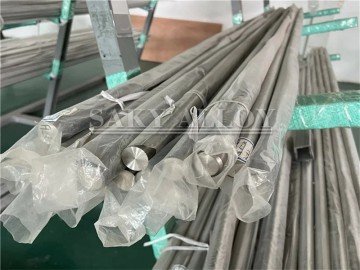
Titanium round rods should be packed carefully to prevent surface damage, contamination and bending during transportation. Small diameter rods are usually bundled and packed in wooden cases, while larger diameter rods may be packed on wooden pallets or in reinforced cases. Each package should be marked with grade, size, heat number, quantity and order reference.
For export orders, buyers can request waterproof wrapping, plastic film, end protection, wooden case packing, pallet packing, shipping marks and loading photos. Delivery time depends on diameter, surface condition, quantity, inspection requirements and whether the material is available from stock or needs production.
FAQ: Grade 4 Titanium Round Rod
What is Grade 4 Titanium Round Rod?
Grade 4 Titanium Round Rod is a commercially pure titanium rod with the highest strength among CP titanium grades. It is commonly identified as ASTM B348 Grade 4 and UNS R50700.
How is Grade 4 titanium different from Grade 2 titanium?
Grade 4 titanium has higher strength than Grade 2 due to controlled interstitial elements, especially oxygen and iron. Grade 2 has better ductility and is more commonly used for general industrial service, while Grade 4 is selected when higher pure titanium strength is required.
Is Grade 4 titanium the same as Grade 5 titanium?
No. Grade 4 is commercially pure titanium, while Grade 5 is Ti-6Al-4V titanium alloy containing aluminum and vanadium. Grade 5 has much higher strength, but Grade 4 is preferred when pure titanium chemistry, corrosion resistance and biocompatibility are required.
What standards should I specify for Grade 4 Titanium Round Rod?
For general industrial titanium rod, ASTM B348 Grade 4 or ASME SB348 Grade 4 is commonly specified. For medical or implant-related requirements, ASTM F67 Grade 4 may be required. Always confirm the standard according to final application.
What should I include in an RFQ for Grade 4 titanium rod?
Please include grade, standard, diameter, length, tolerance, surface finish, quantity, testing requirements, certificate requirements, application, destination port and delivery schedule. Drawings are helpful for cut-to-size or machined parts.
Conclusion
Grade 4 Titanium Round Rod is the strongest commercially pure titanium rod, offering higher mechanical strength than Grade 1, Grade 2 and Grade 3 while maintaining excellent corrosion resistance, low density and biocompatibility. It is widely used in medical, dental, chemical processing, marine, electrochemical and precision machined applications.
For reliable procurement, buyers should clearly specify ASTM B348 Grade 4 or the required project standard, UNS R50700, diameter, length, tolerance, surface condition, testing requirements and certificate requirements. Complete heat number traceability, EN 10204 3.1 MTC, PMI testing and appropriate export packaging help ensure that the supplied titanium rod meets engineering and quality expectations.
Call To Action
Request Grade 4 Titanium Round Rod Quotation
Contact SAKY ALLOY for Grade 4 Titanium Round Rod quotation, ASTM B348 / ASME SB348 compliance, customized diameter, cut length, surface finish, EN 10204 3.1 MTC, PMI testing, UT testing, third-party inspection, export packaging and delivery support.
Please send your required grade, standard, diameter, length, quantity, tolerance, surface finish, certificate requirement and destination port. Our technical and sales team will help you confirm the suitable titanium rod and provide a professional quotation.
Contact Us for RFQ