
Heat Treatment and Cold Working Effects on Grade 9 Titanium Rod Strength
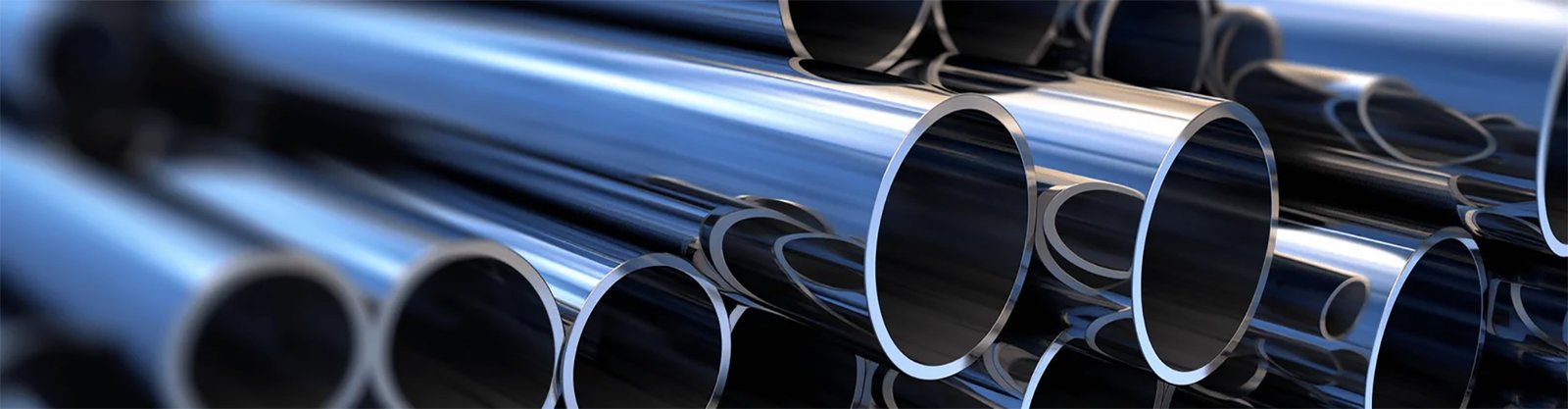
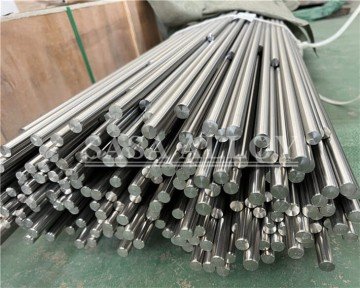
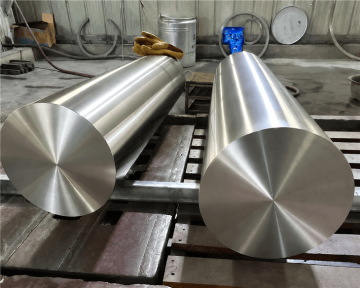
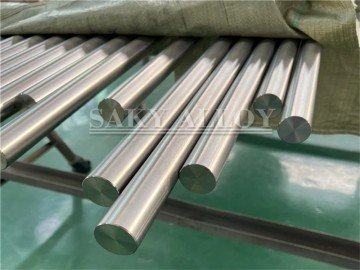
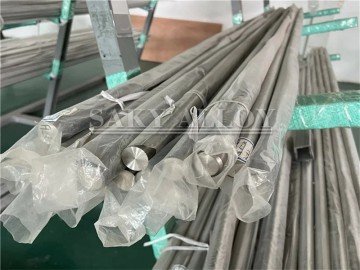
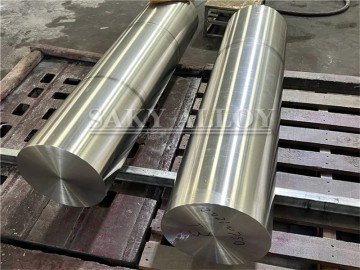
Grade 9 titanium alloy, also known as Ti-3Al-2.5V, is a near alpha titanium alloy widely used in aerospace tubing, high-performance bicycle frames, marine equipment, chemical processing systems, and medical devices. Its unique combination of moderate strength, excellent corrosion resistance, and outstanding formability makes it one of the most versatile titanium alloys available today. To achieve the precise mechanical properties required in these industries, both heat treatment and cold working play essential roles. Their effects on microstructure, tensile strength, fatigue resistance, and ductility directly determine material performance. As a trusted global supplier of titanium materials, sakyalloy leverages advanced thermal processing and controlled cold working technologies to ensure optimal and consistent mechanical strength in every Grade 9 titanium rod.
Introduction to Grade 9 Titanium Alloy Strength
Grade 9 titanium alloy is valued for its ability to provide higher strength than commercially pure titanium (Grade 2 and Grade 3) while still offering much better formability compared with Ti-6Al-4V (Grade 5). Its mechanical strength is strongly influenced by:
-
Alloying elements (Al and V)
-
Thermomechanical processing
-
Heat treatment conditions
-
Degree of cold work
-
Grain size and microstructure stability
To understand how strength can be controlled, it is important to explore how heat treatment and cold working influence the alloy.
Heat Treatment Effects on Grade 9 Titanium Rods
Heat treatment is a critical step in controlling microstructure, relieving internal stress, and improving mechanical consistency.
1. Stress Relief Annealing
Stress relief annealing is typically performed at 425°C to 650°C.
Benefits of Stress Relief:
-
Removes residual stress from cold drawing or rolling
-
Reduces risk of distortion during machining
-
Improves dimensional stability
-
Enhances long-term fatigue resistance
This treatment stabilizes the microstructure without significantly reducing strength.
2. Full Annealing
Full annealing is conducted at 700°C to 800°C, followed by controlled cooling.
Effects of Full Annealing:
-
Reduces strength slightly
-
Improves ductility and formability
-
Restores uniform microstructure after heavy deformation
-
Enhances bending and cold forming operations
Applications requiring extensive forming—such as bicycle tubes and aerospace tubing—favor annealed Grade 9 materials.
3. Microstructure Evolution During Heat Treatment
Heat treatment affects:
-
Alpha phase size
-
Alpha/beta phase distribution
-
Grain boundaries
-
Dislocation density
The near-alpha nature of Grade 9 titanium means alpha phase refinement improves ductility, while controlled beta stability contributes to moderate strength.
Cold Working Effects on Grade 9 Titanium Rod Strength
Cold working dramatically affects the mechanical properties of Grade 9, making it stronger through strain hardening.
Common Cold Working Techniques:
-
Cold drawing
-
Cold rolling
-
Swaging
-
Stretching
-
Precision cold finishing
1. Strength Increase Through Cold Working
Cold working introduces a high density of dislocations within the titanium matrix.
Resulting Changes:
-
Increased tensile strength
-
Increased yield strength
-
Reduced elongation
-
Improved fatigue performance (in controlled amounts)
Typical properties:
-
Annealed Grade 9 tensile strength: ~480 MPa
-
Cold-worked Grade 9 tensile strength: 620–700 MPa depending on reduction rate
Cold working allows Grade 9 to reach strength levels closer to Ti-6Al-4V, but with much better formability.
2. Effects on Ductility and Formability
While cold working increases strength, it reduces ductility.
Trade-offs include:
-
Higher strength = lower elongation
-
Higher hardness = lower bending capability
-
Increased springback during forming
Engineers must choose the correct balance between strength and formability depending on application requirements.
3. Influence on Fatigue Resistance
Fatigue resistance is greatly affected by how cold working is applied.
Properly Controlled Cold Work Improves Fatigue:
-
Grain refinement
-
Increased dislocation density
-
Smoother surface preparation
Excessive Cold Work Reduces Fatigue:
-
Residual stress concentration
-
Potential micro-crack initiation
-
Reduced fracture toughness
This is why controlled cold working is essential for aerospace and high-performance structural applications.
Interaction Between Heat Treatment and Cold Working
Heat treatment and cold working are often combined strategically.
Common Processing Routes for Grade 9 Rods:
-
Hot rolling → cold drawing → stress relief
-
Hot forging → cold working → final annealing
-
Cold finishing → stress relief for dimensional stability
Combined Effects:
-
Heat treatment restores ductility lost during cold work
-
Cold work increases strength beyond annealed levels
-
Stress relief reduces risk of warping or cracking
This synergy allows manufacturers to tailor mechanical properties precisely.
Mechanical Property Comparison: Heat Treated vs Cold Worked Grade 9 Rods
| Condition | Tensile Strength | Yield Strength | Elongation | Typical Applications |
|---|---|---|---|---|
| Fully Annealed | ~480 MPa | ~380 MPa | 20%+ | Forming, welding, medical |
| Stress Relieved | 500–550 MPa | 400–450 MPa | 15–18% | Aerospace tubing |
| 20% Cold Worked | 600–650 MPa | 500–550 MPa | 10–12% | Bicycles, sports equipment |
| 40% Cold Worked | 650–700 MPa | 550–600 MPa | 8–10% | High-performance structures |
Engineers select the proper condition depending on requirements for strength, ductility, and fatigue behavior.
Applications Requiring Specific Strength Conditions
Aerospace Industry
-
High-pressure hydraulic tubes
-
Aircraft structural braces
-
Components needing high strength-to-weight ratio
High-Performance Bicycle Frames
-
Cold worked rods offer high stiffness and light weight
Marine Engineering
-
Requires high corrosion resistance + moderate strength
Heat Exchangers
-
Stronger cold-worked tubes improve durability
Medical Devices
-
Prefer annealed rods to maximize biocompatibility and formability
Challenges in Heat Treating and Cold Working Grade 9 Titanium
-
Titanium’s high reactivity at elevated temperatures
-
Tight temperature control necessary
-
Risk of contamination during heat treatment
-
Managing residual stresses during cold work
-
Maintaining dimensional precision after processing
Manufacturers require advanced equipment and expertise to overcome these challenges.
How sakyalloy Optimizes Heat Treatment and Cold Working
As a professional titanium alloy supplier, sakyalloy ensures:
Precision-controlled heat treatment:
-
Automated furnace temperature control
-
Strict annealing and stress-relief cycles
-
Oxygen-controlled atmosphere
Advanced cold working:
-
High-precision cold drawing lines
-
Controlled reduction ratios
-
Centerless grinding for smooth finish
Comprehensive testing:
-
Tensile testing
-
Hardness measurement
-
Microstructure evaluation
-
Ultrasonic and eddy current inspection
Through rigorous process control, every Grade 9 titanium rod maintains stable strength and consistent mechanical properties.
Conclusion
Heat treatment and cold working significantly influence the mechanical strength, ductility, and fatigue performance of Grade 9 titanium rods. Heat treatment enhances ductility and stabilizes microstructure, while cold working increases strength through strain hardening. By balancing these two processes, manufacturers can produce titanium rods tailored for different engineering applications, from aerospace and marine systems to sports equipment and medical devices. With advanced production technology and strict quality management, sakyalloy ensures every Grade 9 titanium rod achieves optimal performance, reliability, and consistency for demanding industrial environments.