
Heat Treatment and Cold Working Effects on Titanium Grade 11 Strength
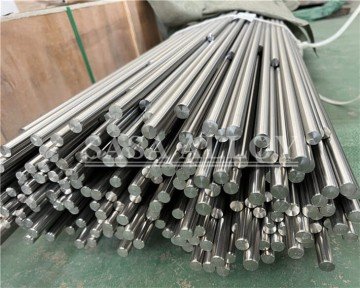
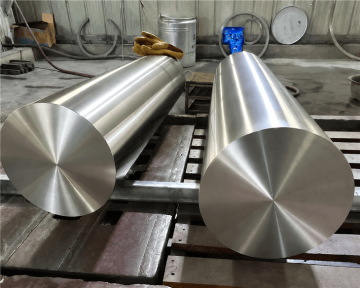
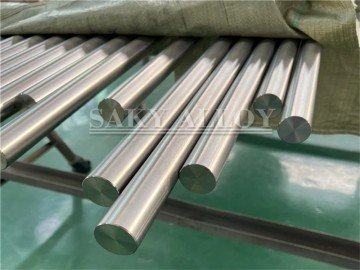
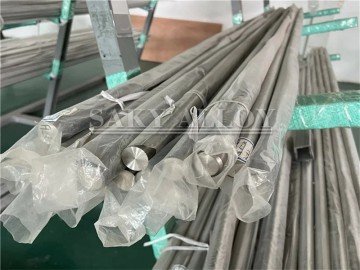
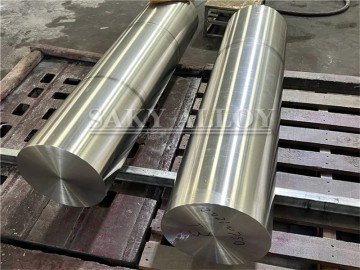
Titanium Grade 11 is a commercially pure titanium alloy renowned for its excellent corrosion resistance, lightweight properties, and high strength. It is extensively used in chemical processing, marine, aerospace, and industrial applications where reliability and performance are critical. The mechanical properties of Titanium Grade 11 bars are heavily influenced by heat treatment and cold working processes, which enhance strength, ductility, and corrosion resistance.
Leading suppliers like sakyalloy employ advanced heat treatment and cold working techniques to ensure that Titanium Grade 11 bars meet stringent mechanical specifications and industry standards. This article explores how these processes affect the strength and performance of Titanium Grade 11.
Overview of Titanium Grade 11
Titanium Grade 11 is classified under ASTM B265 standards for commercially pure titanium. Its key properties include:
-
High corrosion resistance in oxidizing and reducing environments
-
Good mechanical strength and toughness
-
Lightweight nature, offering strength-to-weight efficiency
-
Excellent weldability and formability
Applications of Titanium Grade 11 include chemical reactors, desalination plants, marine hardware, and aerospace components. Achieving optimal strength and durability requires precise control over heat treatment and cold working processes.
Heat Treatment of Titanium Grade 11
Purpose of Heat Treatment
Heat treatment alters the microstructure of titanium to improve mechanical properties and relieve residual stresses from forging and rolling. Key objectives include:
-
Enhancing tensile strength and yield strength
-
Increasing ductility and toughness
-
Reducing residual stress to prevent deformation
-
Optimizing corrosion resistance
Solution Treatment
Solution treatment involves heating Titanium Grade 11 bars to a high temperature within the alpha-beta phase range and then rapidly cooling. Benefits include:
-
Dissolution of microstructural impurities
-
Homogenization of grain structure
-
Improvement of tensile and yield strength
Sakyalloy ensures precise control of heating temperature and cooling rates to achieve consistent mechanical properties across all production batches.
Stress Relieving
Stress relieving is performed to reduce internal stresses induced during forging, rolling, and machining. It typically involves heating bars to a moderate temperature followed by controlled cooling. Benefits include:
-
Minimization of distortion during subsequent processing
-
Enhanced dimensional stability
-
Improved fatigue resistance
Annealing
Annealing involves heating Titanium Grade 11 bars to a specific temperature and holding for a set time before slow cooling. This process improves ductility and toughness while reducing brittleness. Annealing is critical for components that require extensive forming or welding in downstream applications.
Cold Working of Titanium Grade 11
Overview of Cold Working
Cold working refers to the plastic deformation of titanium at room temperature to increase strength and hardness. Common cold working processes include:
-
Rolling
-
Drawing
-
Extrusion
-
Bending
Effects on Strength
Cold working increases dislocation density in the titanium crystal structure, resulting in:
-
Higher tensile and yield strength
-
Enhanced fatigue resistance
-
Slight reduction in ductility, which can be controlled through subsequent heat treatment
The balance between cold working and heat treatment is crucial for achieving desired mechanical properties.
Work Hardening
Work hardening occurs naturally during cold working, increasing the hardness and strength of Titanium Grade 11 bars. The extent of work hardening depends on the degree of deformation and the specific cold working process employed.
Sakyalloy carefully controls cold working parameters to optimize the trade-off between strength and ductility for industrial applications.
Combined Effects of Heat Treatment and Cold Working
Mechanical Property Enhancement
-
Heat treatment ensures uniform microstructure, reduces residual stresses, and improves ductility
-
Cold working increases tensile and yield strength, enhancing load-bearing capacity
-
The combination of both processes allows Titanium Grade 11 bars to achieve a balance between strength, toughness, and corrosion resistance
Dimensional Stability
-
Stress relieving after cold working prevents warping and deformation
-
Heat-treated bars maintain consistent dimensions, essential for precision applications such as aerospace or chemical processing
Corrosion Resistance
-
Heat treatment improves the formation of a stable oxide layer, enhancing corrosion resistance
-
Cold working does not negatively impact corrosion resistance if proper stress relieving and surface finishing are applied
Quality Control in Heat Treatment and Cold Working
Chemical and Mechanical Verification
-
Composition analysis ensures compliance with ASTM B265 standards
-
Tensile, yield, and hardness tests verify mechanical properties
Non-Destructive Testing (NDT)
-
Ultrasonic testing identifies internal flaws
-
Eddy current and dye penetrant testing detect surface defects
-
Ensures defect-free bars suitable for critical industrial applications
Dimensional Inspection
-
Precision instruments confirm bars meet diameter, length, and straightness tolerances
-
Combined with surface finish verification, ensures readiness for fabrication or assembly
Sakyalloy implements rigorous inspection protocols to guarantee consistent quality and performance in Titanium Grade 11 bars.
Applications of Heat-Treated and Cold-Worked Titanium Grade 11
Chemical Processing
-
Reactor vessels, piping systems, and heat exchangers in corrosive environments
-
Tanks and storage equipment for acids, chlorine, and other chemicals
Marine and Offshore
-
Desalination plant components
-
Marine hardware resistant to seawater corrosion
Aerospace
-
Structural components requiring high strength-to-weight ratios
-
Corrosion-resistant parts for aircraft and spacecraft
Power Generation
-
High-temperature steam and water piping systems
-
Critical components exposed to aggressive environments
Heat-treated and cold-worked Titanium Grade 11 bars deliver reliable performance and long service life in these demanding applications.
Advantages of Controlled Heat Treatment and Cold Working
-
Enhanced Strength and Toughness – Optimized processes improve tensile and yield strength while maintaining ductility
-
Dimensional Accuracy – Stress-relieved and heat-treated bars maintain stability
-
Improved Fatigue Resistance – Cold working strengthens bars for cyclic loading applications
-
Corrosion Resistance – Stable microstructure and oxide layer ensure long-term durability
-
Compliance with Standards – ASTM B265 and other international standards
-
Reliable Performance – Suitable for chemical, marine, aerospace, and power applications
Role of Sakyalloy
Expertise and Advanced Processing
Sakyalloy combines heat treatment, cold working, and precision rolling techniques to produce Titanium Grade 11 bars with consistent strength, toughness, and corrosion resistance.
Quality Assurance
-
Rigorous testing and inspection at every stage
-
Documentation and traceability from raw material to finished product
-
Delivery of high-performance bars for critical industrial applications
Choosing sakyalloy ensures Titanium Grade 11 bars meet strict mechanical, chemical, and dimensional requirements.
Conclusion
Heat treatment and cold working play a vital role in enhancing the strength, toughness, and durability of Titanium Grade 11 bars. Controlled heat treatment ensures uniform microstructure, stress relief, and corrosion resistance, while cold working increases tensile and yield strength through work hardening.
Manufacturers like sakyalloy integrate advanced heat treatment, cold working, and quality assurance practices to produce Titanium Grade 11 bars that meet ASTM standards and perform reliably in chemical processing, marine, aerospace, and power generation applications. Optimized processing guarantees bars with consistent strength, dimensional stability, and long-term durability.