
How Does the ELI Process Improve the Purity of Grade 23 Titanium Bars?
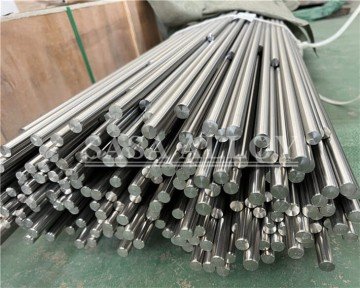
In the world of high-performance metals, titanium alloys have long been recognized for their unique combination of lightweight strength, corrosion resistance, and biocompatibility. Among them, Grade 23 Titanium (Ti-6Al-4V ELI) stands out as a premium alloy specifically designed for applications that demand exceptional purity and reliability — such as aerospace components, biomedical implants, and high-stress engineering parts.
But what makes Grade 23 Titanium so special? The key lies in the ELI process, short for Extra Low Interstitials. This specialized refinement method reduces impurities within the metal, resulting in higher ductility, improved toughness, and superior biocompatibility compared to conventional Grade 5 Titanium.
In this article, we’ll explore in depth how the ELI process improves the purity of Grade 23 Titanium bars, how this affects their mechanical and chemical properties, and how sakyalloy, a trusted global titanium supplier, ensures consistent ELI-quality production for demanding industries.
What Is Grade 23 Titanium?
Grade 23 Titanium, also known as Ti-6Al-4V ELI, is an alpha-beta alloy containing 6% aluminum and 4% vanadium, just like Grade 5. However, it is processed under stricter purity controls to minimize interstitial elements such as oxygen, nitrogen, carbon, hydrogen, and iron.
These small elements, while present in trace amounts, have a significant impact on the material’s ductility and toughness. The lower interstitial content achieved through the ELI process gives Grade 23 its signature properties:
-
Higher fracture toughness
-
Better fatigue resistance
-
Enhanced biocompatibility
-
Excellent corrosion resistance
This makes it the preferred titanium grade for medical implants, cryogenic applications, and aerospace components requiring consistent mechanical performance under extreme conditions.
Understanding the ELI Process
ELI (Extra Low Interstitials) refers to a set of advanced melting and refining steps used during the titanium manufacturing process to significantly reduce trace impurities.
The ELI process primarily focuses on minimizing interstitial elements — small atoms that can occupy spaces between the main titanium atoms in the alloy lattice. These interstitials, especially oxygen and nitrogen, tend to harden the metal but reduce its ductility and toughness.
The ELI process ensures that these unwanted elements are removed or controlled to ultra-low levels, typically below:
-
Oxygen (O): ≤ 0.13%
-
Nitrogen (N): ≤ 0.05%
-
Hydrogen (H): ≤ 0.012%
-
Iron (Fe): ≤ 0.25%
Step-by-Step Breakdown of the ELI Refining Process
1. Raw Material Selection and Preparation
The process begins with high-purity titanium sponge, aluminum, and vanadium — all pre-certified to meet stringent chemical requirements. Impure or contaminated materials are strictly rejected to prevent unwanted interstitial contamination from the start.
2. Vacuum Arc Remelting (VAR)
The raw materials are melted together using vacuum arc remelting, where an electric arc is struck between a titanium electrode and a water-cooled copper crucible inside a vacuum chamber.
-
The vacuum environment prevents oxygen and nitrogen absorption.
-
Controlled melting allows gas bubbles and inclusions to rise and separate from the molten metal.
-
The process is repeated multiple times to ensure uniform composition and remove volatile impurities.
3. Electron Beam (EB) or Plasma Melting (Optional Step)
For even higher purity requirements, a secondary melting step such as Electron Beam Melting (EBM) or Plasma Arc Melting (PAM) is used. These methods refine the metal by evaporating trace contaminants, particularly hydrogen and low-melting inclusions.
4. Controlled Solidification and Cooling
After melting, the alloy is slowly cooled under a controlled vacuum or inert argon atmosphere. This prevents atmospheric contamination and ensures a fine, uniform microstructure free of oxides or nitrides.
5. Hot Working and Heat Treatment
The purified ingot is hot-forged, rolled, and heat-treated under controlled conditions to achieve optimal mechanical properties. The resulting Grade 23 ELI bar exhibits superior ductility, toughness, and fatigue resistance compared to standard titanium alloys.
The Science Behind “Extra Low Interstitials”
To understand how the ELI process enhances purity, it’s important to know how interstitial atoms affect titanium’s structure.
-
Oxygen and Nitrogen: These elements strengthen titanium but make it brittle. Lowering their content improves fracture toughness and elongation.
-
Hydrogen: Causes embrittlement and microcracks; reducing hydrogen ensures long-term structural stability.
-
Carbon: Must be kept low to prevent carbide formation, which weakens grain boundaries.
-
Iron: Excess iron causes segregation and non-uniform mechanical properties.
By minimizing these elements, the ELI process produces a cleaner and more stable alloy, capable of performing under severe dynamic or biological conditions.
Chemical Comparison: Grade 5 vs Grade 23
| Element | Grade 5 (Ti-6Al-4V) | Grade 23 (Ti-6Al-4V ELI) |
|---|---|---|
| Oxygen (O) | ≤ 0.20% | ≤ 0.13% |
| Nitrogen (N) | ≤ 0.05% | ≤ 0.05% |
| Hydrogen (H) | ≤ 0.015% | ≤ 0.012% |
| Iron (Fe) | ≤ 0.40% | ≤ 0.25% |
| Carbon (C) | ≤ 0.08% | ≤ 0.08% |
Observation:
Even though the difference in oxygen may seem small, reducing it from 0.20% to 0.13% dramatically improves ductility and fracture toughness — key factors for safety-critical and biomedical applications.
Mechanical Property Improvements from the ELI Process
| Property | Grade 5 | Grade 23 (ELI) |
|---|---|---|
| Tensile Strength (MPa) | 895 | 860 |
| Yield Strength (MPa) | 828 | 795 |
| Elongation (%) | 10 | 14 |
| Reduction in Area (%) | 25 | 35 |
| Fracture Toughness | Moderate | High |
| Fatigue Resistance | Good | Excellent |
The ELI process slightly reduces tensile strength due to lower interstitials but greatly enhances ductility and toughness, resulting in a more reliable material that resists cracking under stress.
Advantages of the ELI Process for Grade 23 Titanium Bars
1. Enhanced Purity and Clean Microstructure
The ELI process removes impurities and non-metallic inclusions, producing a cleaner, more homogeneous structure. This prevents weak points that could lead to crack initiation.
2. Superior Fracture Toughness
Low oxygen and hydrogen levels give the alloy exceptional resistance to impact and fracture, making it ideal for load-bearing implants and aerospace fasteners.
3. Improved Biocompatibility
ELI titanium is non-toxic, hypoallergenic, and bio-inert, ensuring safe integration with human tissue and bone without risk of adverse reactions.
4. Reliable Performance at Low Temperatures
With fewer interstitial atoms, the alloy maintains ductility and toughness even at cryogenic temperatures, perfect for deep-sea or space environments.
5. Consistent Mechanical Properties
Because of the uniform grain structure, ELI bars exhibit stable mechanical performance across large sections — critical for parts under cyclic loading or vibration.
Applications of Grade 23 Titanium Bars Produced by the ELI Process
| Industry | Application |
|---|---|
| Medical | Orthopedic screws, spinal implants, dental posts, and prosthetic joints |
| Aerospace | Fasteners, structural frames, engine mounts, and cryogenic systems |
| Marine | Subsea connectors, offshore fasteners, and underwater housings |
| Chemical Processing | Corrosion-resistant shafts, fittings, and valve components |
| Additive Manufacturing | Feedstock material for titanium powder and 3D printing |
In every one of these sectors, purity equals safety — and the ELI process ensures that Grade 23 Titanium can perform flawlessly under the most demanding conditions.
Quality Assurance and Testing by sakyalloy
As a professional manufacturer and supplier of titanium and specialty alloys, sakyalloy implements strict ELI-level production control from raw material selection to final inspection.
Quality Control Measures Include:
-
Multi-stage vacuum melting to achieve Extra Low Interstitial levels.
-
Spectrochemical analysis for trace element detection.
-
Ultrasonic and eddy current testing to ensure defect-free bars.
-
Mechanical testing (tensile, impact, and fatigue) for each batch.
-
Mill Test Certificates (MTC) in compliance with ASTM F136 / ASTM B348 / ISO 5832-3.
By combining advanced metallurgy with rigorous testing, sakyalloy guarantees the consistency and purity that industries expect from ELI-grade titanium bars.
Why Choose sakyalloy for Grade 23 ELI Titanium Bars
-
Decades of experience in titanium alloy production and export.
-
Global reputation for high-quality medical and aerospace titanium materials.
-
Comprehensive certifications including ISO 9001 and ISO 13485.
-
Custom machining and finishing for bar, rod, or forged product forms.
-
Fast delivery and full traceability on every shipment.
When performance, safety, and purity matter most, sakyalloy is the trusted partner for world-class titanium solutions.
Conclusion
The ELI process is what transforms ordinary titanium into Grade 23 Titanium — a metal of extraordinary purity and performance. By meticulously reducing interstitial impurities such as oxygen, nitrogen, and hydrogen, the ELI process delivers titanium bars with:
-
Superior toughness and ductility
-
Exceptional biocompatibility
-
Stable mechanical performance under stress
These qualities make Grade 23 the alloy of choice for critical medical implants, aerospace components, and cryogenic applications.
Through its advanced refining technology and strict quality assurance systems, sakyalloy ensures that every Grade 23 Titanium bar meets the highest international standards — guaranteeing both purity and performance in every piece.
In essence, the ELI process is not just about removing impurities — it’s about creating perfection at the atomic level, and sakyalloy continues to deliver that perfection to industries that demand nothing less.