
How Hard Is Grade 5 Titanium?
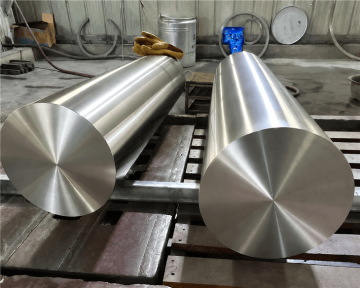
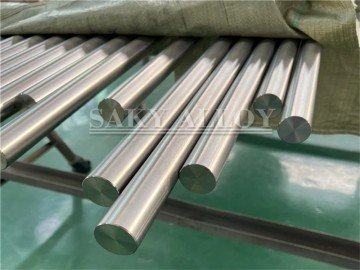
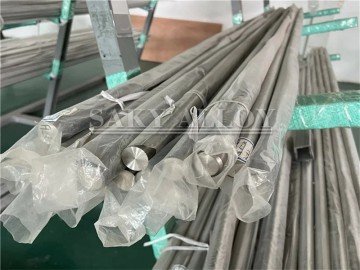
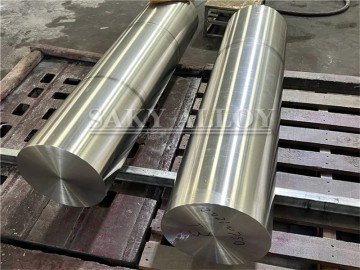
Titanium has become one of the most important engineering metals in the modern world. It is widely used in aerospace, marine, automotive, chemical processing, energy, and medical applications. Among all titanium alloys, Grade 5 Titanium (Ti-6Al-4V) stands out as the most popular and widely applied.
One of the most common questions engineers and buyers ask is: How hard is Grade 5 Titanium? The answer is critical for understanding its suitability for applications requiring strength, durability, wear resistance, and performance under extreme conditions.
This article explores the hardness of Grade 5 Titanium in detail, comparing it with other titanium grades, steels, and metals, while highlighting its advantages, limitations, and real-world applications.
What Is Grade 5 Titanium?
Grade 5 Titanium, also known as Ti-6Al-4V, is an alpha-beta alloy composed of:
-
Titanium (Ti): Balance
-
Aluminum (Al): ~6%
-
Vanadium (V): ~4%
This alloying improves its strength significantly compared to commercially pure titanium grades (Grade 1–4).
Key Characteristics of Grade 5 Titanium
-
High strength-to-weight ratio
-
Excellent corrosion resistance in seawater, oxidizing, and mildly reducing environments
-
Good fatigue resistance
-
Usable up to 400°C (752°F)
-
Biocompatibility (widely used in medical implants)
Hardness of Grade 5 Titanium
Hardness is typically measured using Rockwell C (HRC) or Vickers (HV) scales.
-
Grade 5 Titanium (annealed): ~34–38 HRC (approximately 340 HV)
-
Heat-treated condition: Can reach up to ~41 HRC (400 HV)
Comparison With Other Titanium Grades
-
Grade 1 Titanium: ~70 HB (Brinell hardness) – very soft
-
Grade 2 Titanium: ~80 HB – good ductility, moderate strength
-
Grade 3 Titanium: ~120 HB – stronger, less ductile
-
Grade 4 Titanium: ~160 HB – highest strength CP titanium
-
Grade 5 Titanium: Much harder due to alloying, significantly stronger than CP titanium
Conclusion: Grade 5 Titanium is 2–4 times harder than pure titanium grades.
Grade 5 Titanium vs Other Metals
| Material | Hardness (HRC) | Notes |
|---|---|---|
| Aluminum 6061 | ~15 HRC | Soft, lightweight, easy to machine |
| Mild Steel (A36) | ~17–20 HRC | Stronger than aluminum but less corrosion resistant |
| Stainless Steel 304 | ~20 HRC | Corrosion resistant but softer than Grade 5 titanium |
| Stainless Steel 17-4PH (H900) | ~40–44 HRC | Stronger but denser |
| Grade 5 Titanium | ~34–38 HRC | High hardness, lightweight, corrosion resistant |
| Tool Steel (D2) | ~55–62 HRC | Much harder, but brittle |
Observation: Grade 5 Titanium is harder than stainless steels and carbon steels, while lighter in weight. However, tool steels remain much harder.
How Hardness Impacts Performance
-
Wear Resistance
-
Higher hardness improves resistance to scratching and abrasion.
-
Grade 5 is commonly used in aerospace and military components that face extreme conditions.
-
-
Strength
-
Tensile Strength: ~900–1100 MPa
-
Yield Strength: ~830 MPa
-
Much stronger than stainless steel 304 and mild steel.
-
-
Machinability
-
Higher hardness makes machining Grade 5 Titanium challenging.
-
Requires sharp tools, lower cutting speeds, and cooling lubrication.
-
-
Formability
-
Not as easy to bend as CP titanium (Grade 1–2).
-
Often requires hot forming to avoid cracking.
-
Applications of Hard Grade 5 Titanium
Aerospace and Defense
-
Jet engine components, landing gear, fasteners, and airframe parts
-
Hardness ensures strength under stress and fatigue
Marine and Offshore
-
Propeller shafts, seawater pumps, and heat exchangers
-
Hardness plus corrosion resistance ensures long service life
Automotive and Motorsport
-
Exhaust systems, suspension components, and racing parts
-
Provides strength without adding weight
Medical Implants
-
Orthopedic implants, dental implants, and surgical instruments
-
Hard enough to withstand stress, biocompatible with the human body
Energy Industry
-
Turbine blades, power plant components, and offshore oil rigs
-
Hardness ensures durability under high stress and temperature
Heat Treatment and Hardness Adjustment
Grade 5 Titanium hardness can be modified through:
-
Solution Treating + Aging (STA): Improves strength and hardness to upper limits (~41 HRC).
-
Annealing: Provides better ductility but reduces hardness (~34 HRC).
-
Hot Isostatic Pressing (HIP): Enhances uniformity and toughness.
Challenges of Working With Hard Titanium
-
Tool Wear: Cutting tools dull quickly when machining.
-
Heat Generation: Low thermal conductivity causes overheating during machining.
-
Springback: When bending, titanium’s hardness increases springback compared to softer metals.
-
Cost: Higher than steels and aluminum due to complex processing.
Grade 5 Titanium in Comparison to Strength and Hardness
| Property | Grade 5 Titanium | Stainless Steel 304 | Aluminum 6061 |
|---|---|---|---|
| Density (g/cm³) | 4.43 | 7.9 | 2.7 |
| Tensile Strength (MPa) | ~900 | ~520 | ~310 |
| Hardness (HRC) | 34–38 | ~20 | ~15 |
| Corrosion Resistance | Excellent | Excellent | Good |
| Weight Advantage | Lightweight | Heavy | Very light |
Conclusion: Grade 5 Titanium provides the best combination of hardness, strength, corrosion resistance, and lightweight performance.
Conclusion
So, how hard is Grade 5 Titanium? It is significantly harder than commercially pure titanium, aluminum, and many stainless steels, with a hardness of 34–38 HRC (up to 41 HRC when heat-treated). This hardness, combined with excellent strength-to-weight ratio and corrosion resistance, makes it one of the most valuable engineering materials in aerospace, marine, medical, and automotive industries.
For industries requiring premium titanium alloys, sakyalloy offers high-quality Grade 5 Titanium products with global supply capabilities and strict quality assurance. With its expertise, sakyalloy ensures clients receive durable, cost-effective, and high-performance titanium solutions for critical projects.
By understanding the hardness and properties of Grade 5 Titanium, engineers and procurement specialists can make the best material choices for their applications, balancing strength, weight, corrosion resistance, and fabrication needs.