
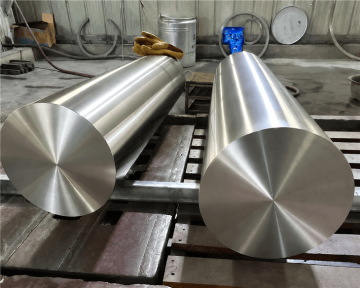
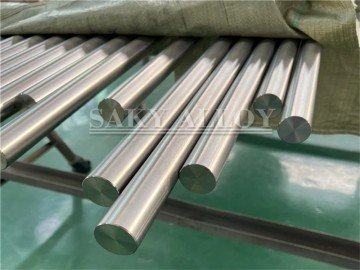
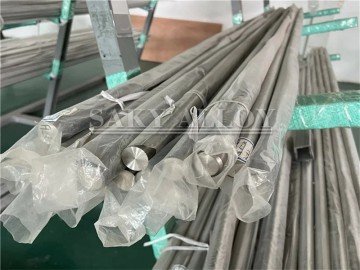
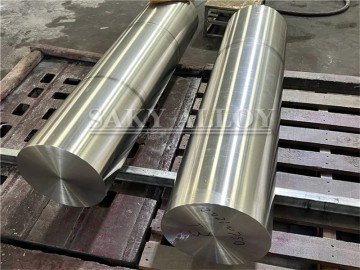
How Heat Treatment Enhances the Performance of Grade 23 Titanium Bars
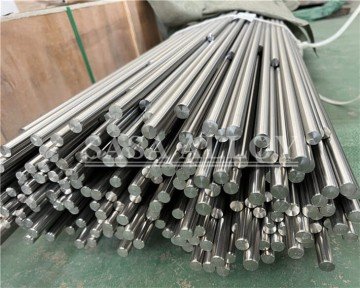
In industries that demand exceptional strength, corrosion resistance, and biocompatibility, Grade 23 titanium bars have become a trusted material of choice. Known as Ti-6Al-4V ELI (Extra Low Interstitial), this alloy represents a refined version of Grade 5 titanium, offering improved toughness and ductility. However, what truly unlocks its full performance potential is the heat treatment process — a precise and controlled method that enhances mechanical properties and ensures consistency across critical applications.
This article explores in detail how heat treatment enhances the performance of Grade 23 titanium bars, explaining the underlying metallurgical changes, common treatment techniques, and their benefits for aerospace, medical, and industrial components. It also highlights how SAKYALLOY manufactures and processes Grade 23 titanium bars to deliver superior reliability, strength, and precision for global industries.
1. Introduction: The Importance of Heat Treatment in Titanium Alloys
Titanium alloys are widely used because of their excellent combination of high strength-to-weight ratio, corrosion resistance, and thermal stability. However, their final properties depend heavily on how the material is processed — especially through heat treatment.
For Grade 23 titanium bars, heat treatment serves several essential purposes:
-
Enhances strength and hardness through microstructural refinement.
-
Relieves residual stresses caused by forging and machining.
-
Improves fatigue resistance for cyclic loading conditions.
-
Optimizes ductility and fracture toughness for critical components.
By applying controlled heating and cooling cycles, SAKYALLOY engineers can tailor the balance between strength and flexibility, ensuring the material meets strict aerospace and medical performance standards.
2. Overview of Grade 23 Titanium Alloy
Grade 23 titanium, or Ti-6Al-4V ELI, is a titanium alloy containing 6% aluminum and 4% vanadium, with extremely low levels of oxygen, carbon, nitrogen, and iron. The “ELI” designation — Extra Low Interstitial — refers to the reduced content of impurity elements, which significantly improves fracture toughness and fatigue strength.
| Element | Typical Composition (%) | Function |
|---|---|---|
| Titanium (Ti) | Balance | Base metal providing low density and corrosion resistance. |
| Aluminum (Al) | 5.5 – 6.75 | Increases strength and stabilizes the alpha phase. |
| Vanadium (V) | 3.5 – 4.5 | Enhances ductility and stabilizes the beta phase. |
| Oxygen (O) | ≤ 0.13 | Controlled to improve toughness and prevent brittleness. |
| Iron (Fe) | ≤ 0.25 | Minor strengthening element. |
| Carbon (C) | ≤ 0.08 | Kept minimal to maintain ductility. |
This unique chemistry allows Grade 23 titanium to outperform standard titanium alloys in medical implants, aerospace components, and high-performance mechanical systems where fatigue life and biocompatibility are critical.
3. Why Heat Treatment Is Crucial for Grade 23 Titanium Bars
Heat treatment is essential for adjusting the microstructure and phase balance of titanium alloys. Grade 23 is an α-β alloy, meaning it contains both alpha (hexagonal close-packed) and beta (body-centered cubic) crystal structures. The ratio and distribution of these phases determine mechanical strength, ductility, and toughness.
Proper heat treatment allows engineers to:
-
Refine the alpha and beta phase morphology for optimized strength.
-
Reduce internal stress from machining or forging.
-
Improve dimensional stability during service.
-
Increase resistance to fatigue cracking.
Without appropriate heat treatment, the alloy may exhibit uneven properties, limiting its performance in demanding environments such as jet engines or medical implants.
4. Common Heat Treatment Processes for Grade 23 Titanium Bars
Heat treatment for Grade 23 titanium typically involves three main processes: annealing, solution treatment, and aging. Each step contributes to specific improvements in the alloy’s characteristics.
a) Annealing
Annealing relieves stresses introduced during forging or machining and restores ductility.
-
Temperature: 700°C – 800°C
-
Duration: 1 to 2 hours
-
Cooling: Air or furnace cooling
Effects:
-
Reduces hardness and improves machinability.
-
Enhances fatigue resistance and dimensional stability.
-
Prepares the microstructure for further treatment.
b) Solution Treatment
This step dissolves alloying elements into the titanium matrix, promoting uniform composition and strengthening potential.
-
Temperature: 925°C – 970°C
-
Cooling: Rapid air or water quenching
Effects:
-
Produces a fine, evenly distributed α+β microstructure.
-
Increases tensile strength and fatigue endurance.
-
Establishes a foundation for aging treatment.
c) Aging (Precipitation Hardening)
Aging enhances strength by precipitating fine α-phase particles from the β-phase matrix.
-
Temperature: 480°C – 600°C
-
Duration: 2 to 8 hours
Effects:
-
Raises hardness and yield strength.
-
Maintains sufficient ductility for forming or machining.
-
Improves wear and fatigue performance.
SAKYALLOY uses precision-controlled furnaces with advanced monitoring systems to ensure consistent heat treatment results, guaranteeing that each Grade 23 titanium bar meets international standards for mechanical performance.
5. Microstructural Evolution During Heat Treatment
During heat treatment, the microstructure of Grade 23 titanium transitions between alpha and beta phases depending on temperature and cooling rate.
-
At low temperatures, the structure is primarily alpha phase, offering high toughness and corrosion resistance.
-
As temperature increases, the beta phase forms, enhancing strength and plasticity.
-
Controlled cooling allows these phases to distribute evenly, creating a fine α+β structure that balances strength and ductility.
This transformation directly impacts the alloy’s tensile properties, fatigue resistance, and fracture toughness, making heat treatment a vital process in optimizing Grade 23 performance.
6. Mechanical Properties Before and After Heat Treatment
| Property | As-Forged | After Heat Treatment |
|---|---|---|
| Tensile Strength (MPa) | 860 – 900 | 930 – 970 |
| Yield Strength (MPa) | 780 – 830 | 880 – 920 |
| Elongation (%) | 12 – 15 | 10 – 14 |
| Reduction of Area (%) | 25 – 30 | 20 – 28 |
| Hardness (HRC) | 32 – 35 | 36 – 40 |
Results:
-
Strength and hardness increase significantly after solution treatment and aging.
-
Ductility remains high enough for machining and forming.
-
Fatigue performance and fracture toughness improve, particularly in medical and aerospace components.
7. Heat Treatment for Medical Applications
In the medical industry, Grade 23 titanium bars are widely used for orthopedic implants, dental screws, and surgical instruments due to their biocompatibility and mechanical compatibility with human bone.
Heat treatment ensures:
-
Uniform microstructure that prevents localized stress.
-
Smooth, defect-free surfaces suitable for polishing and coating.
-
Enhanced fatigue life, critical for implants subjected to cyclic loads.
By achieving a fine and homogeneous microstructure, SAKYALLOY ensures that Grade 23 titanium bars meet stringent medical-grade requirements such as ASTM F136 and ISO 5832-3.
8. Heat Treatment for Aerospace and Industrial Applications
For aerospace and high-performance engineering, heat-treated Grade 23 titanium bars provide outstanding performance in demanding environments.
Benefits include:
-
High fatigue strength under dynamic stress.
-
Excellent resistance to creep and oxidation at elevated temperatures.
-
Improved dimensional stability for precision machined parts.
-
Extended service life of critical components such as fasteners, turbine shafts, and structural supports.
SAKYALLOY works closely with aerospace manufacturers to tailor heat treatment parameters that match component-specific requirements for toughness, density, and fatigue performance.
9. Advantages of Heat-Treated Grade 23 Titanium Bars
The combination of strength, ductility, and corrosion resistance achieved through heat treatment makes Grade 23 titanium an unmatched material in many industries.
Key advantages include:
-
Optimized strength-to-weight ratio for lightweight yet durable designs.
-
Improved fracture toughness for impact and fatigue resistance.
-
Enhanced corrosion resistance in saline, chemical, and oxidizing environments.
-
Consistent microstructure for reliable mechanical performance.
-
Better machinability and formability compared to untreated bars.
These properties make heat-treated Grade 23 titanium bars ideal for mission-critical applications that demand reliability, longevity, and precision.
10. Quality Assurance at SAKYALLOY
SAKYALLOY employs a comprehensive quality control process to guarantee the mechanical and chemical consistency of each Grade 23 titanium bar:
-
Vacuum melting and forging to ensure purity and fine grain structure.
-
Computer-controlled heat treatment furnaces for precise temperature management.
-
Ultrasonic and eddy current testing (NDT) to detect internal defects.
-
Tensile, hardness, and impact testing to verify mechanical performance.
-
Spectrochemical analysis to confirm compliance with ASTM and ISO standards.
Through these measures, SAKYALLOY ensures every titanium bar meets the exact specifications required for aerospace, medical, and industrial applications worldwide.
11. Case Study: Performance in Aerospace Fasteners
A leading aerospace manufacturer selected SAKYALLOY’s Grade 23 titanium bars for the production of high-strength fasteners used in jet engines. After undergoing solution treatment and aging, the bars achieved:
-
Tensile strength exceeding 950 MPa
-
Improved fatigue life by 20%
-
Dimensional stability under high thermal cycling
The result was reduced component failure rates and extended service intervals — demonstrating how proper heat treatment directly enhances performance in demanding environments.
12. Conclusion
The heat treatment process plays a crucial role in unlocking the superior performance of Grade 23 titanium bars. By precisely controlling temperature and cooling conditions, the alloy’s microstructure is optimized to deliver the perfect combination of strength, ductility, fatigue resistance, and corrosion durability.
Whether used in aerospace engineering, biomedical implants, or high-precision mechanical components, heat-treated Grade 23 titanium ensures exceptional reliability and longevity.
With advanced processing technology and strict quality management, SAKYALLOY continues to be a trusted global supplier of Grade 23 titanium bars, delivering consistent performance and excellence in every product.
When strength, purity, and precision matter most — engineers and manufacturers worldwide choose SAKYALLOY.