
How Strong Is a Titanium Bar?
Titanium has become one of the most valuable and widely used metals in modern engineering. Its combination of lightweight structure, superior strength, and corrosion resistance makes it ideal for high-performance applications in aerospace, medical, chemical, and marine industries. But one of the most commonly asked questions is: how strong is a titanium bar?
In this article, sakyalloy explores the strength of titanium bars, compares them with other metals like steel and aluminum, and discusses how different grades, forms, and treatments influence titanium’s mechanical performance.
What Determines the Strength of a Titanium Bar?
The strength of a titanium bar depends on multiple factors:
-
Grade or Alloy Composition
-
Manufacturing Process (e.g., hot rolled, forged, annealed)
-
Heat Treatment
-
Shape and Cross-Section
-
Environmental Conditions (e.g., temperature, corrosion)
Strength is typically measured in terms of tensile strength, yield strength, and fatigue resistance—all of which are key to understanding how titanium performs under stress.
At sakyalloy, we supply titanium bars engineered to deliver consistent strength across a variety of applications.
Tensile Strength of Titanium Bar: A Closer Look
Tensile strength is the maximum stress that a material can withstand while being stretched or pulled before breaking. Titanium bars vary greatly in tensile strength depending on their grade.
Here’s a comparison of commonly used titanium bar grades:
Grade 1 (Commercially Pure)
-
Tensile Strength: ~240 MPa
-
Very soft and ductile
-
Used where forming and corrosion resistance matter more than strength
Grade 2 (Commercially Pure)
-
Tensile Strength: ~345 MPa
-
Offers better strength than Grade 1
-
Widely used in chemical and marine environments
Grade 3 (Commercially Pure)
-
Tensile Strength: ~450 MPa
-
More strength but less formability
-
Suitable for pressure vessels and structural parts
Grade 4 (Commercially Pure)
-
Tensile Strength: ~550 MPa
-
Strongest among CP grades
-
Used in medical, industrial, and high-load applications
Grade 5 (Ti-6Al-4V)
-
Tensile Strength: ~900–1100 MPa
-
Aerospace-grade alloy
-
Exceptional strength-to-weight ratio
Grade 5 is by far the strongest and most versatile titanium grade in bar form, and sakyalloy maintains a large stock of Ti-6Al-4V round bars in annealed and solution-treated conditions.
Yield Strength of Titanium Bars
Yield strength is the stress at which a material begins to deform permanently. This is a critical property when the material is subjected to repeated or prolonged loads.
-
Grade 1: ~170 MPa
-
Grade 2: ~275 MPa
-
Grade 4: ~480 MPa
-
Grade 5 (Ti-6Al-4V): ~880 MPa
The high yield strength of titanium Grade 5 bars makes them suitable for parts exposed to continuous stress, such as aircraft fasteners and turbine blades.
Fatigue Strength and Creep Resistance
Fatigue strength measures how well a material resists weakening under repeated loading. Titanium bars, especially Grade 5, demonstrate excellent fatigue performance, which is why they are trusted in:
-
Aerospace structural parts
-
Automotive suspension systems
-
Medical implants
Titanium also maintains strength at elevated temperatures, with Grade 5 retaining strength up to 400°C. This creep resistance is important in jet engines, gas turbines, and industrial heat exchangers.
Titanium vs. Other Metals: Strength Comparison
How does titanium compare to other common metals?
| Metal | Tensile Strength (MPa) | Density (g/cm³) | Strength-to-Weight Ratio |
|---|---|---|---|
| Aluminum 6061 | ~310 | 2.7 | Moderate |
| Stainless Steel 304 | ~520 | 8.0 | Lower |
| Carbon Steel A36 | ~400–550 | 7.8 | Moderate |
| Titanium Grade 5 | ~900–1100 | 4.43 | High |
While steel may offer similar tensile strength, titanium’s lower density means it delivers greater strength per unit of weight, which is essential in applications where lightness and load-bearing performance are critical.
That’s why industries worldwide turn to sakyalloy when they need titanium bars that perform under pressure while reducing overall structural weight.
How Heat Treatment Affects Strength
Titanium bars can be processed through various heat treatments to increase strength:
-
Annealing: Improves ductility and relieves internal stress
-
Solution Treating and Aging (STA): Used for alloyed grades like Grade 5 to boost tensile and yield strength
-
Cold Working: Can enhance surface strength and fatigue resistance
At sakyalloy, we offer titanium bars in both annealed and heat-treated conditions, depending on your application’s mechanical demands.
Influence of Bar Shape and Size on Strength
-
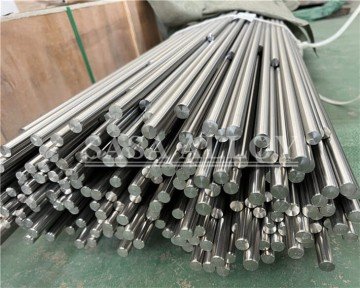
Round Bars: Even distribution of stress makes them ideal for shafts and fasteners
-
Flat Bars: Used in brackets, connectors, and base plates where bending strength is needed
-
Hex/Square Bars: Ideal for machined parts, threaded components, and structural sections
While strength values are intrinsic to the grade, geometry plays a role in how the bar handles load, impact, and fatigue.
sakyalloy offers precision-cut titanium bars in all major cross-sections, with tight tolerances and surface finishes that ensure both mechanical reliability and machining ease.
Applications That Demand High Strength Titanium Bars
-
Aerospace: Engine components, airframes, hydraulic fittings
-
Medical: Bone plates, surgical tools, spinal cages
-
Automotive: Racing components, engine valves
-
Marine: Submarine parts, drive shafts
-
Energy: Nuclear components, offshore drilling tools
Each of these industries demands not just strength, but also longevity, consistency, and traceability—all of which are guaranteed with sakyalloy titanium bar solutions.
Testing and Certification
To verify strength, all titanium bars from sakyalloy undergo:
-
Tensile Testing
-
Yield and Elongation Tests
-
Hardness Testing
-
Ultrasonic Testing (UT)
-
Grain Size and Microstructure Analysis
We provide certifications according to:
-
ASTM B348
-
AMS 4928
-
EN 10204 3.1 / 3.2
-
ISO 5832 (for medical use)
Conclusion
So, how strong is a titanium bar? The answer lies in the grade, form, and treatment—but in short: very strong. Titanium bars, especially those in alloyed grades like Grade 5, offer a tensile strength exceeding 1000 MPa with a fraction of the weight of steel. This makes them indispensable in cutting-edge engineering and manufacturing.
Whether you need ultra-lightweight structural components or high-strength medical implants, sakyalloy is your trusted partner for high-performance titanium bars. We offer expert consultation, fast delivery, and full technical support across all grades and sizes.