
How Titanium Pipe Is Manufactured: From Ore to Tube
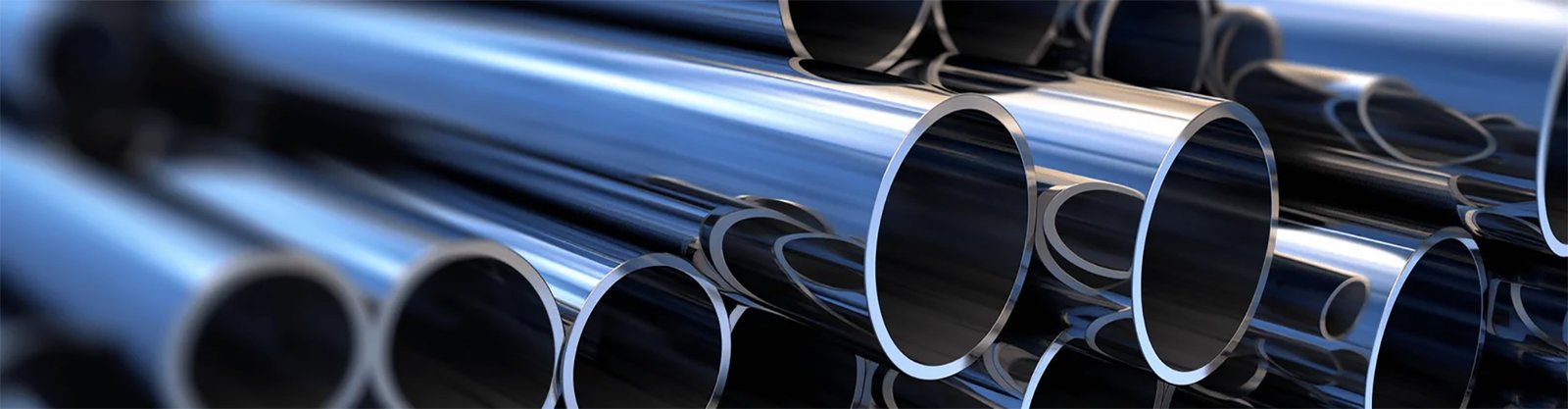
Titanium has long been celebrated for its unique combination of high strength, low weight, and exceptional corrosion resistance. These qualities make titanium pipe the material of choice in industries as diverse as aerospace, chemical processing, marine engineering, and power generation. But how does this remarkable material go from raw ore extracted from the earth to a finished titanium pipe that can withstand the harshest conditions? In this article, we take you on a detailed journey through how titanium pipe is manufactured: from ore to tube, exploring each stage of the process and why it results in one of the most high-performance piping solutions available today.
The Origin: Titanium Ore
Titanium is the ninth most abundant element in the Earth’s crust, but it rarely occurs in its pure form. The primary sources of titanium are minerals such as ilmenite (FeTiO3) and rutile (TiO2). These ores are mined from deposits around the world, with significant operations in Australia, South Africa, Canada, and India.
The first step in the manufacturing process begins at the mine, where titanium ore is extracted and concentrated. The goal at this stage is to increase the purity of the ore and remove unwanted elements such as iron. This is typically done using physical processes such as gravity separation and magnetic separation.
Refining the Ore: The Kroll Process
Once the titanium ore has been concentrated, it is converted into titanium tetrachloride (TiCl4) through a chlorination process. This involves heating the ore with carbon in the presence of chlorine gas. The titanium reacts with the chlorine to form titanium tetrachloride, a liquid compound that can be purified through distillation.
The purified TiCl4 is then reduced to metallic titanium using the Kroll process, which remains the dominant method for producing commercial titanium. In this process, TiCl4 is reacted with molten magnesium in an inert atmosphere, typically in a large sealed vessel. The magnesium removes the chlorine, leaving behind spongy, porous titanium metal known as titanium sponge.
This sponge is then crushed and cleaned to remove any residual magnesium and magnesium chloride. The result is high-purity titanium metal ready for the next stage of processing.
From Sponge to Ingot: Melting and Alloying
The titanium sponge alone is not yet suitable for forming into pipe. To create a homogenous and dense material, the sponge is compacted into briquettes and loaded into a vacuum arc furnace or electron beam furnace. Here, it is melted to form a solid titanium ingot. If specific alloying elements are required (such as aluminum, vanadium, or molybdenum for various titanium alloys), they are added during this melting process.
Melting and remelting (often multiple times) ensure that the ingot has a uniform composition and structure, free from defects. The resulting titanium ingots are then ready to be shaped into forms that can be processed into pipes.
Forming Titanium Billets or Slabs
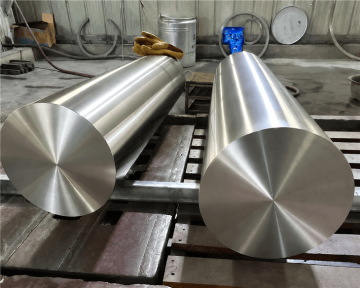
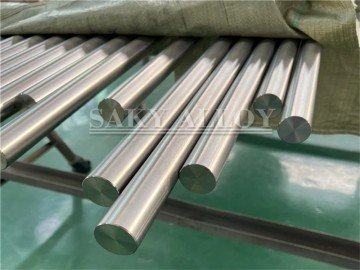
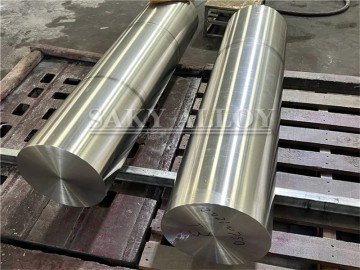
The titanium ingot is forged or hot-rolled into billets or slabs, depending on the final product requirements. For titanium pipe production, billets (solid round bars) are typically preferred. These billets are produced under carefully controlled conditions to ensure a fine, uniform grain structure that will enhance the mechanical properties of the final pipe.
Extrusion or Piercing: Creating the Hollow Form
Transforming a solid billet into a hollow titanium tube involves one of two primary techniques: extrusion or piercing.
-
Extrusion: The billet is heated and forced through a die and over a mandrel, producing a hollow tube in a single step. This method is highly effective for producing seamless titanium pipe with consistent wall thickness and excellent surface finish.
-
Piercing and elongation: Alternatively, the billet can be pierced at its center using a rotary piercing mill, creating a hollow shell. The shell is then elongated and sized using pilger mills or stretch-reducing mills to achieve the desired dimensions.
Both methods result in seamless titanium pipe, which is preferred in critical applications for its strength and reliability without the potential weak points of welded seams.
Cold Working and Annealing
Once the titanium pipe has been formed, it may undergo cold working to improve its dimensional accuracy and mechanical properties. Cold working involves further drawing or rolling the pipe at room temperature, which increases strength through strain hardening.
However, cold working can introduce internal stresses into the material. Therefore, titanium pipes are typically annealed after cold working. Annealing is a heat treatment process that relieves internal stresses, refines the grain structure, and restores ductility while preserving the enhanced strength from cold work. This step ensures the pipe will perform reliably in service, even under demanding conditions.
Finishing Operations
After annealing, the titanium pipe is subjected to a series of finishing processes to meet the stringent requirements of various industries:
-
Straightening: To ensure the pipe has minimal curvature and meets dimensional tolerances.
-
Cutting to length: Pipes are cut to customer-specified sizes using precision saws or lasers.
-
Surface cleaning: Any oxide scale or surface contamination is removed through acid pickling, shot blasting, or mechanical polishing to achieve the desired surface finish.
-
Non-destructive testing: Titanium pipes are often inspected using ultrasonic testing, eddy current testing, or other non-destructive methods to detect any internal or surface defects.
Final Inspection and Certification
Before titanium pipe leaves the manufacturing facility, it undergoes final inspection to verify that it meets the required standards for dimensions, mechanical properties, chemical composition, and surface quality. Certified mill test reports (MTRs) are issued to provide full traceability and assurance of quality for each batch of pipe.
At sakyalloy, we take pride in delivering titanium pipe that meets or exceeds global standards such as ASTM B861, ASTM B338, and ASME SB861. Our rigorous quality control processes ensure that every titanium pipe we supply offers exceptional performance in its intended application.
Applications That Demand the Best
The painstaking process of producing titanium pipe from ore to tube results in a product that offers unmatched performance. Industries that rely on titanium pipe include:
-
Aerospace: Where strength, weight savings, and corrosion resistance are essential
-
Marine engineering: For seawater-resistant piping systems on ships and offshore platforms
-
Chemical processing: Where titanium withstands aggressive chemicals without corrosion
-
Power generation: Especially in nuclear and geothermal plants, where reliability is critical
-
Medical devices: For precision tubes in surgical equipment and implants
The Role of sakyalloy in Titanium Pipe Solutions
At sakyalloy, we support the entire journey of titanium pipe manufacturing, from sourcing high-quality titanium raw material to delivering precision-engineered piping products ready for installation. Our titanium pipes are trusted by clients worldwide for their performance, consistency, and longevity.
By focusing on strict process control and customer-specific requirements, sakyalloy ensures that every titanium pipe we provide helps our customers achieve success in their most demanding projects.
Conclusion
The manufacturing of titanium pipe is a complex and highly controlled process that transforms raw ore into a high-performance material capable of withstanding the most challenging environments. From the mining of titanium-bearing minerals to the production of sponge, melting into ingots, forming into tubes, and precision finishing, each step is essential in creating a product that meets the exacting standards of industries where failure is not an option.
Understanding how titanium pipe is manufactured: from ore to tube helps illustrate why titanium is regarded as one of the most advanced materials for critical applications. When performance, reliability, and longevity matter most, titanium pipe stands out as the ultimate choice.
By choosing titanium solutions from sakyalloy, you are investing in material excellence and manufacturing expertise that deliver lasting value and peace of mind. Whether you need standard or custom titanium pipe, trust us to provide the high-quality products that your project demands.