
How to Machine and Polish Grade 23 Titanium Bar Effectively
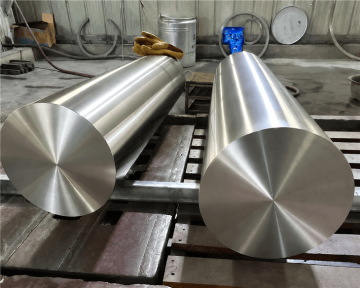
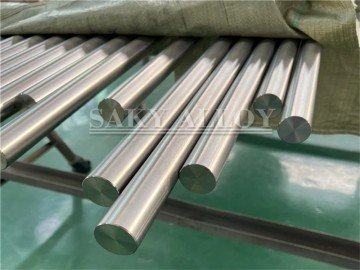
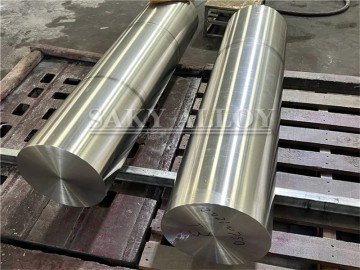
Grade 23 Titanium Bar (Ti-6Al-4V ELI) is one of the most advanced and versatile titanium alloys in modern engineering. Known for its excellent strength-to-weight ratio, biocompatibility, and corrosion resistance, it is widely used in medical implants, aerospace components, and precision mechanical parts.
However, machining and polishing Grade 23 Titanium Bar is not an easy task. Titanium’s low thermal conductivity, high strength, and tendency to gall or work-harden require special attention to cutting parameters, tool selection, and surface finishing methods.
In this guide, sakyalloy explains how to machine and polish Grade 23 Titanium Bar effectively, ensuring superior surface finish, dimensional accuracy, and performance that meets both medical and aerospace standards.
1. Understanding Grade 23 Titanium (Ti-6Al-4V ELI)
Grade 23 Titanium is the extra low interstitial (ELI) version of Grade 5 titanium, featuring reduced levels of oxygen, nitrogen, and carbon. This results in higher ductility and fracture toughness—two critical properties for components used in implants and high-stress aerospace environments.
Chemical Composition (%)
| Element | Content |
|---|---|
| Titanium (Ti) | Balance |
| Aluminum (Al) | 5.5 – 6.5 |
| Vanadium (V) | 3.5 – 4.5 |
| Oxygen (O) | ≤ 0.13 |
| Nitrogen (N) | ≤ 0.05 |
| Carbon (C) | ≤ 0.08 |
| Iron (Fe) | ≤ 0.25 |
| Hydrogen (H) | ≤ 0.0125 |
This clean chemistry enhances biocompatibility and weldability while maintaining high mechanical performance.
2. Key Machining Challenges of Grade 23 Titanium
Machining titanium is often described as “difficult but achievable.” The challenges arise from the alloy’s physical and metallurgical behavior:
-
Low thermal conductivity (only 15% that of steel): Heat concentrates at the cutting zone, causing tool wear.
-
High chemical reactivity: Titanium tends to weld with cutting tools, leading to built-up edge.
-
Work hardening tendency: The surface layer hardens rapidly if the feed rate is too low.
-
Elastic recovery: Causes tool deflection and dimensional inaccuracy.
Understanding these challenges is the first step toward effective machining and achieving mirror-quality surfaces on Grade 23 Titanium Bars.
3. Preparing for Machining
3.1 Material Condition
Before machining, ensure that the titanium bar is:
-
Stress-relieved or annealed to minimize residual stresses.
-
Free from surface oxidation or scale, which may cause tool wear.
-
Securely clamped to prevent vibration during turning or milling.
3.2 Machine Requirements
-
Use rigid CNC machines with minimal vibration.
-
Ensure coolant circulation and chip evacuation systems are optimized.
-
Prefer short tool overhangs to minimize deflection.
3.3 Tool Material Selection
| Tool Type | Recommended Material | Coating |
|---|---|---|
| Turning | Carbide (Grade K20–K40) | TiAlN or AlTiN |
| Milling | Solid carbide / CBN inserts | TiCN or diamond-like coating |
| Drilling | High-speed steel with carbide tip | TiAlN |
| Threading | Carbide inserts | PVD coating |
Proper tool selection is critical for minimizing friction and maintaining surface integrity.
4. Optimal Machining Parameters
To achieve a smooth finish and prevent overheating, follow these general guidelines:
| Process | Cutting Speed (m/min) | Feed Rate (mm/rev) | Depth of Cut (mm) | Coolant |
|---|---|---|---|---|
| Turning | 30–60 | 0.1–0.3 | 0.5–2.0 | Emulsion (High flow) |
| Milling | 40–80 | 0.05–0.15/tooth | 0.5–1.5 | Water-soluble oil |
| Drilling | 10–25 | 0.05–0.15 | — | Flood coolant |
| Threading | 20–40 | — | — | Synthetic cutting oil |
Key Tips
-
Maintain sharp cutting edges—dull tools increase friction and heat.
-
Use constant feed rate to avoid hardening.
-
Avoid dry machining; titanium must always be cooled.
-
Employ high-pressure coolant (up to 70 bar) for chip removal.
5. Surface Finishing and Polishing
Achieving a smooth, mirror-like finish on Grade 23 Titanium Bars is essential for both medical and aerospace applications. Surface finish not only affects appearance but also influences fatigue resistance and biocompatibility.
5.1 Surface Preparation
After machining, the surface may contain burrs, tool marks, or minor scratches. Preparation involves:
-
Deburring using soft abrasive wheels.
-
Cleaning with acetone or alcohol to remove cutting fluids.
-
Grinding with fine-grit abrasives (320–600 grit) before polishing.
5.2 Mechanical Polishing Process
-
Rough Polishing: Use silicon carbide papers (grit 400 → 800 → 1200).
-
Fine Polishing: Use diamond paste or alumina suspension (1–3 µm).
-
Buffing: Apply soft cloth wheels with titanium polishing compound.
-
Final Cleaning: Ultrasonic cleaning with deionized water.
Result: Ra ≤ 0.2 µm, suitable for implants and aerospace fasteners.
5.3 Electrochemical Polishing (Optional)
For superior smoothness and corrosion resistance:
-
Electrolyte: Methanol + hydrofluoric acid (HF) mixture.
-
Voltage: 10–20 V, Duration: 2–5 minutes.
-
Provides mirror finish and removes micro-defects.
5.4 Passivation
After polishing, titanium surfaces are passivated using nitric acid or citric acid to form a protective TiO₂ oxide layer, improving biocompatibility and corrosion resistance.
6. Surface Roughness Standards for Different Applications
| Application | Required Surface Finish (Ra) | Finishing Method |
|---|---|---|
| Medical Implants | ≤ 0.2 µm | Fine mechanical + electro-polish |
| Aerospace Fasteners | ≤ 0.4 µm | Mechanical polish + passivation |
| Industrial Parts | ≤ 0.8 µm | Grinding + buffing |
| Aesthetic Components | ≤ 0.1 µm | Mirror buffing |
sakyalloy produces Gr23 titanium bars capable of achieving these surface standards through advanced machining and polishing lines.
7. Tools and Techniques for Precision Finishing
7.1 Abrasive Belts and Wheels
-
Use non-woven abrasive belts to reduce scratches.
-
Avoid excessive pressure that causes thermal oxidation.
7.2 Diamond Paste Polishing
-
Use pastes with 1 µm or smaller particles for final stages.
-
Maintain constant rotation speed (1500–2000 rpm) during buffing.
7.3 Robotic Polishing Systems
For large production runs, automated robotic polishing ensures uniform surface quality, reducing human error and improving repeatability.
8. Quality Control and Inspection
Inspection Parameters
| Property | Method |
|---|---|
| Surface Roughness | Contact profilometer or optical interferometer |
| Dimensional Accuracy | CMM (Coordinate Measuring Machine) |
| Microstructure | Metallographic analysis |
| Hardness | Vickers HV testing |
| Cleanliness | Ultrasonic and X-ray inspection (for aerospace) |
Every sakyalloy Gr23 titanium bar undergoes strict inspection to guarantee compliance with ASTM F136, ISO 5832-3, and AMS 4930 standards.
9. Common Mistakes and How to Avoid Them
| Problem | Cause | Solution |
|---|---|---|
| Tool wear or breakage | Insufficient coolant / low speed | Use high-pressure cooling and sharp tools |
| Galling | Tool adhesion due to heat | Apply coated tools and lubricants |
| Poor surface finish | Dull tools or vibration | Short tool overhangs and rigid fixturing |
| Blue discoloration | Overheating | Reduce cutting speed and improve cooling |
| Dimensional error | Elastic recovery | Increase feed rate and depth per pass |
Avoiding these errors ensures a stable machining process and excellent surface integrity.
10. Applications Requiring Precision Machining
Medical Sector
-
Orthopedic implants (hip stems, bone screws, spinal rods)
-
Dental implants and abutments
-
Surgical instruments requiring mirror polish
Aerospace Sector
-
Fasteners, turbine bolts, and landing gear components
-
Satellite and rocket assembly fittings
-
Cryogenic components and hydraulic connectors
These industries demand tight tolerances and flawless finishes—achievable only through optimized machining and polishing of Grade 23 titanium bars.
11. Case Studies from sakyalloy
Case 1 – Orthopedic Implants
A biomedical manufacturer adopted Gr23 titanium bars from sakyalloy for spinal rods and bone screws. Precision polishing reduced surface roughness to Ra 0.15 µm, improving implant integration and reducing wear.
Case 2 – Jet Engine Fasteners
An aerospace company used Gr23 titanium bars for high-stress fasteners. After applying sakyalloy’s optimized machining and polishing protocol, fatigue strength increased by 25%, ensuring safer performance under vibration and temperature cycling.
Case 3 – Dental Device Components
For dental abutments, sakyalloy supplied ultra-smooth titanium bars with a mirror finish that improved aesthetics and hygiene while maintaining precise dimensional tolerance.
12. Sustainability and Process Efficiency
sakyalloy integrates sustainability into titanium processing:
-
Coolant recycling systems reduce water and oil waste.
-
Chip recovery and recycling programs reclaim valuable titanium.
-
Energy-efficient machining centers lower power consumption.
-
Dust and emission controls ensure environmentally safe production.
By optimizing both performance and environmental responsibility, sakyalloy maintains its position as a leading supplier of precision titanium materials.
13. Summary of Best Practices
-
Use sharp carbide tools with TiAlN coating.
-
Maintain low cutting speeds but high feed rates.
-
Apply copious coolant—never dry machine titanium.
-
Prevent vibration using rigid fixturing.
-
Polish progressively using fine abrasives and diamond compounds.
-
Perform final passivation to enhance corrosion resistance.
-
Verify results with surface and dimensional inspections.
Following these steps guarantees smooth machining, long tool life, and premium-quality finishes suitable for the most critical applications.
Conclusion
Machining and polishing Grade 23 Titanium Bar (Ti-6Al-4V ELI) requires a blend of technical precision, proper tooling, and advanced surface finishing techniques. When executed correctly, the result is a component with exceptional strength, surface integrity, and corrosion resistance, ready for the most demanding medical and aerospace environments.
With years of experience and specialized facilities, sakyalloy provides high-quality Gr23 titanium bars engineered for optimal machinability and mirror-level polishability. Through strict process control and continuous innovation, sakyalloy ensures that every titanium bar meets the highest global standards for performance, precision, and purity.