
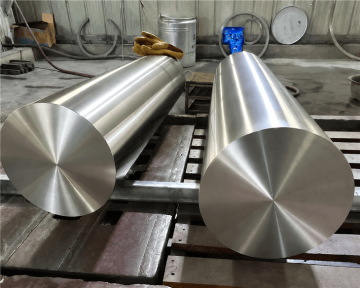
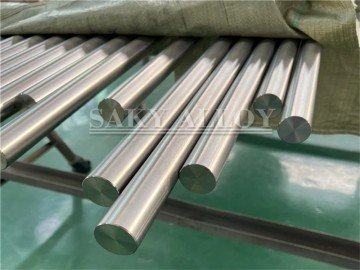
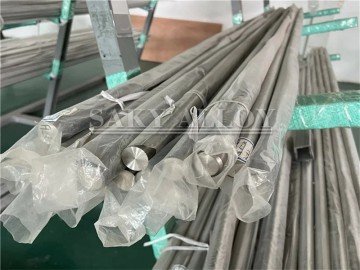
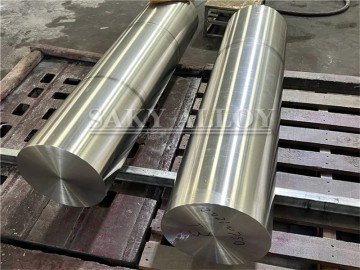
Key Mechanical Properties and Advantages of Grade 9 Titanium Rod
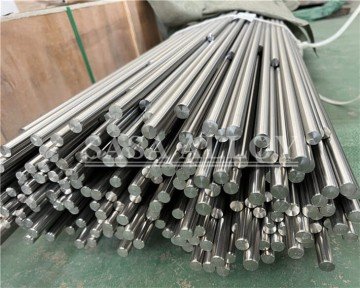
In modern industries where performance, strength, and lightweight characteristics are crucial, Grade 9 Titanium Rod (Ti-3Al-2.5V) stands out as one of the most versatile and efficient materials. It bridges the gap between commercially pure titanium and the stronger Ti-6Al-4V (Grade 5), offering an exceptional balance of formability, corrosion resistance, and mechanical strength. In this article, sakyalloy explores the key mechanical properties, performance advantages, and industrial applications that make Grade 9 titanium an ideal choice for critical engineering components.
1. Overview of Grade 9 Titanium (Ti-3Al-2.5V)
Grade 9 Titanium, also known as Ti-3Al-2.5V, is an alpha-beta titanium alloy that contains 3% aluminum and 2.5% vanadium. This unique combination enhances strength while maintaining good ductility and excellent weldability.
Unlike pure titanium grades (1–4), which prioritize corrosion resistance but have lower strength, and Grade 5 (Ti-6Al-4V), which offers high strength but lower formability, Grade 9 provides an ideal middle ground — strong, light, and easy to fabricate.
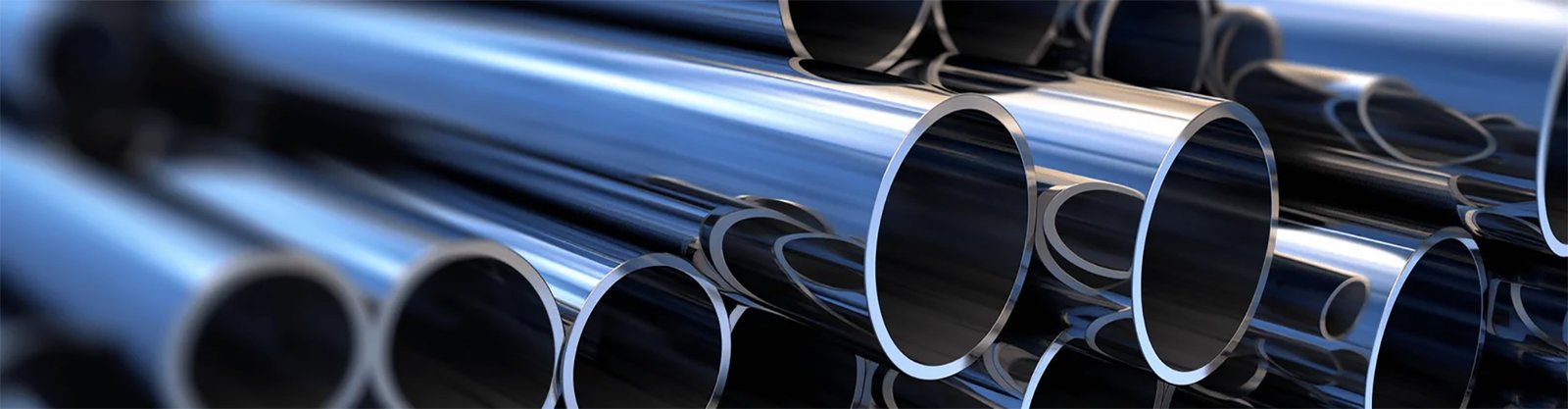
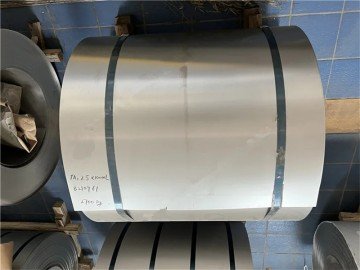
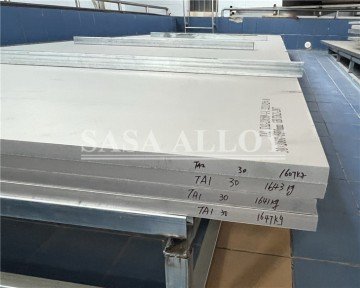
Typical product forms include rods, bars, tubes, and sheets, all designed to perform reliably under demanding environmental and mechanical conditions.
2. Chemical Composition of Grade 9 Titanium Rod
| Element | Content (%) | Purpose |
|---|---|---|
| Titanium (Ti) | Balance | Base element providing light weight and corrosion resistance. |
| Aluminum (Al) | 2.5 – 3.5 | Increases strength and maintains good corrosion resistance. |
| Vanadium (V) | 2.0 – 3.0 | Improves hardenability and tensile strength. |
| Iron (Fe) | ≤ 0.25 | Controlled to maintain toughness. |
| Oxygen (O) | ≤ 0.20 | Affects strength and ductility. |
| Carbon (C) | ≤ 0.08 | Enhances hardness slightly. |
| Nitrogen (N) | ≤ 0.05 | Controlled to avoid brittleness. |
| Hydrogen (H) | ≤ 0.015 | Kept low to prevent embrittlement. |
This well-balanced chemical structure results in a material that combines high specific strength with excellent corrosion resistance — the foundation of its performance across aerospace, marine, and automotive industries.
3. Key Mechanical Properties
The strength-to-weight ratio of Grade 9 Titanium Rod is one of the best among titanium alloys, offering superior performance without compromising on ductility or workability.
| Property | Typical Value | Description |
|---|---|---|
| Density | 4.48 g/cm³ | Nearly 45% lighter than steel, reducing total system weight. |
| Tensile Strength | 620 – 700 MPa | Provides strong resistance to mechanical stress. |
| Yield Strength | 480 – 550 MPa | Excellent for high-stress structural applications. |
| Elongation | 15 – 20% | Maintains flexibility under deformation. |
| Modulus of Elasticity | 105 GPa | Offers rigidity and vibration resistance. |
| Hardness | 200 – 250 HB | Ensures surface durability and wear resistance. |
| Melting Point | 1660°C | Excellent thermal stability. |
| Fatigue Strength | 450 MPa | High endurance under cyclic loads. |
These properties make Grade 9 Titanium Rod a dependable choice where both strength and low weight are required, particularly in aerospace tubing, performance bicycles, and high-pressure hydraulic systems.
4. Comparison: Grade 9 vs Other Titanium Grades
| Property | Grade 2 (CP Ti) | Grade 9 (Ti-3Al-2.5V) | Grade 5 (Ti-6Al-4V) |
|---|---|---|---|
| Tensile Strength (MPa) | 345 | 620–700 | 895 |
| Density (g/cm³) | 4.51 | 4.48 | 4.43 |
| Weldability | Excellent | Excellent | Moderate |
| Formability | Excellent | Very Good | Limited |
| Corrosion Resistance | Excellent | Excellent | Excellent |
| Cost | Lower | Moderate | Higher |
| Applications | Chemical, medical | Aerospace, marine | Aerospace, military |
Grade 9 provides the best compromise between strength, formability, and weldability — outperforming pure titanium in strength while being easier to process than Grade 5.
5. Temperature and Pressure Performance
Grade 9 Titanium performs exceptionally across a wide temperature range:
-
Continuous service temperature: up to 400°C (752°F)
-
Short-term exposure: up to 480°C (896°F)
-
Cryogenic performance: retains ductility and impact strength even below -250°C
This thermal resilience makes it ideal for heat exchangers, exhaust systems, and high-temperature aerospace components where both light weight and strength retention are vital.
6. Corrosion Resistance
Like all titanium alloys, Grade 9 exhibits excellent resistance to corrosion in a variety of aggressive environments. The formation of a stable titanium oxide film on its surface provides natural protection against:
-
Seawater and marine atmospheres
-
Chlorides and saline environments
-
Oxidizing and reducing acids
-
High-humidity conditions
This corrosion resistance makes sakyalloy Grade 9 titanium rods ideal for use in offshore oil platforms, marine pipelines, and desalination equipment.
7. Fatigue Strength and Durability
In applications involving cyclic loading, such as aircraft structures or sports equipment, fatigue resistance is crucial. Grade 9’s fine microstructure provides superior fatigue strength — typically 450 MPa — ensuring long service life even under vibration and dynamic stress.
This property allows it to be used confidently in aircraft hydraulic lines, landing gear systems, and performance bicycle frames, where constant stress fluctuations occur.
8. Formability and Weldability
Grade 9 is easier to cold-form and weld compared to high-strength alloys like Grade 5. Its excellent formability allows fabrication into tubes, rods, and complex geometries without cracking.
-
Welding methods: TIG, plasma arc, and electron beam welding are commonly used.
-
Welded structures: retain full corrosion resistance without post-weld heat treatment.
-
Machinability: similar to other titanium alloys; sharp tools and controlled speeds improve performance.
This makes Grade 9 Titanium Rod a practical and efficient material for precision-engineered parts that demand both strength and manufacturability.
9. Heat Treatment and Microstructure
Grade 9 Titanium typically features a mixed alpha-beta microstructure that provides a balance between strength and ductility. It is supplied in annealed condition, though it can also be cold-worked for higher strength levels.
-
Annealing temperature: 700°C – 850°C
-
Cooling: air or inert gas to maintain fine grain structure
-
Effect: enhances uniformity and restores corrosion resistance after fabrication
The microstructure stability ensures consistent mechanical performance even after multiple forming or welding operations.
10. Applications of Grade 9 Titanium Rod
Because of its balanced properties, sakyalloy Grade 9 Titanium Rod is used extensively across high-performance sectors:
Aerospace Industry
-
Hydraulic and fuel system tubing
-
Airframe structural components
-
Exhaust ducts and fasteners
Marine Industry
-
Heat exchangers and condenser tubing
-
Offshore platform equipment
-
Propeller shafts and underwater hardware
Automotive and Motorsport
-
Exhaust systems and valves
-
Suspension components
-
High-performance bicycle frames
Industrial and Chemical Processing
-
Pressure vessels and heat exchangers
-
Corrosion-resistant piping
-
Desalination plant structures
Medical and Sports Equipment
-
Lightweight prosthetics
-
Surgical instruments
-
Sports gear frames and accessories
In all these areas, Grade 9 Titanium delivers unmatched strength-to-weight efficiency and durability.
11. Advantages of Using Grade 9 Titanium Rod
-
High Strength-to-Weight Ratio:
With nearly half the weight of steel but comparable strength, Grade 9 provides structural efficiency and energy savings. -
Superior Corrosion Resistance:
Performs exceptionally in marine, chemical, and oxidizing environments without coating or plating. -
Excellent Weldability:
Allows seamless joining for complex fabrications without compromising corrosion protection. -
Good Formability:
Easier to bend and shape compared to higher-strength alloys, reducing fabrication time and cost. -
Thermal Stability:
Retains strength at high temperatures and does not degrade under thermal cycling. -
Long Service Life:
Low maintenance and resistance to fatigue extend product lifespan and reduce replacement costs. -
Biocompatibility:
Non-toxic and compatible with the human body, suitable for medical and sports applications. -
Sustainability:
Titanium is 100% recyclable, supporting eco-friendly manufacturing practices.
12. Testing and Quality Control
sakyalloy ensures every Grade 9 Titanium Rod meets international quality standards such as ASTM B348, AMS 4943, and ISO 5832-11.
Each rod undergoes:
-
Chemical composition verification using spectrometers.
-
Mechanical testing for tensile, yield, and elongation properties.
-
Ultrasonic and eddy current inspections for internal integrity.
-
Surface and dimensional checks to ensure precision.
These stringent quality controls guarantee reliable, high-performance titanium products for global industrial use.
13. Economic and Performance Value
While titanium alloys are more expensive than stainless steel or aluminum, their superior performance and durability translate into long-term cost savings. The lower maintenance, reduced downtime, and longer operational lifespan make Grade 9 Titanium Rod an economically sound choice for industries prioritizing quality, safety, and efficiency.
14. Conclusion
The Grade 9 Titanium Rod (Ti-3Al-2.5V) represents a perfect synergy of mechanical strength, lightweight design, corrosion resistance, and fabrication ease. Its versatility allows it to excel in aerospace, marine, automotive, and industrial sectors where precision and performance are critical.
Engineered for demanding conditions, sakyalloy Grade 9 Titanium Rods deliver reliability, durability, and value in every application.
Whether for aircraft tubing, marine systems, or high-performance equipment, sakyalloy ensures consistent quality and adherence to global standards, providing the materials that power innovation and endurance in modern engineering.