
Manufacturing Process of Grade 9 Titanium Rod Melting Rolling and Heat Treatment
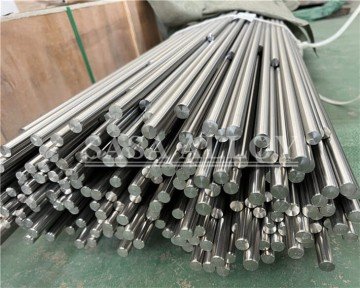
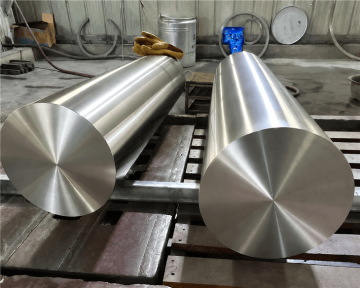
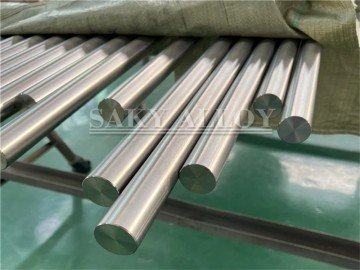
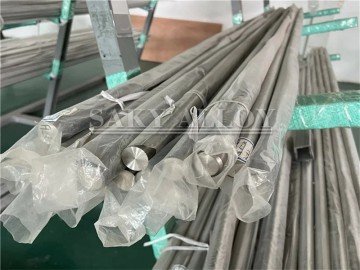
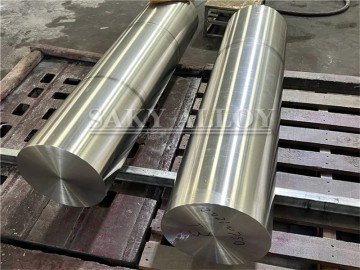
Grade 9 titanium rod, also known as Ti 3Al 2.5V, is one of the most widely used titanium alloys in aerospace tubing, high performance bicycle frames, medical devices, heat exchangers, and marine components. Its exceptional balance of strength, corrosion resistance, and formability makes it a preferred material for industries requiring lightweight yet durable engineering components. To ensure consistent performance and mechanical reliability, the manufacturing process of Grade 9 titanium rod involves advanced melting, precision rolling, controlled heat treatment, and rigorous quality inspection. As a professional titanium alloy supplier, sakyalloy follows strict international standards to guarantee the structural integrity and metallurgical stability of every Grade 9 titanium rod.
Introduction to Grade 9 Titanium Alloy
Grade 9 titanium alloy (Ti 3Al 2.5V) consists of:
-
Titanium (balance)
-
Aluminum: 2.5 to 3.5 percent
-
Vanadium: 2 to 3 percent
It is classified as a near alpha titanium alloy, offering:
-
Higher strength than commercially pure titanium
-
Better formability compared with Ti 6Al 4V Grade 5
-
Excellent corrosion resistance in seawater and chemical environments
-
Outstanding weldability
-
High fatigue resistance
These characteristics make Grade 9 the go to material for demanding lightweight structural applications.
Overview of the Manufacturing Process
The production of Grade 9 titanium rods generally includes:
-
Melting and refining
-
Casting and forming into ingots
-
Hot forging or hot rolling
-
Precision rolling into final rod dimensions
-
Heat treatment
-
Surface finishing
-
Ultrasonic testing and final dimensional inspection
Each stage impacts the alloy’s strength, microstructure, and performance.
Stage 1: Melting and Refining of Grade 9 Titanium
Melting is the foundation of titanium alloy production, determining purity, chemistry, and structural homogeneity.
Vacuum Arc Remelting VAR
Grade 9 alloy is typically melted using VAR vacuum arc remelting, which provides:
-
Ultra high purity
-
Controlled chemical composition
-
Low oxygen and nitrogen levels
-
Elimination of solidification defects
-
Uniform microstructure
During VAR, a titanium alloy electrode is melted under a deep vacuum, producing a high integrity ingot suitable for aerospace and medical applications.
Triple Melting for High End Applications
Some industries require triple melted Grade 9 titanium using:
-
VAR +
-
Electron Beam Melting EBM +
-
Plasma Arc Melting PAM
This ensures metallurgical stability for critical components such as aircraft tubing and surgical implants.
Stage 2: Casting and Ingot Preparation
Once melting is complete, the titanium alloy ingot undergoes conditioning to remove surface defects and ensure consistency.
Ingot Conditioning Includes
-
Surface grinding
-
Ultrasonic inspection
-
Machining to standard shapes
-
Removal of segregation zones
Proper conditioning prepares the ingot for the subsequent hot working process.
Stage 3: Hot Forging or Hot Rolling
Titanium requires controlled processing temperatures due to its sensitivity to oxygen and strain rate.
Hot Forging Process
Hot forging breaks down the ingot and refines grain structure.
Benefits include:
-
Enhanced mechanical strength
-
Improved toughness
-
Reduction of casting defects
-
More uniform microstructure
Forged billets are then cut into lengths for rolling.
Hot Rolling Process
Hot rolling transforms billets into cylindrical rods.
Key Rolling Parameters
-
Temperature range: 750°C to 900°C
-
Precisely controlled deformation rate
-
Continuous reduction to required diameter
-
Strict environmental control to avoid contamination
The goal is to achieve strong, consistent rods with fine grain structure.
Stage 4: Precision Rolling and Cold Finishing
To achieve tighter tolerances and superior surface finish, Grade 9 titanium rods undergo precision rolling or cold finishing.
Precision Hot or Warm Rolling
This step ensures:
-
Accurate dimensional control
-
Improved surface quality
-
Enhanced roundness
-
Uniform mechanical properties along the length
Cold Finishing (Cold Drawing or Peeling)
Cold finishing processes provide:
-
Tight diameter tolerances
-
Smooth surfaces for marine and medical applications
-
Better straightness
-
Enhanced fatigue performance
Cold finishing allows Grade 9 rods to meet precision engineering requirements.
Stage 5: Heat Treatment of Grade 9 Titanium Rod
Heat treatment is critical for optimizing mechanical properties, stress relief, and microstructure control.
Common Heat Treatment Types
1. Stress Relief Annealing
Temperature typically between 425°C and 650°C.
Benefits:
-
Removes residual rolling stress
-
Prevents distortion during machining
-
Improves microstructural uniformity
2. Solution Treatment (Less common for Grade 9)
Used when enhanced ductility is required.
3. Annealing
Performed between 700°C and 800°C.
Results include:
-
Excellent formability
-
Improved ductility
-
Stable microstructure
Proper heat treatment ensures the ideal combination of strength and flexibility.
Stage 6: Surface Finishing and Cleaning
Surface quality is especially important for aerospace, medical, and marine applications.
Common Finishing Options
-
Grinding
-
Polishing
-
Acid pickling
-
Sand blasting
-
Centerless grinding
These processes remove impurities, improve appearance, and prepare rods for final machining.
Stage 7: Final Inspection and Quality Assurance
Quality testing is essential to meet ASTM, AMS, or EN standards.
Common Testing Requirements
1. Ultrasonic Testing UT
Detects internal defects such as:
-
Voids
-
Inclusions
-
Cracks
2. Tensile and Mechanical Tests
Measures:
-
Tensile strength
-
Yield strength
-
Elongation
-
Reduction of area
3. Chemical Composition Analysis
Ensures strict adherence to Ti 3Al 2.5V chemistry.
4. Dimensional Inspection
Checks:
-
Diameter tolerance
-
Roundness
-
Straightness
-
Surface roughness
5. Metallographic Examination
Evaluates:
-
Grain size
-
Alpha-beta phase distribution
-
Absence of harmful phases
Manufacturers such as sakyalloy ensure complete traceability with MTC EN10204 3.1 or higher documentation.
Applications of Grade 9 Titanium Rod
Thanks to its excellent formability and strength to weight ratio, Grade 9 titanium rods are widely used in:
Aerospace
-
Aircraft hydraulic tubing
-
Structural components
Automotive
-
High performance exhaust systems
-
Lightweight racing components
Sports Equipment
-
High end bicycle frames
-
Lightweight outdoor gear
Medical Field
-
Surgical instruments
-
Rehabilitation supports
Marine Engineering
-
Seawater exposed components
-
Anti corrosion fasteners
Grade 9’s versatility makes it one of the most popular medium strength titanium alloys.
Conclusion
The manufacturing process of Grade 9 titanium rods requires precise control from melting to final heat treatment to achieve the required performance for aerospace, medical, industrial, and marine applications. Through vacuum melting, controlled rolling, precision finishing, and strict testing, producers ensure that the rods maintain excellent mechanical properties, corrosion resistance, and structural stability. With advanced production technology and strict quality control, sakyalloy delivers Grade 9 titanium rods that meet international specifications and exceed customer expectations in high performance industries.