
Surface Finish and Dimensional Control in Ti 3Al 2.5V Titanium Rods
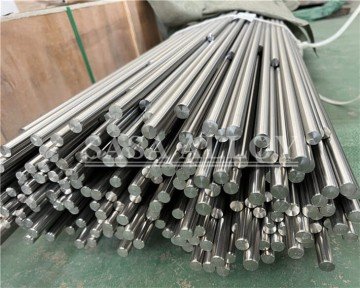
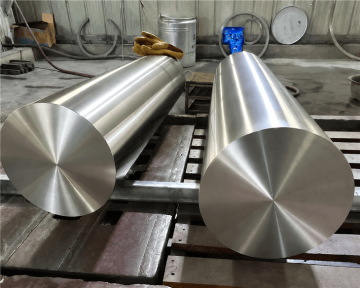
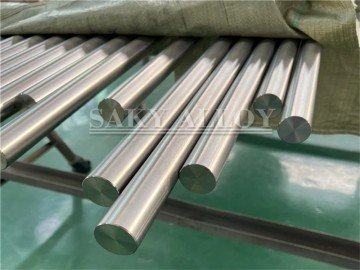
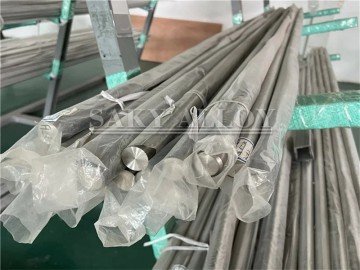
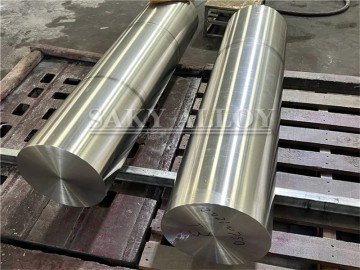
Ti 3Al 2.5V titanium rods, also known as Grade 9, are widely used in aerospace hydraulic tubing, high performance bicycle frames, marine hardware, heat exchangers, medical equipment, sports components, and industrial applications requiring lightweight, corrosion resistant, and high strength materials. To achieve the performance characteristics required in these demanding industries, controlling surface finish and ensuring dimensional accuracy are critical during the production of Ti 3Al 2.5V rods. These factors greatly influence fatigue strength, formability, weldability, corrosion behavior, and long term durability. As a professional titanium supplier, sakyalloy ensures precise surface and dimensional control at every stage of production to deliver high quality Grade 9 titanium rods that meet global engineering standards.
Introduction to Ti-3Al-2.5V Titanium Rods
Ti 3Al 2.5V is a near α (alpha) titanium alloy consisting of titanium with small additions of aluminum and vanadium:
-
Titanium: balance
-
Aluminum: 2.5 to 3.5 percent
-
Vanadium: 2.0 to 3.0 percent
Key Properties
-
High specific strength
-
Excellent corrosion resistance
-
Good cold formability
-
Superior fatigue strength
-
Strong weldability
-
Stable performance in aerospace and marine environments
Surface finish and dimensional precision play a major role in enabling these properties.
Why Surface Finish Matters in Grade 9 Titanium Rods
Surface finish directly influences the rod’s performance, especially in fatigue critical and corrosion sensitive applications.
1. Fatigue Resistance
Smooth surfaces reduce:
-
Stress concentrations
-
Microscopic crack initiation points
-
Fatigue failure risk during cyclic loading
This is essential for aerospace tubing and bicycle frames.
2. Corrosion Resistance
Titanium naturally forms a passive oxide layer. A clean, uniform surface enhances:
-
Pitting resistance
-
Crevice corrosion protection
-
Long term durability
3. Improved Weldability and Formability
Surface finish affects:
-
Clean weld surfaces
-
Lower contamination during welding
-
Better bending and forming quality
4. Aesthetic and Functional Quality
Industries such as high-end sports equipment demand visually consistent and defect free surfaces.
Common Surface Finish Grades for Ti-3Al-2.5V Rods
Different applications require specific surface finishes. Typical options include:
Acid Pickled Finish
-
Removes scale and impurities
-
Produces matte appearance
-
Ideal for aerospace and industrial applications
Polished Finish
-
Enhanced smoothness
-
Useful for medical, marine, and sporting goods
Centerless Ground Finish
-
Achieves precise diameter and excellent roundness
-
Smooth, defect free surface
-
Suitable for high fatigue applications
Sand Blasted Finish
-
Improves bonding surface for coatings or adhesives
Each finish must be uniform, defect free, and consistent along the entire rod length.
Surface Defects That Must Be Controlled
To ensure reliability, Grade 9 titanium rods must be free from:
-
Scratches
-
Pits
-
Cracks
-
Rolling marks
-
Oxide scale
-
Surface inclusions
-
Waves or distortions
These defects may lead to premature failure, especially under stress or corrosion exposure.
Dimensional Control in Grade 9 Titanium Rod Production
Dimensional accuracy is critical to ensuring proper fit, formability, and structural integrity.
Key Dimensional Parameters
-
Diameter tolerance
-
Roundness
-
Straightness
-
Length tolerance
-
Surface roughness (Ra value)
Precise control ensures compliance with ASTM B348, AMS 4943, and other aerospace/engineering standards.
How Dimensional Accuracy Is Achieved
Manufacturers rely on multiple processes to achieve precise tolerance levels.
1. Precision Hot Rolling
Hot rolling shapes the billet into rod form while refining grain size.
Benefits
-
Improves microstructure
-
Enhances mechanical strength
-
Lays foundation for final dimensional accuracy
2. Cold Drawing or Centerless Grinding
Cold finishing enhances precision significantly:
-
Reduces diameter variation
-
Improves roundness
-
Tightens tolerances
-
Achieves smoother surfaces
Cold drawn Grade 9 rods can achieve tolerances as tight as ±0.02 mm depending on size.
3. Straightening
Mechanical or hydraulic straightening ensures:
-
Minimal bowing
-
Easy installation in tubing mills
-
Improved fatigue performance
4. Heat Treatment Stabilization
Stress relieving or annealing helps maintain dimensional stability after cold work.
Surface Treatment Processes Used for Ti-3Al-2.5V Rods
A variety of finishing methods ensure optimal surface quality.
Pickling
-
Removes oxide scale from rolling
-
Improves surface cleanliness
Polishing
-
Mechanical polishing for smoothness
-
Reduces Ra value significantly
Centerless Grinding
-
Provides superior roundness
-
Ensures consistent diameter
Shot Peening (When Required)
-
Induces compressive stress
-
Enhances fatigue strength
Ultrasonic Cleaning
-
Removes contaminants
-
Prepares rods for welding or forming
These processes enhance overall rod performance.
Inspection Methods for Surface and Dimensional Control
Strict inspection ensures consistency for aerospace, medical, and high performance applications.
1. Visual Inspection
Detects:
-
Scratches
-
Contamination
-
Surface discoloration
-
Finishing defects
2. Laser Diameter Measurement
Ensures tight diameter tolerances.
3. Roundness and Straightness Checks
Straightness is critical for tubing production.
4. Surface Roughness Measurement
Ra values are measured to verify finish requirements.
5. Ultrasonic Testing
Detects internal defects such as:
-
Voids
-
Cracks
-
Nonmetallic inclusions
6. Eddy Current Testing
Checks surface integrity and detects micro cracks.
7. Mechanical Testing
Ensures compliance with strength and ductility requirements.
Manufacturers like sakyalloy ensure that each rod undergoes multi-layer testing before delivery.
Why Surface and Dimensional Control Are Crucial for Applications
Aerospace Industry
Grade 9 tubing must meet strict fatigue and dimensional requirements for hydraulic systems.
High Performance Bicycle Frames
Precision rods ensure safe welding, bending, and lightweight frame construction.
Marine and Offshore Systems
Smooth surfaces resist seawater corrosion and biofouling.
Heat Exchangers and Condensers
Dimensional accuracy ensures leak free tube to tube sheet connections.
Medical and Sporting Goods
Surface finish influences hygiene, aesthetics, and longevity.
Challenges in Achieving High Precision for Grade 9 Titanium Rods
-
Titanium’s reactivity at high temperatures
-
Difficulty in machining due to low thermal conductivity
-
Variable springback during forming
-
Need for controlled atmosphere processing
Advanced equipment and strict quality control are required to overcome these challenges.
Conclusion
Surface finish and dimensional control play a decisive role in the performance, safety, and longevity of Ti-3Al-2.5V Grade 9 titanium rods. From aerospace tubing to high performance bicycles and marine structures, industries rely on rods that offer smooth surfaces, tight tolerances, and exceptional consistency. Through advanced processing technologies, precision rolling, cold finishing, and rigorous inspection, sakyalloy ensures that every Grade 9 titanium rod meets international specifications and delivers reliable performance in critical applications.