
The Forging Process of Titanium Bars
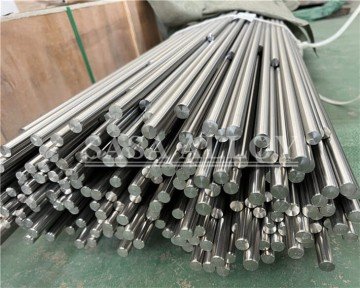
Titanium is a high-performance metal known for its strength-to-weight ratio, corrosion resistance, and ability to perform in extreme environments. To unlock these advantages, titanium bars must be processed through precise and controlled methods—one of the most important being forging. Forging enhances the mechanical properties of titanium, refines its grain structure, and improves overall product integrity.
In this article, we will take a deep dive into the forging process of titanium bars, explaining each step, the equipment used, benefits, applications, and how sakyalloy ensures quality from start to finish.
1. What Is Forging?
Forging is a manufacturing process that shapes metal using compressive forces. For titanium, forging is typically performed at elevated temperatures—this is known as hot forging. The process refines the grain structure, removes internal defects, and improves strength and fatigue resistance.
Forging is essential in producing high-performance titanium bars used in demanding sectors like aerospace, medical, military, and marine.
2. Why Titanium Needs to Be Forged
Titanium alloys, especially Ti-6Al-4V (Grade 5), have excellent properties but are also difficult to machine and deform in cold conditions. Forging offers a solution by:
-
Improving homogeneity in microstructure
-
Reducing porosity and segregation
-
Enhancing tensile and fatigue strength
-
Allowing customized shapes and sizes
sakyalloy uses advanced forging methods to ensure all titanium bars meet international quality and performance standards.
3. Types of Titanium Forging Processes
a) Open Die Forging
-
The titanium billet is deformed between flat dies without enclosing the workpiece completely.
-
Best for large cross-sections and custom-shaped bars.
b) Closed Die Forging (Impression Die)
-
The billet is compressed within a die that contains a shaped cavity.
-
Used for producing near-net-shape parts and repeatable sizes.
c) Rolled Ring Forging
-
A donut-shaped billet is expanded using radial and axial pressure.
-
Used for making titanium rings, which can later be cut into bar sections.
At sakyalloy, open die forging is most commonly used for titanium bars to maintain strength, reduce inclusions, and offer flexible sizing.
4. The Forging Process of Titanium Bars – Step-by-Step
Step 1: Raw Material Selection
High-purity titanium sponge or ingots are selected and melted using Vacuum Arc Remelting (VAR) or Electron Beam Melting (EBM) to ensure low impurities and homogeneity.
Step 2: Billet Preparation
Titanium ingots are cut into billets and preheated to forging temperatures—typically 900°C to 1050°C, depending on the alloy.
Step 3: Hot Forging
Using hydraulic or mechanical presses, the billet is shaped into bars by repeated hammering or pressing. This step:
-
Breaks down the cast structure
-
Refines grains
-
Enhances internal bonding
Step 4: Annealing
After forging, titanium bars are heat treated to relieve internal stresses and optimize mechanical properties. This process also restores some ductility lost during deformation.
Step 5: Surface Treatment
Oxide scales and surface roughness from forging are removed through pickling, grinding, or shot blasting. This step ensures a clean surface for further machining or inspection.
Step 6: Inspection & Testing
Titanium bars undergo:
-
Ultrasonic Testing (UT) for internal flaws
-
Tensile Testing for mechanical strength
-
Hardness Testing
-
Dimensional Verification
-
Visual Inspection
sakyalloy performs all inspections in-house, issuing full EN 10204 3.1 or 3.2 certificates upon request.
5. Benefits of Forged Titanium Bars
-
Superior Strength: Grain refinement increases tensile and fatigue strength.
-
Improved Reliability: Fewer inclusions and porosity ensure stable performance.
-
Excellent Machinability: Uniform grain structure makes post-forging processes easier.
-
High Temperature Resistance: Maintains integrity in heat-intensive applications.
-
Corrosion Resistance: Ideal for chemical, saltwater, and medical environments.
6. Titanium Grades Commonly Forged
-
Grade 2: Commercially pure, high corrosion resistance, good formability.
-
Grade 5 (Ti-6Al-4V): Most commonly used alloy; excellent strength and fatigue resistance.
-
Grade 23 (Ti-6Al-4V ELI): Extra-low interstitials, ideal for medical implants.
-
Grade 7: With palladium addition for enhanced corrosion resistance.
-
Grade 9: Moderate strength and excellent weldability.
sakyalloy provides forged titanium bars in all commercial and aerospace grades, with custom sizes available.
7. Applications of Forged Titanium Bars
Forged titanium bars are used in industries requiring exceptional reliability, such as:
Aerospace
-
Aircraft structural parts
-
Engine components
-
Landing gear and shafts
Medical
-
Orthopedic implants
-
Dental rods
-
Surgical tools
Marine
-
Submarine frames
-
Propulsion systems
-
Saltwater piping
Military
-
Armor plating
-
Missiles and jet engine parts
-
Naval hardware
Industrial
-
Heat exchangers
-
Pressure vessels
-
Chemical processing equipment
8. Forging Tolerances and Surface Finishes
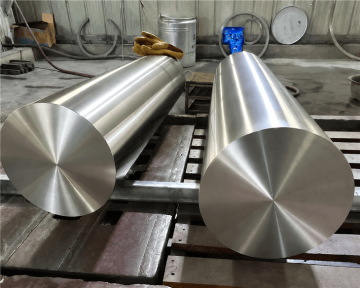
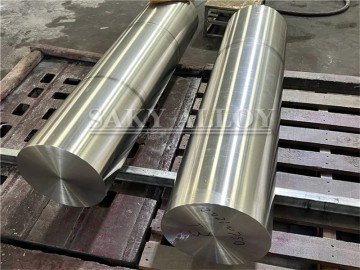
At sakyalloy, forged titanium bars can be provided in the following finish options:
-
Black surface (as-forged)
-
Rough machined
-
Peeled or turned
-
Polished or ground
Standard tolerances follow ASTM B348, AMS 4928, and customer drawings. We also support customized tolerances for precision machining applications.
9. Comparison: Forged vs. Rolled Titanium Bars
| Property | Forged Titanium Bar | Rolled Titanium Bar |
|---|---|---|
| Grain Structure | Directional, refined | Layered, less controlled |
| Strength | Higher | Moderate |
| Ductility | Slightly lower | Higher |
| Surface Finish | Rougher (improves with grinding) | Smoother as rolled |
| Machinability | Good with proper tools | Very good |
| Applications | Aerospace, medical, critical parts | General engineering |
10. Why Choose sakyalloy for Forged Titanium Bars?
sakyalloy is a trusted supplier of high-quality titanium forged products. We provide:
-
Fully traceable raw materials
-
Strict in-house quality inspection
-
Custom sizes, grades, and finishes
-
Global shipping and logistics support
-
Expert technical support and documentation
Whether you need a small medical-grade titanium bar or large aerospace-grade billets, sakyalloy delivers precision, performance, and reliability.
Conclusion
Forging is the cornerstone of high-performance titanium bar production. It transforms raw metal into high-strength, defect-free bars with optimal properties for critical applications. Understanding the forging process—from billet heating to final inspection—helps buyers and engineers choose materials that perform under pressure.
If you’re looking for forged titanium bars that meet global standards and exceed expectations, turn to sakyalloy. We offer titanium solutions backed by technology, experience, and a commitment to quality.