
The Importance of ELI (Extra Low Interstitials) in Grade 23 Titanium Production
In high-performance industries such as medical implant manufacturing, aerospace engineering, and advanced precision machining, titanium alloys have become indispensable due to their exceptional strength, low density, and outstanding corrosion resistance. Among the most popular alloys, Grade 5 (Ti-6Al-4V) and Grade 23 (Ti-6Al-4V ELI) are leaders—but there’s one critical difference that separates them: ELI, which stands for Extra Low Interstitials.
The ELI designation defines a titanium alloy with tightly controlled impurity levels—especially oxygen, nitrogen, carbon, and hydrogen. These elements, although present in small amounts, significantly influence the material’s ductility, toughness, and biocompatibility.
This article by sakyalloy explores why ELI is crucial in Grade 23 titanium production, how it enhances material properties, and why this purity level makes Grade 23 the preferred choice for life-critical and mission-critical applications.
1. Understanding the Concept of ELI (Extra Low Interstitials)
The term ELI (Extra Low Interstitials) refers to titanium alloys manufactured with reduced levels of interstitial impurities, primarily:
-
Oxygen (O)
-
Nitrogen (N)
-
Carbon (C)
-
Hydrogen (H)
In titanium alloys, these elements occupy spaces within the crystal lattice known as “interstitial sites.” While small amounts improve strength, excessive interstitials make the material brittle and less ductile, which is unacceptable in applications requiring fracture toughness and fatigue resistance.
The ELI process ensures these elements are kept to extremely low levels, resulting in Grade 23 Titanium (Ti-6Al-4V ELI)—a cleaner, more ductile, and biocompatible version of the traditional Grade 5 Titanium (Ti-6Al-4V).
2. Chemical Composition: Grade 5 vs Grade 23 Titanium
| Element | Grade 5 (Ti-6Al-4V) | Grade 23 (Ti-6Al-4V ELI) |
|---|---|---|
| Aluminum (Al) | 5.5 – 6.75 | 5.5 – 6.75 |
| Vanadium (V) | 3.5 – 4.5 | 3.5 – 4.5 |
| Oxygen (O) | ≤ 0.20 | ≤ 0.13 |
| Nitrogen (N) | ≤ 0.05 | ≤ 0.05 |
| Carbon (C) | ≤ 0.08 | ≤ 0.08 |
| Hydrogen (H) | ≤ 0.015 | ≤ 0.0125 |
| Iron (Fe) | ≤ 0.40 | ≤ 0.25 |
| Titanium (Ti) | Balance | Balance |
This reduction—especially in oxygen content—is what grants Grade 23 superior fracture toughness and ductility without sacrificing its strength and corrosion resistance.
3. Why Interstitial Control Is So Important
Even trace impurities have profound effects on titanium’s mechanical behavior. Here’s how each interstitial element impacts the alloy:
| Element | Impact on Titanium Alloy | ELI Advantage |
|---|---|---|
| Oxygen (O) | Increases strength but reduces ductility | Lower oxygen improves toughness |
| Nitrogen (N) | Causes embrittlement | Reduced nitrogen prevents cracking |
| Carbon (C) | Forms carbides, reducing fatigue life | Controlled carbon ensures uniform structure |
| Hydrogen (H) | Leads to hydride formation and cracking | Low hydrogen eliminates hydrogen embrittlement |
Through ELI refinement, Grade 23 titanium achieves a balance of strength, flexibility, and resilience that standard alloys cannot match.
4. The Metallurgical Advantages of ELI Titanium
4.1 Improved Fracture Toughness
Lower oxygen and nitrogen contents enhance fracture toughness, allowing Grade 23 titanium to absorb more stress before failure—critical for implants and aerospace fasteners exposed to dynamic loads.
4.2 Superior Ductility
Reduced interstitial levels prevent embrittlement, giving the alloy a greater elongation (10–14%), which improves its ability to deform without cracking.
4.3 Higher Fatigue Resistance
Fatigue strength—the ability to resist failure under cyclic stress—is enhanced, making it ideal for components under repeated mechanical loading, such as hip stems, bone screws, and aircraft bolts.
4.4 Enhanced Biocompatibility
Lower impurity levels minimize ion release and eliminate cytotoxic reactions, ensuring safe long-term performance inside the human body.
4.5 Better Weldability and Machinability
ELI-grade titanium responds better to welding and machining due to its cleaner structure and reduced gas absorption, allowing precise fabrication of medical and aerospace parts.
5. ELI in Medical-Grade Titanium Applications
Biocompatibility and purity are the two cornerstones of any medical material. The ELI process ensures that Grade 23 titanium bars from sakyalloy meet the strict requirements of ASTM F136 and ISO 5832-3 medical standards.
5.1 Orthopedic Implants
-
Hip and knee joints
-
Bone plates and screws
-
Spinal rods and fixation devices
These applications demand materials that resist fatigue and remain inert in biological environments—both key benefits of ELI titanium.
5.2 Dental Implants
ELI titanium ensures osseointegration, the process where bone bonds with the implant surface. Its smooth, oxide-protected surface allows bone cells to attach and grow naturally.
5.3 Surgical Instruments
Grade 23 titanium provides non-magnetic, corrosion-resistant surgical tools that remain sharp and durable even after repeated sterilization.
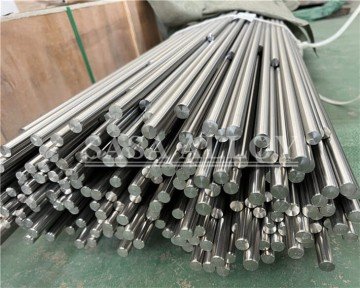
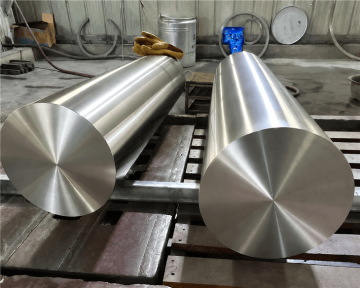
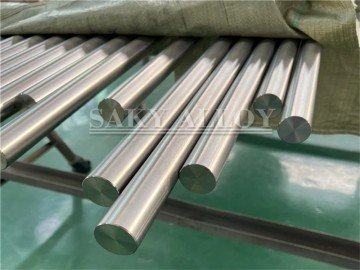
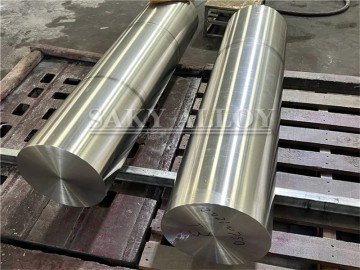
sakyalloy supplies mirror-finished Gr23 titanium bars specifically tailored for the medical industry, offering both mechanical strength and biological safety.
6. ELI in Aerospace and Defense Applications
While ELI titanium was originally developed for medical implants, its superior toughness and fatigue resistance have made it equally valuable in aerospace and defense sectors.
6.1 Aircraft Fasteners and Fittings
ELI titanium’s cleanliness ensures reliability under vibration, temperature changes, and high-stress flight conditions.
6.2 Spacecraft and Satellite Structures
The alloy’s low impurity content and stable microstructure maintain performance under radiation exposure and cryogenic temperatures.
6.3 Engine Components
Reduced interstitials prevent hydrogen embrittlement in high-temperature environments, ensuring safe and efficient performance of critical parts.
sakyalloy manufactures ELI titanium bars compliant with AMS 4930 standards, ensuring precision for aerospace clients globally.
7. Manufacturing Process for ELI-Grade Titanium at sakyalloy
To achieve the Extra Low Interstitial quality, sakyalloy follows a series of controlled metallurgical steps designed to eliminate impurities and refine grain structure.
7.1 Raw Material Selection
-
High-purity titanium sponge is sourced from certified suppliers.
-
Raw materials are inspected for chemical purity using OES (Optical Emission Spectroscopy).
7.2 Vacuum Melting and Refining
-
Double or triple VAR (Vacuum Arc Remelting) ensures removal of gases and inclusions.
-
Optional EB (Electron Beam Melting) refines the structure further for ultra-high purity.
7.3 Forging and Hot Rolling
-
Performed under controlled temperature to prevent oxidation.
-
Uniform deformation enhances grain refinement and mechanical consistency.
7.4 Heat Treatment
-
Stress relief annealing improves ductility and removes internal stresses.
-
Precisely controlled cooling rates maintain the ELI microstructure.
7.5 Surface Preparation and Cleaning
-
Acid pickling and ultrasonic cleaning remove surface oxides.
-
Passivation creates a stable TiO₂ film for corrosion protection.
8. Non-Destructive Testing and Quality Control
sakyalloy integrates advanced testing systems to ensure every Gr23 titanium bar meets international quality standards.
| Test | Purpose |
|---|---|
| Ultrasonic Testing (UT) | Detects internal defects and inclusions |
| Eddy Current Inspection | Identifies surface cracks |
| Dye Penetrant Test (PT) | Reveals micro-defects on the surface |
| Microstructure Analysis | Confirms α+β phase distribution |
| Gas Content Testing | Verifies oxygen, nitrogen, and hydrogen levels |
| Tensile & Hardness Tests | Ensure mechanical consistency |
This combination of process control and testing precision allows sakyalloy to deliver titanium bars with exceptional purity and performance reliability.
9. Standards and Certifications
Each sakyalloy Gr23 titanium bar is fully traceable and certified according to international specifications:
| Standard | Description |
|---|---|
| ASTM F136 | Titanium alloy for surgical implants |
| ISO 5832-3 | Titanium and titanium alloys for surgical applications |
| AMS 4930 | Aerospace-grade titanium bar standard |
| EN 10204 3.1 | Mill Test Certification with traceability |
All certifications include detailed chemical analysis, mechanical testing, and NDT results to ensure complete compliance.
10. Comparing ELI vs. Non-ELI Grades
| Property | Grade 23 (ELI) | Grade 5 (Standard) |
|---|---|---|
| Oxygen Content | ≤ 0.13% | ≤ 0.20% |
| Ductility | Excellent | Good |
| Fracture Toughness | Higher | Moderate |
| Biocompatibility | Superior | Limited |
| Fatigue Resistance | Higher | Standard |
| Applications | Medical & Aerospace | General Industrial |
The differences may seem minor chemically, but in practice, ELI’s enhanced ductility and toughness make it the superior choice wherever precision and safety are essential.
11. Case Study: Orthopedic Implant Manufacturer
A global orthopedic implant producer partnered with sakyalloy to supply Gr23 titanium bars for spinal fixation devices. After switching from standard Grade 5 titanium, they reported:
-
30% increase in fatigue resistance
-
15% reduction in machining time due to improved ductility
-
Full compliance with ASTM F136 biocompatibility standards
The ELI-grade titanium enabled smoother machining, better surface polish, and improved implant longevity.
12. Environmental and Sustainability Benefits
Titanium is inherently recyclable and sustainable, and the ELI production process at sakyalloy minimizes environmental impact through:
-
Vacuum melting systems that reduce energy waste
-
Recycling of titanium chips and scrap
-
Closed-loop cleaning systems for acid and water reuse
-
Emission-free refining using eco-friendly fluxes
These initiatives align with global sustainability goals while maintaining uncompromised material purity.
13. Future of ELI Titanium Alloys
The use of ELI titanium continues to grow in emerging technologies such as:
-
Additive manufacturing (3D printing) of medical implants
-
Cryogenic fuel systems for space exploration
-
Next-generation aerospace frames requiring lightweight durability
As manufacturing techniques evolve, sakyalloy remains committed to refining the ELI process, ensuring even higher purity and mechanical performance in the years ahead.
Conclusion
The ELI (Extra Low Interstitials) specification defines more than just a chemical limit—it defines the quality, safety, and reliability of the final product. By minimizing impurities like oxygen and nitrogen, Grade 23 Titanium (Ti-6Al-4V ELI) achieves unmatched levels of ductility, toughness, and biocompatibility, setting it apart from all other titanium grades.
With state-of-the-art vacuum melting, precise refining, and advanced inspection, sakyalloy guarantees that every Gr23 titanium bar embodies the highest purity and performance standards—ready to serve the most demanding applications, from life-saving implants to space-bound components.