
The Role of Ti-3Al-2.5V Rods in Jet Engine and Hydraulic Systems
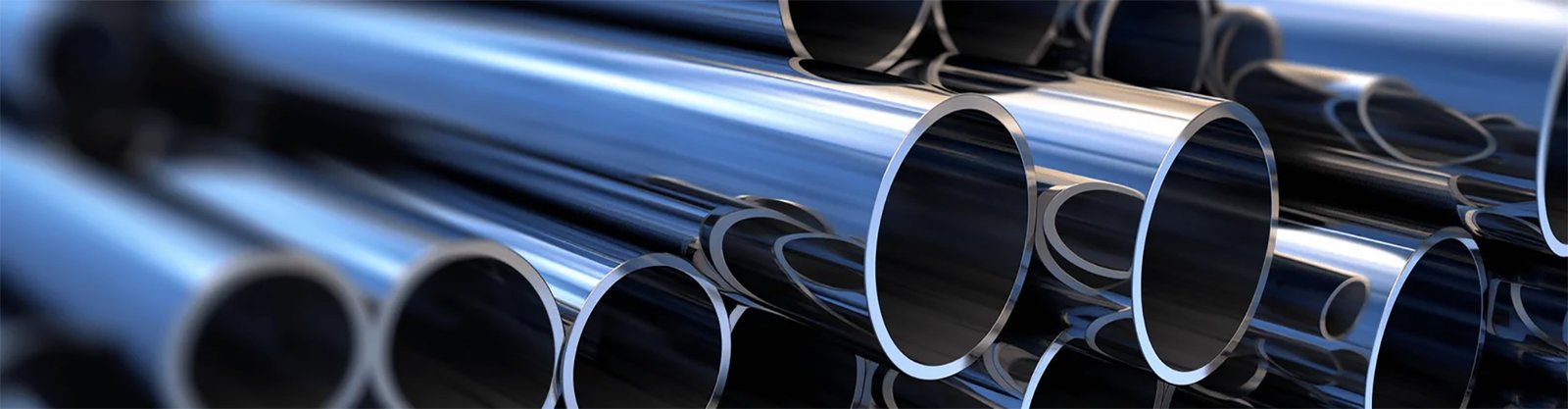
The aviation industry continues to evolve toward higher performance, greater efficiency, and reduced weight. These demands have driven aerospace engineers to seek advanced materials that can deliver superior mechanical strength, corrosion resistance, and temperature stability under the most extreme conditions. Among these, Ti-3Al-2.5V titanium alloy rods—also known as Grade 9 titanium rods—have become an essential material for jet engines and hydraulic systems, two of the most demanding environments in aircraft design.
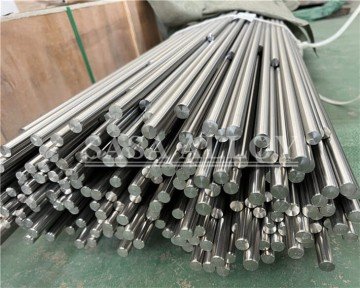
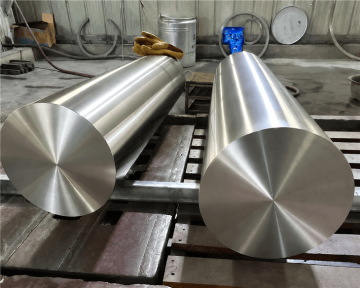
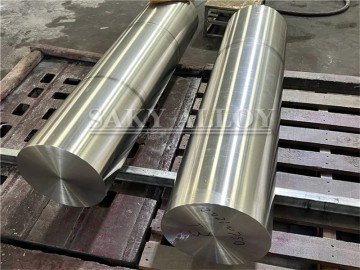
This titanium alloy offers a unique combination of lightweight strength, excellent corrosion resistance, and superior fatigue endurance, making it ideal for components subjected to continuous stress, vibration, and high temperatures. As a global leader in titanium manufacturing, sakyalloy supplies precision-engineered Ti-3Al-2.5V rods that meet the highest aerospace standards, ensuring reliable performance and long-term durability in flight-critical systems.
Understanding Ti-3Al-2.5V (Grade 9 Titanium Alloy)
Ti-3Al-2.5V is an alpha-beta titanium alloy composed of 3% aluminum and 2.5% vanadium. It bridges the performance gap between the high-strength Ti-6Al-4V (Grade 5) and the more ductile commercially pure titanium grades (Grade 2 and 3). This balance gives it an exceptional combination of strength, ductility, and corrosion resistance, perfectly suited for aerospace tubing and rod applications.
Typical Chemical Composition (%):
-
Titanium (Ti): Balance
-
Aluminum (Al): 2.5–3.5
-
Vanadium (V): 2.0–3.0
-
Iron (Fe): ≤ 0.25
-
Oxygen (O): ≤ 0.20
-
Carbon (C): ≤ 0.08
-
Hydrogen (H): ≤ 0.015
This carefully controlled chemistry provides high mechanical stability, oxidation resistance, and excellent compatibility with aerospace hydraulic fluids and jet fuels.
Mechanical Properties of Ti-3Al-2.5V Rods
| Property | Value (Typical) |
|---|---|
| Density | 4.48 g/cm³ |
| Yield Strength | 480–620 MPa |
| Tensile Strength | 620–760 MPa |
| Elongation | 15–20% |
| Modulus of Elasticity | 105 GPa |
| Service Temperature | Up to 400°C |
These properties make Ti-3Al-2.5V rods highly desirable for aircraft engine and hydraulic system components, where the combination of high pressure, heat, and mechanical load demands materials that maintain strength and stability throughout long service life.
Why Titanium Is Essential in Jet Engines and Hydraulic Systems
Jet engines and hydraulic systems are among the most critical systems in any aircraft. They face extreme environmental and operational conditions such as:
-
High thermal loads up to 400°C
-
Constant pressure fluctuations
-
Vibration and fatigue cycles
-
Exposure to jet fuel, oil, and hydraulic fluids
-
Weight and space limitations
Titanium alloys like Ti-3Al-2.5V offer the perfect solution to these challenges, replacing heavier stainless steels and less durable aluminum alloys.
Role of Ti-3Al-2.5V Rods in Jet Engine Systems
The jet engine is the heart of an aircraft, operating at extremely high speeds and temperatures. Every kilogram saved in engine components translates to significant fuel efficiency and performance improvement.
1. Compressor and Turbine Section Components
Titanium’s high specific strength (strength-to-weight ratio) allows the manufacture of compressor blades, spacers, and casings that can withstand high rotational forces while remaining lightweight. Ti-3Al-2.5V provides the necessary ductility to absorb dynamic stresses without cracking under vibration.
2. Engine Mounts and Support Brackets
Ti-3Al-2.5V rods are used in engine mounting frames and brackets, where they must resist both mechanical and thermal stresses. The alloy’s excellent fatigue life ensures long-term structural integrity under fluctuating loads.
3. Fuel and Oil Line Tubing
In jet engines, titanium tubing transports fuel and lubricants at high pressure and temperature. Ti-3Al-2.5V resists corrosion from hydrocarbon fuels and oxidation from heat exposure, guaranteeing leak-free operation throughout the engine’s lifespan.
4. Exhaust and Cooling Systems
Due to its oxidation resistance up to 400°C, Ti-3Al-2.5V is also used for ducting, cooling channels, and small heat-exposed components, helping maintain stable engine temperatures and reduce thermal degradation.
5. Actuation Systems and Linkages
Titanium rods are used in engine control rods and actuators, where precision, reliability, and resistance to mechanical wear are vital for throttle control and flight performance.
Role of Ti-3Al-2.5V Rods in Hydraulic Systems
Hydraulic systems control vital aircraft operations such as landing gear retraction, flight control surfaces, and braking systems. These systems operate under high pressure (up to 5,000 psi) and must perform flawlessly across wide temperature ranges.
1. Hydraulic Tubing and Lines
Ti-3Al-2.5V rods are converted into thin-walled hydraulic tubes, offering excellent pressure containment with reduced weight compared to stainless steel. Their smooth internal surfaces ensure laminar fluid flow and minimize friction losses.
2. Actuator Shafts and Pistons
Precision-machined titanium rods are used in hydraulic actuators and piston rods, where resistance to fatigue, corrosion, and wear is essential. Ti-3Al-2.5V maintains dimensional accuracy even under continuous motion and high pressure.
3. Fittings, Couplings, and Connectors
The alloy’s superior machinability and weldability make it ideal for producing hydraulic connectors and fittings that maintain a tight seal even during extreme vibration and pressure cycles.
4. Landing Gear and Brake Systems
Titanium’s high strength ensures the reliability of hydraulic landing gear assemblies, where heavy loads, shock absorption, and corrosion resistance are crucial for safety and performance.
Performance Advantages of Ti-3Al-2.5V Rods
1. Lightweight Strength
Ti-3Al-2.5V is 40% lighter than steel yet provides comparable strength. This significant weight reduction enhances aircraft performance, fuel economy, and payload capacity.
2. Corrosion and Oxidation Resistance
Titanium’s naturally forming oxide layer protects against corrosion caused by moisture, fuel, and hydraulic fluids, ensuring long-term reliability with minimal maintenance.
3. High Fatigue Resistance
Jet engines and hydraulic systems experience millions of stress cycles per flight. Ti-3Al-2.5V’s fatigue resistance ensures long service life, reducing the risk of fatigue cracks or component failure.
4. Thermal Stability
Maintaining performance at temperatures up to 400°C, this alloy is ideal for engine and hydraulic components exposed to continuous thermal cycling.
5. Superior Weldability and Machinability
Unlike higher-strength alloys, Grade 9 can be cold-formed, drawn, and welded without post-weld heat treatment—making it highly efficient for manufacturing tubing and precision-engineered rods.
6. Compatibility with Composite Materials
Modern aircraft use composite materials extensively. Ti-3Al-2.5V offers galvanic corrosion compatibility with carbon fiber structures, preventing electrochemical degradation.
Comparison with Other Materials
| Property | Ti-3Al-2.5V | Ti-6Al-4V (Grade 5) | Stainless Steel (316L) |
|---|---|---|---|
| Density (g/cm³) | 4.48 | 4.43 | 8.0 |
| Tensile Strength (MPa) | 620–760 | 900 | 600 |
| Fatigue Resistance | Excellent | Excellent | Good |
| Formability | Excellent | Moderate | Fair |
| Corrosion Resistance | Excellent | Excellent | Moderate |
| Weldability | Excellent | Moderate | Good |
| Temperature Limit (°C) | 400 | 480 | 300 |
Conclusion:
Ti-3Al-2.5V offers a balanced performance profile—stronger than most steels, lighter than any structural metal, and easier to fabricate than higher-alloyed titaniums.
Quality and Certification Standards
All Ti-3Al-2.5V rods produced by sakyalloy adhere to strict international aerospace standards for quality, reliability, and traceability.
Standards and Specifications:
-
AMS 4943 / AMS 4944 – Aerospace tubing and rod specifications
-
ASTM B348 – Titanium and titanium alloy bars and billets
-
ISO 5832-11 – Titanium alloys for aerospace and medical applications
Testing and Quality Assurance:
-
Ultrasonic Testing (UT) for internal defect detection
-
Tensile and Yield Strength Verification
-
Microstructure and Grain Size Analysis
-
Dimensional and Surface Finish Inspection
-
Mill Test Certificate (EN 10204 3.1 / 3.2) for full traceability
Every sakyalloy titanium rod is tested to meet the highest standards of performance and consistency, ensuring reliability in critical aerospace systems.
sakyalloy – Partnering with Global Aerospace Innovators
At sakyalloy, we understand that precision, consistency, and safety define success in aerospace manufacturing. Our Ti-3Al-2.5V titanium rods are produced using advanced vacuum melting, forging, and CNC machining technologies, ensuring optimum strength, uniformity, and fatigue resistance.
Our Advantages:
-
Full dimensional range: diameter 3 mm to 200 mm
-
Customized lengths up to 6,000 mm
-
Compliance with AMS, ASTM, and ISO aerospace standards
-
Global supply capability with timely delivery
-
Technical support for design and material selection
With a focus on innovation and excellence, sakyalloy continues to provide titanium materials that drive performance improvements in aircraft propulsion and control systems, reinforcing safety and efficiency in modern aviation.
Future Outlook: Titanium in Next-Generation Aerospace Systems
As the aerospace industry moves toward lighter, greener, and more energy-efficient aircraft, titanium alloys like Ti-3Al-2.5V will play an even greater role. Future developments include:
-
Hydrogen-powered engines requiring corrosion-resistant, lightweight materials.
-
All-electric aircraft where titanium’s thermal stability enhances battery system safety.
-
Additive manufacturing (3D printing) applications for customized jet and hydraulic components.
Ti-3Al-2.5V’s combination of sustainability, recyclability, and performance ensures its continued use in next-generation aerospace systems designed for high efficiency and low environmental impact.
Conclusion
The Ti-3Al-2.5V titanium rod is an indispensable material in both jet engine and hydraulic system engineering. Its exceptional combination of lightweight strength, fatigue resistance, corrosion protection, and thermal stability enables superior performance in components that operate under the harshest conditions in aviation.
From engine mounts, fuel lines, and control rods to hydraulic actuators and landing gear assemblies, Ti-3Al-2.5V ensures safety, durability, and efficiency—helping aircraft fly farther, safer, and more economically.
Through its expertise in titanium metallurgy and aerospace manufacturing, sakyalloy continues to deliver high-quality Ti-3Al-2.5V rods to aerospace OEMs and tier suppliers worldwide, reinforcing the foundation of modern aviation technology and innovation.